What Is Norwood 3 Vertex? A Complete Medical Guide

Key Takeaways
- Norwood 3 vertex describes a recognizable stage of androgenetic alopecia with crown thinning and often front hairline recession.
- It is not the same as general shedding; the pattern usually reflects a genetic and hormone-sensitive process.
- A dermatologist can confirm the stage and rule out other causes such as telogen effluvium or scalp disease.
- Treatment options may include topical therapies, oral medicines, procedures, or hair restoration surgery depending on the pattern and goals.
- Early evaluation is helpful because more follicles can often be preserved when care starts sooner.
Norwood 3 vertex is a stage of male pattern hair loss where thinning becomes visible at the crown, often alongside a receding hairline. Understanding the pattern helps patients choose timely, evidence-based care and set realistic expectations about treatment.
Overview
Norwood 3 vertex is a commonly used description for a specific pattern of male pattern hair loss. In practical terms, it usually means that hair thinning is visible at the crown, or vertex, and may be paired with a deeper recession at the temples. For many people, this is the point where hair loss becomes noticeable in everyday life, photos, or bright lighting.
The term comes from the Norwood scale, which is used by clinicians to map the progression of androgenetic alopecia. While the scale is not a diagnosis by itself, it helps doctors and patients talk clearly about the extent of hair loss and the most appropriate next steps. For someone deciding whether to seek care locally or while traveling for treatment, identifying the stage early can make planning easier and more targeted.
Norwood 3 vertex is often viewed as an important transition stage because the thinning is no longer limited to subtle recession. The crown begins to show scalp visibility, which may continue gradually over time if the underlying process is not addressed.
What Norwood 3 Vertex Looks Like

On the Norwood scale, the “vertex” refers to the top-back area of the scalp, also called the crown. In Norwood 3 vertex, this area shows a distinct thinning patch or widening area of low-density hair. The hairline may also appear receded, though the amount varies from person to person.
Some people notice that the crown looks thinner under strong light, after showering, or in photographs taken from above. Others first become aware when a barber or family member points out that the scalp is more visible than before. The pattern tends to develop gradually, which is why it can be overlooked until it is more established.
It is useful to distinguish Norwood 3 vertex from diffuse shedding. In vertex-pattern loss, thinning is centered in a predictable location and usually follows a male-pattern distribution. This pattern recognition helps clinicians separate androgenetic alopecia from other causes of hair loss.
Causes and Risk Factors
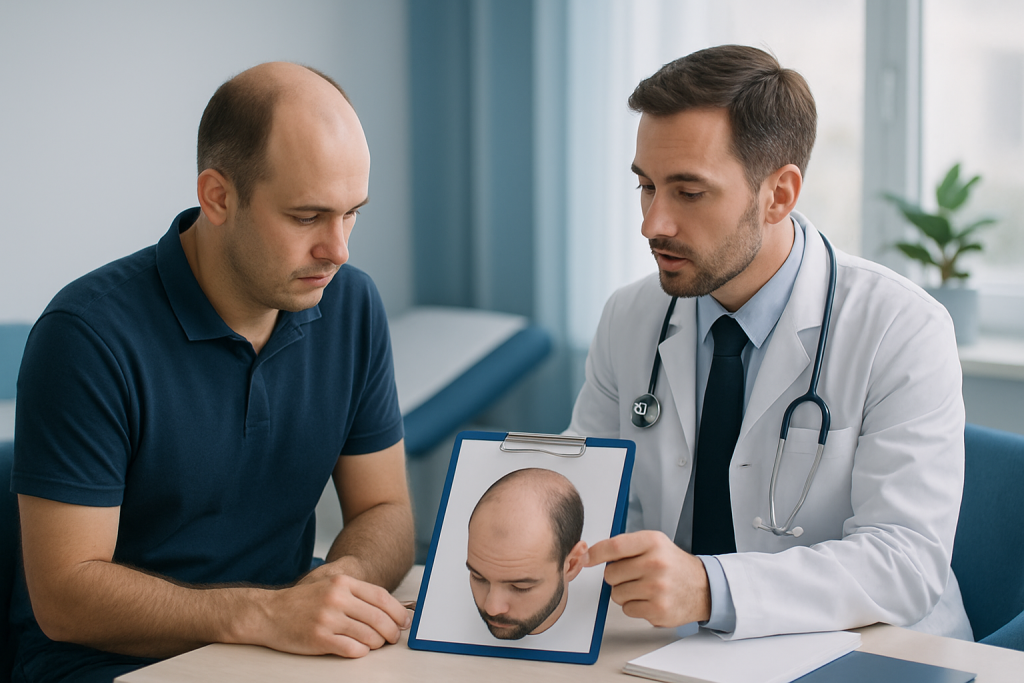
Norwood 3 vertex is most often caused by androgenetic alopecia, the medical term for hereditary pattern hair loss. This condition is influenced by genetics and sensitivity of hair follicles to dihydrotestosterone, a hormone derived from testosterone. Over time, affected follicles become smaller, and the hairs they produce may become finer and shorter.
Family history is one of the strongest clues. A person with close relatives who developed pattern hair loss is more likely to experience it as well, although the exact age and pattern can differ. Hair loss can also become more noticeable with aging, as follicle miniaturization progresses.
Other factors do not usually cause Norwood 3 vertex on their own, but they can influence how quickly thinning is noticed:
- Genetic predisposition
- Hormonal sensitivity of follicles
- Age-related progression
- Concurrent scalp conditions, such as seborrheic dermatitis
- Stress or illness that may add temporary shedding on top of pattern loss
Because more than one process can affect hair density at the same time, a medical assessment is valuable when the pattern seems sudden, patchy, itchy, painful, or unusual.
How Doctors Diagnose It
Diagnosis usually starts with a careful history and scalp examination. A dermatologist looks at the pattern of recession, the crown, hair shaft thickness, and whether miniaturized hairs are present. The Norwood scale may then be used to describe the stage in a standardized way.
In many cases, no complex testing is needed when the pattern is typical. However, a doctor may recommend additional evaluation if the presentation is unclear, the loss is rapid, or symptoms suggest another cause. These may include blood tests, scalp dermoscopy, or occasionally a scalp biopsy.
Common conditions that may be considered alongside Norwood 3 vertex include telogen effluvium, alopecia areata, thyroid-related hair changes, and scalp inflammation. A correct diagnosis matters because treatment plans differ depending on whether the problem is pattern hair loss, temporary shedding, or another scalp disorder.
Treatment Options
Treatment depends on the extent of loss, age, family history, medical background, and personal goals. For some men, the main aim is to slow further thinning. For others, the priority is improving density in visible areas such as the crown and hairline. A doctor can help decide which approach is realistic for the current stage.
Medical therapies are commonly used to reduce progression and support remaining follicles. Topical treatments may be recommended for scalp application, while some patients may be candidates for oral medicines prescribed and monitored by a physician. The benefit of treatment is often gradual, and consistency matters more than quick changes.
Procedural options may also be discussed when hair loss is more established or when medical therapy alone is not enough. These can include hair transplant surgery, platelet-rich plasma in selected settings, or other clinic-based approaches. Surgery is not suitable for everyone, and planning must account for donor hair availability, long-term stability of hair loss, and recovery time, especially for international patients arranging care away from home.
Useful treatment conversations often cover:
- How much hair loss is active versus stable
- Whether crown thinning, hairline recession, or both are present
- Expected maintenance needs after any procedure
- Recovery time and follow-up arrangements if traveling for care
Prevention and Self-care
Pattern hair loss cannot usually be fully prevented when genetics are driving the process, but there are practical steps that may help protect hair quality and support treatment. Early assessment is one of the most useful actions, because it allows doctors to intervene before thinning becomes advanced.
Gentle hair care can reduce additional breakage and scalp irritation. That means avoiding harsh grooming habits, excessive heat, tight hairstyles, and aggressive chemical treatments when possible. A balanced diet, adequate protein intake, and attention to overall health also support normal hair growth, although they do not reverse genetic hair loss on their own.
For people pursuing treatment from another country, planning matters. It helps to bring a list of current medications, understand the expected follow-up schedule, and discuss how progress will be monitored after returning home. In Acibadem Health Point, multidisciplinary specialists and JCI-accredited hospitals diagnose and treat hair and scalp conditions for international patients in a coordinated setting.
When to See a Doctor
A medical evaluation is a good idea when hair thinning is becoming visible, especially if the crown and temples are both changing. Early treatment discussions are often more productive than waiting until density is very low, because more options may be available when the process is caught earlier.
It is also important to seek care if the hair loss seems abrupt, occurs in patches, is accompanied by itching or scalp pain, or follows an illness, medication change, or major stressor. These features can point to a different cause that deserves specific treatment.
People who are considering a hair transplant should first confirm that the diagnosis is pattern hair loss and that the loss pattern is appropriate for surgery. A qualified dermatologist or hair restoration specialist can help determine whether medical treatment, procedural care, or a combination is the best fit.
Living With Norwood 3 Vertex
For many men, this stage affects confidence before it affects physical health. That is understandable, and it is one reason people often seek advice earlier than they once did. A clear diagnosis can replace uncertainty with a plan, whether the goal is slowing progression, improving appearance, or both.
It helps to think of hair loss management as a long-term process rather than a single appointment. Photos taken in consistent lighting, routine follow-up visits, and realistic expectations all make it easier to see whether treatment is helping. Even when full restoration is not possible, many patients are able to improve the appearance of thinning and reduce ongoing loss with the right combination of care.
Frequently asked questions
01Is Norwood 3 vertex the same as male pattern baldness?
Norwood 3 vertex is one stage within male pattern baldness, also called androgenetic alopecia. It describes a pattern where the crown begins to thin and the hairline may also recede. A clinician uses the stage to describe how far the condition has progressed.
02Can Norwood 3 vertex be reversed?
Some improvement may be possible, especially if treatment starts early and follicles are still active. In many cases, the main goal is to slow or stabilize loss and improve the appearance of thinning rather than fully restore the original hairline. A doctor can explain what is realistic for the individual pattern.
03Does crown thinning always mean Norwood 3 vertex?
Not always. Crown thinning can happen for several reasons, including temporary shedding, scalp inflammation, or other medical conditions. A dermatologist can confirm whether the pattern matches Norwood 3 vertex or whether another cause should be considered.
04How fast does Norwood 3 vertex progress?
Progression varies widely from person to person. Some men notice slow change over years, while others see more noticeable thinning over a shorter period. Family history, age, and treatment all influence the course.
05Is hair transplant surgery appropriate at this stage?
It may be considered in selected patients, but it is not automatically the first step. Doctors usually look at whether the hair loss is stable, how much donor hair is available, and whether medical treatment should be started first. A proper evaluation helps determine the best sequence of care.
06What should someone bring to a hair loss consultation?
It is helpful to bring a list of medicines, previous treatment attempts, and a brief family history of hair loss. Photos showing how the thinning has changed over time can also be useful. This information helps the specialist understand the pattern more accurately.
This article is for general information only and is not a substitute for professional medical advice. Please consult a qualified doctor about your individual situation.
Hair transplant in Turkey — costs, graft counts & a free assessment
JCI-accredited · board-certified surgeons · reply within 24h
Add us as a Preferred Source to see more of our trusted health content across Google Search, AI Overviews and Discover.