What Is Gastric Polyps? A Complete Medical Guide

Key Takeaways
- Gastric polyps are growths in the stomach lining and are often found by chance during endoscopy.
- Most gastric polyps are benign, but type, size, number, and biopsy results guide next steps.
- Symptoms are often absent; when present, they may include indigestion, nausea, or bleeding-related signs.
- Diagnosis usually involves upper endoscopy and tissue sampling to confirm the polyp type.
- Treatment may involve removal, monitoring, medication review, and follow-up endoscopy.
- A doctor should be consulted for black stools, vomiting blood, anemia, persistent pain, or unexplained weight loss.
Gastric polyps are small growths that form on the lining of the stomach, and many are found only during endoscopy. Most are noncancerous, but some types need removal or closer follow-up to lower the chance of complications.
Overview
Gastric polyps are small growths that develop on the inner lining of the stomach. Many are discovered unexpectedly during an upper endoscopy done for reflux, anemia, abdominal discomfort, or another digestive concern, which means a person may have them without realizing it.
Not every gastric polyp is dangerous. Some are harmless and never cause trouble, while others deserve closer attention because they can sometimes change over time or reflect an underlying stomach condition. The important question is not just whether a polyp is present, but what kind it is and whether it needs removal or follow-up.
For international patients planning care abroad, the practical issue is often how quickly the polyp can be identified, biopsied, and discussed in one pathway. A well-organized gastroenterology team can usually move from detection to diagnosis to a clear plan with minimal delays.
Symptoms
In some cases, the symptoms come from the condition that led to the polyp rather than the polyp itself. For example, long-standing acid suppression, inflammation of the stomach lining, or a hereditary tendency can shape how polyps appear and how they behave.
People should seek medical advice if indigestion is persistent, if a sense of fullness is worsening, or if there are any signs of blood loss. Even mild symptoms can matter when they are ongoing, especially for patients who are traveling and may want answers before returning home.
Causes & Risk Factors
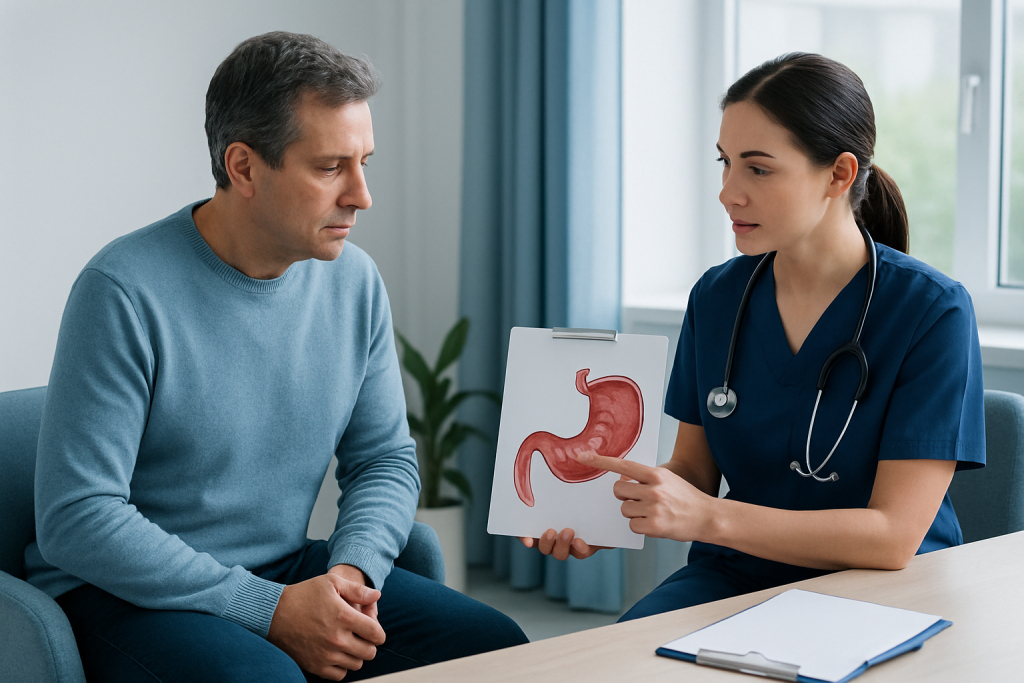
Gastric polyps arise for different reasons depending on their type. Some are linked to long-term irritation or inflammation of the stomach lining, while others are related to acid-suppressing medicines, inherited conditions, or infection-related changes in the stomach environment.
Several factors may increase the chance of developing gastric polyps, including older age, a history of chronic gastritis, prolonged use of certain stomach medications, family history of polyposis syndromes, and conditions that affect the stomach lining over time. The exact risk depends on the specific polyp type, not just the presence of a single factor.
- Long-term inflammation of the stomach lining
- Use of proton pump inhibitors in some people
- Hereditary polyposis syndromes
- Atrophic gastritis or other chronic stomach disorders
- History of prior gastric polyps
It is also important to remember that some people develop gastric polyps without any obvious risk factor. That is one reason biopsy and pathology are so valuable: they help identify the tissue type and guide the follow-up plan instead of relying on assumptions.
Diagnosis
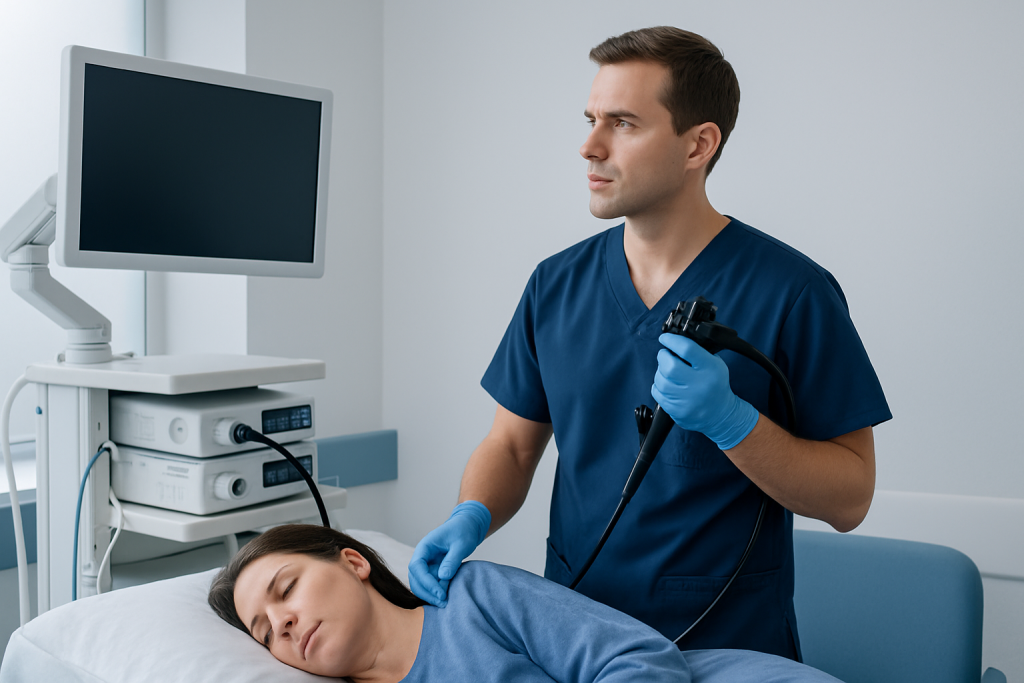
The main test used to find and evaluate gastric polyps is upper endoscopy. During this procedure, a thin flexible tube with a camera is passed through the mouth to examine the esophagus, stomach, and upper small intestine. If a polyp is seen, the doctor may take a small tissue sample or remove it during the same session if appropriate.
Biopsy is often the step that provides the most useful answer. It tells the care team whether the polyp is inflammatory, hyperplastic, fundic gland in type, adenomatous, or another less common form. That distinction matters because the next steps can range from simple observation to complete removal and scheduled surveillance.
Additional tests may be used when needed, such as blood tests for anemia, tests for H. pylori, or a review of medications and prior digestive history. For people arranging care internationally, it can be helpful to ask in advance whether endoscopy, pathology, and follow-up consultation can be coordinated during the same visit or within a short time frame.
Treatment Options
Treatment depends on the type, size, appearance, and number of gastric polyps, as well as the person’s symptoms and medical history. Some small benign polyps may not require removal, but they are often watched over time to make sure they do not change.
When removal is recommended, it is usually done during endoscopy. This approach allows the doctor to treat the polyp and collect tissue for analysis at the same time. If the polyp has features that raise concern, or if there are many polyps, the doctor may advise a more detailed follow-up plan.
Medication review is also part of treatment. In some situations, a clinician may reassess long-term acid-suppressing therapy, especially if the pattern of polyps suggests a connection. If H. pylori infection is present, treating the infection may also be part of the plan.
For polyps linked to inherited syndromes or more complex stomach conditions, care may involve a broader team and repeated surveillance. That is one reason a coordinated digestive service can be helpful for patients who are far from home: the diagnosis, pathology review, and next-step planning are easier to manage when the team works together.
Prevention & Self-care
Not every gastric polyp can be prevented, especially when genetics or chronic stomach conditions are involved. Still, a few practical measures may reduce avoidable irritation and support stomach health over time.
People who have been told they have gastric polyps should keep follow-up appointments, take prescribed treatments as directed, and review long-term medications with their doctor rather than stopping them on their own. If a stomach medicine is being used for years, it should be periodically reassessed in light of the person’s full medical picture.
- Attend recommended surveillance endoscopies
- Ask whether H. pylori testing is appropriate
- Discuss any long-term acid-suppressing medication
- Report new bleeding, fatigue, or black stools promptly
- Keep a record of prior pathology reports for future care
Self-care also includes practical planning. Travelers who undergo endoscopy abroad should leave with copies of the report, pathology results, and follow-up instructions, since those documents are essential for future care in their home country.
When to See a Doctor
A doctor should be consulted if digestive symptoms persist, especially if they are new, worsening, or associated with anemia, vomiting, unexplained weight loss, or a family history of stomach polyps or hereditary syndromes. Even when symptoms are mild, evaluation may be worthwhile if they continue over time.
Urgent medical attention is appropriate for black stools, vomiting blood, dizziness with suspected blood loss, or significant weakness. These signs do not prove that a gastric polyp is the cause, but they do indicate that the stomach should be checked promptly.
If a polyp has already been found, follow-up should be based on the pathology result and the doctor’s advice, not on guesswork. In complex cases, multidisciplinary specialists and JCI-accredited hospitals such as Acibadem Health Point can help international patients with diagnosis, treatment, and coordinated follow-up.
Living With a Diagnosis of Gastric Polyps
Hearing that a gastric polyp was found can be unsettling, but the finding is often manageable once the type is known. The first clear step is usually to understand the pathology report, because the report explains whether the polyp is low risk, needs removal, or requires surveillance.
Patients are often best served by keeping a simple folder that includes endoscopy images, biopsy results, medication lists, and prior stomach history. This is especially useful when care is split between countries, because it helps future clinicians compare findings over time.
A thoughtful follow-up plan is usually more important than any single procedure. When the condition is reviewed carefully and the appropriate interval for reassessment is set, many people can continue ordinary life with confidence and clear expectations.
Frequently asked questions
01What are gastric polyps?
Gastric polyps are small growths that form on the lining of the stomach. Many are harmless, but some types need biopsy or removal so a doctor can confirm the diagnosis and plan follow-up.
02Do gastric polyps usually cause symptoms?
Often they do not cause any symptoms and are found during endoscopy for another reason. If symptoms happen, they are usually vague, such as indigestion, nausea, or signs of slow bleeding.
03Can gastric polyps turn into cancer?
Some types have little or no cancer risk, while others may carry a higher risk depending on their appearance and biopsy results. That is why the exact polyp type matters more than the name alone.
04How are gastric polyps diagnosed?
They are usually diagnosed with upper endoscopy, and the doctor may take a biopsy or remove the polyp for testing. Pathology is what confirms the type and helps guide treatment.
05Are gastric polyps always removed?
No. Small benign polyps may simply be monitored, while others are removed because of their type, size, or appearance. The decision is based on the individual case and the biopsy result.
06What should a patient bring if traveling for treatment?
It helps to bring prior endoscopy reports, pathology results, medication lists, and any stomach-related test results. These documents make it easier for the new doctor to compare findings and continue care without delay.
This article is for general information only and is not a substitute for professional medical advice. Please consult a qualified doctor about your individual situation.
Persistent digestive symptoms? Get evaluated in Turkey
JCI-accredited · board-certified surgeons · reply within 24h
Add us as a Preferred Source to see more of our trusted health content across Google Search, AI Overviews and Discover.