

What Is Eyebrow Ring Scar? A Complete Medical Guide
- 10 min read
- Published November 26, 2026
Key Takeaways
- Eyebrow ring scar usually refers to scar tissue that remains after an eyebrow piercing or injury heals.
- Scars may be flat, raised, red, darker than surrounding skin, or firm to the touch.
- Repeated irritation, infection, skin type, and delayed healing can increase the chance of noticeable scarring.
- Treatment may include silicone products, steroid injections, laser therapy, or minor surgical revision, depending on the scar type.
- Home care should focus on gentle cleansing, sun protection, and avoiding picking or friction.
- A clinician should review scars that are painful, growing, infected, or affecting the eyelid or eyebrow movement.
An eyebrow ring scar is a visible mark or raised area of scar tissue that can develop after an eyebrow piercing, trauma, or a healing complication near the brow. Most are harmless, but the right treatment depends on whether the scar is flat, thickened, darkened, or associated with infection or irritation.
Overview
An eyebrow ring scar is the mark left behind when skin around an eyebrow piercing, piercing-related injury, or local trauma heals with visible scar tissue. It may appear as a small flat line, a slightly raised bump, a firm nodule, or a darker patch where the jewelry once sat.
In many people, the scar is mostly cosmetic and does not affect health. In others, the tissue can become thickened, itchy, tender, or more noticeable over time, especially if the area was repeatedly irritated while healing. Because the eyebrow sits close to the eye, it is sensible to have persistent or changing scars assessed by a qualified clinician, particularly if the skin looks inflamed or the eyelid is involved.
Understanding the type of scar is the first step toward choosing the right care. Some scars improve with conservative measures such as silicone and sun protection, while others need in-office treatment to soften, flatten, or reduce redness.
How an eyebrow ring scar forms
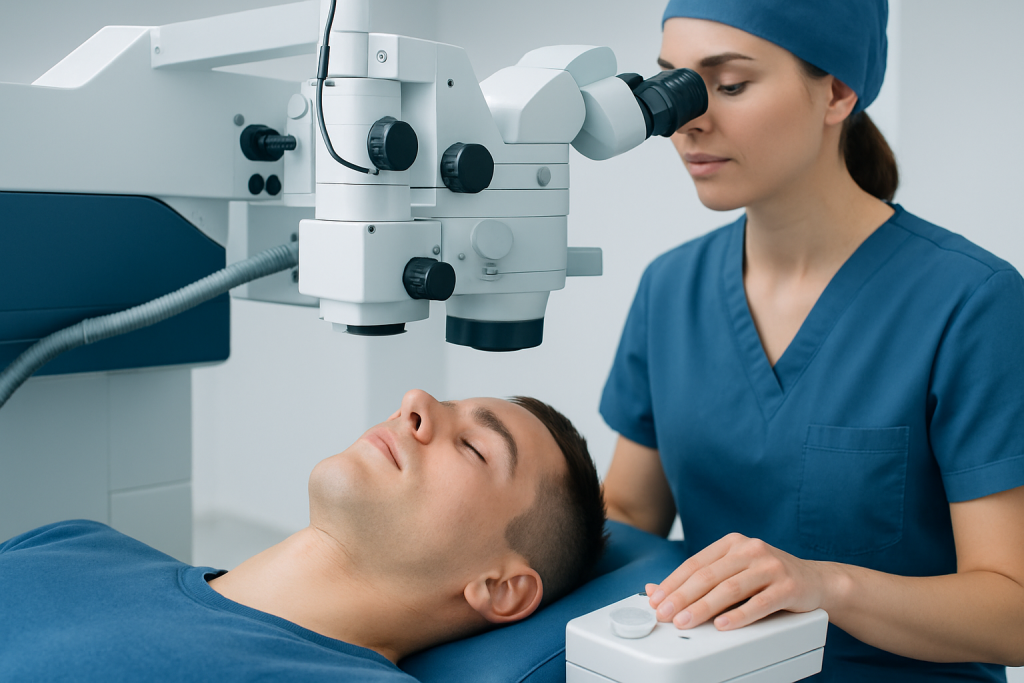
Skin repairs itself by building collagen after an injury. When the wound closes neatly, the result may be a thin, pale line. When healing is disrupted by infection, repeated movement, friction from jewelry, or delayed removal of the piercing, the body may lay down extra collagen and create a thicker scar.
Eyebrow piercing scars are often seen after a ring or barbell has been in place for a long time, has migrated, or has been removed after inflammation. A small tract can remain under the skin, and in some cases the opening closes with a firm bump or a dimpled mark. If the piercing was traumatic, the scar may be more irregular or more noticeable in certain lighting.
Not every bump near the brow is a scar. Cysts, retained foreign material, an irritated piercing tract, or a skin growth can look similar. That is why a careful examination matters before any treatment plan is chosen.
Symptoms and appearance

The look of an eyebrow ring scar can vary widely. Some scars are nearly skin-colored and only visible up close, while others are red, pink, brown, or shiny. Raised scars may feel rubbery or firm, and some people notice itching, mild soreness, or a pulling sensation when the brow moves.
Common features include:
- A flat line or dot where the piercing was placed
- A raised, thickened bump along the original piercing track
- Darkening of the skin after inflammation
- Mild tenderness when touched or brushed
- Skin tightness or a slight indentation
If the area becomes increasingly red, warm, swollen, or drains fluid, the problem may be infection or an irritated wound rather than a stable scar. Changes near the eyelid should be taken seriously because swelling in this region can interfere with comfort and eye care.
Causes and risk factors
Several factors can make an eyebrow piercing more likely to leave a lasting scar. Infection is one of the most important, because inflamed tissue heals less smoothly. Repeated touching, twisting the jewelry, sleeping on the area, or using harsh skin products can also prolong healing and increase the chance of visible scarring.
Some people are naturally more prone to raised scars such as hypertrophic scars or keloids. Keloids extend beyond the original wound and may continue growing, while hypertrophic scars stay within the injury area but remain thick and elevated. A personal or family history of keloids, darker skin tones, and previous problematic scarring can raise the risk.
Other contributors include piercing technique, jewelry material, allergic contact dermatitis, trauma from accidental snagging, and removing the jewelry before the tract has fully settled. The eyebrow area is also exposed to sunscreen, makeup, and facial cleansing products, which may irritate healing skin in sensitive individuals.
How doctors diagnose it
Diagnosis usually begins with a visual and tactile examination of the area. A clinician will ask when the piercing was placed, whether there was infection or injury, how the skin changed over time, and whether the scar has grown, flattened, or become symptomatic.
In most cases, no specialized test is needed. The main task is to distinguish a scar from a lingering piercing tract, a cyst, an inflamed follicle, a foreign-body reaction, or a skin lesion that needs different care. If the area is unusual, recurrent, or not responding as expected, a dermatologist, plastic surgeon, or ophthalmology-related specialist may recommend further evaluation.
When the scar is close to the eye, doctors also consider eyelid position, brow movement, and whether the tissue is causing irritation to the ocular surface. This is especially relevant for international patients planning treatment abroad, because follow-up expectations and healing time should be reviewed before travel.
Treatment options
Treatment depends on the scar’s type, age, and symptoms. Flat, quiet scars may only need observation and protection from sun exposure. Raised or symptomatic scars often respond better to structured treatment, especially when the scar is still active rather than fully mature.
Common options include silicone gel or silicone sheets to support scar remodeling, gentle massage when advised by a clinician, and corticosteroid injections for raised scars that are thick or itchy. Some scars are treated with laser therapy to reduce redness or improve texture, while select cases benefit from minor surgical revision. If a scar is pigmented, clinicians may discuss measures to protect the skin and gradually even out color.
When a piercing tract has left a persistent opening, a small procedure may be needed to remove the tract and close the skin neatly. If the scar represents a keloid, treatment often works best as a combination approach, because keloids can be stubborn and may recur if managed with surgery alone.
People seeking care in another country should ask how many visits are usually required, what wound care is expected after the procedure, and what type of follow-up will be available after they return home. Acibadem Health Point’s multidisciplinary specialists and JCI-accredited hospitals diagnose and treat this condition for international patients with coordinated planning and follow-up.
Prevention and self-care
The best prevention is careful aftercare from the start. A new eyebrow piercing should be cleaned gently according to professional instructions, left alone as much as possible, and protected from repeated friction. Jewelry should be left in place until a trained professional confirms that the skin has healed enough for removal, if removal is planned.
For an existing eyebrow ring scar, simple steps can help it settle and stay less noticeable. These include using sunscreen on healed skin, avoiding picking or scrubbing, and choosing non-irritating skincare around the brow. If makeup is used, it should be removed gently and the area should not be over-cleansed.
Helpful self-care habits may include:
- Do not twist, scratch, or squeeze the scar
- Use only clinician-approved scar products on healed skin
- Protect the area from sunlight
- Avoid new piercings in the same spot until fully evaluated
- Watch for infection signs during healing
If a person has a history of keloids or thick scars, it is worth discussing that history before any future facial piercing or minor skin procedure.
When to see a doctor
Medical review is advisable when the scar is growing, painful, itchy, or cosmetically concerning enough that the person is considering treatment. A consultation is also appropriate if the area keeps reopening, bleeds easily, or seems to contain a lump rather than simple scar tissue.
Prompt evaluation is especially important if there are signs of infection such as increasing redness, warmth, swelling, pus, fever, or spreading tenderness. Because the eyebrow is close to the eye, any swelling that affects eyelid opening, vision comfort, or eye movement deserves assessment without delay.
People who have had keloids before, or who noticed rapid thickening after a piercing, should mention this early in the visit. That history can shape treatment choices and help reduce the chance of the scar becoming more prominent after a procedure.
For anyone traveling for treatment, it is reasonable to ask in advance what to expect during healing, how long to stay locally, and how remote follow-up will be arranged if the scar requires more than one session.
Living with an eyebrow ring scar
An eyebrow ring scar can be frustrating, especially when it sits in the center of the face and draws attention in certain lighting or facial expressions. Many people feel better once they understand that the scar is a common healing outcome, not a sign that something is seriously wrong.
In some cases, the goal is not to erase the mark completely but to make it softer, flatter, and less noticeable. Modern scar care can often improve comfort and appearance, but results depend on the scar’s age, thickness, and biology. The most useful plan is usually a realistic one, built around the scar’s specific behavior rather than a one-size-fits-all approach.
With careful assessment, sensible self-care, and the right procedure when needed, many eyebrow ring scars can be managed well. A calm, stepwise approach tends to work best, particularly when the area is close to the eye and should be treated thoughtfully.
Frequently asked questions
01Is an eyebrow ring scar permanent?
It can be long-lasting, but not all eyebrow ring scars are permanent in the same way. Some fade and flatten with time, while others remain visible or become raised and may need treatment to improve their appearance.
02Can a scar be left after removing an eyebrow piercing?
Yes. Even when the piercing has healed well, a small scar or opening can remain after jewelry removal. The final result depends on healing time, skin type, infection history, and how much the area was irritated.
03How can someone tell if it is a scar or an infection?
A scar is usually stable, while infection tends to become redder, warmer, more swollen, and more painful over time. Drainage, fever, or rapidly increasing tenderness are reasons to seek medical assessment.
04Do eyebrow ring scars go away on their own?
Some small scars become less noticeable with time, especially in the first months after healing. Raised scars or keloids are less likely to disappear without treatment and may benefit from medical care.
05What treatments are commonly used for raised eyebrow scars?
Doctors may recommend silicone therapy, steroid injections, laser treatment, or surgical revision depending on the scar’s type. The choice usually depends on whether the scar is flat, thick, itchy, or continuing to grow.
06Is it safe to wear makeup over an eyebrow ring scar?
Makeup is usually fine once the skin is fully healed and not irritated. It should not be applied to an open wound, and removal should be gentle to avoid friction that could make the scar more noticeable.
This article is for general information only and is not a substitute for professional medical advice. Please consult a qualified doctor about your individual situation.
Explore treatments in Turkey — costs, top hospitals & a free quote
JCI-accredited · board-certified surgeons · reply within 24h
Add us as a Preferred Source to see more of our trusted health content across Google Search, AI Overviews and Discover.



How can we help you today?
Meet an Acibadem specialist by secure video, before you travel.
Book a video visit