

Flashes of Light in Eye: What You Need to Know
- 10 min read
- Published November 26, 2026
Key Takeaways
- Flashes of light in eye are often caused by traction on the vitreous and retina, but they should never be ignored if they are new or sudden.
- A sudden shower of floaters, a shadow in vision, or loss of side vision can point to a retinal tear or detachment and needs urgent assessment.
- Eye examination is the only reliable way to tell whether flashes are harmless or linked to a more serious condition.
- Treatment depends on the cause and may range from observation to procedures that protect the retina.
- People with high myopia, eye injury, prior eye surgery, or diabetes may have a higher risk of retinal problems.
Flashes of light in the eye can have harmless explanations, but they can also signal a problem inside the eye that needs prompt attention. Understanding the pattern, associated symptoms, and timing helps determine when simple observation is reasonable and when urgent eye care is needed.
Overview
Flashes of light in eye are brief bursts, sparkles, or lightning-like streaks that seem to come from inside the eye rather than from the environment. They are commonly noticed in dim light or when the person moves the eyes quickly, and they may appear in one eye or both. In many cases, the cause is related to the eye’s natural gel changing with age, but new flashes deserve attention because they can also be a warning sign of retinal traction or a tear.
For patients deciding whether to seek care at home or while traveling, the key question is not only whether flashes are present, but whether they are new, frequent, and paired with other visual changes. A single brief flash after rubbing the eyes is different from repeated flashes accompanied by new floaters or a curtain-like shadow. The second pattern is more concerning and should be assessed promptly by an eye specialist.
Because the retina is delicate and essential for vision, doctors take sudden flashes seriously. A careful dilated eye exam is usually the first step, and it can help distinguish a benign age-related change from a condition that needs treatment. Early evaluation is especially helpful for international patients, since vision care plans can be explained clearly before travel and followed up after return home.
Symptoms
The sensation is usually described in simple terms: a flicker, spark, zigzag, streak, or flash that may last only a second. Some people notice it more in the dark or when shifting their gaze. The flashes may be occasional or repeated, and they may seem to happen off to one side of the field of vision.
Flashes are important partly because of what happens alongside them. Common accompanying symptoms include new floaters, which can look like specks, cobwebs, or drifting threads, and changes in peripheral vision. A shadow, gray curtain, or missing area of vision suggests a more urgent problem than flashes alone.
- New or sudden floaters
- Repeated flashes, especially in one eye
- Blurred vision or reduced side vision
- A curtain, veil, or shadow over vision
- Eye pain, especially if the eye is red or sensitive to light
Not all flashes indicate retinal disease. Migraine aura can also cause shimmering lights or zigzag patterns, sometimes in both eyes and often followed by headache. Even so, a new visual pattern should be checked if the person is unsure whether it is coming from the eye or the brain, or if it is different from prior migraine episodes.
Causes & Risk Factors

The most common cause of flashes of light in eye is posterior vitreous detachment, a normal age-related change in which the gel inside the eye pulls away from the retina. As this happens, it can tug on the retina and create flashes. Many people experience this without serious harm, but in some cases the traction can lead to a retinal tear.
Other possible causes include retinal detachment, eye injury, inflammation inside the eye, migraine aura, and less commonly certain neurological conditions. Cataract surgery and other eye procedures can slightly change the risk profile because the vitreous may shift more easily after surgery. People with strong nearsightedness, a history of retinal problems, or a family history of retinal detachment should be especially attentive to new symptoms.
Risk is also influenced by everyday context. A minor bump to the head or eye may be enough to trigger symptoms in someone already prone to vitreous changes. Diabetes-related eye disease can also complicate the picture, which is one reason regular eye checks matter for patients with chronic conditions.
- Age-related vitreous change
- High myopia (significant nearsightedness)
- Eye trauma or recent surgery
- Previous retinal tear or detachment
- Family history of retinal disease
- Inflammatory eye conditions
Diagnosis
Diagnosis usually begins with a detailed conversation about when the flashes started, whether they are changing, and whether there are floaters or vision loss. The doctor may ask if the person sees flashes in one eye or both, if the symptoms happen in darkness, and whether there has been a recent injury or migraine history. These details help separate common vitreous changes from conditions that require more urgent care.
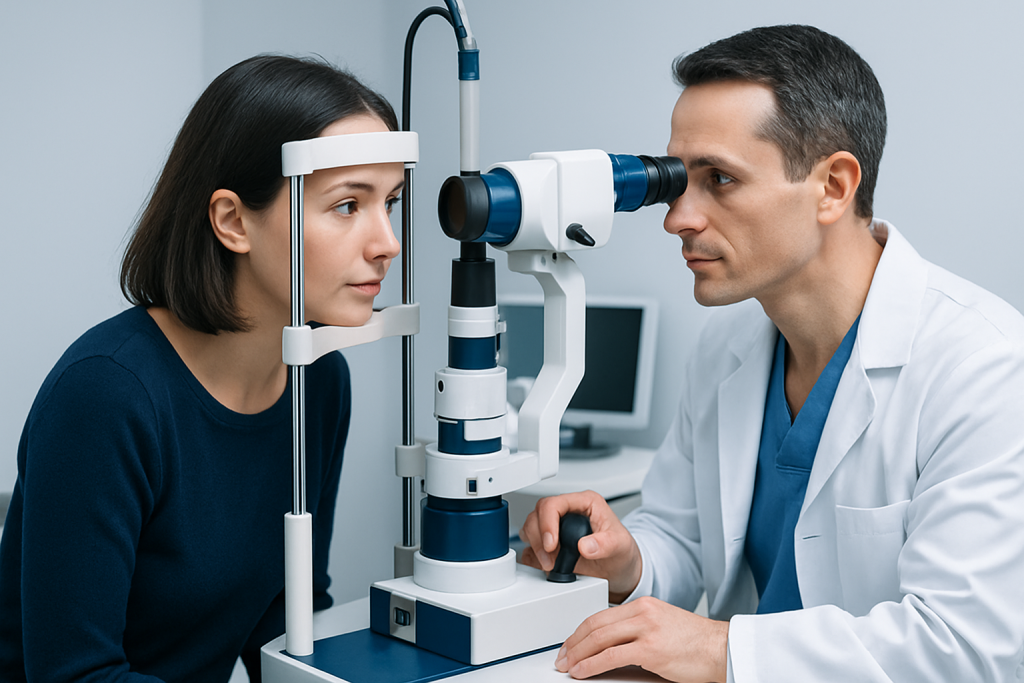
The key test is a dilated eye examination, which allows the retina and vitreous to be examined carefully. Eye drops widen the pupil so the doctor can look for a retinal tear, detachment, bleeding, or signs of inflammation. In some cases, imaging such as optical coherence tomography or ultrasound may be used if the view inside the eye is limited.
For patients coming from another country, it can help to bring a timeline of symptoms, a list of medications, and any previous eye records or surgical reports. This makes the consultation more efficient and can support a smoother follow-up plan after returning home. If a retinal problem is suspected, the doctor may recommend a rapid treatment pathway rather than waiting to “see if it settles.”
Treatment Options
Treatment depends entirely on the cause. If the flashes are due to posterior vitreous detachment and the retina is intact, no procedure may be needed right away. The doctor may recommend observation and repeat examinations because a small retinal tear can sometimes appear after the first visit.
If a retinal tear is found, treatment is usually aimed at sealing the tear before fluid can pass behind the retina. This may be done with laser therapy or a freezing treatment called cryopexy. If the retina has detached, surgery may be needed to reattach it and preserve vision. The exact approach depends on the location and extent of the detachment and the overall condition of the eye.
When flashes are related to migraine aura or another non-retinal cause, treatment focuses on the underlying issue rather than the symptom itself. That may include managing migraine triggers, reviewing medications, or addressing inflammation or infection if present. In every case, the plan should be individualized, because the same symptom can come from very different causes.
Patients receiving care away from home often benefit from a coordinated plan that explains what needs immediate treatment, what can be observed, and what follow-up is needed after travel. Acibadem Health Point’s multidisciplinary specialists and JCI-accredited hospitals diagnose and treat this condition for international patients with that kind of continuity in mind.
Prevention & Self-care
Not every cause of flashes can be prevented, especially when the issue is related to natural aging of the vitreous. Still, protecting the eyes and staying alert to change can reduce the chance of missing a more serious problem. The practical goal is early recognition rather than self-diagnosis.
People with risk factors should keep regular eye appointments, especially if they are highly myopic, diabetic, or have had prior retinal disease. Wearing eye protection during sports, home repairs, and other activities that could lead to injury is also sensible. If a person has ever had a retinal tear or detachment, they should understand their personal warning signs and follow the ophthalmologist’s instructions closely.
- Do not ignore new flashes, even if they seem mild
- Arrange routine eye checks if risk factors are present
- Use protective eyewear for activities with eye injury risk
- Keep diabetes and blood pressure well managed
- Seek prompt care if floaters or shadows appear with the flashes
Self-care is mostly about observation and caution. It is not a good idea to wait weeks in the hope that the symptom will disappear if the flashes are new, frequent, or accompanied by other visual changes. A timely eye exam is the safest form of “watchful waiting.”
When to See a Doctor
New flashes of light in eye should be evaluated promptly if they appear suddenly, occur repeatedly, or come with a shower of floaters. The urgency increases if the person notices a curtain, shadow, blurred side vision, or any decrease in central vision. Those symptoms can point to retinal tear or detachment, which should be assessed without delay.
Immediate medical attention is also important after eye trauma, even if the eye looks normal from the outside. People with known high myopia, previous retinal problems, or recent cataract surgery should be especially cautious. If there is uncertainty about whether the flashes are eye-related or part of a migraine aura, it is safer to have an eye exam than to assume they are harmless.
If symptoms are mild and clearly consistent with a previously diagnosed migraine pattern, the doctor may advise routine follow-up. But when the pattern is new or changing, the recommended next step is a comprehensive exam by an ophthalmologist or retina specialist. Vision is too important to leave to guesswork.
Frequently asked questions
01What do flashes of light in eye usually mean?
They often happen when the vitreous gel inside the eye pulls on the retina, which can occur with age. Sometimes they are harmless, but they can also signal a retinal tear or detachment. Because the same symptom can have different causes, a new flash pattern should be checked by an eye doctor.
02Are flashes of light in eye an emergency?
They can be urgent, especially if they start suddenly or come with many new floaters, a curtain over vision, or side vision loss. Those features may suggest retinal damage and should be assessed promptly. Flashes without other symptoms are less urgent, but they still deserve medical evaluation if they are new.
03Can migraines cause flashes of light?
Yes, migraine aura can cause shimmering lights, zigzags, or blind spots that may look different from eye-related flashes. Migraine aura often affects both eyes, although people may notice it more on one side. If the person is not sure, or if the pattern is different from usual, an eye exam is still wise.
04Will the flashes go away on their own?
Sometimes they do, especially if they are related to a vitreous change or migraine aura. Even so, improvement does not prove the cause is harmless. A doctor should confirm that the retina is safe, particularly when the flashes are new.
05What tests are done for flashes of light in eye?
The most important test is a dilated eye exam so the doctor can examine the retina and vitreous. Depending on the findings, imaging such as optical coherence tomography or ultrasound may be used. The goal is to rule out a retinal tear, detachment, or other eye disease.
06Can I travel if I have flashes of light in eye?
Travel may be possible if an eye specialist has ruled out urgent retinal problems and the symptoms are stable. If the flashes are new or accompanied by floaters or vision loss, it is better to be evaluated before leaving. International patients should carry their records so follow-up care can continue smoothly after travel.
This article is for general information only and is not a substitute for professional medical advice. Please consult a qualified doctor about your individual situation.
Explore treatments in Turkey — costs, top hospitals & a free quote
JCI-accredited · board-certified surgeons · reply within 24h
Add us as a Preferred Source to see more of our trusted health content across Google Search, AI Overviews and Discover.



How can we help you today?
Meet an Acibadem specialist by secure video, before you travel.
Book a video visit