

What Is Baby Grinding Teeth? A Complete Medical Guide

Key Takeaways
- Baby grinding teeth is often a temporary habit and is not always a sign of disease.
- Teething, new tooth alignment, stress, sleep changes, and certain airway issues can contribute.
- A child dentist can check for tooth wear, pain, jaw problems, and less common underlying causes.
- Simple home steps like comfort routines and sleep hygiene may help, but grinding should not be ignored if it is frequent or severe.
- Seek medical or dental advice sooner if there is pain, broken teeth, snoring, or concerns about breathing during sleep.
Baby grinding teeth, also called bruxism, is common in infants and young children and often settles on its own. In most cases it is linked to normal development, but persistent or painful grinding deserves a pediatric dental check.
Overview
Baby grinding teeth is the common term parents use when an infant or toddler clenches or rubs the teeth together, often during sleep. The medical term is bruxism. In many young children, it is a short-lived part of growth and does not lead to lasting problems.
For families, the first question is usually straightforward: is it normal? Often, yes. Babies and toddlers may grind because their teeth are erupting, their bite is changing, or they are exploring new jaw movements. Still, because the same behavior can sometimes be linked to discomfort, sleep issues, or dental wear, it is worth watching the pattern rather than dismissing it completely.
This guide explains what baby grinding teeth can mean, what signs deserve attention, and how parents can support a child’s oral health in a calm, practical way. It is especially useful for families who are balancing everyday childcare with travel, as a pediatric dental evaluation can be planned without needing to rush in every case.
Symptoms
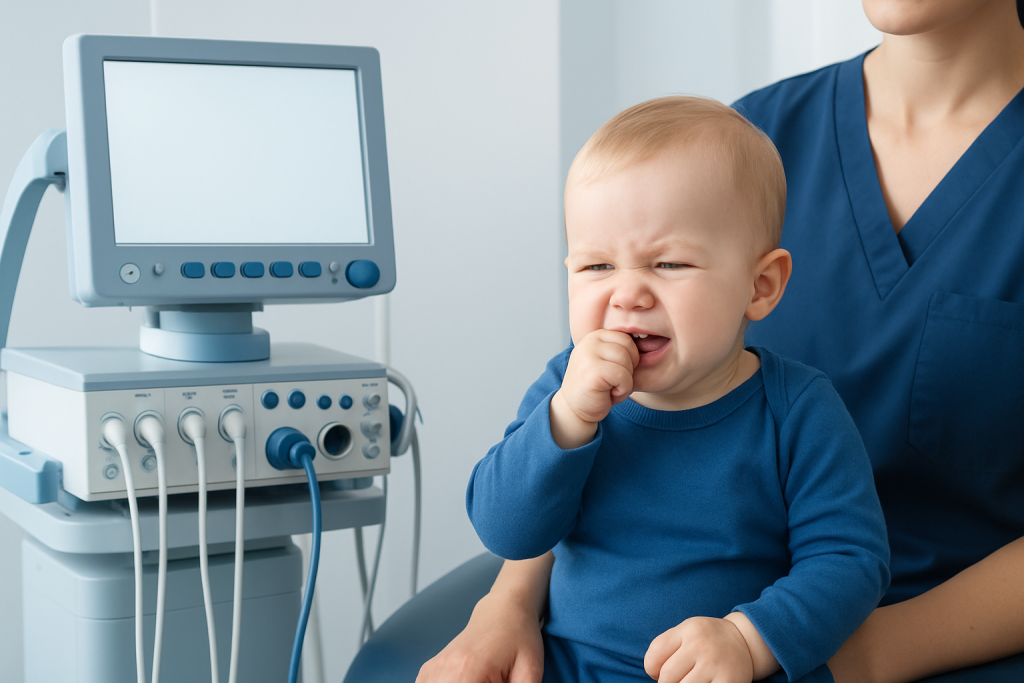
The most obvious sign is the sound or movement itself: the child rubs or clenches the teeth together, often during sleep. Some children grind only briefly, while others do it in repeated episodes. Parents may notice the sound on a baby monitor before they see any daytime behavior.
Other signs can appear if the grinding is frequent or strong. These may include worn or flattened tooth edges, tenderness when touching the jaw, a child who seems more irritable after sleep, or a complaint of mouth discomfort in older toddlers who can speak. In some children, the grinding is noticed together with mouth breathing, snoring, or restless sleep.
- Grinding mainly during sleep
- Jaw clenching or facial tension
- Tooth sensitivity or visible wear
- Interrupted sleep or restlessness
- Snoring or noisy breathing at night
It helps to remember that not every child can describe pain clearly. A change in feeding, refusal of harder foods, or repeated rubbing of the face may be a subtle clue that something is bothering the mouth or jaw.
Causes & Risk Factors

There is no single cause of baby grinding teeth. In many infants and young children, the behavior appears during periods of tooth eruption or as the bite develops and the upper and lower teeth begin to meet in new ways. The jaw is learning alignment, and the child may unconsciously test the feel of the teeth.
Some children grind when they are overtired, overstimulated, or adapting to changes in routine. Sleep disruption, anxiety, or temporary discomfort from illness may also play a role. In older children, jaw clenching can be associated with nasal congestion, enlarged tonsils, or other airway problems that affect sleep quality.
Less commonly, ongoing bruxism may be linked to dental misalignment, certain medications, neurologic conditions, or sleep-related disorders. Risk tends to be higher when multiple factors overlap, such as teething plus poor sleep or a habit that continues after a new set of teeth has erupted.
Parents do not need to assume a serious cause. The key is pattern recognition: how often it happens, whether it is new, whether it is affecting sleep, and whether the child seems comfortable during the day.
Diagnosis
Diagnosis usually begins with a careful history and an oral examination. A pediatric dentist will ask when the grinding happens, how long it has been going on, whether it occurs during sleep or waking hours, and whether there are signs of pain, tooth wear, or breathing concerns. If the child is very young, the discussion with parents becomes the main source of detail.
During the exam, the dentist looks at tooth surfaces, the bite, the jaw, and the soft tissues of the mouth. In some cases, no treatment is needed beyond observation. If the grinding is persistent or there are red flags, the dentist may check whether the teeth are developing normally or whether another condition, such as airway obstruction or a significant bite problem, needs attention.
Testing is not always required. Many children can be monitored over time, especially when the behavior is mild and there are no symptoms of pain or sleep disturbance. When other health concerns are suspected, the dental team may coordinate with a pediatrician or sleep specialist so the child receives a complete assessment rather than a narrow one.
Treatment Options
There is no one-size-fits-all treatment for baby grinding teeth because many children outgrow it. When the behavior is mild and the teeth are not being damaged, the most common approach is watchful waiting with regular dental follow-up. This is especially true in infants and toddlers whose grinding seems tied to teething or jaw development.
If a contributing factor is found, treatment focuses on that issue. For example, a child with nasal congestion or sleep-disordered breathing may need medical evaluation. If the grinding is linked to tooth alignment or dental sensitivity, the dentist may recommend closer monitoring or specific oral care. Mouth guards are not routinely used in very young children unless a specialist believes they are appropriate, because safety and fit must be considered carefully as the mouth grows.
For families traveling from another country, the practical advantage of seeing a pediatric dental team is continuity: the child can be assessed, a plan can be set, and follow-up recommendations can be shared clearly with the home doctor or dentist. At Acibadem Health Point, multidisciplinary specialists and JCI-accredited hospitals diagnose and treat this condition for international patients in a coordinated way.
In all cases, treatment should be gentle and age-appropriate. The goal is not to stop every sound overnight, but to protect the teeth, ease discomfort, and make sure nothing more significant is being missed.
Prevention & Self-care
Parents can often reduce triggers by keeping routines steady and calming the child before sleep. A predictable bedtime, reduced overstimulation in the evening, and a comfortable sleep environment may help. For babies, meeting feeding and comfort needs promptly can also reduce fussiness that sometimes accompanies nighttime jaw activity.
Oral hygiene matters even in the earliest years. Gentle cleaning of the gums and teeth, age-appropriate fluoride guidance from a dentist or pediatrician, and regular checkups all support healthy development. If a child is old enough to chew a wider variety of foods, offering balanced nutrition and avoiding very hard objects that could stress the teeth is sensible.
Parents should avoid trying to force a child to stop grinding by scolding or using harsh methods. The behavior is usually not intentional. A calmer approach is to observe the pattern, note any sleep or breathing symptoms, and share those details with the child’s dentist.
- Keep sleep routines consistent
- Reduce evening overstimulation
- Maintain regular dental checkups
- Watch for snoring or mouth breathing
- Prevent chewing on hard objects
When to See a Doctor
A dental visit is a good idea if baby grinding teeth is frequent, loud, or continuing beyond the early teething years. It is also wise to seek advice if the child seems uncomfortable, has visible tooth wear, or has trouble eating certain textures. Early assessment is usually simple and reassuring.
Parents should arrange a medical or dental review sooner if grinding is paired with snoring, pauses in breathing, persistent mouth breathing, daytime sleepiness, or repeated waking. These signs can point to a sleep-related or airway issue that deserves attention. Jaw swelling, broken teeth, or signs of infection also require prompt care.
If the family is planning care while abroad, it can help to gather a short record of when the grinding happens, how often it occurs, and any associated symptoms. That information makes the consultation more efficient and helps the specialist decide whether monitoring or further evaluation is the right next step.
Living With Baby Grinding Teeth
For most families, the best course is a combination of observation and reassurance. Baby grinding teeth often improves as the child grows, the bite matures, and sleep becomes more stable. A child who is otherwise thriving, eating well, and sleeping normally may simply need routine follow-up.
What matters most is balance: take the habit seriously enough to notice patterns, but not so seriously that every episode feels alarming. A pediatric dentist can help parents judge whether the grinding is a normal phase or part of something that needs treatment. With the right guidance, most children continue growing comfortably and safely.
When questions persist, especially if the child is traveling with family or receiving care in a new country, a coordinated pediatric dental assessment can provide clarity and a plan that fits the child’s age and needs.
Frequently asked questions
01Is baby grinding teeth normal?
Yes, it can be normal, especially during teething or as a child’s bite develops. Many babies and toddlers outgrow it without treatment. It is still worth mentioning to a pediatric dentist if it happens often or seems uncomfortable.
02Why does my baby grind teeth in sleep?
Sleep grinding may happen because of teething, jaw development, or brief sleep disruption. In some children, it is associated with nasal congestion or other breathing-related sleep issues. A pattern that includes snoring or restless sleep deserves a closer look.
03Can baby grinding teeth damage the teeth?
Mild, short-term grinding often does not cause lasting harm. Strong or persistent grinding can sometimes wear tooth surfaces or irritate the jaw. A dentist can check whether the teeth look healthy and whether follow-up is needed.
04Should my child wear a mouth guard?
Mouth guards are not routinely used for infants and very young children because fit and safety must be considered carefully. A pediatric dentist would decide if any protective device is appropriate based on age, tooth development, and the severity of grinding. Most children do not need one.
05Does teething always cause grinding?
No, teething does not always cause grinding, and grinding does not always mean teething. It is one possible explanation among several. If the habit continues after teething or comes with other symptoms, it is sensible to ask a doctor or dentist.
06When should parents be concerned?
Concern rises if the grinding is frequent, causes pain, wears down teeth, or occurs with snoring, mouth breathing, or pauses in breathing. A child who has broken teeth or seems unwell should be assessed promptly. When in doubt, a pediatric dental visit is the safest next step.
This article is for general information only and is not a substitute for professional medical advice. Please consult a qualified doctor about your individual situation.
Explore treatments in Turkey — costs, top hospitals & a free quote
JCI-accredited · board-certified surgeons · reply within 24h
Add us as a Preferred Source to see more of our trusted health content across Google Search, AI Overviews and Discover.


