

What Is Dead Tooth? A Complete Medical Guide

Key Takeaways
- A dead tooth is usually a tooth whose inner pulp has died or become nonvital.
- Color change, pain when biting, swelling, or a lingering toothache may be warning signs.
- Common causes include deep decay, trauma, cracks, and untreated infection.
- Treatment often involves root canal therapy, and in some cases extraction and replacement.
- Early dental assessment can help preserve the tooth and reduce the risk of complications.
A dead tooth is a tooth that has lost its blood supply and nerve function, usually after injury or deep decay. It may turn darker, become sensitive or painful, or sometimes cause no symptoms at all, so dental evaluation matters even when the problem seems mild.
Overview
A dead tooth is a tooth whose inner living tissue, called the pulp, has lost its blood supply and nerve function. In practical terms, this means the tooth is no longer healthy from the inside, even if it may still look intact from the outside. Many people first notice a dead tooth because the tooth changes color, becomes sensitive, or starts to feel different from nearby teeth.
This condition is also described as a nonvital tooth or an avulsed tooth that has become compromised after trauma, but the exact meaning depends on the cause. A dead tooth does not always cause immediate pain, which is why it can be overlooked until a dental examination or an X-ray shows the underlying issue. Understanding what it is, and what it is not, helps patients make timely decisions about treatment.
For international patients planning care abroad, a dead tooth is usually straightforward to assess with a clinical exam and imaging. The key is not to wait for the problem to spread to the surrounding gums or jawbone, since treatment is generally simpler when the tooth is still restorable.
Symptoms

Symptoms can vary widely. Some dead teeth are almost silent, while others produce clear warning signs. A tooth may darken to gray, yellow, brown, or black as the inside of the tooth changes after blood flow is lost. This discoloration is often one of the first visible clues.
Other common symptoms include pain when chewing, tenderness to touch, sensitivity to hot or cold, or a dull ache that comes and goes. In some cases, the tooth may feel slightly loose, the gum around it may swell, or a small pimple-like bump may appear near the root because of infection drainage.
- Tooth discoloration that does not match nearby teeth
- Pain when biting or chewing
- Swelling around the gum or face
- Bad taste or odor if infection is present
- Sometimes no symptoms at all
Because symptoms may be subtle, a tooth that looks only mildly changed should still be checked. A tooth that seems “fine” on the surface can still have significant pulp damage underneath.
Causes & Risk Factors
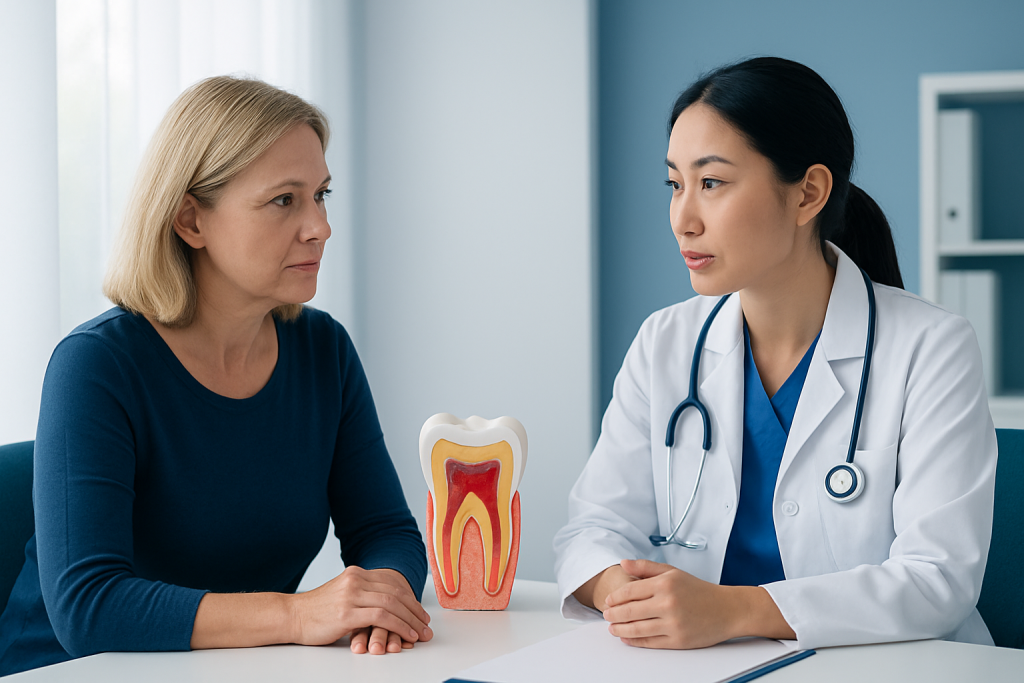
The most common cause of a dead tooth is trauma. A hard impact from sports, a fall, a car accident, or even biting down on something unexpectedly hard can injure the pulp and interrupt blood flow. Sometimes the tooth survives the initial injury but gradually loses vitality over time.
Deep tooth decay is another major cause. When cavities are left untreated, bacteria can reach the pulp and trigger inflammation, infection, and eventual tissue death. Repeated dental work on the same tooth, a severe crack, or an advanced gum and bone infection can also damage the tooth’s internal structures.
Certain factors can raise the chance of a tooth becoming nonvital, including a history of dental trauma, untreated cavities, enamel cracks, grinding or clenching, and delays in dental care. Children and adults alike can be affected, especially when a tooth has been injured but not fully evaluated after the event.
Diagnosis
Diagnosis begins with a dental examination and a careful review of the patient’s symptoms and dental history. The dentist may ask when the tooth changed color, whether there was an injury, and whether the tooth reacts to temperature or pressure.
Several tests may be used to determine whether the pulp is still alive. These can include a cold test, an electric pulp test, tapping the tooth, and checking for tenderness in the surrounding tissues. Dental X-rays are often important because they can reveal infection at the root tip, bone changes, or damage that is not visible during the exam.
In some cases, more than one visit is needed before the diagnosis is fully clear, especially after trauma. A tooth that has recently been injured may need follow-up testing because pulp status can change over time. This is one reason dentists often recommend monitoring after dental trauma, even when the tooth initially feels normal.
Treatment Options
Treatment depends on whether the tooth can be saved and whether infection is present. If the dead tooth is structurally sound enough to preserve, root canal treatment is often the main option. During this procedure, the damaged pulp is removed, the inside of the tooth is cleaned and shaped, and the space is sealed to prevent further infection.
After a root canal, the tooth may need a filling or crown to restore strength and appearance. If the tooth has become badly fractured, severely infected, or too weak to repair, extraction may be recommended. In that situation, replacement options such as a dental implant, bridge, or partial denture can be discussed based on the patient’s overall oral health and goals.
When discoloration is the main concern after the tooth has been treated, cosmetic options may also be considered. These can include internal bleaching in selected cases or external restorative treatment. The best choice depends on the tooth’s condition, the bite, and the long-term plan for protection.
For patients traveling from another country, treatment planning often benefits from a coordinated approach. A dentist may first stabilize the tooth, then schedule definitive care in a way that fits travel timing and follow-up needs.
Prevention & Self-care
Not every dead tooth can be prevented, especially when trauma is involved, but the risk can often be lowered. Wearing a mouthguard during contact sports, treating cavities early, and addressing cracked teeth promptly all help protect the pulp. Regular dental checkups are especially valuable because they can detect problems before the tooth becomes nonvital.
Self-care matters after treatment as well. Patients are generally advised to keep the area clean, brush gently but thoroughly, and follow the dentist’s instructions about eating, oral hygiene, and follow-up visits. If a temporary restoration or crown has been placed, protecting that tooth from hard foods may be important until the final repair is completed.
It is also wise to avoid using a damaged tooth as a tool for biting hard objects, opening packages, or chewing ice. Small habits like these can contribute to cracks that later allow bacteria to reach the pulp.
When to See a Doctor
A dentist should evaluate any tooth that changes color, becomes painful, or feels different after an injury. Even if the pain is mild or comes and goes, early assessment can help determine whether the pulp is still healthy and whether the tooth can be preserved.
Prompt care is particularly important if there is swelling, fever, facial pain, pus, or difficulty chewing. These signs may suggest infection that needs treatment rather than watchful waiting. A tooth that has been knocked loose, partially displaced, or recently injured should also be assessed as soon as possible.
Patients who are coordinating care from abroad should share any prior dental records, X-rays, and details of previous trauma or treatment. Acibadem Health Point’s multidisciplinary specialists and JCI-accredited hospitals can help international patients diagnose and treat dead tooth cases with coordinated dental care and follow-up planning.
Living With a Dead Tooth: What Patients Should Expect
A dead tooth does not always mean immediate emergency care, but it does mean the tooth needs professional attention. Some patients are surprised when they learn a tooth can stay in place for a while even after the pulp has died. The important point is that the tooth still requires treatment because the inside of the tooth cannot heal on its own once vitality is lost.
After diagnosis, the next steps usually focus on preserving function, stopping infection, and restoring appearance. The outlook is often very good when the tooth is treated early and the restoration is maintained properly. In many cases, a treated dead tooth can continue to function for years with normal dental care and regular monitoring.
The most helpful mindset is simple: color change, discomfort, or a history of trauma should not be ignored. A timely dental visit can turn a confusing problem into a manageable one.
Frequently Asked Questions
Below are answers to common questions people ask when they first hear the phrase “dead tooth.” These responses are meant to clarify the condition, but they do not replace an individual dental assessment.
Frequently asked questions
01What is a dead tooth in simple terms?
A dead tooth is a tooth whose inner pulp has lost its blood supply and nerve function. It may still remain in the mouth, but it is no longer healthy inside and usually needs dental treatment.
02Does a dead tooth always hurt?
No. Some dead teeth cause pain, but others are painless and only show color change or subtle bite discomfort. That is why a dental exam is important even if symptoms seem mild.
03Can a dead tooth be saved?
Often, yes. If the tooth can still be restored, root canal treatment and a protective restoration may save it. The dentist will assess whether the tooth is strong enough for repair.
04Why does a dead tooth turn dark?
As the tooth loses vitality, blood and tissue breakdown products can change the tooth’s color from within. This can make the tooth appear gray, brown, yellow, or black compared with the neighboring teeth.
05Is a dead tooth dangerous if left untreated?
It can become a problem if bacteria spread from the damaged pulp into the root and surrounding tissues. That may lead to infection, swelling, or bone damage, so evaluation is recommended.
06Do all dead teeth need to be removed?
No. Many dead teeth are treated with root canal therapy and then restored. Extraction is usually considered only when the tooth cannot be repaired or the infection is too advanced.
This article is for general information only and is not a substitute for professional medical advice. Please consult a qualified doctor about your individual situation.
Explore treatments in Turkey — costs, top hospitals & a free quote
JCI-accredited · board-certified surgeons · reply within 24h
Add us as a Preferred Source to see more of our trusted health content across Google Search, AI Overviews and Discover.


