What Is Baby Acne? A Complete Medical Guide

Key Takeaways
- Baby acne usually appears as small red or white bumps on a newborn’s face, especially the cheeks, forehead, or chin.
- It is common and often clears without treatment as the baby’s skin matures.
- Harsh washing, scrubbing, and acne products meant for older children or adults can irritate delicate infant skin.
- Persistent, widespread, or pus-filled rashes may need a medical evaluation to rule out another condition.
- Gentle skin care and observation are usually enough, unless the rash changes or the baby seems unwell.
Baby acne is a common, usually harmless skin condition that can appear in the first weeks or months of life. It often resolves on its own, but parents may still want to know how to recognize it, care for the skin gently, and know when a doctor should check it.
Overview
Baby acne is a common skin condition seen in newborns and young infants. It usually looks like tiny red bumps, whiteheads, or a mix of both on the face, most often on the cheeks, forehead, or chin. In many babies, it appears in the first few weeks after birth and fades on its own as the skin settles.
For parents, the word “acne” can sound more serious than it usually is in this setting. Baby acne is not the same as teenage acne, and it does not mean the baby has poor skin health or will later have acne problems. In most cases, it is a temporary response of very young skin as it adapts to life outside the womb.
Because several newborn rashes can look similar, it helps to understand the basic pattern. A doctor may distinguish baby acne from conditions such as milia, heat rash, eczema, or infection by looking at where the bumps are, how they feel, and whether the baby has any other symptoms.
Symptoms
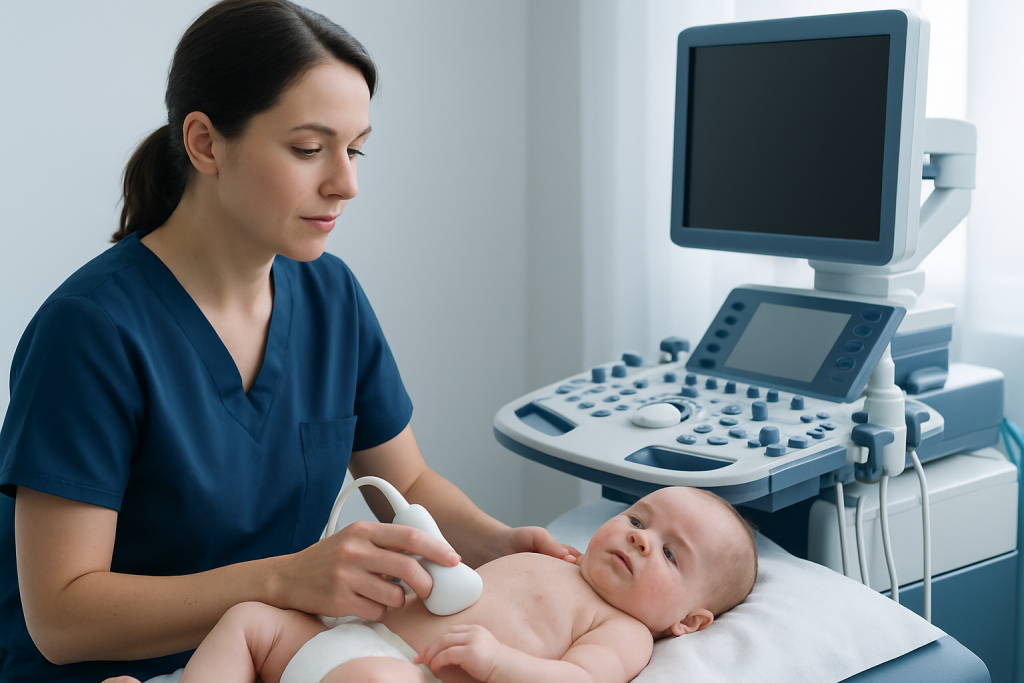
Baby acne usually shows up as small raised bumps on the face. These may be red, skin-colored, or have a white tip. The bumps are often most visible when the baby is warm, fussy, or just after a feeding, which can make the skin look temporarily more flushed.
The rash is commonly centered on the cheeks, but it can also appear on the forehead, nose, scalp, or chin. Some babies have only a few spots, while others develop a broader cluster. The surrounding skin may look slightly irritated, but the baby typically seems well and comfortable.
It is useful to note what baby acne usually does not cause. It generally does not lead to fever, poor feeding, marked swelling, or significant discomfort. If a rash is rapidly spreading, crusting heavily, bleeding, or accompanied by illness, another cause should be considered.
Causes & Risk Factors
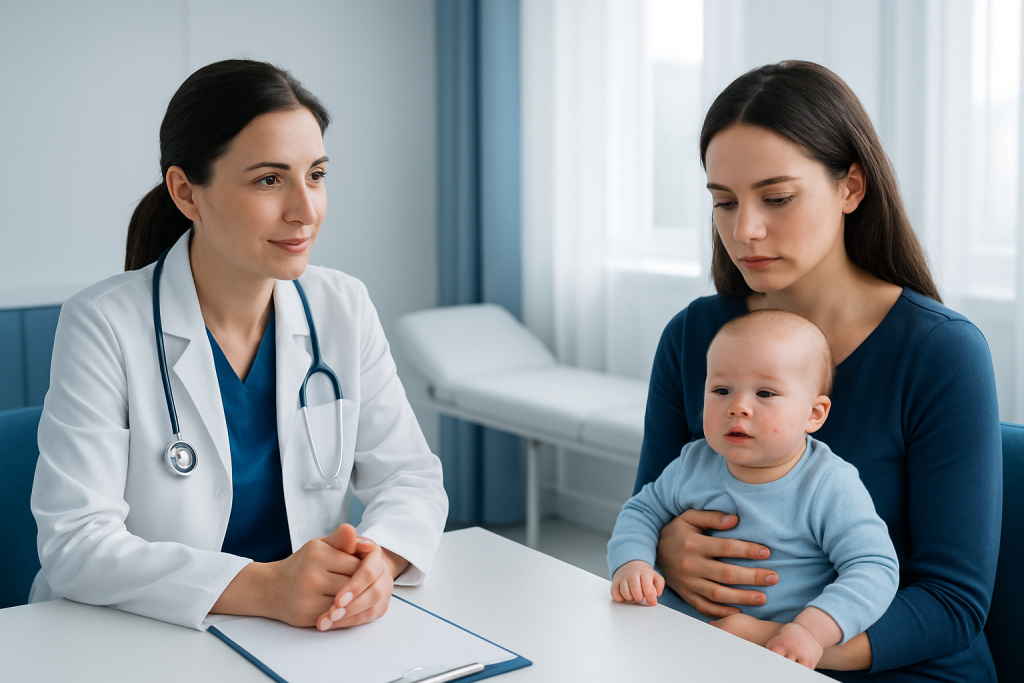
The exact cause of baby acne is not always clear. One common explanation is that maternal hormones may briefly affect the baby’s oil glands after birth, leading to small breakouts on sensitive skin. Another factor is that newborn skin is still developing its barrier function and can react easily to heat, moisture, and friction.
Baby acne is not caused by dirty skin, and it is not a sign that the baby is being bathed too little or too much. Parents sometimes worry that a change in formula, breastfeeding, or a skincare product must be responsible, but in many cases the acne appears without an obvious trigger.
Some babies may be more likely to notice rashes on the face because their skin is naturally delicate and frequently exposed to saliva, milk, fabric, and wiping. However, baby acne can happen in many healthy infants, and it is usually a short-lived part of early skin development rather than a lasting problem.
Diagnosis
Diagnosis is usually made by simple visual examination. A pediatrician or dermatologist will look at the rash’s appearance, location, and timing, and will ask whether the baby has any other symptoms. In most cases, no tests are needed.
Sometimes the more important task is distinguishing baby acne from other newborn skin conditions. For example, milia are tiny white cysts that do not look inflamed, heat rash tends to appear in sweaty areas, and eczema often causes dry, rough, itchy patches. A clinician may also consider infection if the skin looks warm, tender, or oozing.
Parents seeking care from another country or while traveling may find it helpful to bring clear photos taken over several days, since newborn rashes can change quickly. A good photo record can help the clinician understand whether the rash is improving, stable, or developing features that need closer attention.
Treatment Options
Most cases of baby acne do not need medication. The skin usually improves on its own, so the main approach is gentle care and patience. Doctors commonly recommend washing the face with lukewarm water and a mild, fragrance-free cleanser if needed, then patting the skin dry rather than rubbing it.
It is best to avoid over-the-counter acne creams, exfoliants, alcohol-based products, and oils unless a clinician specifically advises them. Infant skin can become irritated easily, and products designed for older children or adults are not appropriate for routine baby acne care.
If the rash is severe, unusual, or persistent, a doctor may look for another diagnosis or recommend a targeted treatment. In that situation, the plan depends on the actual cause, not on the label “baby acne.” This is one reason an in-person assessment can be helpful when the appearance is not typical or when the baby’s skin is not improving as expected.
- Use gentle, non-perfumed skin care products
- Wash only as needed with lukewarm water
- Avoid scrubbing, picking, or squeezing bumps
- Keep blankets, hats, and clothing soft and breathable
- Seek medical advice before using any medicated cream
Prevention & Self-care
There is no guaranteed way to prevent baby acne, because it often reflects normal newborn skin changes rather than a specific exposure. Still, a gentle routine can reduce irritation and help the skin settle comfortably. Fewer products usually means less chance of unnecessary redness.
Parents can support the skin by keeping baths short, using mild cleansers sparingly, and avoiding layered fragrances, scrubs, or adult skincare products. Clothing and bedding that are soft, clean, and breathable can also help limit friction and heat buildup on the face.
It can be reassuring to remember that baby acne is often temporary. A calm “watch and care” approach works for many families, especially when the baby is feeding well, growing normally, and otherwise acting like a healthy newborn. If parents are unsure whether a rash is truly baby acne, a pediatric visit can provide clarity and peace of mind.
When to See a Doctor
Medical review is a good idea if the rash does not look like typical baby acne, keeps spreading, or lasts much longer than expected. A doctor should also evaluate the skin if the bumps become very red, swollen, crusted, painful, or filled with pus. These features may point to another skin condition.
Parents should seek prompt advice if the baby develops a fever, seems unwell, feeds poorly, has swelling around the eyes, or shows signs of infection such as warmth or discharge from the rash. Newborn skin can change quickly, and it is always reasonable to ask for help when the baby’s overall condition changes along with the rash.
For families planning care across borders, a pediatric or dermatology consultation can be coordinated before travel or after arrival, depending on the situation. Acibadem Health Point’s multidisciplinary specialists and JCI-accredited hospitals diagnose and treat skin conditions for international patients, with follow-up planning designed to fit the family’s journey home.
Frequently asked questions
01What is baby acne exactly?
Baby acne is a common newborn skin condition that causes small red or white bumps, usually on the face. It is generally harmless and often clears without treatment as the skin matures.
02How long does baby acne last?
In many babies, it improves within weeks to a few months. The exact timeline varies, but it usually resolves on its own without leaving a problem behind.
03Should baby acne be washed more often?
Not usually. Gentle cleansing once a day or as needed is generally enough, and over-washing can irritate delicate infant skin.
04Can breast milk or formula cause baby acne?
Baby acne is not typically caused by breastfeeding or formula. It is more often related to normal newborn skin changes and temporary hormone effects.
05Is baby acne the same as eczema or heat rash?
No, these are different conditions even if they can look similar at first. Eczema often looks dry and itchy, while heat rash tends to appear in sweaty areas; a doctor can help tell them apart.
06When should parents worry about a newborn rash?
Parents should seek medical advice if the rash is widespread, painful, crusted, pus-filled, or linked with fever or poor feeding. Those signs suggest the rash may not be simple baby acne.
This article is for general information only and is not a substitute for professional medical advice. Please consult a qualified doctor about your individual situation.
Hair transplant in Turkey — costs, graft counts & a free assessment
JCI-accredited · board-certified surgeons · reply within 24h
Add us as a Preferred Source to see more of our trusted health content across Google Search, AI Overviews and Discover.