What Is a Stent and How Does Stent Placement Work?

A stent is a small expandable tube, most often placed inside a narrowed coronary artery to help restore blood flow to the heart muscle. Stent placement is commonly performed during angioplasty and requires careful follow-up, including prescribed antiplatelet medicines.
What is a stent?
A stent is a small tube placed inside a narrowed or blocked body passage to keep it open. In cardiology, the term usually refers to a coronary stent: a tiny expandable metal mesh tube placed in an artery that supplies blood to the heart. It is typically inserted during angioplasty, also called percutaneous coronary intervention (PCI).
Most coronary stents used today are drug-eluting stents. These slowly release medicine that helps reduce scar tissue growth inside the artery, lowering the chance that the treated area narrows again. A stent improves blood flow at one specific narrowing, but it does not remove the underlying tendency to develop atherosclerosis, or fatty plaque buildup, elsewhere in the arteries.
Stents can also be used in other parts of the body, such as blood vessels in the legs, bile ducts, airways, ureters, or the esophagus. The reason for placement, expected benefits, and recovery differ by location. This article focuses mainly on coronary stents used for heart artery disease.
How a coronary stent works
Coronary artery disease develops when plaque narrows the arteries that bring oxygen-rich blood to the heart. When a narrowing significantly limits blood flow, it can cause angina, often described as pressure, tightness, heaviness, or discomfort in the chest. A sudden clot forming over a ruptured plaque can completely block blood flow and cause a heart attack.
During angioplasty, a cardiologist guides a thin catheter through an artery in the wrist or groin to the heart. A small balloon is inflated at the narrowed segment to widen it. The stent, mounted around the balloon, expands with it and remains in place as a scaffold to support the artery wall. Blood can then flow more freely through that section.
A stent may relieve symptoms and, in a heart attack, quickly restoring blood flow can limit heart muscle damage. However, treatment decisions are individualized. Some people with stable symptoms benefit most from medicines and lifestyle measures, while others need PCI or coronary artery bypass surgery. Coronary artery disease should be assessed in the context of symptoms, test results, overall health, and the pattern of artery narrowing.
Who may be a candidate for stent placement?
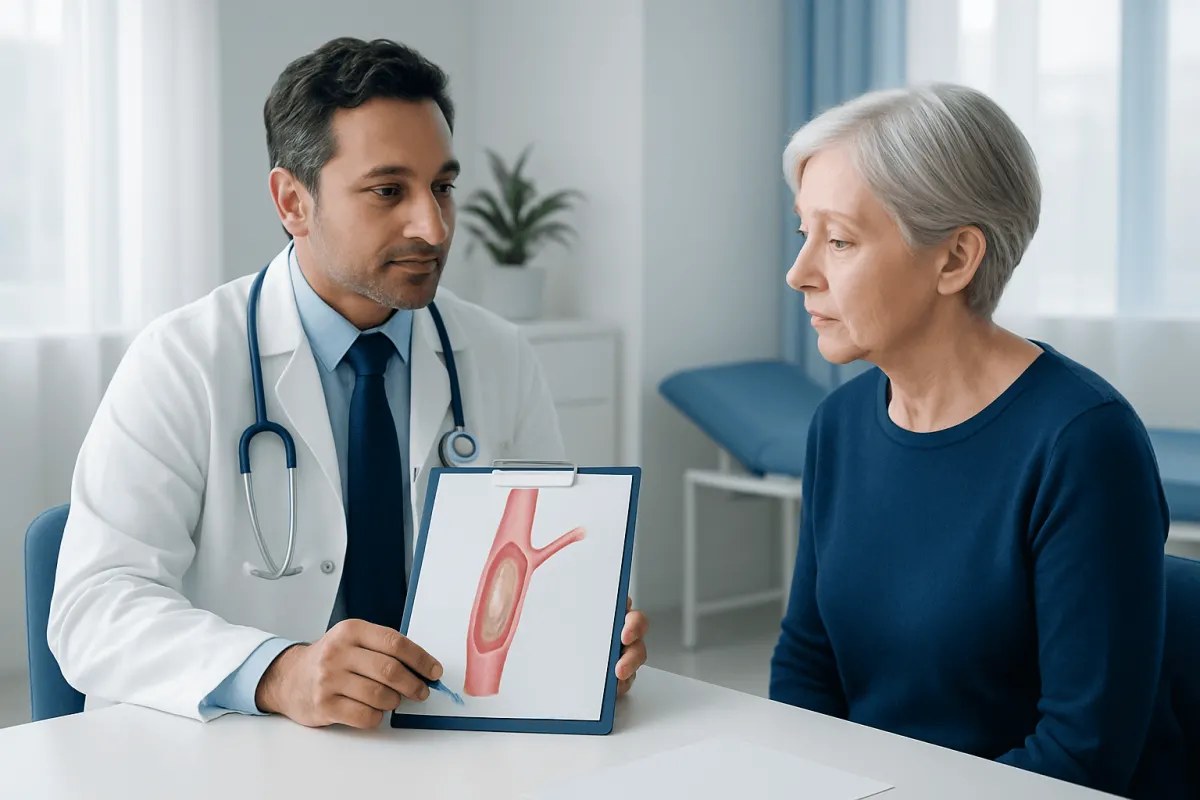
A doctor may recommend stent placement when testing shows a coronary narrowing that is likely responsible for symptoms or is reducing blood flow to heart muscle. Common reasons include persistent angina despite appropriate medicines, an abnormal stress test with relevant artery disease, or acute coronary syndrome, which includes unstable angina and heart attack.
Before recommending a procedure, the care team considers the number and location of narrowed arteries, how severe the narrowing is, heart pumping function, kidney function, bleeding risk, other health conditions, and a person’s preferences. Coronary angiography, an X-ray test using contrast dye, often identifies the narrowed area. In selected cases, specialized measurements inside the artery help determine whether a narrowing is limiting blood flow enough to treat.
Not every blockage needs a stent. Very complex or widespread disease, especially involving several major arteries or the main coronary artery, may be better managed with medication, surgery, or another approach. A cardiologist can explain whether coronary angioplasty with stenting is appropriate and what alternatives may offer.
Stent placement: step-by-step
Preparation commonly includes a review of medicines, allergies, kidney health, blood tests, and fasting instructions. The patient is asked to report blood thinners, diabetes medicines, prior reactions to contrast dye, and any chance of pregnancy. Medication changes should only be made under the instructions of the treating team.
In the procedure room, monitoring pads are placed to track heart rhythm, blood pressure, and oxygen levels. The wrist or groin is cleaned, numbed with local anesthetic, and used to access an artery. Most people remain awake; some receive medication to help them relax. The cardiologist advances a catheter to the coronary arteries and uses contrast dye and X-ray imaging to view blood flow.
If a stent is needed, a guidewire crosses the narrowing, followed by a balloon and stent. The balloon expands the stent against the artery wall and is then removed. The stent stays permanently in the artery. The access site is closed with pressure or a closure device, and the patient is observed while the team checks the heart rhythm, circulation, and puncture site.
Patients are often prescribed antiplatelet medicines after the procedure. These medicines reduce the risk of a clot forming in the new stent. They must not be stopped early or changed without speaking to the cardiologist, even if a dental procedure or another operation is planned.
How long is bed rest after a stent?
Bed rest after a stent depends mainly on where the catheter entered the body and how the access site was closed. With wrist access, many people can sit up and walk relatively soon after the procedure, although the wrist must be protected and heavy lifting avoided for a short period. With groin access, lying flat for several hours may be necessary to reduce bleeding risk.
The hospital team provides specific timing based on the procedure, medicines used, and any individual concerns such as bleeding or low blood pressure. Nurses regularly check the access site, pulse, blood pressure, and comfort during this observation period. Patients should tell staff promptly if they notice warmth, swelling, bleeding, numbness, or increasing pain in the arm or leg used for access.
Once home, gentle walking is often encouraged unless the cardiologist advises otherwise. Rest is still important on the first day, particularly after a groin procedure. Activity should increase gradually rather than returning immediately to strenuous exercise or physically demanding work.
How painful is getting a stent put in?
Stent placement is generally not described as painful, although it can be uncomfortable. The local anesthetic used at the wrist or groin may briefly sting, and patients may feel pressure while the catheter is introduced. Sedation can help reduce anxiety and promote comfort, but most people can still communicate with the team.
When contrast dye is injected, a temporary warm or flushed sensation can occur. Inflating the balloon may briefly reproduce chest pressure, especially if the artery is very narrowed, but this is usually short-lived and should be reported immediately. The team closely monitors symptoms and can provide treatment if discomfort occurs.
Afterward, mild tenderness or bruising at the access site is common. Severe or worsening pain, a rapidly enlarging lump, persistent bleeding, a cold or pale hand or foot, or chest symptoms should be assessed urgently. Pain experiences vary, and patients should discuss concerns about comfort or sedation before the procedure.
Recovery timeline, benefits and possible risks
How soon can you go home after stent placement? After an uncomplicated planned procedure, some people go home later the same day, while others stay overnight for monitoring. A stent placed during a heart attack, a complex intervention, medical conditions requiring observation, or concerns at the access site can mean a longer hospital stay.
During the first few days, fatigue and mild bruising may occur. Many people return to routine light activities within several days, but driving, work, exercise, travel, bathing, and lifting limits should follow the cardiologist’s individualized instructions. Cardiac rehabilitation may provide supervised exercise, education, and support for long-term heart health.
Benefits can include improved blood flow, relief of angina, better ability to be active, and emergency treatment of a heart attack. Risks are uncommon but can include bleeding, bruising, artery injury, kidney effects from contrast dye, allergic reaction, heart rhythm changes, heart attack, stroke, infection, or a blood clot in the stent. Restenosis, or repeat narrowing, can also happen over time.
Long-term care remains important after a successful procedure. Controlling blood pressure, cholesterol, diabetes, smoking, diet, physical activity, and stress helps protect the heart. Cardiac rehabilitation can help people safely build these habits after a cardiac event or intervention.
What should you not do after having a stent put in?
After coronary stent placement, patients should not stop aspirin, a P2Y12 inhibitor, or any other prescribed antiplatelet medicine unless their cardiologist specifically says it is safe. Stopping these medicines prematurely can lead to a dangerous clot within the stent. Before any surgery, endoscopy, dental work, or new medication, patients should inform the relevant clinician that they have a stent and ask the cardiology team for advice.
For the first days after the procedure, people should avoid strenuous activity, heavy lifting, and repetitive forceful use of the wrist or leg used for access. They should also avoid smoking and nicotine products, which increase cardiovascular risk. Alcohol may interact with medicines or affect recovery, so individualized medical advice is appropriate.
It is also important not to ignore recurring symptoms. A stent treats a particular narrowed segment, but new plaque can develop elsewhere. Follow-up appointments, prescribed cholesterol-lowering treatment, healthy eating, regular activity once cleared, and management of diabetes or high blood pressure all remain central to recovery.
Acıbadem Health Point’s multidisciplinary specialists at JCI-accredited hospitals evaluate and treat coronary artery disease for international patients, with care plans based on individual clinical needs.
When to seek medical care
Emergency care is needed for chest pressure, pain, or tightness that is severe, new, persistent, or associated with shortness of breath, sweating, nausea, fainting, or pain spreading to the arm, jaw, back, or shoulder. These symptoms can indicate a heart emergency and should not be managed by waiting at home or driving oneself to hospital.
After stent placement, urgent assessment is also needed for bleeding that does not stop with firm pressure, rapidly growing swelling at the access site, severe pain or numbness in the accessed limb, fever with worsening redness or drainage, or new weakness, speech difficulty, or facial drooping. For non-urgent questions about bruising, activity, medicines, or follow-up, the treating cardiology team is the best first contact.
Regular follow-up helps ensure symptoms, medicines, risk factors, and recovery goals are reviewed. Patients should bring an updated medication list and report any side effects, recurrent angina, or difficulty taking medicines as prescribed.
Frequently asked questions
01Is a stent the same as angioplasty?
No. Angioplasty is the catheter-based procedure used to widen a narrowed artery, usually with a small balloon. A stent is the mesh tube that may be placed during angioplasty to help keep the artery open.
02How long does a coronary stent last?
A coronary stent is designed to remain in the artery permanently. The treated artery can narrow again in some cases, and new plaque can develop in other arteries, so ongoing medication and heart-healthy habits remain important.
03Can a person have more than one stent?
Yes. More than one stent may be placed if there are several suitable narrowings in one or more coronary arteries. Whether this is appropriate depends on the location and complexity of disease and the person’s overall health.
04Can a stent move after it is placed?
Once expanded correctly, a coronary stent is pressed into the artery wall and does not normally move. The main concern after placement is not movement but clot formation or repeat narrowing, which is why prescribed antiplatelet medicines and follow-up are important.
05Can someone exercise after a stent?
Most people can return gradually to physical activity after clearance from their cardiology team. The timing depends on why the stent was placed, the access site, symptoms, and any heart damage; cardiac rehabilitation may offer a safe, structured way to resume exercise.
06What foods should be avoided after a stent?
There is no single food that must be avoided solely because of a stent, but a heart-healthy eating pattern is recommended. Limiting foods high in saturated fat, trans fat, salt, and added sugars while emphasizing vegetables, fruit, whole grains, legumes, and lean protein can support cardiovascular health.
This article is for general information only and is not a substitute for professional medical advice. Please consult a qualified doctor about your individual situation.
Heart care in Turkey — expert evaluation and treatment
JCI-accredited · board-certified surgeons · reply within 24h
Add us as a Preferred Source to see more of our trusted health content across Google Search, AI Overviews and Discover.