What Is a Dental Crown on Implant and When Is It Placed?

A dental crown on implant is the custom-made visible tooth attached to a dental implant after healing. It is usually placed once the implant has integrated with the jawbone and the gum tissue is healthy enough to support a natural-looking, functional result.
Overview: What Is a Dental Crown on Implant?
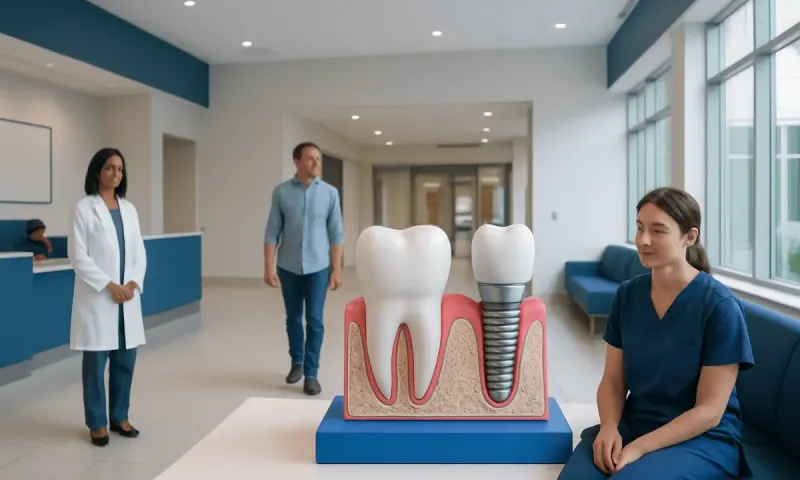
A dental crown on implant is the visible replacement tooth attached to a dental implant. The implant itself is a small post, usually made of titanium or another biocompatible material, that is placed into the jawbone to act like an artificial tooth root. Once healing is complete, a custom-made crown is fixed on top so the tooth can look and function more naturally.
This type of restoration is commonly used when a person has lost a single tooth and wants a stable, fixed replacement that does not rely on neighboring teeth for support. Unlike a traditional bridge, an implant crown stands independently. It is designed to match the surrounding teeth in shape, size, and color as closely as possible.
The full treatment often involves several parts: the implant, an abutment that connects the implant to the crown, and the crown itself. In some cases, the abutment and crown are made as separate pieces, while in others the design is more integrated. A dentist or prosthodontist chooses the most suitable approach based on bite, esthetics, gum health, and the position of the implant.
Patients often hear the terms implant, abutment, and crown used together, but they are not the same thing. The crown is the part seen above the gumline. Learning this difference can make it easier to understand treatment planning for dental implants and how the final tooth replacement is completed.
When Is the Crown Placed on an Implant?

The crown is usually placed after the implant has had enough time to heal and fuse with the jawbone. This healing process is called osseointegration. It allows the implant to become stable enough to support chewing forces and the long-term function of the new tooth.
Timing varies. In many cases, a person waits several weeks to several months after implant placement before receiving the final crown. The exact schedule depends on factors such as bone quality, the location of the implant, whether a tooth was recently extracted, and whether additional procedures like dental bone grafts were needed.
Some patients may receive a temporary crown earlier in the process, especially in visible areas such as the front teeth. A temporary crown can help shape the gum tissue and improve appearance during healing. However, it is not always appropriate, and the dentist will only recommend early loading when the implant is considered sufficiently stable.
Before placing the final crown, the dental team checks that the implant is secure, the gum tissue is healthy, and the bite can be adjusted properly. Impressions or digital scans are then used to create a custom restoration. In many clinics, digital dentistry tools help improve fit, comfort, and planning accuracy.
Who May Need an Implant Crown?

An implant crown may be recommended for a person who has lost a single tooth because of decay, trauma, fracture, gum disease, or another dental problem. It can restore chewing, speech, and appearance while helping maintain the spacing of nearby teeth. For many patients, it is a durable alternative to removable options.
Not everyone is an immediate candidate for this treatment. Adequate jawbone support, healthy gums, and good general oral health are important. If the surrounding tissues are inflamed, or if there is active disease such as significant bleeding gums, treatment of the gum condition may be needed first.
People with habits such as teeth grinding may still be eligible, but they may require special planning to protect the restoration. A heavy bite can place extra stress on both the implant and the crown. In these situations, assessment and management of bruxism may be part of the overall care plan.
An implant crown can also be considered as part of wider rehabilitation when several teeth are missing, although multiple missing teeth may be better managed with bridges or full-arch implant solutions. The most suitable option depends on oral anatomy, function, esthetic goals, and the patient’s long-term maintenance ability.
How Dentists Plan and Diagnose the Right Timing
Careful diagnosis is essential before the crown is placed. The dentist examines the mouth, checks the healing of the implant site, and reviews X-rays or other imaging to confirm that the implant is integrating well with the bone. The surrounding gums are also assessed because healthy soft tissue helps support a comfortable and natural-looking result.
Bite analysis is another important step. The new crown must meet the opposing teeth in a balanced way so that chewing forces are distributed appropriately. If the bite is too heavy on the implant crown, it may increase the risk of mechanical problems such as loosening, wear, or fracture of the restoration.
The dentist also evaluates the space available for the crown and the appearance of the neighboring teeth. A crown in the front of the mouth often requires especially detailed planning to achieve symmetry and a natural gumline. When esthetics are a major concern, aspects of dental crowns and soft tissue contouring may be discussed as part of the restorative plan.
If there has been bone loss or a difficult extraction, treatment may need more time before the final crown can be placed. The main goal is not speed alone, but a stable and healthy foundation. A carefully timed restoration often gives a better long-term outcome than placing the crown too early.
Types of Implant Crowns and How They Are Attached
Implant crowns are commonly made from materials such as porcelain, ceramic, zirconia, or porcelain fused to a metal substructure. The best material depends on where the tooth is located, the forces placed on it, and esthetic preferences. Front teeth often require highly natural translucency, while back teeth may require extra strength.
There are two common ways to attach an implant crown: screw-retained and cement-retained. A screw-retained crown is fixed to the implant or abutment with a small screw and can often be removed more easily by the dentist if maintenance is needed. A cement-retained crown is bonded onto an abutment and may offer advantages in some esthetic situations.
Each design has benefits and limitations. Screw-retained crowns may simplify retrieval and reduce concerns about leftover dental cement under the gum. Cement-retained crowns can sometimes help when implant angle or access makes screw placement less ideal. The choice is based on anatomy, implant position, gum line, and the clinician’s judgment.
The final crown is shaped to restore the appearance and function of the missing tooth. It should allow normal cleaning access, support comfortable chewing, and blend well with surrounding teeth. A well-designed restoration does more than fill a gap; it supports oral health and day-to-day confidence.
What to Expect During and After Crown Placement
Placing the final crown is usually simpler than the implant surgery itself. At the appointment, the dentist may first expose the implant if needed and attach the abutment. In other cases, the abutment has already been placed earlier. The crown is then checked for fit, appearance, and bite before being secured.
Many patients experience little discomfort during crown placement. Some pressure or minor gum sensitivity can occur, especially if the tissues are still adjusting around the restoration. Once the crown is attached, the dentist may make small bite adjustments so the tooth feels even and functions comfortably.
After placement, patients are usually advised to avoid very hard or sticky foods for a short period if the dentist recommends it, and to follow specific cleaning instructions. Mild tenderness may settle quickly. Ongoing discomfort, a loose feeling, or difficulty biting should be reported, because the crown or bite may need adjustment.
Follow-up visits are important. The dentist checks how the gums are responding, whether plaque is accumulating around the implant, and whether the crown remains stable. Regular monitoring helps identify concerns early and supports the long-term success of the implant restoration.
Caring for an Implant Crown
An implant crown cannot develop tooth decay in the same way a natural tooth can, but the gums and bone around the implant still need careful protection. Daily oral hygiene is essential. Brushing twice a day, cleaning between teeth, and using tools recommended by the dental team can help remove plaque around the implant site.
Professional dental cleanings and routine checkups remain important after treatment. The dental team may use special instruments and techniques suitable for implants. These visits help detect inflammation, bite changes, wear, or early problems before they become more difficult to manage.
Lifestyle habits also matter. Smoking can interfere with healing and increase the risk of implant complications. Clenching or grinding can place excess force on the crown, which is why some people may benefit from a night guard if recommended by their dentist. Good maintenance supports both the crown and the bone holding the implant.
Patients should also pay attention to signs such as bleeding around the implant, persistent bad taste, swelling, or a feeling that the crown moves. These can sometimes point to inflammation or mechanical issues that need professional review. Early assessment is the best way to protect the restoration.
When to See a Dentist
A dentist should be consulted if a missing tooth is affecting chewing, confidence, or the position of neighboring teeth. Early evaluation can help preserve bone and expand treatment options. People considering an implant crown often benefit from discussing timing soon after tooth loss, even if the final decision is made later.
Anyone who already has an implant should seek care if there is pain that does not improve, swelling, bleeding, pus, gum recession, looseness, or a change in the way the crown meets the bite. These symptoms do not always mean the implant has failed, but they should be checked promptly. Quick treatment may prevent a small issue from becoming more serious.
Patients who have complex needs, limited bone volume, gum disease history, or multiple missing teeth may require care from a multidisciplinary team. Acıbadem Health Point’s multidisciplinary specialists in JCI-accredited hospitals diagnose and treat dental implant conditions for international patients, including implant-supported restorations when appropriate.
Choosing the right timing for a dental crown on implant is an individualized decision. A qualified dentist or oral surgeon can explain the steps, review healing progress, and recommend the safest moment to place the final crown for function, comfort, and esthetics.
Frequently asked questions
01Is a dental crown on implant the same as the implant itself?
No. The implant is the part placed into the jawbone to act as an artificial root, while the crown is the visible tooth-shaped part attached on top. Some cases also include an abutment, which connects the implant and crown.
02How long after implant surgery is the crown usually placed?
The timing varies depending on healing, bone quality, and whether other procedures were needed. In many cases, the final crown is placed after several weeks or months, once the implant is stable and the gums are healthy. A dentist determines the safest timing for each patient.
03Can a crown be placed on an implant immediately?
Sometimes a temporary crown can be placed early, especially in selected cases with good implant stability. However, immediate placement is not suitable for everyone. The final crown is usually delayed until healing is confirmed.
04Does getting the crown placed hurt?
Crown placement is usually much less invasive than the implant surgery itself. Most people feel only mild pressure or temporary sensitivity, if any. If discomfort continues after the procedure, the dentist should recheck the fit and bite.
05How long does an implant crown last?
An implant crown can last for many years with good oral hygiene, regular dental visits, and proper bite management. Its lifespan depends on factors such as material, chewing forces, grinding habits, and gum health. Even durable restorations may eventually need repair or replacement.
06Can an implant crown get infected?
The crown itself does not become infected like living tissue, but the gums and bone around the implant can develop inflammation or infection. This is why cleaning and regular follow-up are so important. Bleeding, swelling, or a loose feeling should be assessed by a dentist.
This article is for general information only and is not a substitute for professional medical advice. Please consult a qualified doctor about your individual situation.
Explore treatments in Turkey — costs, top hospitals & a free quote
JCI-accredited · board-certified surgeons · reply within 24h
Add us as a Preferred Source to see more of our trusted health content across Google Search, AI Overviews and Discover.