What Is a Dental Bridge? Types, Uses, and How It Works

A dental bridge is a common way to replace one or more missing teeth and restore the ability to bite, chew, and smile comfortably. Understanding the types, benefits, and care needs can help patients discuss the best option with their dentist.
Overview: What Is a Dental Bridge?
A dental bridge is a fixed dental restoration used to replace one or more missing teeth. It works by placing an artificial tooth, called a pontic, into the empty space and supporting it with nearby teeth or dental implants. The goal is to restore the look and function of the smile while helping the mouth bite more evenly.
Missing teeth can affect more than appearance. Over time, gaps may make chewing less comfortable, change speech, and allow nearby teeth to shift out of position. A bridge helps maintain spacing and can support a more balanced bite, which may reduce strain on surrounding teeth.
Dental bridges are one of several options for replacing missing teeth. Depending on the person’s oral health, location of the gap, and treatment goals, a dentist may discuss a bridge alongside alternatives such as removable dentures or dental implants. A bridge is often chosen when a patient wants a fixed solution that does not come out of the mouth.
How a Dental Bridge Works
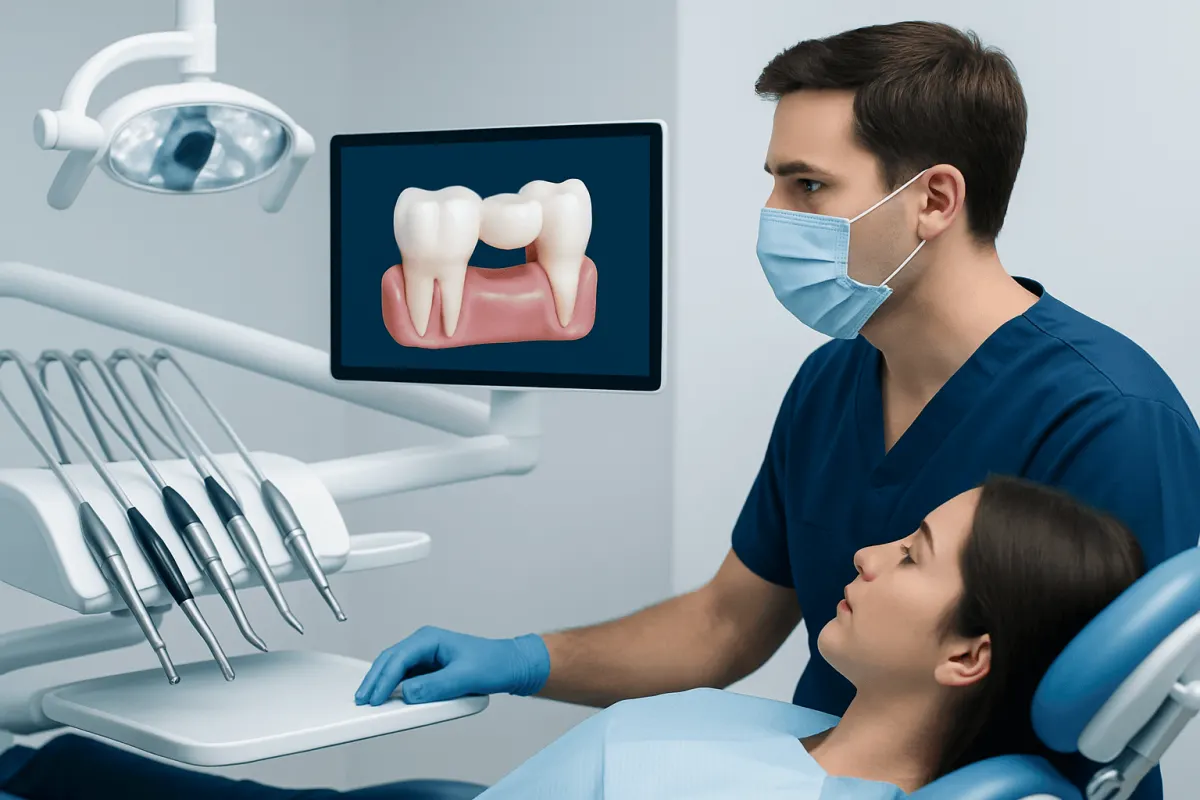
A bridge spans the gap where a tooth is missing, much like a small structure connecting one side to the other. In a traditional design, the teeth next to the gap are prepared so that crowns can fit over them. These supporting teeth, called abutment teeth, hold the replacement tooth in place.
In some cases, the bridge is supported by implants instead of natural teeth. This can be useful when several teeth are missing or when the surrounding teeth are not strong enough to support a bridge. Implant-supported bridges can provide excellent stability and help distribute biting forces more evenly.
The materials used may include porcelain, ceramic, metal alloys, or combinations of these. Many modern bridges are made to blend closely with natural teeth, so they can look very natural. The dentist chooses the material based on the bridge location, bite forces, durability needs, and cosmetic goals.
Types of Dental Bridge

There are several types of dental bridge, and the best option depends on where the missing tooth is, how healthy the neighboring teeth are, and how much support is available. Each type has specific advantages and limitations, so the decision is usually individualized after a dental examination.
Common types include:
- Traditional bridge: the most common type, using crowns on teeth on both sides of the gap to support the pontic.
- Cantilever bridge: supported on only one side. This is used less often and only in carefully selected situations.
- Maryland bridge: uses a metal or ceramic framework bonded to the back of nearby teeth rather than full crowns. It is often considered for front teeth where bite forces are lighter.
- Implant-supported bridge: attached to dental implants instead of natural teeth, often useful when several teeth are missing in a row.
Some patients may also hear about conservative fiber-reinforced approaches in selected cases, such as fiber application, especially when a minimally invasive option is being considered. However, not every person is a candidate, and long-term suitability depends on bite, tooth condition, and the location of the missing tooth.
When Is a Dental Bridge Used?
A dental bridge may be recommended when one or more teeth are missing and the patient wants a fixed replacement. It can be especially helpful when the teeth next to the gap already have large fillings or need crowns, because those teeth can sometimes be restored and used to support the bridge at the same time.
Bridges are used to improve both function and appearance. Replacing missing teeth can make it easier to chew, support clearer speech, and help restore the natural shape of the face and smile. In many cases, a bridge also prevents neighboring teeth from drifting into the empty space.
A bridge may not be the best choice if the supporting teeth have significant gum disease, severe decay, or poor long-term stability. In those situations, the dentist may recommend treating the underlying problem first through general dentistry care or considering another replacement option. A careful assessment helps determine what will be healthiest and most durable.
Causes of Tooth Loss and Risk Factors
People may need a dental bridge for many reasons, but the most common cause is tooth loss. Teeth can be lost because of untreated decay, gum disease, trauma, cracked teeth, or failure of older restorations. In some cases, teeth are removed because they cannot be repaired safely or predictably.
Risk factors for missing teeth include poor oral hygiene, infrequent dental checkups, smoking, uncontrolled diabetes, teeth grinding, and diets high in sugar. Accidents and sports injuries may also lead to tooth loss, especially in younger adults. In older adults, wear, bone loss, and long-term dental disease can make tooth loss more likely.
Addressing the cause matters just as much as replacing the missing tooth. For example, if a tooth is lost after severe infection, the dentist may need to treat surrounding tissues first. If bone volume is limited and implants are being considered, procedures such as dental bone grafts may sometimes be discussed as part of a broader treatment plan.
Diagnosis and Planning
Planning a dental bridge begins with a dental examination. The dentist checks the teeth, gums, bite, and the space where the tooth is missing. X-rays are commonly used to evaluate the roots of neighboring teeth, bone levels, and any signs of infection or hidden damage.
The condition of the abutment teeth is especially important. These teeth need to be healthy enough to support the bridge over time. The dentist also assesses whether gum disease is present, whether the bite places excessive pressure on the area, and whether the patient has habits such as clenching or grinding that may affect longevity.
In some situations, the dentist may compare a bridge with other treatments, including a single implant, partial denture, or a full restorative plan. Patients who are exploring options can benefit from discussing the dedicated dental bridge treatment process in detail, including expected preparation, appearance, cleaning needs, and follow-up care.
Dental Bridge Procedure and Treatment Options
The exact procedure depends on the type of bridge. For a traditional bridge, treatment usually takes more than one visit. The supporting teeth are carefully shaped so crowns can fit over them, then impressions or digital scans are taken. A temporary bridge may be placed while the final restoration is being made.
At the fitting appointment, the dentist checks the bridge for comfort, shape, bite, and color match before cementing it in place. Minor adjustments are common to help ensure the bridge feels natural and functions well. For implant-supported bridges, treatment usually takes longer because the implants need time to heal and integrate with the bone before the bridge is attached.
Every treatment option has benefits and limitations. Bridges can be effective and aesthetically pleasing, but they may require preparation of neighboring teeth unless implants are used. Implant-based solutions may preserve adjacent teeth, but they involve surgery and are not suitable for everyone. The best choice depends on oral health, anatomy, preferences, and budget, and should be decided with a qualified dentist.
Most patients adapt well after placement. Mild sensitivity or awareness of the new bite can occur at first, but this often improves as the mouth adjusts. If discomfort persists, the bridge feels loose, or flossing is difficult, the dentist should review the fit.
Care, Longevity, and When to See a Dentist
Good daily care is essential for the health of a dental bridge and the supporting teeth. Patients are usually advised to brush twice a day with fluoride toothpaste and clean carefully around and under the bridge using floss threaders, interdental brushes, or other dentist-recommended tools. Plaque can build up around the margins, so gentle but thorough cleaning is important.
Regular dental visits help detect problems early. A bridge can last many years when it is well designed and well cared for, but its lifespan varies with oral hygiene, bite forces, material, and the condition of the supporting teeth and gums. Avoiding smoking, managing grinding, and limiting very hard or sticky foods may help reduce wear and complications.
A dentist should be consulted if there is pain, a bad taste, bleeding gums, sensitivity that does not improve, difficulty chewing, or any feeling that the bridge is moving. Prompt review can help prevent more serious problems in the supporting teeth or gum tissues. For international patients needing assessment and treatment, Acıbadem Health Point’s multidisciplinary dental specialists in JCI-accredited hospitals provide evaluation and care plans tailored to individual needs.
Frequently asked questions
01Is a dental bridge permanent?
A dental bridge is considered a fixed restoration, meaning it is cemented or attached in place and is not removed daily by the patient. It is not permanent for life, however, and may eventually need repair or replacement depending on wear, oral hygiene, and the health of the supporting teeth.
02How long does a dental bridge last?
Many bridges last for years, especially with good oral hygiene and regular dental checkups. Longevity depends on factors such as gum health, bite pressure, the bridge material, and how well the patient cleans around the restoration.
03Does getting a dental bridge hurt?
The procedure is usually done with local anesthesia, so patients should not feel pain during tooth preparation. Some mild sensitivity or soreness can happen afterward, but this is often temporary and should be discussed with the dentist if it continues.
04What can a person eat with a dental bridge?
After placement, most people can return to a normal balanced diet once they feel comfortable chewing. It is often wise to start with softer foods and avoid very hard, sticky, or chewy items that may put extra stress on the bridge.
05Is a bridge better than an implant?
Neither option is automatically better for everyone. A bridge may be suitable when adjacent teeth already need crowns or when a quicker fixed option is preferred, while an implant may help preserve neighboring teeth and bone in selected patients.
06Can a dental bridge replace more than one tooth?
Yes, a bridge can replace more than one missing tooth if there is enough support from teeth or implants. The design must be planned carefully to ensure it is stable, functional, and appropriate for the forces of chewing.
This article is for general information only and is not a substitute for professional medical advice. Please consult a qualified doctor about your individual situation.
Explore treatments in Turkey — costs, top hospitals & a free quote
JCI-accredited · board-certified surgeons · reply within 24h
Add us as a Preferred Source to see more of our trusted health content across Google Search, AI Overviews and Discover.