What Happens at a Neurophysiology Appointment? Tests, Preparation, and What to Expect

A neurophysiology appointment helps doctors assess how the brain, nerves, and muscles are working. It usually involves a discussion of symptoms and one or more tests, such as EEG, EMG, or nerve conduction studies, chosen to answer specific clinical questions.
Overview: what a neurophysiology appointment is
A neurophysiology appointment is a visit focused on measuring how the nervous system is functioning. Neurophysiology looks at the electrical signals produced by the brain, spinal pathways, peripheral nerves, and muscles. These signals can provide important clues when a person has symptoms that suggest a neurological problem.
The appointment often takes place in an outpatient clinic or hospital diagnostic unit. A specialist doctor, clinical neurophysiologist, neurologist, or trained technician may perform the tests, depending on the healthcare setting. The aim is not simply to do a test, but to match the right test to the person’s symptoms and medical history.
People may be referred for neurophysiology if they have numbness, tingling, muscle weakness, involuntary movements, blackout episodes, seizures, sleep-related symptoms, facial pain, or persistent muscle cramps. In some cases, testing is used to help monitor a known condition rather than to make a first diagnosis.
Many people worry that these tests will be painful or overwhelming. In reality, most are well tolerated, and the team usually explains each step before starting. The exact experience depends on which test is needed and why it has been requested.
Why someone may be referred
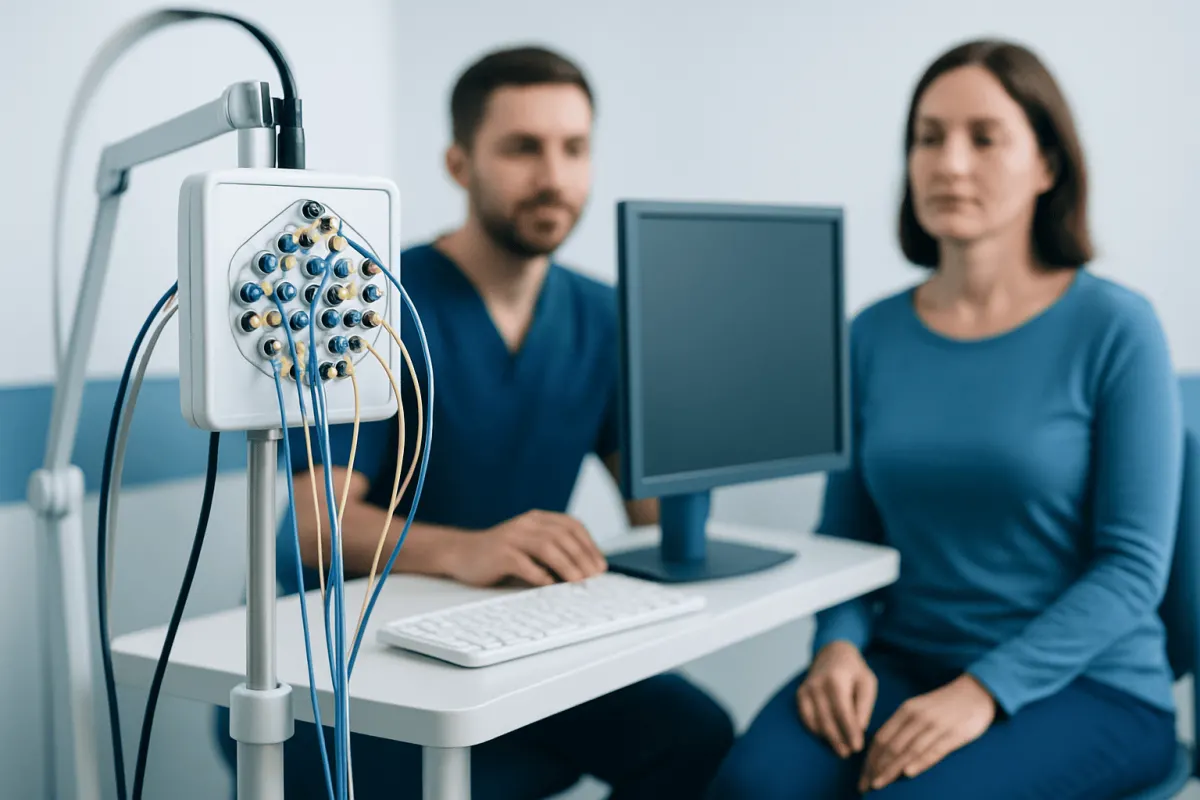
A doctor may suggest a neurophysiology appointment when symptoms point to a problem affecting nerve signaling. This can include sensory symptoms such as burning, tingling, or loss of feeling; muscle symptoms such as twitching, cramps, or weakness; or brain-related symptoms such as seizures or episodes of altered awareness.
Testing can help clarify whether symptoms are coming from the brain, a peripheral nerve, the neuromuscular junction, or the muscle itself. For example, nerve conduction studies and EMG may help investigate possible carpal tunnel syndrome or other nerve compression problems, while an EEG may be used when there are suspected seizures or unexplained spells.
Neurophysiology may also support the assessment of chronic conditions that affect nerve function over time. A doctor might use these tests alongside scans, blood tests, and a neurological examination to build a fuller picture. The results are interpreted in context, not in isolation.
In some patients, the purpose is to rule out certain disorders rather than confirm one. That can be reassuring and clinically useful, especially when symptoms are troubling but the underlying cause is uncertain.
Common tests performed during a neurophysiology appointment
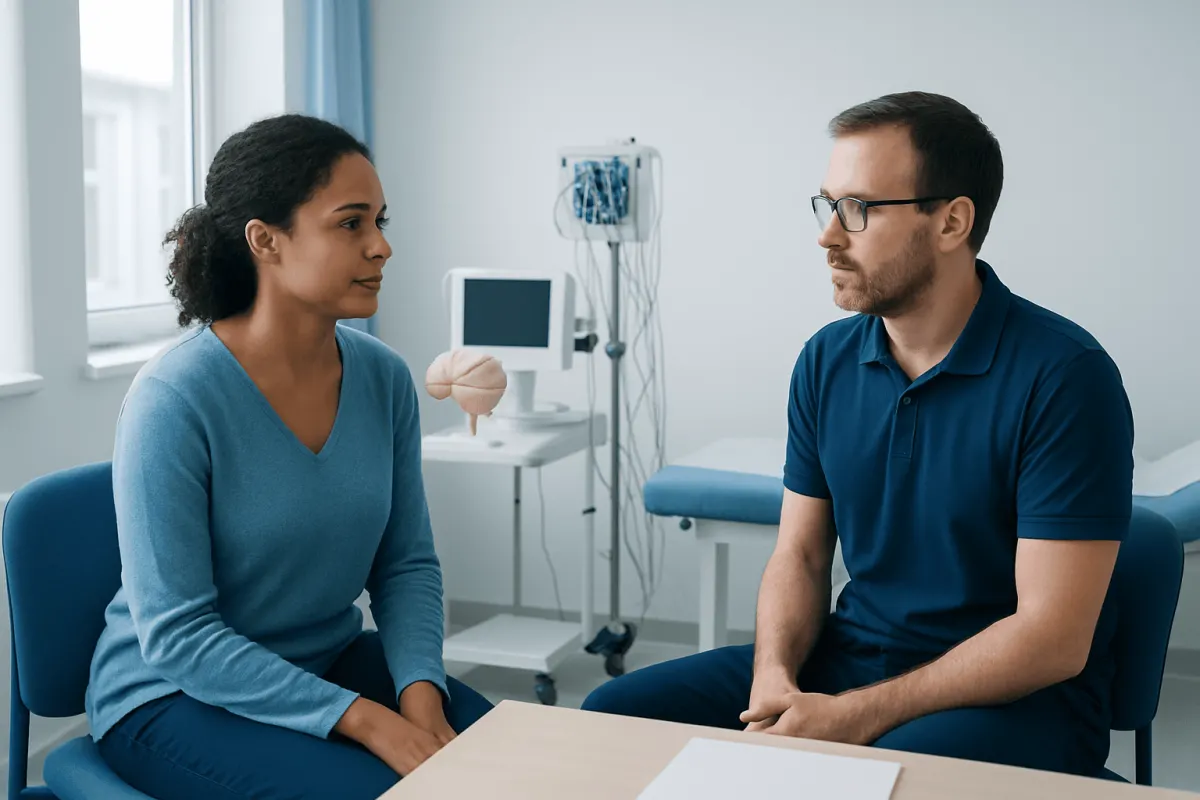
The most common neurophysiology tests include electroencephalography, or EEG, electromyography, or EMG, and nerve conduction studies. Some centers also perform evoked potential tests, which assess how the nervous system responds to visual, auditory, or sensory stimulation. The doctor selects the test based on the person’s symptoms and examination findings.
An EEG records the brain’s electrical activity using small sensors placed on the scalp. It is often used to assess suspected seizures, blackouts, or certain sleep-related events. The test is painless, and the sensors record activity rather than deliver electricity.
EMG and nerve conduction studies are commonly done together. A needle EMG assesses how muscles respond at rest and during gentle contraction, while nerve conduction studies measure how quickly and effectively electrical signals travel along the nerves. These tests can help evaluate weakness, numbness, tingling, nerve injury, or disorders affecting the communication between nerves and muscles.
Some patients may have an EEG test as a separate appointment or as part of a broader neurological assessment. Each test answers different questions, so not every person will need all of them.
How to prepare for the appointment
Preparation depends on the specific test. In general, it helps to bring a list of symptoms, current medicines, allergies, previous test results, and any relevant medical history. If the symptoms come and go, noting when they happen, how long they last, and what seems to trigger them can be very useful.
For an EEG, patients are often asked to arrive with clean, dry hair and to avoid hair sprays, oils, or gels, as these can affect how well the scalp sensors attach. Some EEGs also require partial sleep deprivation, but this is only done if specifically requested by the medical team. It is important to follow the instructions given for that individual appointment.
For EMG and nerve conduction studies, it is usually best to avoid applying lotions, creams, or oils to the skin on the day of the test. Loose, comfortable clothing can make access to the arms or legs easier. Patients taking blood thinners or those with a pacemaker, implanted defibrillator, bleeding disorder, or skin infection should mention this before the test, as the team may need to adjust the plan.
Most people can eat, drink, and take their usual medicines unless they are told otherwise. If there is any uncertainty about preparation, contacting the clinic in advance is the safest approach.
What happens during the tests
The appointment usually begins with a brief review of symptoms and medical history. The clinician may ask when the problem started, whether it affects one side or both sides, and whether there are associated symptoms such as pain, weakness, speech changes, or loss of awareness. This helps the team decide where to focus the testing.
During an EEG, small electrodes are placed on the scalp with a gentle adhesive or paste. The patient may be asked to relax, open and close the eyes, breathe deeply for a short time, or look at flashing lights. The recording itself is painless and usually takes between 20 minutes and an hour, though some forms of EEG monitoring can last longer.
During nerve conduction studies, small electrical pulses are applied to the skin over a nerve to measure how the signal travels. These pulses can feel brief and unusual, but they are generally manageable. During EMG, a very fine needle electrode is inserted into selected muscles to record their electrical activity; this can cause temporary discomfort, similar to a quick injection or muscle ache.
If evoked potentials are being performed, the patient responds to visual patterns, sounds, or mild sensory stimulation while the equipment records how the nervous system processes those signals. The team usually explains each part of the test as it happens so the patient knows what to expect.
After the appointment and understanding the results
Most people can return to normal activities soon after a neurophysiology appointment. After an EEG, there are usually no restrictions unless the person has had a seizure-related event or has been given sedating medicine, which is uncommon in routine testing. After EMG, a small amount of muscle soreness may occur for a day or two, but significant after-effects are unusual.
Results are not always given immediately. In many centers, the recordings are carefully reviewed and interpreted by a specialist before a report is sent to the referring doctor. This is important because the meaning of a test depends on the full clinical picture, including symptoms, examination findings, imaging, and blood tests where relevant.
A normal test does not always mean that symptoms are not real or that there is no problem. Some conditions are intermittent, affect areas not captured during the test, or are better assessed in another way. Likewise, an abnormal result does not automatically point to one single diagnosis; it often narrows the possibilities and guides the next step.
If further evaluation is needed, the doctor may recommend additional neurological review, imaging, blood tests, or condition-specific care. For patients needing specialist assessment, centers such as Acıbadem Health Point have multidisciplinary specialists and JCI-accredited hospitals that diagnose and treat neurological conditions for international patients.
Risks, limitations, and how patients can feel more comfortable
Neurophysiology tests are generally considered safe. EEG does not expose the patient to radiation or electrical shocks. In rare situations, flashing lights or hyperventilation during EEG may provoke symptoms in someone who is already prone to seizures, which is why the test is supervised by trained professionals.
Nerve conduction studies use small electrical impulses, and EMG uses a fine needle electrode. These tests can be briefly uncomfortable, but serious complications are uncommon. Mild bruising or temporary soreness may happen after EMG, particularly in more sensitive muscles.
Like all medical tests, neurophysiology has limitations. The quality of the recording can be affected by movement, skin products, recent sleep, or technical factors. Also, some nerve or muscle disorders may be very early, mild, or patchy, making them harder to detect in a single session.
Patients often feel more comfortable when they know they can ask questions before and during the test. Wearing comfortable clothing, arriving on time, and sharing worries with the team can help the appointment go more smoothly. A calm, step-by-step explanation usually makes the process easier to manage.
When to seek medical advice
A neurophysiology appointment is usually arranged after a referral, but urgent medical advice is important if symptoms are sudden, severe, or rapidly worsening. Emergency assessment is especially important for a first seizure, new facial droop, sudden weakness, loss of speech, severe confusion, or symptoms that could suggest stroke or another acute neurological problem.
Medical review is also advisable if numbness, tingling, or weakness is progressive; if there is muscle wasting; if falls are becoming more frequent; or if episodes of collapse or altered awareness are recurring. Symptoms that disturb sleep, driving safety, work, or daily functioning also deserve prompt attention.
People living with known neurological conditions should seek advice if symptoms change significantly or if treatment seems less effective than before. For example, a person with possible epilepsy or suspected peripheral neuropathy may need reassessment if new symptoms appear.
Even when symptoms are not urgent, it is best not to ignore persistent neurological complaints. Early evaluation can help clarify the cause, guide treatment, and reduce uncertainty.
Frequently asked questions
01Is a neurophysiology appointment painful?
Most neurophysiology tests are well tolerated, though the sensation depends on the type of test. EEG is painless, while nerve conduction studies can feel like brief electrical pulses and EMG may cause short-lived discomfort from fine needle electrodes. Any discomfort is usually temporary, and the team can explain each step in advance.
02How long does a neurophysiology appointment take?
The length varies depending on the test being performed and how many nerves or muscles need to be assessed. A routine EEG may take under an hour, while EMG and nerve conduction studies may take longer if several areas are examined. The clinic usually provides an estimated appointment time beforehand.
03Can I eat or take my usual medicines before the test?
In many cases, yes, but this depends on the specific test and the instructions from the clinic. Patients should continue prescribed medicines unless they have been clearly advised otherwise. If there is any doubt, it is safest to check before the appointment.
04What should I wear to a neurophysiology appointment?
Comfortable, loose-fitting clothes are usually best, especially if the arms or legs may need to be examined. For EEG, clean hair without gels, oils, or sprays is helpful. For EMG and nerve conduction studies, avoiding skin lotions or creams on the day of the test is often recommended.
05Will I get my results on the same day?
Sometimes a preliminary impression may be discussed, but formal results are often reviewed later by a specialist. The final interpretation is usually sent to the referring doctor, who explains what it means in the context of symptoms and other tests. This careful review helps make the results more accurate and useful.
06Why would I need both EMG and nerve conduction studies?
These tests assess related but different parts of the nervous system. Nerve conduction studies examine how signals travel along nerves, while EMG looks at the electrical activity within muscles. Doing both together can help doctors tell whether symptoms are more likely to come from the nerve, the muscle, or the connection between them.
This article is for general information only and is not a substitute for professional medical advice. Please consult a qualified doctor about your individual situation.
Joint and spine care in Turkey — expert assessment & treatment
JCI-accredited · board-certified surgeons · reply within 24h
Add us as a Preferred Source to see more of our trusted health content across Google Search, AI Overviews and Discover.