What Is Neurophysiology? Tests, Specialists, and When They Are Used

Neurophysiology is the medical field that evaluates how the nervous system functions, often through specialized tests that measure electrical activity in the brain, nerves, and muscles. It helps doctors investigate symptoms such as seizures, numbness, tingling, muscle weakness, sleep-related concerns, and unexplained changes in movement or sensation.
Overview: What Neurophysiology Means
Neurophysiology is the branch of medicine that studies how the nervous system works. This includes the brain, spinal cord, peripheral nerves, muscles, and the pathways that carry signals between them. In clinical care, neurophysiology helps doctors understand whether these systems are functioning normally and where a problem may be located.
Rather than focusing only on anatomy, neurophysiology looks at function. A scan such as MRI can show the structure of the brain or spine, but neurophysiology tests can show how nerve cells and muscles are actually working in real time. This can be especially useful when symptoms are present but imaging alone does not provide a complete answer.
Clinical neurophysiology is commonly used in neurology, neurosurgery, rehabilitation, sleep medicine, and pediatric care. It helps assess symptoms such as numbness, tingling, weakness, muscle cramps, fainting-like episodes, seizures, abnormal movements, and certain sleep disturbances.
For patients, neurophysiology is often best understood as a group of specialized tests and expert interpretations. These tests are selected carefully based on a person’s symptoms, age, medical history, examination findings, and the specific question the doctor is trying to answer.
What a Neurophysiology Specialist Does
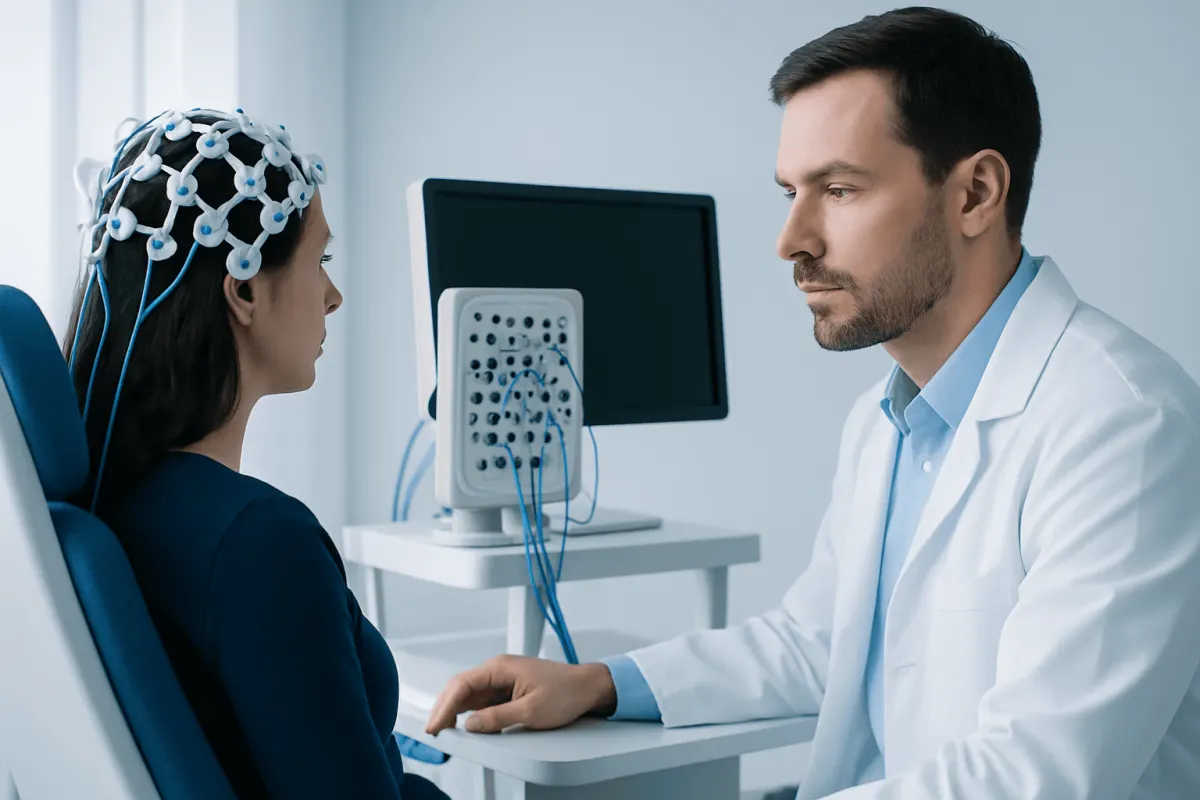
A neurophysiology specialist is usually a physician trained in neurology or a closely related field, with additional expertise in testing and interpreting nervous system function. In many hospitals, this doctor may be called a clinical neurophysiologist. Their role is to decide which test is most appropriate, perform or supervise the test, and explain how the findings fit with the patient’s symptoms.
These specialists often work closely with neurologists, neurosurgeons, rehabilitation physicians, sleep specialists, and pediatric doctors. For example, a patient with suspected epilepsy may need an electroencephalogram, while someone with hand numbness or leg weakness may be referred for nerve and muscle testing. Neurophysiology results can help confirm a diagnosis, narrow the possibilities, or guide the next steps in treatment.
Neurophysiology specialists may be involved in evaluating conditions such as epilepsy, peripheral nerve disorders, muscle diseases, spinal nerve root problems, and some sleep-related neurological concerns. They also play an important role before and during certain operations, where monitoring of nerve pathways can help support safer surgical decision-making.
Because many nervous system symptoms overlap, the specialist’s interpretation is important. A test result is rarely viewed in isolation. It is considered together with the medical history, physical examination, blood tests, and imaging when needed.
Common Neurophysiology Tests

Several different tests fall under neurophysiology, and each one answers a different clinical question. Some measure electrical activity in the brain, while others evaluate how well nerves and muscles send signals. The choice depends on the symptom pattern and the suspected condition.
An electroencephalogram, or EEG, records the brain’s electrical activity through small sensors placed on the scalp. It is often used when a person has seizures, unexplained episodes of loss of awareness, or possible abnormal brain activity. EEG may also be helpful in assessing some sleep disorders and certain changes in brain function. In the broader work-up, it may complement imaging such as MRI scanning when doctors need both structural and functional information.
Electromyography (EMG) and nerve conduction studies are used to assess nerves and muscles. Nerve conduction studies evaluate how well and how fast electrical signals travel through peripheral nerves. EMG uses a very fine recording needle in selected muscles to look for signs of nerve or muscle dysfunction. These tests are commonly used for symptoms such as numbness, tingling, pain, cramps, weakness, or suspected nerve compression.
Other tests include evoked potentials, which measure how the nervous system responds to visual, sound, or touch stimulation, and sleep-related neurophysiology tests, which may be part of a more detailed assessment when neurological symptoms occur during sleep. In some settings, doctors also use intraoperative neurophysiological monitoring during surgery to follow nerve pathway function in real time.
- EEG: evaluates brain electrical activity
- EMG: assesses muscle electrical activity
- Nerve conduction studies: measure peripheral nerve signal speed and strength
- Evoked potentials: test sensory pathways to the brain
- Sleep studies with neurological monitoring: help assess selected sleep-related symptoms
When Neurophysiology Tests Are Used
Doctors use neurophysiology tests when symptoms suggest that the nervous system may not be functioning normally. This does not always mean there is a serious disease. In many cases, testing is done to clarify a symptom, rule out certain problems, or identify the exact location of a disturbance.
Common reasons for referral include suspected seizures, repeated blackouts, persistent numbness, burning pain, tingling, muscle weakness, muscle twitching, tremor, balance problems, or changes in sensation. Neurophysiology can also help in the assessment of symptoms related to nerve compression, radiculopathy from the spine, peripheral neuropathy, and some muscle disorders. For example, when a person has features of peripheral neuropathy, nerve conduction studies may help define the pattern and severity.
These tests are also used when there is concern about conditions affecting communication between nerves and muscles, or when symptoms are difficult to explain with examination alone. In children, they may be used to investigate developmental neurological concerns, seizure-like events, or certain inherited neuromuscular disorders.
In some situations, neurophysiology supports treatment planning rather than making the initial diagnosis. A surgeon may request testing before an operation, or a neurologist may use serial studies over time to monitor change. Results may also help determine whether a patient would benefit from therapies such as physical therapy and rehabilitation as part of recovery and function support.
What to Expect During Testing
Most neurophysiology tests are outpatient procedures and are generally well tolerated. The exact experience depends on the type of test. EEG usually involves placing small electrodes on the scalp with a conductive gel or paste while the patient rests, breathes normally, and may be asked to open and close the eyes or respond to simple instructions. Some EEG studies are short, while others last longer or include sleep recording.
For nerve conduction studies, small electrical impulses are applied to the skin over a nerve to measure how well it responds. Patients often describe this as brief tapping or pulsing sensations. EMG involves inserting a very fine needle electrode into certain muscles to record their electrical activity at rest and during gentle movement. This may cause temporary discomfort, but it is usually manageable and brief.
Preparation varies. Patients may be asked to arrive with clean skin and hair, avoid lotions or oils, and bring a list of medicines. For some studies, specific instructions about sleep, caffeine, or medication timing may be given. It is important to tell the doctor about pacemakers, implanted devices, bleeding disorders, pregnancy, or blood-thinning medication, especially before EMG.
After the test, most people can return to normal daily activities right away. Mild temporary soreness can occur after EMG. The results are interpreted by a trained specialist, and the report is then reviewed together with the person’s overall clinical picture. In some cases, further tests such as blood work, imaging, or neurology rehabilitation assessment may be advised depending on the findings.
How Results Help Diagnosis and Treatment
Neurophysiology results can help answer several important questions: Is the problem coming from the brain, spinal cord, nerve root, peripheral nerve, neuromuscular junction, or muscle? Is the issue widespread or limited to one area? Is it recent or longstanding? These details can be very helpful in narrowing down the diagnosis.
For example, an EEG may support the diagnosis of seizure disorders or help distinguish epileptic events from some non-epileptic episodes. EMG and nerve conduction studies may help identify nerve compression, radiculopathy, generalized neuropathy, or certain muscle conditions. Evoked potentials may reveal slowing or disruption in sensory pathways even when symptoms are subtle.
It is important to remember that a normal test does not always mean a person has no symptoms or no condition. Some disorders are intermittent, mild, or better detected by other methods. Likewise, an abnormal result must be interpreted in context. Doctors combine the findings with neurological examination and, when appropriate, structural testing such as brain MRI.
Once the likely cause is clearer, treatment can be planned more effectively. This may include medication, rehabilitation, lifestyle measures, surgery in selected cases, or ongoing monitoring. The main value of neurophysiology is that it helps make care more precise and more tailored to the individual patient.
Safety, Limits, and Self-care After Referral
Neurophysiology tests are generally considered safe. EEG is noninvasive and painless, aside from the inconvenience of scalp electrodes and the time involved. Nerve conduction studies and EMG may cause short-term discomfort, and occasionally there can be mild bruising or muscle soreness afterward. Serious complications are uncommon when testing is performed by experienced professionals.
Like any medical test, neurophysiology has limits. It may not detect every condition, especially if symptoms are very early, intermittent, or outside the specific pathways being studied. Some patients need repeat testing or a combination of tests to build a complete picture. This is one reason why specialist interpretation matters so much.
Self-care after referral is usually simple. Patients should follow preparation instructions carefully, ask questions if anything is unclear, and share a full medical history including medicines, chronic illnesses, and implanted devices. Keeping a symptom diary can also help, especially for episodes such as possible seizures, blackouts, tremor, sleep-related events, or fluctuating weakness.
If a person is receiving care at a center with multidisciplinary neurological services, the process may be more coordinated. Acıbadem Health Point’s multidisciplinary specialists and JCI-accredited hospitals diagnose and treat neurological conditions for international patients, with neurophysiology testing used as part of a broader evaluation when appropriate.
When to See a Doctor
A doctor should evaluate persistent or unexplained neurological symptoms, especially if they interfere with daily life or are getting worse. Examples include ongoing numbness, weakness, repeated falls, burning nerve pain, new tremor, muscle twitching, unexplained episodes of staring or blackout, and sudden changes in speech, coordination, or sensation.
Urgent medical care is important for symptoms that begin suddenly or could signal an emergency, such as sudden one-sided weakness, new confusion, severe sudden headache, loss of consciousness, prolonged seizure activity, or trouble speaking. In these situations, emergency assessment comes first, and neurophysiology testing may be arranged later if needed.
For non-emergency concerns, patients can start with a primary care doctor, pediatrician, or neurologist. The doctor will decide whether neurophysiology testing is likely to be helpful and which test best matches the symptoms. Not every symptom requires these studies, but when they are indicated, they can provide valuable information that supports an accurate diagnosis and a clear treatment plan.
Seeking evaluation early can be reassuring as well as medically useful. Many neurological symptoms have treatable or manageable causes, and a timely assessment helps patients understand what is happening and what steps to take next.
Frequently asked questions
01What is the difference between neurology and neurophysiology?
Neurology is the broader medical specialty that diagnoses and treats disorders of the brain, spinal cord, nerves, and muscles. Neurophysiology is a focused area within this field that studies how these parts of the nervous system function, often through specialized tests such as EEG, EMG, and nerve conduction studies.
02Is neurophysiology the same as an EEG?
No. EEG is one type of neurophysiology test, but neurophysiology includes several different studies. Depending on the symptoms, it may also involve EMG, nerve conduction studies, evoked potentials, or sleep-related testing.
03Are neurophysiology tests painful?
Many neurophysiology tests are painless or only mildly uncomfortable. EEG is usually painless, while nerve conduction studies feel like brief electrical pulses and EMG can cause short-term discomfort from the fine needle electrode. Most people tolerate these tests well.
04Why would a doctor order EMG and nerve conduction studies?
These tests are often ordered when a person has numbness, tingling, weakness, muscle cramps, or suspected nerve compression. They help show whether the problem affects the nerve, the muscle, or the connection between them, which can guide diagnosis and treatment.
05Can neurophysiology tests diagnose all neurological conditions?
No single test can diagnose every neurological condition. Neurophysiology provides important functional information, but doctors often combine it with a physical examination, medical history, blood tests, and imaging. Sometimes results are normal even when symptoms are present, so interpretation always depends on the full clinical picture.
06How should a patient prepare for a neurophysiology test?
Preparation depends on the test, but patients are often asked to avoid lotions or hair products and to bring a list of medications. Some studies may include instructions about sleep, caffeine, or medicine timing. It is best to follow the testing center’s guidance closely and ask if anything is unclear.
This article is for general information only and is not a substitute for professional medical advice. Please consult a qualified doctor about your individual situation.
Joint and spine care in Turkey — expert assessment & treatment
JCI-accredited · board-certified surgeons · reply within 24h
Add us as a Preferred Source to see more of our trusted health content across Google Search, AI Overviews and Discover.