What Causes Varicose Veins in the Legs?
Varicose veins develop when one-way valves inside veins, usually in the legs, become weak or damaged and allow blood to collect instead of flowing efficiently back toward the heart. They are common and often harmless, but new pain, swelling, skin changes or bleeding should be assessed by a qualified clinician.
Overview: what causes varicose veins?
Varicose veins are enlarged, twisted veins that are most often seen beneath the skin of the legs. They develop when small one-way valves inside the veins weaken or do not close fully. Rather than moving steadily upward toward the heart, some blood can flow backward and pool, increasing pressure in the vein and causing it to stretch and become more visible.
This explains what causes varicose veins in legs, ankles, feet and thighs: gravity places extra pressure on veins below the heart, particularly while standing. The underlying problem is usually called chronic venous insufficiency or venous reflux. It is not caused by “bad blood,” and it does not automatically mean that a person has serious heart or circulation disease.
Varicose veins can range from a cosmetic concern to a source of troublesome symptoms. Some people notice blue or purple rope-like veins, while others have aching, heaviness, throbbing, itching, nighttime cramps or lower-leg swelling. A clinical examination and, when needed, an ultrasound can clarify whether vein valve dysfunction is present.
What are the two main causes of varicose veins?
The two main causes of varicose veins are weak or damaged vein valves and increased pressure within the veins. Healthy leg veins rely on valves to keep blood moving in one direction. If valves become stretched, weakened or damaged, blood may fall backward between heartbeats and collect in the lower part of the vein.
Pressure rises naturally in the leg veins during standing because blood must travel upward against gravity. Prolonged standing or sitting, pregnancy, excess body weight and anything that obstructs or slows venous return can add to this pressure. Over time, the vein wall may widen, making the valve problem more pronounced.
In some cases, valve damage follows a previous deep vein thrombosis, or blood clot in a deep vein. This is different from ordinary visible varicose veins and needs medical evaluation. People with a history of clotting should discuss persistent leg symptoms with their clinician.
Who is more likely to develop varicose veins?
Varicose veins often run in families. Inherited features of vein walls and valves can make some people more prone to venous reflux, which is why they may develop visible veins at a younger age than others. Aging also matters because veins and valves can gradually lose elasticity over time.
Pregnancy is another common factor. Hormonal changes can relax vein walls, blood volume increases, and the growing uterus can place pressure on pelvic veins. These changes help explain what causes varicose veins in pregnancy. Veins may improve after delivery, although some may remain or become more noticeable with later pregnancies.
Other factors that can contribute include overweight or obesity, low levels of physical activity, jobs requiring many hours of standing, and long periods of sitting. Varicose veins occur in women and men. What causes varicose veins in men is generally the same combination of valve weakness, family tendency and pressure in the leg veins; men may simply be less likely to seek assessment for early visible changes.
- Family history of varicose veins or chronic venous disease
- Older age
- Pregnancy or multiple pregnancies
- Prolonged sitting or standing
- Excess body weight
- Previous leg injury, surgery or deep vein thrombosis
Why veins may appear in the feet, ankles, thighs or testicles
Varicose veins can be visible anywhere along the legs, including the thighs, calves, ankles and feet. Their location depends on which superficial veins and connecting veins have faulty valves. At the ankles, raised venous pressure may be associated with swelling, brownish skin discoloration, eczema-like irritation or, in more advanced cases, skin breakdown.
Prominent veins on the feet are not always varicose veins. Thin skin, warm temperatures, exercise, aging or normal anatomy can make foot veins appear more visible. A doctor can help distinguish normal surface veins from venous disease, especially if there is pain, swelling, skin change or a new one-sided difference.
What causes varicose veins in testicles is a different condition called a varicocele. It involves enlarged veins in the scrotum, most often on the left side, and is not the same as leg varicose veins. Varicoceles may cause discomfort or may be evaluated in the context of fertility concerns. A new scrotal lump, swelling or pain should be examined promptly by a healthcare professional.
Do varicose veins mean poor health?
Varicose veins do not necessarily mean poor health. Many people who are otherwise well develop them because of genetic tendency, pregnancy, age or daily work patterns. They are common, and mild cases may not need treatment beyond symptom management and periodic monitoring.
However, visible veins can sometimes be a sign of chronic venous insufficiency, especially when accompanied by persistent swelling, aching, itching, skin discoloration, hardened skin near the ankles or slow-healing sores. These changes deserve assessment because treating venous reflux and caring for the skin can help lower the chance of complications.
Symptoms that begin suddenly, affect only one leg, or include marked pain and swelling should not be assumed to be ordinary varicose veins. A clinician may need to rule out a deep vein clot or another cause. Prompt evaluation is particularly important after recent surgery, prolonged immobility, injury or long-distance travel.
Do varicose veins ever go away?
Once a vein has become significantly enlarged, it usually does not disappear completely on its own. Pregnancy-related veins may become less noticeable in the months after delivery as blood volume and pelvic pressure return toward usual levels, but underlying valve weakness can remain. Lifestyle measures can improve comfort and may slow progression, even if they do not remove existing veins.
For veins causing persistent symptoms, skin changes or concerns about appearance, several minimally invasive options may be considered after assessment. These can include compression therapy for selected patients, sclerotherapy, endovenous thermal treatment, medical adhesive closure or removal of smaller surface veins. The appropriate approach depends on symptoms, ultrasound findings, overall health and personal goals.
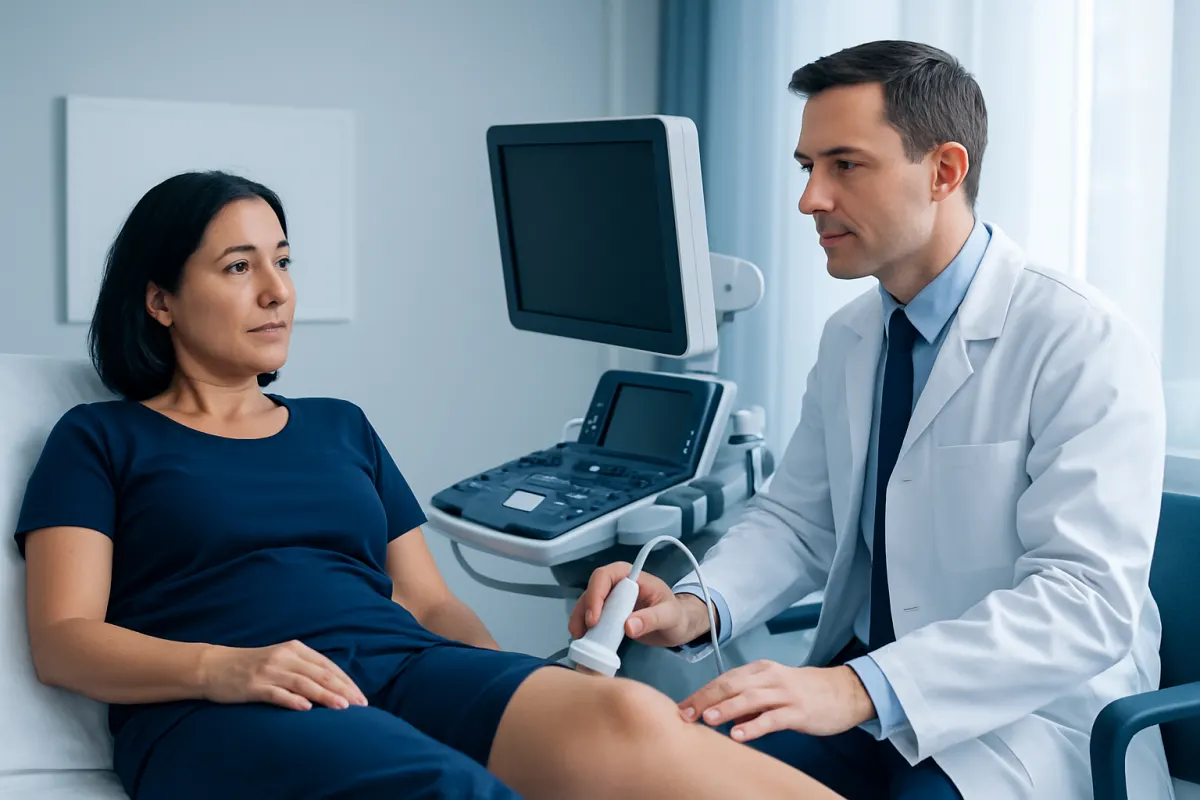
A vascular specialist may use duplex ultrasound to map blood flow and identify reflux before recommending treatment. In appropriate cases, varicose vein treatment can close or remove problem veins while blood continues to return to the heart through healthy veins.
What is the best way to stop varicose veins?
There is no guaranteed way to prevent all varicose veins, particularly when there is a strong family history. The best practical approach is to support healthy leg circulation and reduce prolonged pressure in the veins. Regular walking and other leg-focused activity help calf muscles pump blood upward toward the heart.
It can help to change position frequently during long periods of sitting or standing, take walking breaks during travel, and avoid sitting with the legs still for many hours. Maintaining a weight that is healthy for the individual, choosing comfortable footwear and discussing appropriate exercise with a clinician can also be useful. Elevating the legs for short periods may ease symptoms such as heaviness or mild swelling.
Compression stockings may improve symptoms for some people, but the suitable strength and fit vary. They should be discussed with a clinician, especially for people with peripheral artery disease, diabetes-related foot concerns, heart failure or significant numbness. Stockings are not a cure for valve dysfunction, but can be part of a broader care plan.
When to seek medical care
Non-urgent medical advice is appropriate when varicose veins cause ongoing aching, heaviness, itching, swelling, cramps, skin irritation or a change in daily activities. Assessment is also sensible if skin near the ankles becomes darker, thinner, harder or persistently inflamed, or if there is a wound that is slow to heal.
Urgent medical care is needed for sudden swelling, warmth, redness or significant pain in one leg, particularly if it occurs with shortness of breath, chest pain, coughing blood, fainting or severe dizziness. These symptoms may have causes other than varicose veins and require prompt evaluation. Bleeding from a varicose vein can occur after minor injury because the vein is close to the skin; direct firm pressure and leg elevation can help while urgent care is arranged if bleeding does not stop quickly.
Acıbadem Health Point’s multidisciplinary specialists and JCI-accredited hospitals assess and treat venous conditions for international patients. A healthcare professional can determine whether symptoms are due to uncomplicated varicose veins, chronic venous insufficiency or another condition requiring different care.
Frequently asked questions
01What causes varicose veins to burst?
A varicose vein may bleed if its thin, stretched wall is injured, sometimes after a small bump, scratching or shaving injury. Bleeding can look dramatic because veins carry a steady flow of blood under pressure. Firm direct pressure and elevation of the leg are important, and persistent or heavy bleeding needs urgent medical attention.
02Can exercise make varicose veins worse?
Regular low-impact exercise, such as walking, cycling or swimming, is usually beneficial because calf muscles help move blood through the leg veins. Exercise does not generally cause varicose veins. Someone with severe pain, active skin ulcers or a recent clot should ask their clinician which activities are appropriate.
03Are varicose veins and spider veins the same?
Both involve visible surface veins, but they are not exactly the same. Spider veins are smaller red, blue or purple web-like vessels, while varicose veins are usually larger, raised and twisted. Either can occur with or without symptoms.
04Can varicose veins cause blood clots?
Varicose veins may be associated with inflammation or clotting in a superficial vein, called superficial thrombophlebitis. This differs from deep vein thrombosis, which occurs in deeper veins and can be more serious. New localized redness, tenderness or a firm cord-like vein should be evaluated by a healthcare professional.
05Why do varicose veins ache more at the end of the day?
Symptoms often become more noticeable after long periods of standing or sitting because blood and fluid can pool in the lower legs. This can create heaviness, throbbing, swelling or fatigue. Movement, rest breaks and leg elevation may help, but persistent symptoms should be discussed with a clinician.
06Can varicose veins return after treatment?
A treated vein can usually be closed or removed effectively, but treatment does not change a person’s underlying tendency to develop venous disease. New varicose veins can develop in other veins over time. Follow-up and healthy circulation habits may help identify or manage recurrent symptoms early.
This article is for general information only and is not a substitute for professional medical advice. Please consult a qualified doctor about your individual situation.
Persistent digestive symptoms? Get evaluated in Turkey
JCI-accredited · board-certified surgeons · reply within 24h
Add us as a Preferred Source to see more of our trusted health content across Google Search, AI Overviews and Discover.