What Causes Bladder Infection in Men?

A bladder infection in men is usually caused by bacteria entering the urinary tract and multiplying in the bladder. Because an underlying issue such as prostate enlargement, incomplete bladder emptying, stones, or a catheter may contribute, new urinary symptoms in men should be assessed by a clinician.
Overview: What Causes Bladder Infection in Man?
Most bladder infections in men occur when bacteria, often Escherichia coli from the bowel, enter through the urethra and multiply in the bladder. The process is more likely when urine cannot drain completely, such as with prostate enlargement, a stone, or a urinary catheter. In clinical terms, this is usually bacterial cystitis, a lower urinary tract infection.
The same mechanisms broadly explain what causes urinary tract infection in man. A urinary tract infection, or UTI, can affect the urethra, bladder, kidneys, or prostate, while a bladder infection specifically affects the bladder. Symptoms alone cannot always identify the exact location, so a urine test is helpful, particularly when symptoms are new, severe, recurrent, or accompanied by fever.
The terms urine infection and water infection in men are informal descriptions rather than medical diagnoses. A bladder infection is usually not caused by drinking water itself; it is most often related to bacteria from a person’s own bowel area reaching the urinary tract. It is not necessarily a sign of poor personal hygiene or sexual behavior.
What Are the 5 Warning Signs of a Bladder Infection in Men?
Symptoms can begin gradually or suddenly. The five common warning signs below can suggest a bladder infection, although other conditions, including an enlarged prostate, prostatitis, kidney stones, and sexually transmitted infections, can cause similar symptoms.
- Burning or pain during urination
- Needing to urinate more often than usual, often passing small amounts
- A sudden, difficult-to-delay urge to urinate
- Pressure, aching, or discomfort in the lower abdomen or bladder area
- Cloudy urine, visible blood in urine, or a noticeably unusual smell
Urine odor or darker urine alone does not prove an infection, as dehydration, food, vitamins, and medicines can change urine appearance or smell. However, these changes are more meaningful when they occur with pain, urgency, or frequency.
Fever, shaking chills, nausea, pain in the side or back, marked fatigue, or trouble passing urine are not typical simple bladder symptoms. They may indicate infection involving the kidneys or prostate, or a urinary blockage, and should be assessed promptly.
Causes and Risk Factors in Men
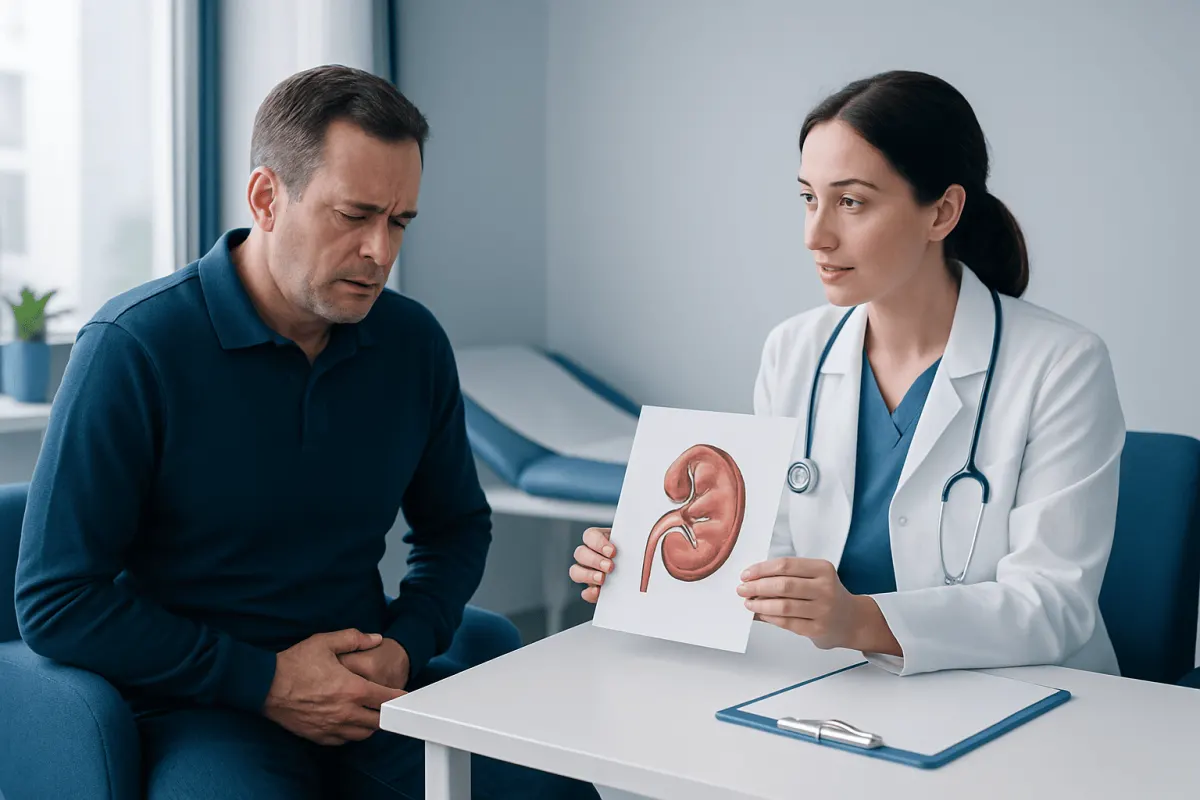
Bacteria can reach the bladder through the urethra, and any factor that leaves urine behind after urination gives bacteria more opportunity to grow. Benign prostate enlargement is a frequent contributor in older men because it can narrow the flow of urine and prevent complete emptying. This is one reason bladder infections in men over 60 may become more common, although age alone does not cause an infection.
Other risk factors include kidney or bladder stones, narrowing of the urethra, recent urinary procedures, use of a catheter, previous urinary tract surgery, and conditions that affect bladder nerve control. Diabetes, immune system suppression, and chronic kidney conditions can also increase susceptibility. Constipation may worsen urinary symptoms or incomplete emptying in some people.
Sexual activity can occasionally move bacteria toward the urethra, but it does not mean that a bladder infection is sexually transmitted. Chlamydia, gonorrhea, and other sexually transmitted infections can cause burning or discharge that resembles a UTI, so testing may be appropriate. When people ask what causes bladder cystitis in men, infection is a common answer, but bladder inflammation can also be noninfectious, including inflammation related to certain medicines, radiation therapy, or bladder pain conditions.
Human UTI information does not apply directly to animals. Questions about what causes bladder infection in male dogs or male cats should be discussed with a veterinarian, since stones, prostate conditions, anatomical differences, and urinary blockage can play different roles. In male cats especially, an inability to pass urine can be a veterinary emergency.
How a Bladder Infection Is Diagnosed
A clinician will ask about urinary symptoms, their timing, sexual history when relevant, medicines, previous infections, catheter use, and conditions such as diabetes or prostate enlargement. An examination may include checking the abdomen, back, external genital area, and, when appropriate, the prostate. These steps help distinguish bladder infection from other causes of urinary discomfort.
A urine sample is usually tested for blood, white blood cells, nitrites, and bacteria. A urine culture can identify the organism and show which antibiotics are likely to work, making it particularly valuable for men, recurrent infections, treatment failures, or more severe symptoms. If an STI is possible, swab or urine-based STI testing may also be recommended.
Imaging is not needed for every first episode. However, an ultrasound, CT scan, bladder-emptying assessment, or specialist review may be considered when infections recur, symptoms persist, stones or blockage are suspected, or there is blood in the urine. Identifying an underlying cause can reduce the chance of another infection.
How Can a Man Get Rid of a Bladder Infection?
The appropriate way to get rid of a confirmed bladder infection is medical assessment followed by treatment tailored to the likely cause and urine results. Antibiotics are commonly prescribed for bacterial infection, with the choice guided by local recommendations, allergy history, kidney function, and urine culture findings when available. Because the prostate can sometimes be involved in male urinary infections, treatment decisions may differ from those used for uncomplicated cystitis in women.
Symptoms may start improving soon after effective treatment begins, but the prescribed course should be taken exactly as directed unless the treating clinician advises otherwise. Leftover antibiotics, someone else’s medication, or stopping treatment early can leave infection incompletely treated and contribute to antibiotic resistance. If symptoms do not improve, worsen, or return after treatment, the clinician should be contacted.
Supportive measures can improve comfort but do not replace evaluation or antibiotics when they are needed:
- Drink regular fluids if there is no medical reason to limit intake.
- Urinate when needed rather than holding urine for long periods.
- Ask a pharmacist or clinician about suitable pain relief, especially if there is kidney disease, stomach ulcer disease, or use of blood-thinning medicines.
- Avoid alcohol, excess caffeine, or other drinks that seem to worsen bladder irritation while symptoms are active.
Where an enlarged prostate, stone, catheter problem, poorly controlled diabetes, or another condition is contributing, treating that issue is an important part of preventing future infection. Severe infection, vomiting, dehydration, or inability to take oral medicines may require hospital-based treatment.
Does Ejaculating Help With UTI in Males?
Ejaculation is not a treatment for a UTI and does not clear bacteria from the bladder. There is no reliable evidence that ejaculating shortens a bladder infection or replaces antibiotic treatment when antibiotics are clinically indicated. Some men may also find ejaculation uncomfortable when urinary symptoms, prostate inflammation, or pelvic pain are present.
Sex can be avoided until pain and urinary symptoms have settled, particularly if it is uncomfortable. If urethral discharge, genital sores, new sexual exposure, or possible STI symptoms are present, sexual contact should be paused until medical testing and any needed treatment are completed. A bladder infection itself is not generally passed to a partner, but an STI requires separate assessment and partner advice.
Will a Male Bladder Infection Go Away on Its Own?
Some mild urinary symptoms may ease temporarily, but a man should not assume a possible bladder infection will go away on its own. Infection can persist, recur, involve the prostate or kidneys, or be caused by a condition that needs separate treatment. A urine test helps determine whether bacteria are present and whether antibiotics are necessary.
New urinary symptoms in men are best discussed with a clinician promptly, even when symptoms feel mild. Drinking water and resting may support general wellbeing, but they do not reliably eliminate a bacterial infection or correct obstruction, stones, or incomplete bladder emptying. Delaying assessment is especially unhelpful when symptoms are recurrent or accompanied by fever, pain, or difficulty urinating.
When to Seek Medical Care
A man with new burning during urination, urgency, frequent urination, lower abdominal discomfort, or unusual urine changes should contact a healthcare professional promptly, ideally the same day when symptoms are significant. Medical review is particularly important for men over 60, people with diabetes, kidney disease, immune suppression, a urinary catheter, known prostate enlargement, or a history of urinary stones.
Urgent medical care is needed for fever, chills, pain in the side or back, vomiting, visible blood in urine, inability to pass urine, rapidly worsening symptoms, confusion, or severe weakness. These symptoms can signal a more extensive infection or urinary obstruction. Recurrent infections, symptoms that continue after treatment, or repeated blood in urine also warrant further evaluation.
To reduce recurrence, regular fluid intake, not delaying urination, managing constipation, careful catheter care when applicable, and good diabetes control can be useful. For international patients, Acıbadem Health Point’s multidisciplinary specialists at JCI-accredited hospitals can assess urinary symptoms and arrange appropriate testing and treatment when needed.
Frequently asked questions
01Is a bladder infection the same as a UTI in men?
A bladder infection is one type of urinary tract infection, often called cystitis. A UTI is a broader term that can also include infection of the urethra, kidneys, or prostate.
02Can sexual activity cause a bladder infection in men?
Sexual activity can sometimes move bacteria toward the urethra, which may contribute to infection in some people. However, burning with urination after sex can also be caused by an STI, so testing may be needed when there is discharge, sores, or new sexual exposure.
03Why are bladder infections more common in men over 60?
Prostate enlargement becomes more common with age and can prevent the bladder from emptying fully. Residual urine can allow bacteria to multiply, while catheter use, stones, and chronic health conditions may add to the risk.
04Can dehydration cause a bladder infection?
Dehydration does not directly cause a bacterial infection, but concentrated urine can irritate the bladder and make symptoms more noticeable. Regular fluid intake may support normal urination, although people with fluid restrictions should follow their clinician's advice.
05How do doctors tell the difference between a UTI, prostatitis, and an STI?
Doctors consider the symptom pattern, examination findings, urine testing, and urine culture. STI tests may be added when there is urethral discharge, genital symptoms, or relevant sexual exposure, while pelvic or prostate symptoms may suggest prostatitis.
06Should men with recurrent bladder infections see a specialist?
Recurrent infections should be reviewed because incomplete bladder emptying, prostate enlargement, stones, structural changes, or resistant bacteria may be involved. A clinician may recommend imaging, bladder function testing, or referral to a urologist depending on the findings.
This article is for general information only and is not a substitute for professional medical advice. Please consult a qualified doctor about your individual situation.
Persistent digestive symptoms? Get evaluated in Turkey
JCI-accredited · board-certified surgeons · reply within 24h
Add us as a Preferred Source to see more of our trusted health content across Google Search, AI Overviews and Discover.