Weeping Eczema: Symptoms, Causes and Treatment

Key Takeaways
- Weeping eczema refers to eczema that becomes raw, inflamed, and may ooze fluid.
- Scratching, irritation, and sometimes infection can worsen the condition.
- Treatment usually focuses on calming inflammation, protecting the skin barrier, and addressing infection if present.
- Gentle skin care and trigger avoidance can reduce future flares.
- A doctor should assess persistent, painful, spreading, or infected-looking eczema.
Weeping eczema is a flare of eczema that produces oozing, crusting, and inflamed skin. With the right diagnosis and care, symptoms can usually be brought under control and the skin barrier can be supported as it heals.
Overview
Weeping eczema is not a separate disease so much as a way eczema can look when the skin is very inflamed. The affected area may become red, tender, shiny, and moist, with clear fluid or yellowish crusting on the surface. For many people, it appears during an eczema flare after the skin barrier has been irritated, scratched, or exposed to a trigger.
The term can sound dramatic, but the condition itself is usually manageable once the underlying flare is understood. Because the skin is open and more vulnerable in this phase, it deserves prompt attention rather than harsh home remedies. For someone traveling for care, that often means arranging a dermatology review early enough to avoid a worsening flare while abroad or during recovery at home.
Weeping eczema can affect children or adults and may appear on the hands, arms, legs, face, or folds of the body. Some cases settle with proper skin care and prescription treatment, while others need evaluation for infection or another skin condition that can look similar.
Symptoms
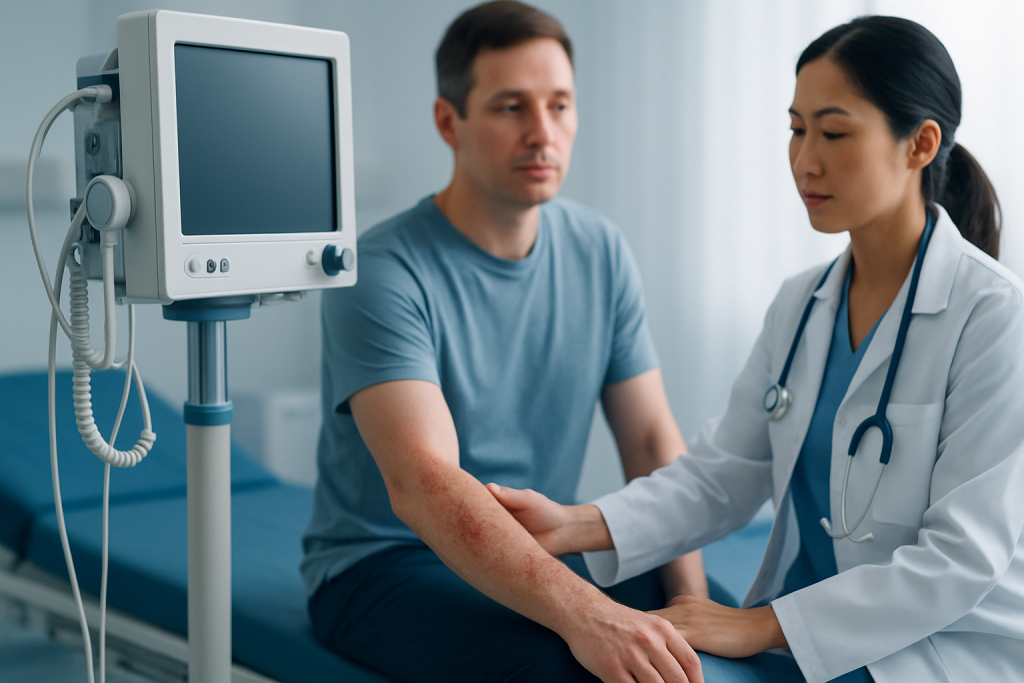
The most noticeable feature is a wet or oozing appearance. The skin may leak clear fluid, become sticky, or form crusts as the surface dries. Itching is common, and the area may also burn, sting, or feel sore, especially when clothing rubs against it or when the skin is washed too aggressively.
Other signs can include swelling, redness, small blisters, thickened skin from repeated scratching, and cracked patches around the edges of the flare. In some people, the area looks yellow and crusted, which can happen when fluid dries on the skin; in others, that same appearance can suggest infection and should be checked by a clinician.
Symptoms often fluctuate. A flare may improve for a while, then return when the skin becomes dry, stressed, irritated by a product, or exposed to weather changes. When symptoms become more widespread or intense than usual, it is worth seeking medical advice rather than trying to manage it only with over-the-counter products.
Causes & Risk Factors
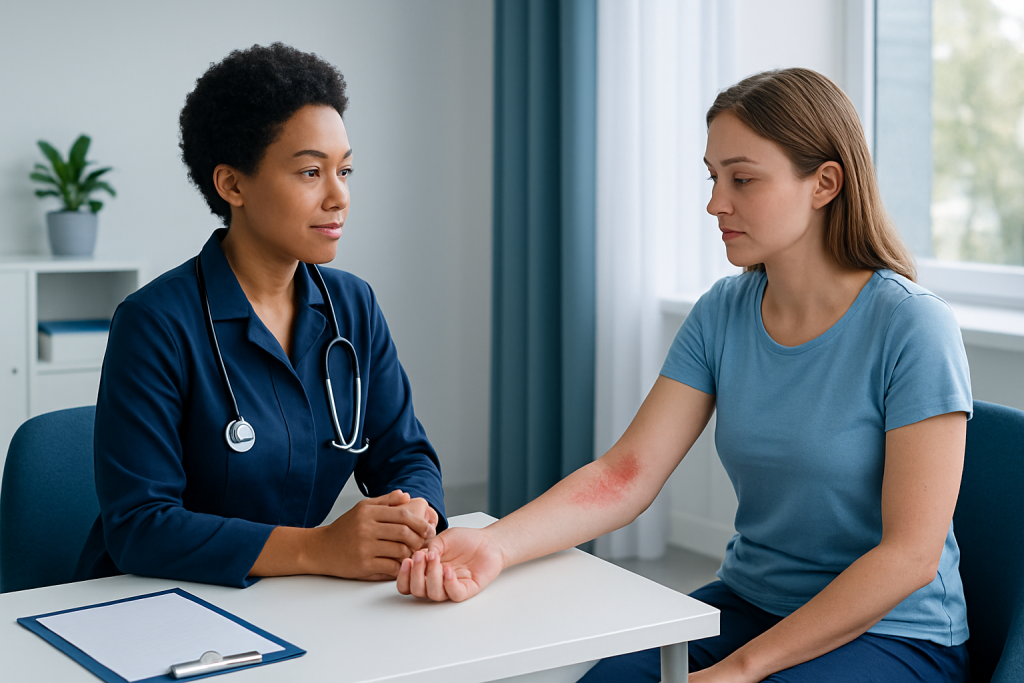
Weeping eczema usually develops when eczema inflammation becomes severe enough to damage the skin barrier. Once the barrier is weakened, moisture escapes and irritants, allergens, and microbes can enter more easily. Scratching can then create small breaks in the skin, allowing fluid to ooze and making the area more vulnerable.
Common flare triggers include soaps, fragranced products, detergent residue, sweat, friction, dry weather, stress, and contact with known allergens. Some people also notice flares after infections, changes in routine, or travel-related skin stress such as long flights, unfamiliar water, or frequent washing in new environments.
Risk factors include a personal or family history of eczema, asthma, or allergic conditions; dry or sensitive skin; and repeated exposure to irritants at work or home. In children, drooling, scratching, and skin rubbing from play can contribute to weeping patches, while in adults, handwashing, occupational exposures, and stress may play a larger role.
Diagnosis
Diagnosis usually begins with a careful skin examination and a discussion of how the rash started, what it looks like, and whether it is painful, itchy, or spreading. A doctor will also ask about skin products, recent exposures, allergies, past eczema flares, and any treatments already tried.
In many cases, weeping eczema is diagnosed clinically, meaning no special test is needed. However, if the skin looks infected, is not responding as expected, or the diagnosis is uncertain, a clinician may take a swab to look for bacteria or recommend other tests to rule out conditions such as contact dermatitis, impetigo, or a fungal rash.
For international patients, clear documentation of prior treatments and photos of earlier flares can be helpful, especially if care is being coordinated across countries. A dermatologist can use that history to decide whether the pattern truly fits eczema or whether another diagnosis should be considered.
Treatment Options
Treatment is usually aimed at three goals: calming inflammation, protecting the skin barrier, and treating infection if it is present. Doctors may recommend topical anti-inflammatory medicines, such as corticosteroid creams or other prescription anti-inflammatory options, chosen according to the location and severity of the rash. These medicines can help reduce redness, itching, and oozing when used appropriately.
Moisturizing is also central to recovery, though the timing and texture of the product matter. Very irritated skin may do better with bland, fragrance-free emollients and gentle cleansing, while heavily weeping areas may need a clinician’s guidance on how to layer products without trapping too much moisture or causing more irritation. If a bacterial infection is suspected, an antibiotic treatment may be added under medical supervision.
Some patients benefit from wet wrap therapy, medicated dressings, or short-term use of oral medicines when flares are extensive or difficult to control. The right plan depends on the person’s age, the skin area involved, previous responses to treatment, and whether the flare is complicated by infection. Because eczema care often changes over time, follow-up is important even after the skin starts to settle.
For patients who are coordinating care from abroad, it can be useful to plan treatment in stages: initial assessment, stabilization of the flare, and a practical follow-up plan for returning home. Acibadem Health Point’s multidisciplinary specialists and JCI-accredited hospitals diagnose and treat this condition for international patients, which can help with continuity when care needs to be shared across settings.
Prevention & Self-care
Daily skin care can make future flares less likely, even if eczema cannot be cured outright. Gentle, fragrance-free cleansers, brief lukewarm showers, and regular use of a suitable moisturizer can support the skin barrier. It also helps to pat the skin dry rather than rubbing it, since friction can worsen irritation.
Avoiding known triggers is another practical step. Common adjustments include switching to mild laundry products, wearing breathable fabrics, limiting scented products, and managing sweat quickly after exercise. People with hand eczema may need extra protection at work, such as gloves chosen carefully to avoid trapping irritants against the skin.
During a flare, scratching control is important. Keeping nails short, using cool compresses when advised, and identifying the moments when itching is worst can reduce skin damage. Stress management, adequate sleep, and a predictable routine may also help some people because eczema often becomes more noticeable when the body is under strain.
When to See a Doctor
Medical review is sensible when eczema starts weeping for the first time, when a flare is more severe than usual, or when home care is not helping. A doctor should also assess the skin if there is increasing pain, warmth, swelling, spreading redness, fever, or thick yellow crusting, since these may suggest infection or another problem that needs treatment.
Anyone with eczema around the eyes, on the face, or in large body areas should seek professional advice sooner rather than later. The same is true if the person is a child, has a weakened immune system, or finds that the rash keeps recurring despite good skin care. Early treatment can often prevent a longer recovery.
If care is being planned from another country, it is reasonable to ask for a dermatology evaluation before travel or soon after arrival, depending on symptom severity. A clear treatment plan, written instructions, and follow-up guidance can make it easier to recover safely and avoid confusion once the initial flare settles.
Living With Recurrent Flares
People who get repeated episodes of weeping eczema often do best when they learn their own pattern. Some flares start after a product change, others after weather shifts, illness, or a stressful period. Keeping a simple record of timing, triggers, and what helped can make future visits with a dermatologist more productive.
It can also help to think of eczema care as long-term skin maintenance rather than a one-time treatment. When the skin barrier is protected consistently, flares may become less frequent and less intense. That approach is especially helpful for patients who travel often or live between two healthcare systems, because it reduces the chance of starting over each time symptoms return.
With the right plan, many people can keep weeping eczema under control and return to normal routines. The key is to treat the skin gently, recognize warning signs early, and seek professional guidance when the appearance changes or the flare does not behave like previous ones.
Frequently asked questions
01Is weeping eczema the same as infected eczema?
Not always. Weeping eczema describes eczema that is oozing or moist, while infected eczema means bacteria or another germ has also caused infection. Because the two can look similar, a clinician may need to examine the skin to tell them apart.
02Why does eczema ooze fluid?
When the skin barrier is very inflamed, tiny amounts of fluid can leak from the skin surface. Scratching and broken skin can make this more noticeable. Oozing is a sign that the area needs gentler care and sometimes medical treatment.
03Can weeping eczema heal on its own?
Mild cases may improve if triggers are removed and the skin is protected, but many flares benefit from medical treatment. If the area is painful, spreading, or crusted, it is better not to wait. Early care can shorten the flare and lower the chance of complications.
04Should moisturizers be used on weeping eczema?
Moisturizers are usually an important part of eczema care, but the type and timing matter. Very inflamed skin may need guidance on which products to use and how often. A doctor or dermatologist can recommend a suitable approach for the specific flare.
05Is weeping eczema contagious?
Eczema itself is not contagious. However, if the skin has a secondary infection, that infection may need treatment and extra hygiene precautions. A medical assessment helps clarify what is causing the ooze or crusting.
06What should someone bring to a dermatologist appointment?
It helps to bring a list of skin products, past treatments, and any known triggers. Photos of the rash at its worst can also be useful if the flare has started to settle before the visit. If the person is traveling for care, prior records and medication names are especially helpful.
This article is for general information only and is not a substitute for professional medical advice. Please consult a qualified doctor about your individual situation.
Explore treatments in Turkey — costs, top hospitals & a free quote
JCI-accredited · board-certified surgeons · reply within 24h
Add us as a Preferred Source to see more of our trusted health content across Google Search, AI Overviews and Discover.