Eczema On Face: Symptoms, Causes and Treatment

Key Takeaways
- Facial eczema is often linked to an overactive skin immune response and a weakened skin barrier.
- Symptoms may include dryness, redness, itching, flaking, burning, and sensitivity to products.
- Triggers can include harsh cleansers, weather changes, stress, allergens, and some skincare ingredients.
- Treatment usually focuses on restoring moisture, reducing inflammation, and avoiding personal triggers.
- Medical review is important if the rash is persistent, painful, infected, or affecting the eyes or eyelids.
Eczema on the face is a common inflammatory skin condition that can make the skin feel dry, itchy, red, and easily irritated. With the right diagnosis and gentle, consistent care, many people can keep symptoms under better control and protect the skin barrier.
Overview
Eczema on the face can be especially frustrating because the skin is thin, visible, and exposed to everyday irritants such as wind, cosmetics, facial cleansers, and masks. In simple terms, eczema is an inflammatory skin condition that makes the skin barrier less effective at holding in moisture and keeping out irritants.
When eczema appears on the face, it may show up as patches of redness, dryness, scaling, roughness, or itching. Some people notice a stinging or burning sensation more than itch, especially after washing the face or applying products. The condition can affect the cheeks, forehead, around the mouth, eyelids, or the folds beside the nose.
Facial eczema is not one single disease in every case. It can be part of atopic dermatitis, or it may be related to contact dermatitis, seborrheic dermatitis, or other skin conditions that can look similar at first glance. That is why a careful skin evaluation matters, particularly when symptoms are recurring or localized to the face.
For people traveling from another country to seek care, a clear diagnosis is often the first step toward relief. Dermatology teams usually focus on identifying the likely type of eczema, reviewing skin-care habits and exposures, and creating a plan that can be followed safely after returning home.
Symptoms
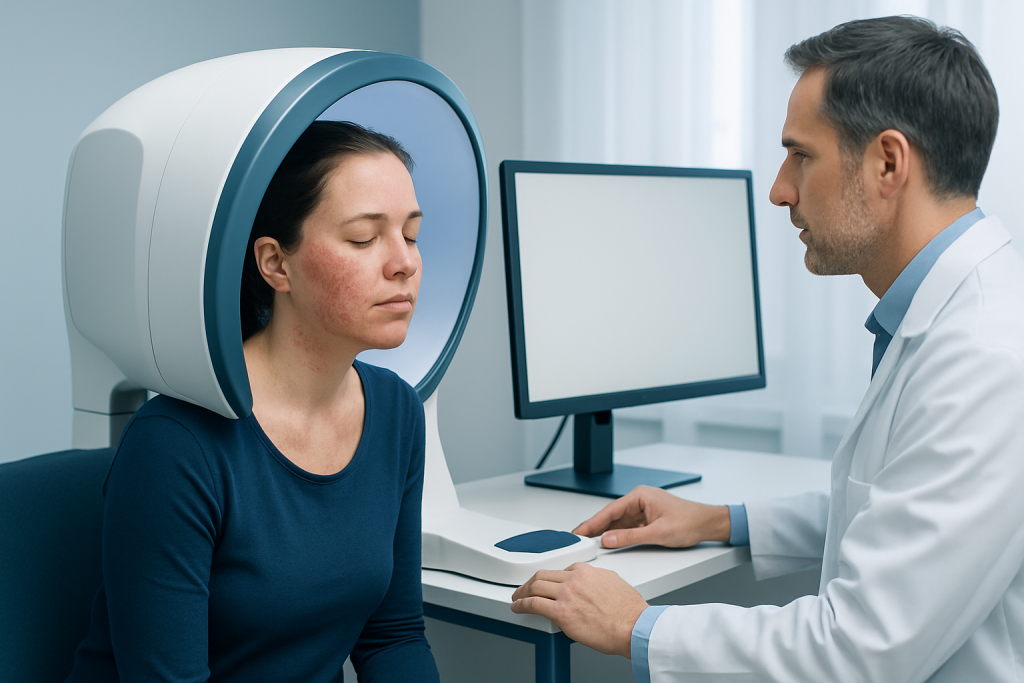
Facial eczema does not look exactly the same from person to person. Some people have faint redness and dryness, while others develop more obvious inflamed patches that become sore or itchy. In darker skin tones, redness may be less obvious, and the skin may look darker, grayish, or more ashy in the affected areas.
Common symptoms can include:
- Dry, rough, or flaky skin
- Redness or discoloration
- Itching, tightness, or burning
- Small bumps or patches of inflammation
- Cracking, especially where the skin folds
- Swelling around the eyes or eyelids in some cases
Symptoms may come and go. Many people notice flare-ups after washing the face too often, using fragranced products, spending time in very dry air, or sweating. Scratching can make the skin more irritated and may increase the risk of infection or post-inflammatory dark marks.
Because facial skin is more delicate, even mild eczema can feel disruptive. It may affect makeup use, work, sleep, or confidence in social settings. A gentle treatment plan can make a meaningful difference in comfort and appearance.
Causes & Risk Factors

Eczema usually develops when the skin barrier is less able to retain moisture and protect against irritants. The immune system then reacts more strongly than usual, which leads to inflammation. On the face, this can be triggered by both internal tendencies and external exposures.
People with a personal or family history of eczema, asthma, or allergic conditions may be more likely to develop facial eczema. However, anyone can experience it. Skin sensitivity, environmental dryness, frequent washing, and repeated exposure to cosmetics or skincare ingredients can all contribute.
Common triggers and risk factors include:
- Harsh soaps, cleansers, toners, or scrubs
- Fragrances, preservatives, or certain cosmetic ingredients
- Cold weather, low humidity, heat, or sweating
- Stress and poor sleep
- Allergens such as pollen, dust, or pet dander in some people
- Skin rubbing from masks, scarves, or tissues
It is also important to remember that not every facial rash is eczema. Seborrheic dermatitis, rosacea, contact allergy, fungal rashes, and psoriasis can overlap in appearance. A clinician may ask about new products, occupational exposures, and any pattern in flare-ups to narrow down the cause.
Diagnosis
Diagnosing eczema on the face usually begins with a careful history and skin examination. A clinician will look at where the rash appears, how it feels, how long it has been present, and what makes it better or worse. Photos taken during flare-ups can be very helpful if the skin looks calmer at the time of the appointment.
In many cases, diagnosis is clinical, meaning it is based on the pattern of the rash and the person’s history. If contact allergy is suspected, patch testing may be recommended to identify a specific trigger such as a fragrance, preservative, or ingredient used in a skincare product.
Sometimes additional testing is needed to rule out other conditions that can mimic eczema. This is more likely when the rash is limited to the eyelids, around the mouth, or in a pattern that suggests another cause. A dermatologist can help distinguish between similar-looking conditions and recommend care that fits the exact diagnosis.
For international patients, bringing a list or photos of products used at home can be particularly useful. This makes it easier for the medical team to review likely irritants and suggest practical substitutions that can be continued after travel.
Treatment Options
Treatment for facial eczema usually aims to calm inflammation, repair the skin barrier, and reduce exposure to triggers. Because the face is sensitive, treatment choices are often more conservative than those used on thicker skin areas. The goal is steady improvement without over-treating delicate skin.
Moisturizers are often a foundation of care. Thick, fragrance-free emollients or bland creams can help reduce dryness and support barrier repair. Doctors may also prescribe anti-inflammatory treatments such as topical corticosteroids for short, carefully monitored use, or non-steroid options such as topical calcineurin inhibitors for areas where steroid-sparing treatment is preferred.
Other treatment approaches may include:
- Switching to gentle, fragrance-free cleansers and skin products
- Adjusting make-up or sunscreen choices to reduce irritation
- Treating any secondary infection if it develops
- Addressing associated conditions such as allergic contact dermatitis
- Managing severe or widespread eczema with additional prescription therapies when needed
It is important not to use stronger prescription creams on the face without medical guidance, since the skin in this area can be more prone to side effects. A dermatologist can choose a treatment plan based on the severity of the rash, the exact location, and whether the eyes or eyelids are involved.
Prevention & Self-care
Daily habits often play a major role in keeping facial eczema quieter. The most helpful routines are usually the simplest ones: reduce irritation, protect the skin barrier, and keep skincare consistent rather than constantly changing products.
A gentle self-care plan may include using lukewarm water instead of hot water, choosing fragrance-free cleansers, and applying moisturizer soon after washing. It can also help to avoid exfoliating scrubs, alcohol-heavy toners, and layered products that cause stinging or redness. When trying a new product, patch testing on a small area may reduce surprises.
Other practical steps include:
- Keeping a short trigger diary to spot patterns
- Using a humidifier in very dry environments if appropriate
- Managing stress and sleep routines as part of skin care
- Wearing protective clothing in wind or cold weather
- Changing pillowcases and washcloths regularly with gentle detergents
People recovering after treatment abroad may find it useful to leave with a very clear written plan, including product categories to use and ingredients to avoid. That kind of roadmap can make long-distance follow-up easier and reduce trial-and-error once home.
When to See a Doctor
Medical review is a good idea if a facial rash lasts more than a short time, keeps returning, or does not improve with basic gentle care. A doctor can confirm whether it is eczema or another condition with a similar appearance.
Prompt evaluation is especially important if the skin becomes painful, crusted, oozing, or unusually swollen, since these changes may suggest infection or significant inflammation. Eye symptoms, eyelid swelling, or changes in vision should also be assessed quickly.
It is also worth seeking advice when facial eczema is affecting sleep, causing major discomfort, or limiting daily activities. Even when the rash seems mild, treatment can be worthwhile if the location makes it difficult to manage. For people considering care outside their home country, Acibadem Health Point’s multidisciplinary specialists and JCI-accredited hospitals can diagnose and treat eczema on the face for international patients in a coordinated way.
With the right plan, facial eczema can often be managed more comfortably over time. The key is to identify the trigger pattern, support the skin barrier, and use treatments that are appropriate for the face rather than relying on repeated self-treatment.
Frequently asked questions
01Is eczema on the face the same as atopic dermatitis?
Not always. Facial eczema can be part of atopic dermatitis, but it can also result from contact dermatitis, seborrheic dermatitis, or another skin condition that looks similar. A clinician may need to examine the pattern carefully to identify the right cause.
02Can makeup make facial eczema worse?
Yes, some makeup products can irritate sensitive skin, especially if they contain fragrance, alcohol, or harsh preservatives. Many people do better with fragrance-free, non-comedogenic products, but any new product should be introduced cautiously.
03Why is eczema on the eyelids or around the mouth more sensitive?
These areas have thinner skin and are more easily irritated by products, rubbing, and environmental triggers. They may also react to allergens or contact irritants that do not bother other parts of the body.
04Should facial eczema be treated with the same creams used on the body?
Not necessarily. Facial skin is more delicate, so treatment choices are often different and should be guided by a clinician. Some body treatments may be too strong or too irritating for the face.
05Can facial eczema leave dark marks?
Yes, inflammation and scratching can leave temporary darker or lighter marks, especially in medium to deep skin tones. These changes often fade gradually, but protecting the skin from irritation can help reduce the risk.
06What is the best first step at home?
The best first step is usually to simplify the routine: use a gentle cleanser, moisturize regularly, and stop any product that stings or seems to worsen the rash. If symptoms do not improve or the rash is recurrent, a doctor should evaluate it.
This article is for general information only and is not a substitute for professional medical advice. Please consult a qualified doctor about your individual situation.
Explore treatments in Turkey — costs, top hospitals & a free quote
JCI-accredited · board-certified surgeons · reply within 24h
Add us as a Preferred Source to see more of our trusted health content across Google Search, AI Overviews and Discover.