Wart on the Scalp: Signs That Need Assessment
A wart on scalp is commonly a noncancerous skin growth caused by certain types of human papillomavirus (HPV). Because the scalp is difficult to examine and other skin conditions can resemble a wart, a healthcare professional can confirm the cause and advise on safe treatment when needed.
Overview: What Is a Wart on Scalp?
A wart on scalp is a localized growth in the outer layer of skin caused by infection with certain strains of human papillomavirus (HPV). It may appear as a small, firm, rough bump, sometimes with a skin-colored, grayish, brownish or yellowish surface. Many warts are painless and harmless, although they may become uncomfortable when a comb, hairbrush, hat or razor repeatedly rubs against them.
Not every bump on the scalp is a wart. Cysts, moles, seborrheic keratoses, folliculitis, psoriasis and, less commonly, skin cancers can have a similar appearance. Hair can also make it difficult for a person to notice changes in size, color or shape. For this reason, it is sensible to have a new, persistent or unusual scalp growth examined by a dermatologist or qualified healthcare professional.
Warts can occur at any age, but they are more common in children and young adults. They may clear without treatment as the immune system recognizes the virus, although this can take months or sometimes longer. Treatment is usually considered when the diagnosis is uncertain, the growth is painful, catches on grooming tools, spreads, bleeds from repeated trauma or causes concern.
How a Scalp Wart May Look and Feel
Common warts often have a rough, uneven or cauliflower-like surface. On the scalp, they may be easier to feel than see. A person may notice a firm bump while washing their hair, styling it or scratching their head. Some warts have tiny dark dots within them, which are small clotted blood vessels, but these dots are not present in every wart.
A wart may be single or occur in a cluster. It can remain the same size for a long period, gradually enlarge or be joined by new nearby lesions. Itching is possible, especially if the surrounding skin is dry or irritated, but intense itch, marked tenderness, pus or widespread scaling may point to another condition rather than a simple wart.
Scalp warts can bleed if they are scratched, shaved or caught by a comb. Brief bleeding after an obvious injury is often not serious, but bleeding without touching the lesion, repeated crusting, ulceration or a sore that does not heal needs medical assessment. It is important not to pick at a suspected wart, as this can irritate the skin and may spread the virus to nearby areas.
Why Scalp Warts Develop

Warts develop when HPV enters the skin through tiny, often unnoticed breaks. The virus stimulates extra growth of skin cells, creating the raised lesion. HPV types that cause common skin warts are generally different from the types associated with genital HPV infection. Having a common wart on the scalp does not by itself indicate a sexually transmitted infection.
The virus can spread through direct skin-to-skin contact or indirectly when people share items that touch the skin, such as combs, brushes, hair accessories, towels or razors. Transmission does not happen after every exposure. Whether a wart develops depends on the type of virus, the condition of the skin and an individual’s immune response.
Risk may be higher when the skin is frequently irritated or damaged, including through scratching, shaving or some scalp conditions. Children, people who bite their nails or pick their skin, and those with a weakened immune system may develop warts more easily or have warts that persist. Immune suppression can result from certain medicines or medical conditions; anyone in this situation should seek professional advice before trying home treatment.
- Do not share combs, brushes, razors, hats or towels when a wart is present.
- Cover cuts or grazes on the scalp when practical and avoid scratching them.
- Clean grooming tools regularly, particularly if they contact a lesion.
- Avoid shaving directly over a suspected wart, as this can cause bleeding and spread.
How a Clinician Confirms the Diagnosis
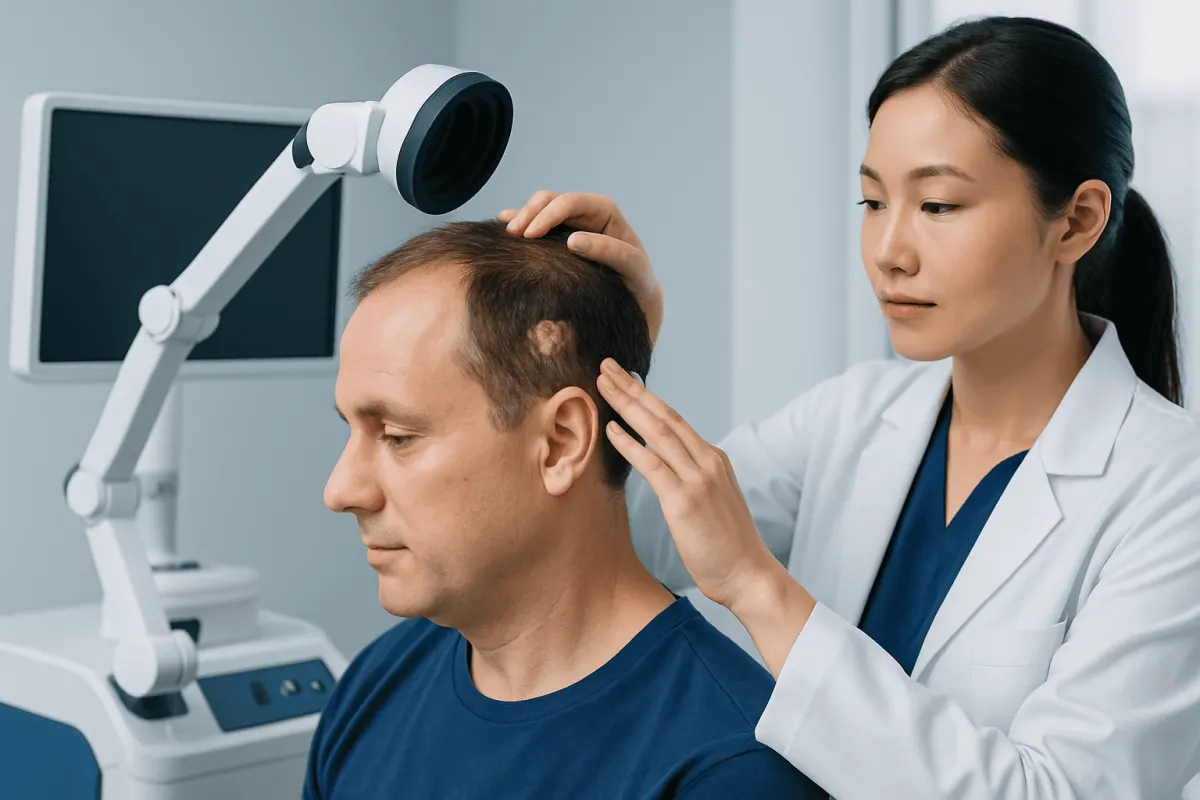
Diagnosis often begins with a medical history and a close examination of the scalp lesion. The clinician may ask when it first appeared, whether it has grown or changed, whether it hurts or bleeds, and whether there is a history of warts elsewhere on the body. They may also ask about immune health, medicines, previous skin cancer and family history.
A dermatologist may use a dermatoscope, a handheld device that magnifies and illuminates the skin, to assess surface patterns and blood vessels. This can help distinguish a wart from a mole, seborrheic keratosis or other growth. Hair may be parted or clipped minimally to allow an adequate view of the lesion and the surrounding skin.
If the appearance is not typical, or if there are warning features such as irregular pigmentation, persistent bleeding, rapid growth or an open sore, the clinician may recommend a biopsy. In this procedure, a small sample or the entire lesion is removed under local anesthetic and examined in a laboratory. A biopsy is an important diagnostic tool and does not mean that cancer is expected; it is used to provide a clear answer when examination alone is insufficient.
Treatment Options for a Wart on Scalp
Many confirmed warts can be observed without treatment if they are not bothersome. Spontaneous resolution is possible, especially in otherwise healthy children and young adults. However, waiting may be less suitable if the lesion repeatedly catches during hair care, spreads, causes distress or has an uncertain diagnosis.
Clinician-directed treatment may include cryotherapy, which uses controlled freezing to destroy wart tissue; prescription topical treatments; or carefully selected removal methods. Depending on the lesion, a dermatologist may consider curettage, electrosurgery, laser treatment or surgical excision. The choice depends on the size, location, number of lesions, skin and hair characteristics, likelihood of scarring, and whether tissue needs to be examined.
Over-the-counter products containing salicylic acid are widely used for warts on hands and feet, but the scalp presents special challenges. These products can irritate healthy skin, may be difficult to apply accurately through hair and should not be used near the eyes. A person should not use strong acids, wart-removal devices, household chemicals or do-it-yourself cutting methods on a scalp growth that has not been diagnosed.
After treatment, temporary soreness, redness, scabbing or changes in skin color can occur. Procedures on the scalp can occasionally affect hair follicles or leave a small scar, so discussing expected healing and hair-care instructions with the treating clinician is useful. Warts can recur because HPV may remain in nearby skin, and follow-up may be needed.
Scalp Care and Preventing Spread
Gentle scalp care can reduce irritation while a wart is being monitored or treated. It is best to wash the scalp normally with a mild shampoo, avoid vigorous scratching and use a clean comb or brush. If a wart is accidentally nicked, gentle pressure with clean gauze can help stop minor bleeding. Seek advice if bleeding is difficult to control or if the area becomes increasingly painful, swollen or produces discharge.
A person can lower the chance of spreading HPV by washing hands after touching the lesion and by avoiding picking, cutting or shaving over it. Combs, brushes, razors, hair clips and towels should not be shared. Washing reusable grooming items and replacing or cleaning razor heads according to product instructions is also sensible.
There is no guaranteed way to prevent all common warts, since HPV is common and may be present without visible lesions. Still, protecting the skin barrier and avoiding direct contact with another person’s visible wart can help. It is also useful to remember that ordinary scalp warts are common and usually manageable; careful assessment is more important than trying to remove every scalp bump immediately.
When to Seek Medical Care
Medical care is recommended for any scalp growth that is new and difficult to identify, particularly because it may not be easy to monitor beneath hair. A clinician should assess a lesion that grows quickly, changes in color or shape, develops an irregular border, repeatedly bleeds, becomes ulcerated, causes persistent pain or does not heal. These features do not automatically mean a serious condition, but they should not be assumed to be a wart.
Prompt medical advice is also appropriate if there are many warts, if the lesion is spreading, if home treatment has caused irritation, or if the person has diabetes, poor circulation, reduced sensation or a weakened immune system. Children should have a scalp lesion reviewed if the diagnosis is uncertain or if it is painful or repeatedly traumatized during grooming.
Acıbadem Health Point’s multidisciplinary specialists and JCI-accredited hospitals can assess scalp lesions and provide appropriate dermatology care for international patients. A qualified clinician can determine whether monitoring, treatment or further testing is the safest next step.
Frequently asked questions
01Can a wart grow on the scalp?
Yes. Common warts can develop on the scalp when HPV enters the outer skin through tiny breaks. They may be hidden by hair and are often first noticed as a rough or firm bump during washing or brushing.
02Is a wart on scalp contagious?
The HPV types that cause common warts can spread through direct contact or through shared items such as combs, brushes, razors and towels. Spread is not inevitable, but avoiding picking and not sharing grooming tools can reduce the risk.
03Can a scalp wart be removed at home?
It is best not to remove a scalp growth at home before it has been diagnosed. Over-the-counter acids and cutting methods can damage healthy skin, cause bleeding or scarring, and may delay evaluation of a lesion that is not actually a wart.
04Will a wart on scalp go away without treatment?
Some warts resolve on their own as the immune system responds to the virus. This may take months or longer, and some lesions persist. Medical treatment may be helpful when a wart is uncomfortable, spreading, repeatedly injured or diagnostically uncertain.
05Does a scalp wart cause hair loss?
A small common wart does not usually cause hair loss. However, inflammation, repeated scratching, infection or certain removal procedures may temporarily affect nearby hair. A clinician can explain the expected effect of a particular treatment based on the wart's location.
06How can someone tell whether a scalp bump is a wart or a mole?
It is often not possible to tell with certainty at home, especially beneath hair. Warts commonly feel rough and may have a thickened surface, while moles can be smooth or raised, but appearances overlap. A dermatologist can examine the lesion closely and arrange a biopsy if needed.
This article is for general information only and is not a substitute for professional medical advice. Please consult a qualified doctor about your individual situation.
Hair transplant in Turkey — costs, graft counts & a free assessment
JCI-accredited · board-certified surgeons · reply within 24h
Add us as a Preferred Source to see more of our trusted health content across Google Search, AI Overviews and Discover.