Vomiting with Blood While Pregnant: What You Need to Know

Key Takeaways
- Blood in vomit during pregnancy is not something to ignore, even if the blood seems small in amount.
- Common causes include repeated vomiting, irritation of the esophagus, and small tears from forceful retching.
- Emergency evaluation is needed if there is heavy bleeding, fainting, severe abdominal pain, black stools, or trouble breathing.
- Doctors may use a careful history, exam, blood tests, and sometimes imaging or endoscopy to find the cause safely in pregnancy.
- Hydration, anti-nausea care, and treatment of the underlying problem usually help once the source is identified.
Vomiting with blood while pregnant can range from a small irritation in the throat or stomach to a sign of a more serious problem. It should always be discussed with a doctor promptly, especially if the blood is bright red, the amount is more than a streak, or other symptoms are present.
Overview
Vomiting with blood while pregnant usually means that blood has entered the vomit from the mouth, throat, esophagus, or stomach. In some cases, the blood appears as small red streaks after repeated vomiting. In others, it may look dark, like coffee grounds, which can suggest that the blood has been in the stomach for a while.
This symptom deserves attention because pregnancy changes digestion, blood volume, and nausea patterns, but it does not make blood in vomit normal. A pregnant person does not need to decide the cause alone; the safest next step is to contact an obstetrician, midwife, or urgent care clinician for guidance, especially if the symptom is new or recurring.
Most causes are treatable, and many are not dangerous when caught early. The key is to assess how much blood is present, whether vomiting has been frequent, and whether there are other warning signs such as pain, dizziness, or dehydration.
Symptoms and what the blood may look like
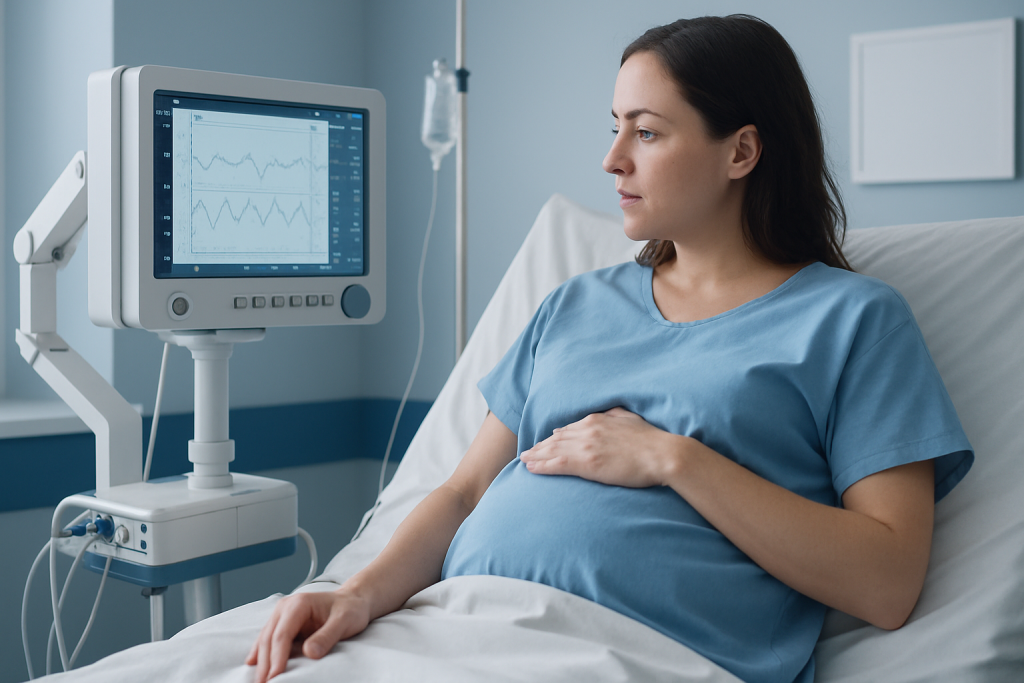
The appearance of the blood can offer clues, but it cannot confirm the cause on its own. Bright red blood may come from fresh irritation in the throat or esophagus, while darker blood or coffee-ground material may indicate blood that has been exposed to stomach acid. Either pattern should be reported to a doctor.
Vomiting with blood may happen alongside nausea, heartburn, retching, abdominal discomfort, or a sour taste in the mouth. Some people also notice nosebleeds that drain backward and are later mistaken for blood from the stomach.
Pregnant patients should pay attention to the overall pattern:
- How much blood was seen: streaks, teaspoons, or more
- How often vomiting has happened
- Whether the person can keep fluids down
- Whether there is black stool, faintness, or severe pain
If the vomiting is persistent, the body can lose fluid and electrolytes quickly. That matters in pregnancy because dehydration can make someone feel weak, speed the heart rate, and worsen nausea and reflux.
Causes and risk factors
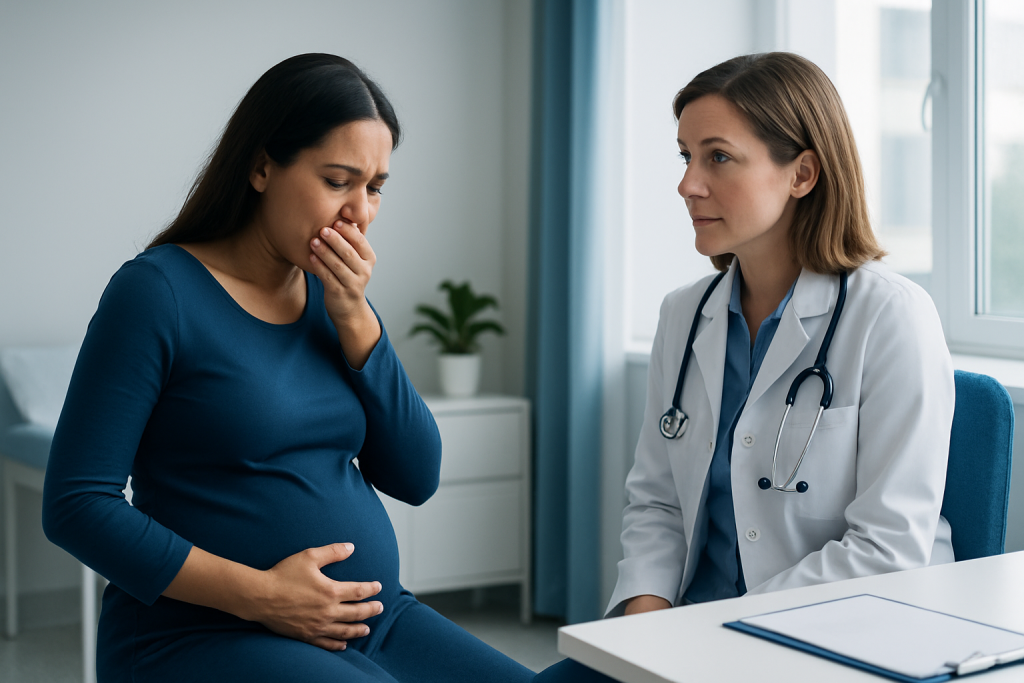
The most common explanation is irritation from repeated vomiting. Forceful retching can inflame the lining of the esophagus or stomach and may cause a small tear, especially after frequent episodes of nausea and vomiting in pregnancy. This is one reason hyperemesis gravidarum, the severe end of pregnancy-related nausea and vomiting, sometimes leads to blood in the vomit.
Other possible causes include acid reflux, gastritis, a stomach ulcer, swallowed blood from a nosebleed or bleeding gums, or, less commonly, a more serious upper gastrointestinal bleed. Preexisting conditions such as a history of ulcers, liver disease, alcohol-related disease, blood clotting problems, or use of certain medicines may increase concern.
Risk is also higher when vomiting has gone on for a long time, when there is limited food or fluid intake, or when someone has been taking medications that irritate the stomach. Pregnancy itself can worsen reflux and nausea, which can set up a cycle of vomiting and irritation.
How doctors evaluate it
The evaluation usually begins with a detailed discussion of the vomit, recent meals, nausea severity, reflux symptoms, pain, medications, and any bleeding elsewhere. A clinician will also ask about the pregnancy stage, dehydration symptoms, and whether there has been dizziness, black stools, or fainting.
A physical examination may check the abdomen, blood pressure, pulse, hydration status, and signs of anemia. Blood tests can help assess hemoglobin, electrolytes, liver function, and clotting if needed. In some situations, testing may also look for pregnancy-related complications or non-pregnancy causes of vomiting.
If the source is unclear or the bleeding seems significant, a doctor may recommend imaging or upper endoscopy. When these tests are needed in pregnancy, they are chosen carefully to balance maternal and fetal safety, and the medical team will explain why they are being considered.
Treatment options
Treatment depends on the cause and how much blood has been lost. If the blood came from irritation after repeated vomiting, the plan may focus on stopping the nausea, protecting the stomach lining, and restoring fluids. If reflux or gastritis is involved, a clinician may suggest pregnancy-appropriate medicines and dietary changes.
When dehydration is present, IV fluids may be needed. If a blood test shows anemia or if bleeding is more than minimal, more urgent treatment may be required. In the uncommon event of an ulcer, tear, or active gastrointestinal bleeding, care may involve observation, medication, and sometimes a procedure to identify and treat the source.
Pregnant patients should not self-treat with over-the-counter medicines without checking first. Some medications used for nausea, pain, or acid relief are safer than others in pregnancy, so the right option should be chosen by a clinician familiar with the individual’s trimester and medical history.
Prevention and self-care
Prevention begins with reducing repeated vomiting when possible. Eating smaller, more frequent meals; avoiding strong smells and trigger foods; staying upright after eating; and sipping fluids throughout the day can help some pregnant people. If nausea is becoming difficult to manage, earlier treatment is usually easier than waiting until vomiting is severe.
Gentle reflux habits can also lower irritation: not lying down right after meals, avoiding very spicy or greasy foods if they worsen symptoms, and keeping the upper body slightly elevated during rest. If a person is prone to nosebleeds or bleeding gums, good nasal and oral care may help reduce swallowed blood that can later appear in vomit.
At home, it is reasonable to monitor how often vomiting happens, whether fluids stay down, and whether the color of the vomit changes. Keeping a short note of symptoms can help a doctor identify patterns quickly, especially if care is being arranged from another country or across different stages of pregnancy follow-up.
When to see a doctor
A pregnant person should contact a doctor promptly after any episode of vomiting with blood, even if the amount is small, because the cause cannot be confirmed by appearance alone. The call should be urgent if vomiting is ongoing, if the person cannot keep liquids down, or if nausea is severe enough to raise dehydration concerns.
Emergency care is needed if there is a large amount of blood, black or tarry stool, fainting, chest pain, shortness of breath, severe abdominal pain, confusion, or signs of shock such as clammy skin and extreme weakness. These symptoms do not automatically mean a dangerous diagnosis, but they do mean the situation needs immediate medical assessment.
For Myomectomy Recovery for International Patients: The Usual Travel Timeline" class="ahp-ilk">international patients, clear communication matters: bringing a symptom list, medication names, and pregnancy records can speed evaluation. Acibadem Health Point’s multidisciplinary specialists and JCI-accredited hospitals diagnose and treat this condition for international patients, with coordinated care when a pregnancy needs additional medical attention.
Recovery, follow-up, and pregnancy safety
Recovery depends on the source of the bleeding and whether vomiting can be controlled. Many people improve once dehydration is corrected and nausea is treated, but follow-up is important if symptoms return or if there is a history of ulcers, reflux, or severe vomiting in pregnancy.
Doctors may want to recheck blood counts, hydration, or stomach symptoms after the first visit, especially if the patient has had repeated episodes. This is also the time to review a safe nutrition plan, anti-nausea strategy, and warning signs that should prompt another call.
Pregnancy care works best when stomach symptoms are not separated from obstetric care. A coordinated plan helps protect maternal health while keeping fetal well-being in view, which is especially important for people traveling for treatment or managing the pregnancy from abroad.
Frequently asked questions
01Is vomiting with blood while pregnant always an emergency?
Not always, but it should always be assessed promptly. Small streaks of blood can come from irritation after repeated vomiting, yet a clinician still needs to confirm the cause and make sure there is no more serious bleeding.
02Can severe morning sickness cause blood in vomit?
Yes, repeated forceful vomiting can irritate the throat, esophagus, or stomach lining and sometimes cause small tears. This is more likely when nausea has been intense or prolonged.
03What does coffee-ground vomit mean in pregnancy?
Coffee-ground vomit usually means the blood has been exposed to stomach acid, which can happen with upper gastrointestinal bleeding. It is not something to watch at home without medical advice.
04Should a pregnant person take antacids or anti-nausea medicine on their own?
They should check with a doctor or pharmacist first, because pregnancy-safe choices depend on the symptom pattern and medical history. Some medicines are appropriate in pregnancy, but the right option should be personalized.
05Can blood in vomit come from a nosebleed instead of the stomach?
Yes, swallowed blood from a nosebleed or even bleeding gums can appear in vomit. A doctor can help sort this out by asking about recent nosebleeds, coughing, reflux, and the vomit’s appearance.
06When should follow-up happen after the bleeding stops?
Follow-up should happen soon if the cause is not clear, if vomiting continues, or if the patient has ongoing reflux or dehydration. A doctor may want to make sure anemia, ulcer disease, or another stomach problem is not being missed.
This article is for general information only and is not a substitute for professional medical advice. Please consult a qualified doctor about your individual situation.
Persistent digestive symptoms? Get evaluated in Turkey
JCI-accredited · board-certified surgeons · reply within 24h
Add us as a Preferred Source to see more of our trusted health content across Google Search, AI Overviews and Discover.