VASER Liposuction in Turkey: Method, Cost and Who It Suits

Key Takeaways
- VASER uses ultrasound energy to loosen fat cells before they are removed, which may allow a more targeted approach in fibrous or contoured areas.
- It is a contouring procedure for people close to a stable, healthy weight — not a treatment for obesity or a substitute for weight loss.
- Most international patients plan a stay of roughly five to seven nights, with fitness to fly confirmed by the operating surgeon rather than assumed.
- Costs are best understood as planning bands influenced by the number of areas, anaesthesia type and hospital stay; a firm figure follows medical assessment.
- Accreditation such as JCI, verifiable surgeon credentials and a written aftercare pathway matter more than headline pricing.
- Compression garments, gradual return to activity and follow-up back in the UK are part of the result, not optional extras.
VASER liposuction is an ultrasound-assisted form of body contouring used to remove localised fat deposits that have not responded to diet and exercise. This guide explains how UK patients typically plan, budget for and recover from treatment abroad, and what to check before booking.
VASER Liposuction Turkey: How the Method Works
People researching vaser liposuction turkey options are usually looking for the same thing: a clear explanation of the technique, an honest sense of cost, and reassurance that the journey can be organised safely from the UK. VASER (Vibration Amplification of Sound Energy at Resonance) is a form of ultrasound-assisted liposuction. Fine probes deliver ultrasound energy into the fatty layer, which helps to loosen fat cells from surrounding tissue before they are suctioned away through small cannulas. The intention is to allow the surgeon to work precisely in areas that are fibrous or anatomically detailed.
It is important to frame VASER accurately. It is a surgical body-contouring procedure performed by a qualified plastic surgeon, usually under general anaesthesia or sedation with local anaesthetic, depending on the number of areas treated and the individual assessment. It reshapes specific zones — such as the abdomen, flanks, thighs, arms, back or chin — rather than reducing overall body weight. Skin quality also influences the outcome, because removing fat does not tighten loose skin.
Because the technique is operator-dependent, results vary between individuals and cannot be predicted precisely in advance. A responsible consultation will discuss what is realistically achievable for a particular body shape, whether a different or additional procedure may suit better, and what the recovery period involves. This article looks at the coordination side of that journey; detailed clinical questions about technique, anaesthesia and personal suitability should always be discussed directly with a surgeon.
Who VASER Liposuction Tends to Suit
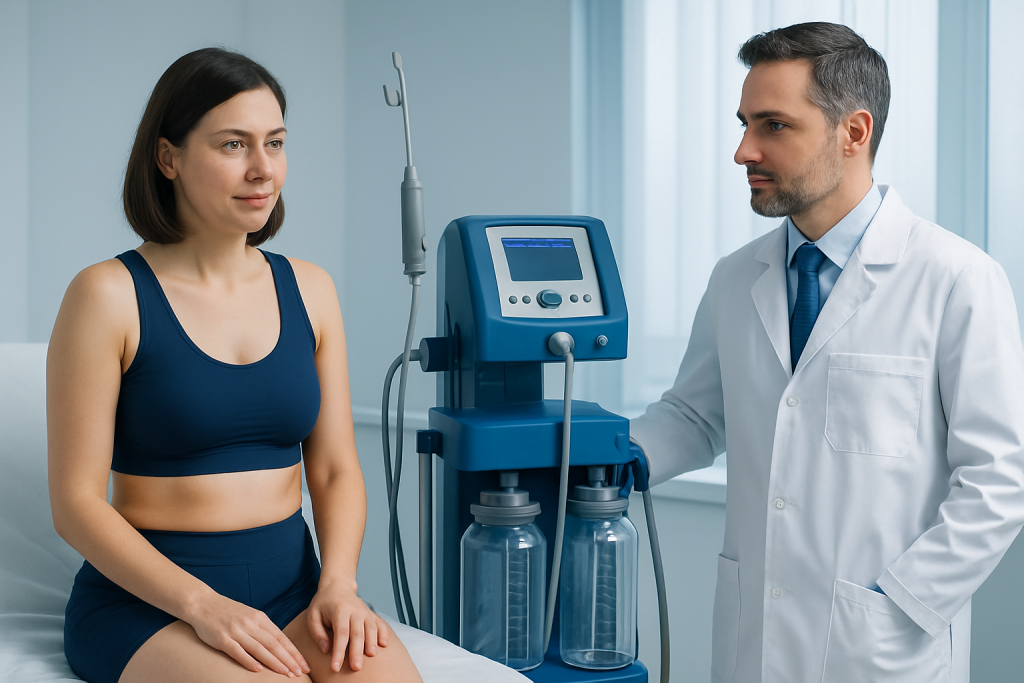
VASER liposuction is generally considered for adults in good general health who are at or near a stable weight and who have localised fat pockets that persist despite consistent diet and exercise. Candidates with reasonable skin elasticity often see smoother contour transitions, because the skin can retract over the treated area. Non-smokers, or those willing to stop smoking well in advance, are usually better placed for uncomplicated healing.
Equally important is understanding when the procedure is not the right choice. Liposuction is not a weight-loss treatment and is not appropriate for managing obesity or metabolic conditions. It is not intended to correct significant skin laxity, stretch marks or muscle separation after pregnancy, which may require different surgical approaches. Anyone with uncontrolled diabetes, a bleeding disorder, significant cardiovascular or respiratory disease, or an active infection will need thorough medical review first, and some will be advised against surgery altogether.
Motivation also matters. Body-contouring surgery tends to work best when the person is seeking a change for themselves, has realistic expectations, and understands that outcomes settle over months rather than days. Surgeons are trained to identify unrealistic expectations and may decline to operate — a sign of good practice rather than an obstacle.
- Close to a stable, healthy weight for at least several months
- Localised, diet-resistant fat deposits rather than generalised excess weight
- Reasonable skin tone and elasticity in the treatment area
- Non-smoker or able to stop smoking well before and after surgery
- Realistic expectations and willingness to follow aftercare instructions
Planning the Journey from the UK

A well-organised medical trip begins long before the flight. Most international patients start with a remote assessment: photographs taken from standard angles, a summary of medical history, current medications, previous surgery and body measurements. A video consultation with the surgeon or a senior clinical coordinator then allows the plan to be discussed, alternatives considered, and questions answered while the patient is still at home and under no pressure to commit.
Pre-operative investigations — typically blood tests, and cardiac or respiratory checks where indicated — may be arranged locally in the UK or on arrival, depending on timing. Patients taking anticoagulants, hormonal contraception or certain supplements will need specific guidance about what to pause and when, which must come from the treating team rather than from general advice online.
Logistics are then built around the medical plan, not the other way round. This usually means booking flexible flights, allowing a buffer day after surgery before any travel, arranging accommodation within easy reach of the hospital, and confirming interpreter support if English-language communication is needed at every stage. Travelling with a companion is strongly recommended for the first days after surgery, and many patients also choose to arrange travel insurance that explicitly covers planned surgery abroad and any complications.
What Treatment Packages Typically Include
Packages differ between hospitals, so the value of a quotation lies in the detail rather than the total. A transparent proposal sets out exactly which services are covered and which are billed separately, so that there are no surprises after arrival. Patients should ask for this in writing and read it carefully before paying a deposit.
A comprehensive package for body-contouring surgery commonly covers the elements listed below, though the exact composition should always be confirmed for the individual case.
- Pre-operative consultation, examination and standard laboratory tests
- Surgeon, anaesthetist and operating theatre fees
- Hospital stay for the agreed number of nights, including nursing care
- The first compression garment and routine post-operative medication
- Post-operative check-ups during the stay and removal of any drains or sutures where applicable
- Airport transfers, hospital transfers and interpreter support
- A discharge summary and written aftercare instructions for the GP at home
Items frequently excluded include flights, hotel nights beyond the package, additional garments, lymphatic drainage massage sessions, treatment of unrelated medical issues, and any revision surgery. Clarifying the hospital’s policy on complications — who provides care, where, and on what financial basis — is one of the most important questions a patient can ask before booking.
Understanding Cost Bands and Budget Planning
It is not possible, or responsible, to quote a fixed price before a surgeon has assessed the individual. Costs are better understood as planning bands. At the lower end sit single-area treatments performed under sedation with local anaesthetic and same-day or single-night discharge. Mid-range bands generally reflect two to four treatment areas under general anaesthesia with an overnight hospital stay. Higher bands apply to extensive multi-area contouring, longer operating time, combined procedures, or cases requiring additional monitoring.
Several factors move a quotation within these bands: the number and size of areas treated, the volume of fat to be removed, the type of anaesthesia, the length of hospital stay, the seniority and specialisation of the surgeon, and the level of hospital facilities and accreditation. Fat transfer to another area, if planned, adds operating time and complexity. Prices quoted without an assessment should be treated with caution, as should figures that seem markedly out of step with comparable providers.
Sensible budgeting also allows for the parts of the trip that sit outside the medical fee: flights, extra accommodation nights, meals, additional compression garments, and a contingency in case the surgeon advises a longer stay. Patients should also consider the cost of any follow-up care needed at home. Written, itemised cost planning provided in advance — with a clear statement of what would change the figure — is a hallmark of a well-run international patient service.
Choosing a Hospital and Surgeon Safely
Accreditation is a useful starting filter. Joint Commission International (JCI) accreditation indicates that a hospital has been externally assessed against international standards covering patient safety, infection control, medication management and clinical governance. It does not guarantee an individual outcome, but it does signal that systems are in place and are audited. Operating in a full hospital environment, rather than a day clinic, also means that emergency support, intensive care and other specialities are available if needed.
Surgeon credentials matter just as much. Patients are entitled to know the surgeon’s full name, specialist qualification in plastic, reconstructive and aesthetic surgery, years of experience with the specific technique, and professional registration. Being able to speak with the operating surgeon — not only a sales representative — before committing is a reasonable expectation. Consistent, unretouched before-and-after photographs of comparable body types, shared with appropriate consent, are more informative than promotional imagery.
Other practical markers of quality include a clear written consent process that explains risks, a named point of contact throughout the stay, documented follow-up arrangements, and a stated complications policy. Patients should feel free to ask questions, request a second opinion, and take time to decide. Any provider that discourages this, or applies pressure to book quickly, is not offering the standard of care that surgery deserves.
Recovery, Travel Timing and Flying Home
Recovery from VASER liposuction is gradual. Bruising, swelling, numbness and a sensation of tightness are usual in the early weeks, and compression garments are typically worn for a period defined by the surgeon to support the tissues and help swelling settle. Light walking is usually encouraged early to support circulation, while strenuous exercise and heavy lifting are restricted until the surgeon confirms it is safe. Final contour continues to refine over several months as swelling resolves.
Travel timing should be built around medical clearance rather than a pre-set schedule. Many international patients plan a stay of roughly five to seven nights so that the immediate post-operative period, wound checks and at least one review appointment happen before departure. The surgeon confirms fitness to fly on an individual basis; some patients are advised to stay longer. Because surgery and immobility both raise the risk of venous thromboembolism, in-flight advice such as moving the legs regularly, staying hydrated and following any prescribed preventive measures should be taken seriously.
Patients should also prepare for the journey home practically: an aisle seat, loose clothing over the compression garment, assistance with luggage, and copies of the operation note and discharge summary in the hand luggage. Arranging for someone to help at home for the first few days makes the transition considerably easier.
Aftercare Back Home and When to Seek Advice
Aftercare does not end at the airport. Before leaving Turkey, patients should have written instructions covering garment wear, wound care, activity restrictions, any prescribed medication, the schedule for remote follow-up, and a direct contact route for questions. Many hospitals arrange video reviews at intervals over the following weeks and months, and can share documentation with a GP or a local practitioner in the UK if further assessment is needed.
Registering the procedure with the GP is sensible, so that any local care is informed by an accurate record. Some patients arrange private nursing or physiotherapy support at home for dressing changes or lymphatic drainage massage, if this has been recommended. Maintaining a stable weight, staying active and eating well all help to protect the result, since remaining fat cells can still enlarge with weight gain.
Urgent medical advice should be sought without delay for signs such as increasing pain that is not controlled, spreading redness, fever, foul-smelling discharge, heavy bleeding, marked asymmetry or a sudden change in swelling, calf pain or swelling, chest pain or breathlessness. These require prompt in-person assessment locally, and the operating team should also be informed. For patients weighing up their options, Acibadem Health Point coordinates assessment and treatment across the group’s multidisciplinary specialists and JCI-accredited hospitals, and a patient coordinator can be contacted at the research stage — well before any booking — to discuss suitability, documentation and travel planning.
Frequently asked questions
01How is VASER different from traditional liposuction?
VASER uses ultrasound energy to loosen fat cells before they are suctioned out, whereas traditional liposuction relies on the mechanical action of the cannula alone. Surgeons may prefer ultrasound assistance in fibrous areas or where detailed contouring is planned. Both are surgical procedures with similar general risks, and the choice depends on the individual assessment rather than on the technique being inherently superior.
02How long should UK patients plan to stay in Turkey?
Many international patients plan around five to seven nights so that surgery, hospital observation and at least one post-operative review can take place before travelling home. The surgeon confirms fitness to fly individually, and some people are advised to stay longer. Flexible flight bookings are wise, as recovery cannot be scheduled precisely in advance.
03Why can't a clinic give an exact price before assessment?
The cost depends on the number and size of areas treated, operating time, type of anaesthesia and length of hospital stay, all of which are determined by a medical assessment. Reputable providers therefore give indicative planning bands first and a firm, itemised quotation after review of photographs, measurements and medical history. A precise figure offered before any assessment should prompt further questions.
04What does JCI accreditation actually mean for a patient?
Joint Commission International accreditation means a hospital has been independently assessed against international standards for patient safety, infection control, clinical governance and medication management. It does not guarantee a particular result for any individual, but it indicates that quality systems are documented and regularly audited. It is one useful criterion alongside surgeon credentials and a clear aftercare pathway.
05Is the result of VASER liposuction permanent?
Fat cells removed during the procedure do not return, but the remaining fat cells throughout the body can still enlarge if weight is gained. Maintaining a stable weight through balanced eating and regular activity therefore helps protect the contour achieved. Results also continue to refine for several months as swelling settles, so early appearances are not the final outcome.
06What follow-up is available after returning to the UK?
Most international patient services arrange remote follow-up by video or messaging at set intervals, and provide a discharge summary and operation note that can be shared with a GP. Some patients arrange local support for dressing changes or massage. Any concerning symptom, such as fever, spreading redness, chest pain or calf swelling, needs prompt in-person medical assessment at home as well as notification of the operating team.
07When is the right time to contact a patient coordinator?
It is reasonable to make contact at the research stage, before any decision has been made. A coordinator can explain what medical information is needed, arrange a video consultation with a surgeon, outline indicative cost planning and describe travel and accommodation logistics. There should be no pressure to book, and taking time to consider options is always appropriate before surgery.
This article is for general information only and is not a substitute for professional medical advice. Please consult a qualified doctor about your individual situation.
Explore treatments in Turkey — costs, top hospitals & a free quote
JCI-accredited · board-certified surgeons · reply within 24h
Add us as a Preferred Source to see more of our trusted health content across Google Search, AI Overviews and Discover.