Upper Back Herniated Disc: Symptoms and Care Options
A herniated disc in the upper back usually refers to a thoracic disc herniation, in which the cushioning disc between vertebrae bulges or leaks and may irritate nearby nerves. Many cases can be managed without surgery, but new weakness, walking difficulty, or bladder or bowel changes require urgent medical assessment.
What Is a Herniated Disc in the Upper Back?
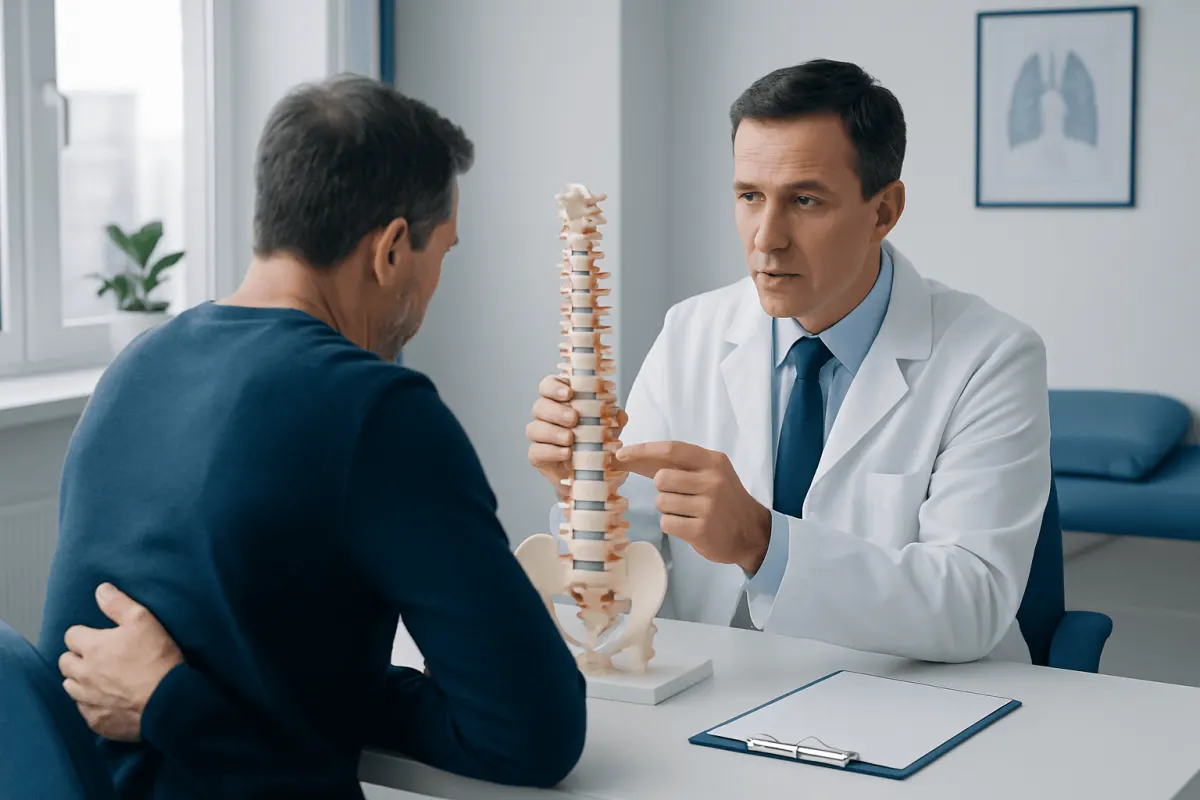
A herniated disc upper back usually means a disc problem in the thoracic spine, the 12 vertebrae between the neck and lower back. Intervertebral discs act as cushions between vertebrae. Each has a tougher outer ring and a softer inner material. A herniation occurs when disc material pushes through a weakened part of the outer ring and may press on or inflame a nearby nerve.
Thoracic disc herniations are less common than disc herniations in the lower back or neck. The rib cage helps stabilize the thoracic spine, so this section generally moves less. Some thoracic disc changes are found on scans performed for another reason and do not cause symptoms. Treatment decisions therefore depend on the person’s symptoms, examination findings, and imaging results rather than on a scan alone.
The phrase “upper back” can also describe muscle strain, joint pain, shoulder conditions, lung or heart-related symptoms, and other causes. A clinician can help distinguish a thoracic disc problem from these possibilities, especially when pain is new, persistent, severe, or accompanied by nerve symptoms.
How Symptoms Can Feel
Symptoms vary according to the disc level, the size and direction of the herniation, and whether a nerve root or the spinal cord is affected. Some people have a deep, aching, or sharp pain centered in the mid-back. Pain may increase with particular movements, prolonged sitting, coughing, sneezing, or straining, although these patterns are not specific to a disc herniation.
When a thoracic nerve root is irritated, pain may travel from the back around one side of the chest or abdomen in a band-like pattern. It can be accompanied by tingling, burning, altered sensation, or sensitivity of the skin along the ribs. This pattern may sometimes be confused with a rib, chest, abdominal, or skin condition.
More significant pressure on the spinal cord can cause symptoms below the affected area. These may include leg heaviness, stiffness, weakness, numbness, reduced coordination, unsteadiness while walking, or changes in reflexes. Such symptoms need timely medical review because the thoracic spinal canal has limited space around the spinal cord.
- Mid-back pain that persists or recurs
- Pain wrapping around the chest wall or upper abdomen
- Tingling, numbness, burning, or altered skin sensation
- Leg weakness, balance problems, or changes in walking
Why Thoracic Disc Herniation Happens
Disc herniation is often related to gradual age-related disc change. Over time, discs may lose some water content and flexibility, making small tears in the outer layer more likely. A disc may then bulge or herniate during everyday movement without one clear triggering event.
Less commonly, a sudden force, fall, collision, or heavy lifting episode may contribute. Repetitive bending, twisting, vibration exposure, and jobs or activities involving frequent physical loading can also place stress on the spine. These factors do not mean a person will develop a symptomatic thoracic disc herniation, and many people with disc changes never experience significant pain.
Risk may be influenced by smoking, reduced physical conditioning, excess body weight, and family tendencies toward disc degeneration. Conditions that weaken bone or affect the spine, as well as previous spinal injury or surgery, may alter the assessment. Pain in the upper back should not automatically be attributed to a disc, particularly when there is fever, unexplained Acid Reflux Weight Loss: A Complete Medical Overview" class="ahp-ilk">weight loss, a history of cancer, or recent significant trauma.
How Doctors Confirm the Cause
Assessment begins with a history of the pain and related symptoms. A doctor will ask where symptoms started, whether they spread around the torso or into the legs, what makes them better or worse, and whether there have been injuries, illness, or changes in bladder or bowel function. The examination may include posture and movement assessment, strength testing, sensation, reflexes, coordination, and gait.
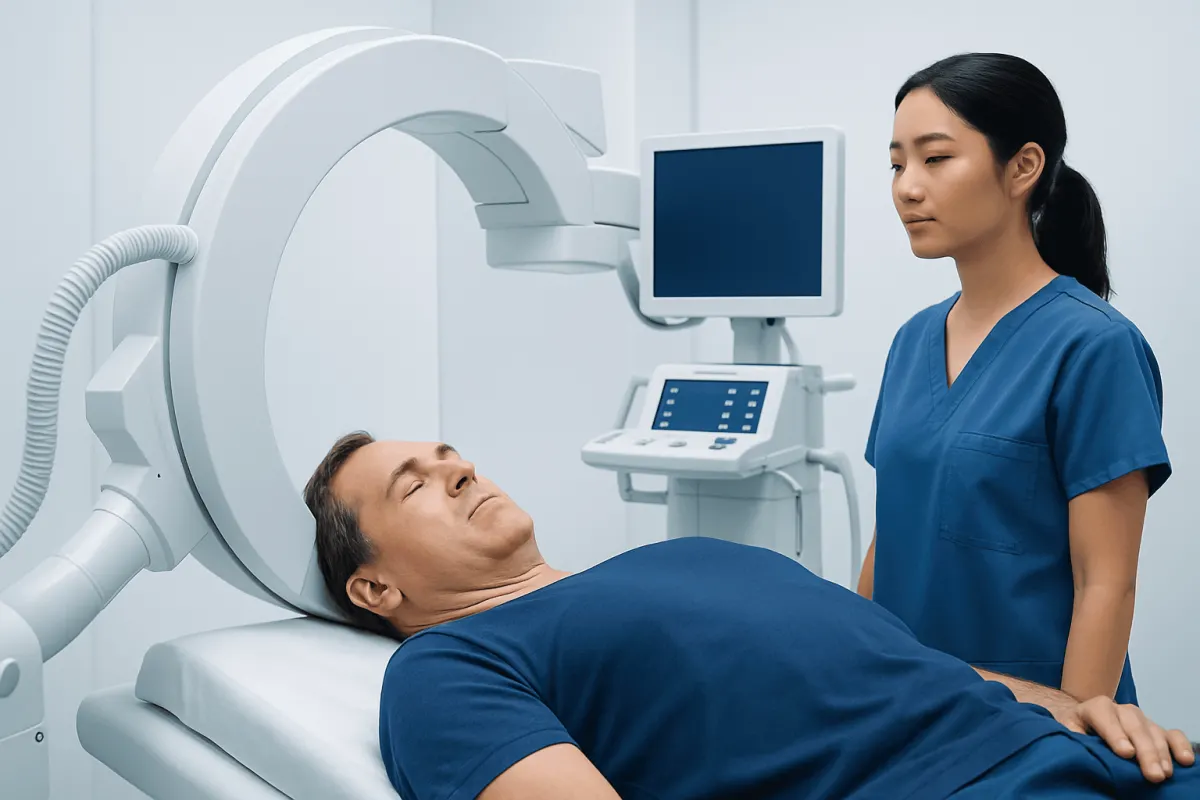
MRI is generally the most useful imaging test when a thoracic disc herniation is suspected because it shows discs, nerves, the spinal cord, and surrounding soft tissues. CT may provide additional detail about bone changes or calcification, while X-rays can help assess alignment, fractures, or other bony conditions but do not show disc and nerve tissues as clearly.
Imaging findings must be interpreted carefully. A disc bulge or herniation can be present without causing pain, while symptoms may arise from a different structure. Doctors also consider other causes of thoracic pain, including muscle and joint conditions, compression fractures, inflammatory disorders, shingles, and medical causes of chest or abdominal pain. If symptoms suggest a different condition, further tests or referral may be appropriate.
Treatment Options and Recovery
For many people without progressive neurological symptoms, treatment begins conservatively. This often includes staying gently active while avoiding movements that clearly worsen symptoms, using short periods of relative rest rather than prolonged bed rest, and returning gradually to normal activities. A clinician may recommend pain-relieving or anti-inflammatory medicines when they are safe for the individual’s medical history and other medicines.
Physical therapy can support recovery through education, comfortable mobility work, posture and movement guidance, and progressive strengthening of the trunk, shoulders, and hips. The aim is not simply to “fix” a scan finding; it is to improve function, confidence with movement, and long-term spinal capacity. A therapy plan should be adapted if exercises increase radiating pain, numbness, or weakness.
If pain remains significant despite initial care, a specialist may discuss further options. In selected cases, image-guided injections may be considered to reduce inflammation and clarify the source of nerve-related pain. These procedures have potential benefits and risks, so they should be planned by an appropriately qualified team after individual evaluation.
Surgery is not needed for most thoracic disc herniations. It may be considered when there is spinal cord compression, progressive weakness or walking impairment, severe ongoing nerve symptoms, or pain that remains disabling despite adequate non-surgical treatment. Thoracic spine surgery is specialized because of the nearby spinal cord and chest structures. Spine surgery planning should include a detailed discussion of the expected goals, alternatives, possible risks, and rehabilitation needs.
Everyday Care and Reducing Future Strain
During a painful episode, pacing is often more helpful than complete inactivity. Breaking tasks into shorter periods, changing positions regularly, and avoiding sudden loaded twisting can reduce irritation while preserving normal movement. Heat or cold may offer short-term comfort for some people, provided it is used safely and does not cause skin injury.
Once symptoms settle, regular physical activity can help maintain back strength, mobility, and general health. Walking, swimming, cycling, and appropriately guided resistance training may all be suitable depending on symptoms and fitness. Core and upper-back endurance, hip strength, and movement control are often more useful targets than trying to maintain a rigid “perfect” posture.
Workstation and lifting adjustments can also be practical. Keeping frequently used items within reach, taking movement breaks, using safe lifting technique, and seeking help with heavy or awkward loads may reduce repeated strain. Stopping smoking, if relevant, and addressing sleep, stress, and overall activity levels can support musculoskeletal recovery. These measures cannot guarantee that a disc will not change, but they can support comfort and resilience.
When to Seek Medical Care
A doctor should assess upper-back pain that is persistent, recurrent, limits normal activity, travels around the chest or abdomen, or is associated with numbness or tingling. An appointment is also sensible after a significant injury or when pain does not improve with reasonable self-care. Because chest discomfort can have causes outside the spine, new chest pain should be assessed promptly, particularly if it occurs with shortness of breath, sweating, nausea, fainting, or exertion.
Urgent medical care is needed for new or worsening leg weakness, difficulty walking or maintaining balance, rapidly spreading numbness, or loss of coordination. Emergency assessment is also important for new problems controlling urine or stool, inability to urinate, or numbness in the groin, genital, or inner-thigh area. These signs may indicate significant nerve or spinal cord compression and should not be managed at home.
Fever, unexplained weight loss, a history of cancer, immune suppression, intravenous drug use, or severe unrelenting night pain are additional reasons to seek timely assessment. Acıbadem Health Point’s multidisciplinary specialists and JCI-accredited hospitals evaluate and treat spinal conditions for international patients, with care tailored to the findings and the person’s needs.
Frequently asked questions
01Is a herniated disc in the upper back common?
Thoracic, or upper-back, disc herniations are less common than herniated discs in the neck and lower back. The thoracic spine is supported by the rib cage and has less movement than these other spinal regions. Some thoracic disc changes are found incidentally and do not produce symptoms.
02Can a thoracic herniated disc cause pain around the ribs?
Yes. Irritation of a thoracic nerve root can cause pain, tingling, burning, or numbness that wraps from the back around the chest wall or upper abdomen. This pattern can overlap with other medical conditions, so it is important not to self-diagnose persistent or severe chest or abdominal symptoms.
03Can an upper-back herniated disc heal without surgery?
Many people improve with non-surgical care, including guided activity, physical therapy, and appropriate symptom relief. Symptoms may settle as inflammation reduces and the body adapts over time. The outlook depends on the severity of nerve or spinal cord involvement and the individual cause of symptoms.
04What test shows a herniated disc in the upper back?
MRI is commonly used because it provides detailed images of discs, nerves, the spinal cord, and soft tissues. A doctor will decide whether imaging is needed based on symptoms and examination findings. CT or X-rays may be useful in some situations, but they answer different clinical questions.
05What activities should be avoided with a thoracic disc herniation?
It is generally sensible to temporarily limit movements that clearly trigger sharp or radiating pain, especially heavy lifting, forceful twisting, and high-impact activity. Prolonged bed rest is usually not recommended because gentle movement supports recovery. A clinician or physical therapist can give activity advice based on the person’s symptoms and work or sport demands.
06When is surgery considered for an upper-back herniated disc?
Surgery may be considered if there is pressure on the spinal cord, progressive weakness, gait or balance changes, or disabling symptoms that do not respond to appropriate non-surgical treatment. The decision is individualized and based on symptoms, neurological examination, imaging, and overall health. A specialist explains the potential benefits, limitations, and risks before surgery is planned.
This article is for general information only and is not a substitute for professional medical advice. Please consult a qualified doctor about your individual situation.
Persistent digestive symptoms? Get evaluated in Turkey
JCI-accredited · board-certified surgeons · reply within 24h
Add us as a Preferred Source to see more of our trusted health content across Google Search, AI Overviews and Discover.