

Tympanic Thermometers: Uses and How to Use Them
- 9 min read
- Published November 29, 2026
Key Takeaways
- A tympanic thermometer estimates core body temperature using infrared heat from the eardrum area.
- Correct placement matters; small technique errors can change the reading.
- Earwax, ear infection, and recent outdoor exposure can affect accuracy.
- It is useful for quick checks, but a single reading should be interpreted in context.
- Persistent fever, very high temperature, or concerning symptoms deserve medical review.
A tympanic thermometer measures body temperature through the ear canal and can be a convenient tool for home or clinical use. Understanding how it works, when it may be less reliable, and how to use it correctly helps support better decisions about fever and follow-up care.
Overview
A tympanic thermometer is an ear thermometer designed to measure temperature by sensing infrared heat from the ear canal, close to the eardrum. Because the eardrum shares blood supply with the body’s temperature-regulating center, the reading is often a practical estimate of core temperature when the device is used properly.
For many families and clinicians, the appeal is simple: the measurement is fast, usually comfortable, and does not require a long wait. That can matter in real-world situations such as checking a child who is unwell at home, monitoring recovery after a procedure, or deciding whether someone needs to be seen sooner while traveling for care.
Still, convenience does not replace technique. Ear temperature can be influenced by ear shape, wax, recent physical activity, environmental temperature, and how the probe is positioned. A tympanic thermometer is best understood as one useful part of the assessment, not the only answer.
Symptoms and What the Reading Means
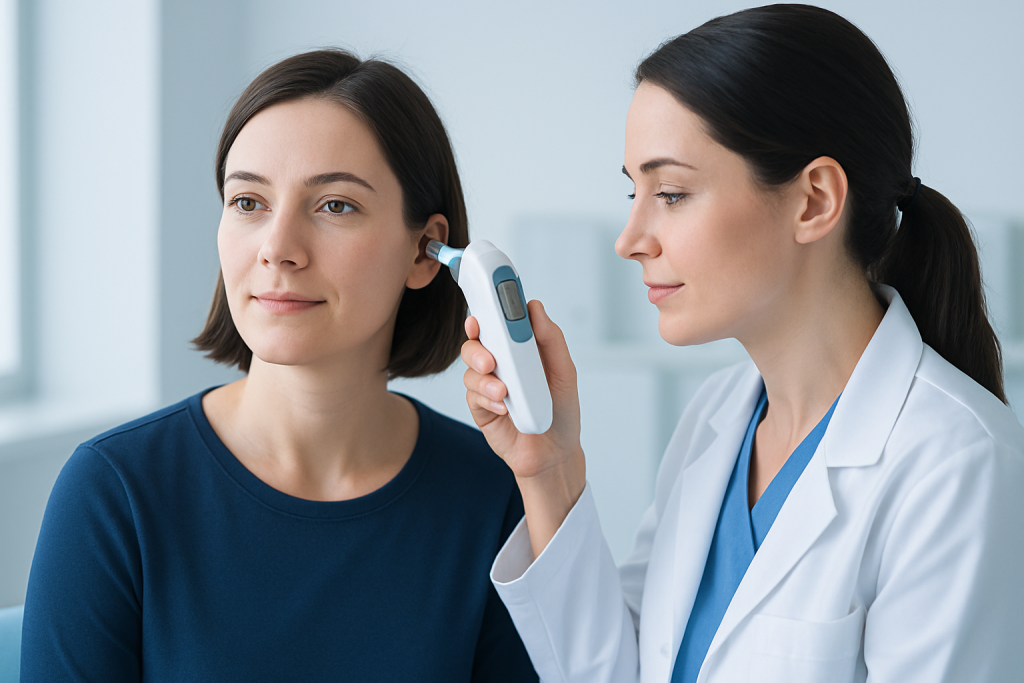
The thermometer itself does not diagnose an illness; it provides a number that helps interpret symptoms. A higher-than-usual reading may support the idea of fever, but a normal reading does not always rule out infection or inflammation, especially if other symptoms are present.
People often use tympanic readings when someone feels hot, shivery, flushed, unusually tired, or has headache, cough, sore throat, body aches, or reduced appetite. In children, fever may also show up as irritability, poor feeding, sleepiness, or a change in usual behavior rather than a clear verbal complaint.
- Fever is often considered together with symptoms, not by temperature alone.
- One ear may differ slightly from the other, especially if the probe is not centered.
- Repeated readings taken correctly are often more informative than one isolated number.
If the reading seems unexpected, it is sensible to repeat it after checking technique and allowing the person to rest in a stable indoor environment. When uncertainty remains, a clinician may recommend a different method of temperature measurement for comparison.
Causes and Risk Factors for Inaccurate Readings

Several everyday factors can make an ear thermometer read too high or too low. Earwax buildup is one of the most common issues because it can block the path of infrared detection. A recent ear infection, ear surgery, or anatomy that makes the ear canal narrow can also make readings less dependable.
Temperature changes from the environment matter as well. Someone who has just come in from cold weather, has been lying on one side for a long time, or has been exercising may not get a stable baseline right away. Moisture in the ear, such as after bathing or swimming, can also interfere with measurement.
Risk factors for unreliable use are less about the person and more about the situation:
- Improper probe placement or angle
- Dirty lens or unclean probe cover use
- Wax, discharge, or swelling in the ear canal
- Very young age, if the ear canal is too small for consistent positioning
- Taking the reading immediately after outdoor exposure or strenuous activity
For international patients who are monitoring symptoms before a flight, clinic visit, or hospital admission, a small mistake in temperature reading can lead to unnecessary worry or delay. In that setting, it helps to know how the device should be used and when a nurse or doctor should confirm the result.
Diagnosis and How a Tympanic Thermometer Is Used
Using a tympanic thermometer is usually straightforward, but accuracy depends on following the device instructions closely. The ear should generally be clear and dry, and the probe should be aimed toward the eardrum, not simply placed anywhere in the outer ear.
Many models require a disposable cover and a gentle pull on the ear to help straighten the canal. The device then takes a quick infrared measurement. If the reading seems inconsistent with the person’s condition, it may be repeated in the same ear after a short pause or checked in the opposite ear.
Clinicians may compare the ear reading with the person’s age, symptoms, medication use, and the possibility of another source of temperature change. In some cases, especially in hospital or acute care settings, a different method may be chosen if ear measurement is not reliable enough.
- Follow the manufacturer’s instructions for the exact model.
- Use a clean probe cover if the device requires one.
- Wait after exposure to cold or heat before measuring.
- Seek confirmation if the reading does not match the overall picture.
Treatment Options
A tympanic thermometer does not treat fever or illness, but it can guide next steps. If a reading suggests fever, treatment depends on the underlying cause. That may range from rest and fluids to assessment for an infection, inflammatory condition, or another medical issue.
For many mild viral illnesses, supportive care is the main approach. A clinician may recommend hydration, rest, and monitoring for changing symptoms. If a bacterial infection or another specific condition is suspected, treatment may involve prescription medication or further testing.
When people are managing care across borders, the practical value of a thermometer is often in helping them decide whether to continue home observation, contact a local clinician, or arrange follow-up with their treating team. Acibadem Health Point’s multidisciplinary specialists and JCI-accredited hospitals diagnose and treat this condition for international patients.
The key point is that the thermometer is only the starting tool. The treatment plan should be based on the whole clinical picture, not on the number alone.
Prevention and Self-care
Good technique is the best form of prevention when it comes to inaccurate ear readings. Keeping the device clean, replacing covers as instructed, and storing it according to the manufacturer’s guidance can help preserve performance. It is also wise to keep the thermometer at room temperature before use.
Self-care during a fever focuses on comfort, observation, and knowing when the situation is changing. Drinking enough fluids, resting, and avoiding unnecessary over-bundling are common general measures. Temperature should be rechecked at reasonable intervals rather than repeatedly within minutes, which can create confusing results.
Helpful habits include:
- Measuring after the person has been indoors and settled for a short time
- Using the same ear and same method for comparisons when possible
- Cleaning the device as directed
- Not relying on a single reading if symptoms are concerning
Parents and caregivers may find it useful to write down the time, temperature, symptoms, and any medicine already given. That record can be valuable if a doctor later needs to understand the pattern, especially when care is being coordinated from another city or country.
When to See a Doctor
Medical advice is appropriate when fever persists, returns repeatedly, or is accompanied by symptoms that do not seem mild. A clinician should also evaluate any unusually high temperature, a reading that remains unclear after repeating it properly, or a person who appears significantly unwell despite a modest number on the thermometer.
Seek prompt medical review if fever is paired with trouble breathing, confusion, stiff neck, chest pain, dehydration, seizure, severe pain, or a rash that is spreading or unusual. In infants, older adults, and people with weakened immune systems, the threshold for contacting a doctor is lower because symptoms can progress differently.
It is also sensible to ask for help if the ear itself is painful, draining, or blocked, since those conditions can interfere with the reading and may need treatment on their own. If someone is planning to travel for care, a local clinician can often advise whether the temperature should be confirmed before departure.
When in doubt, a timely discussion with a healthcare professional is safer than trying to interpret a questionable reading alone. Temperature is one clue among many, and experienced clinicians use it alongside the person’s history, examination, and overall condition.
Frequently Asked Questions
Is a tympanic thermometer accurate?
It can be accurate when used correctly and when the ear is suitable for measurement. Accuracy can drop if there is wax, recent cold exposure, poor positioning, or ear disease. For that reason, it works best as part of a broader assessment rather than as a stand-alone decision-maker.
Why do both ears sometimes give different numbers?
Small differences can happen because of technique, ear shape, or local factors such as wax. A consistent difference that keeps appearing may be worth mentioning to a clinician. Repeating the reading carefully can help show whether the result is stable.
Can a tympanic thermometer be used in children?
Yes, it is commonly used in children, but correct placement is especially important. In very young children or in those with narrow ear canals, the reading may be less dependable. Parents should follow the device instructions and seek guidance if the result does not match the child’s symptoms.
Should the ear be cleaned before measuring?
The outer ear can be gently cleaned if needed, but deep cleaning should not be attempted at home. Wax pushed further into the canal can make the reading worse and may cause discomfort. If wax buildup is a concern, a clinician can advise on safe removal.
What if the reading seems normal but the person feels very unwell?
A normal temperature does not rule out illness. Many conditions cause fatigue, pain, or weakness without fever, and some infections may not raise temperature early on. A doctor should evaluate symptoms that are severe, persistent, or worsening even if the thermometer number is not high.
Can I use the same thermometer after traveling?
Yes, as long as it is stored and cleaned properly and has acclimated to room temperature if needed. After travel, it is wise to check the device against its instructions before relying on it for important decisions. If the results seem inconsistent, a healthcare professional can help interpret them.
When should I stop using the ear thermometer and choose another method?
If the ear is painful, blocked, draining, or recently injured, another method may be more reliable. A clinician may also suggest a different measurement approach if repeated ear readings do not fit the clinical picture. The right choice depends on the person’s age, symptoms, and medical situation.
This article is for general information only and is not a substitute for professional medical advice. Please consult a qualified doctor about your individual situation.
Explore treatments in Turkey — costs, top hospitals & a free quote
JCI-accredited · board-certified surgeons · reply within 24h
Add us as a Preferred Source to see more of our trusted health content across Google Search, AI Overviews and Discover.



How can we help you today?
Meet an Acibadem specialist by secure video, before you travel.
Book a video visit