Tooth Cracked in Half No Pain: Possible Causes and When to Seek Care
A tooth cracked in half with no pain should still be assessed by a dentist promptly. Lack of pain can mean the tooth nerve is not exposed or has already lost sensation, but the crack may deepen, collect bacteria, or make the tooth more likely to break further.
Tooth Cracked in Half With No Pain: What It Can Mean
A tooth cracked in half with no pain can still be a dental problem that needs timely professional attention. Teeth do not repair cracks in the way that bone heals. Even if the tooth feels normal, a fracture can spread with chewing pressure, allow bacteria to enter deeper layers, or cause a piece of the tooth to detach.
Not every visible line is a serious crack. Very fine surface lines in enamel, sometimes called craze lines, are common and usually do not require treatment. However, a tooth that appears divided into separate sections, has a missing portion, feels rough or sharp, moves slightly, or has changed shape should be evaluated by a dentist as soon as practical.
The absence of pain is reassuring in the sense that there may be no acute inflammation, but it does not show how deep the crack is. A dentist can determine whether the injury is limited to the outer enamel, extends into dentin, reaches the nerve-containing pulp, or continues below the gum line and into the root.
Why a Cracked Tooth May Not Hurt
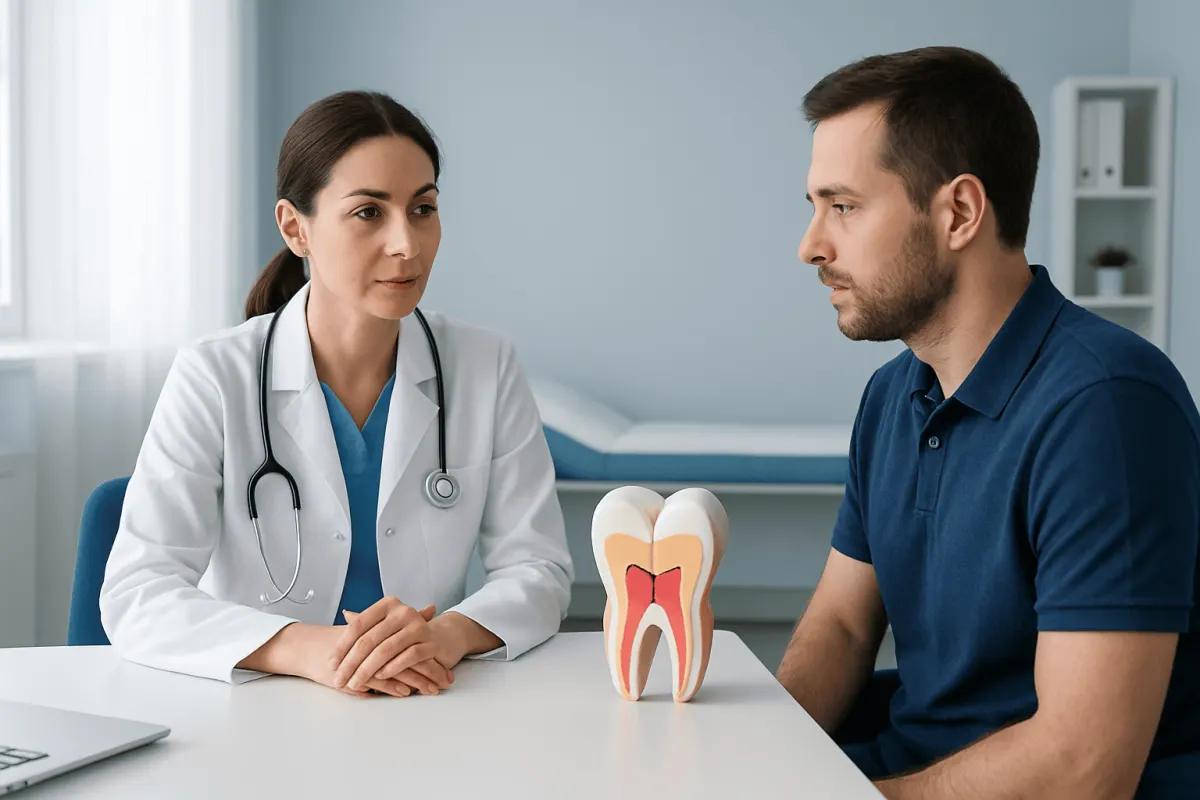
Teeth have a hard outer enamel layer and a softer inner dentin layer. The pulp at the center contains nerves and blood vessels. A crack limited to enamel may cause no symptoms because it has not reached sensitive structures. Some cracks through dentin also remain painless until pressure, temperature changes, or bacteria affect the pulp.
A painless tooth may also have reduced or absent nerve sensation. This can occur after an old injury, extensive decay, previous dental treatment, or gradual pulp damage. In some cases, a tooth with a non-vital, or “dead,” pulp does not respond normally to cold or heat even though infection may later develop around the root.
Symptoms can be intermittent. A person may only notice a brief twinge when releasing a bite, eating hard foods, or drinking something cold. Others first notice the crack visually or feel a sharp edge with the tongue. Because signs can be subtle, it is sensible not to use the lack of pain as a reason to delay an assessment.
Common Causes and Risk Factors
Many cracked teeth result from biting or chewing on something hard, such as ice, hard candy, popcorn kernels, olive pits, or a utensil. A fall, a blow to the mouth, or a sports injury can also fracture a tooth. The injury may be obvious immediately, although a small crack can sometimes become noticeable days or weeks later.
Repeated pressure is another important cause. Teeth grinding or clenching, also known as bruxism, places substantial force on teeth and may gradually create or enlarge cracks. Uneven bite forces, chewing predominantly on one side, and teeth with large fillings can also make a tooth more vulnerable over time.
Teeth may be more likely to crack when they have large restorations, untreated decay, prior root canal treatment, or significant wear. Temperature changes may contribute to expansion and contraction within the tooth, particularly where enamel is already weakened. Age-related wear can also make cracks more common, although a crack can occur at any age.
- Biting hard foods or non-food objects, including pens or fingernails
- Grinding or clenching teeth during sleep or stress
- Dental trauma from falls, accidents, or contact sports
- Large fillings, cavities, or previous dental procedures
- Sudden changes in biting force or an uneven bite
What to Do Until a Dental Appointment
After noticing a crack, it is best to protect the tooth from further force. Avoid chewing on that side of the mouth and choose soft foods such as yogurt, eggs, soups that are not very hot, cooked vegetables, or pasta. Avoid hard, crunchy, sticky, and very hot or cold foods until the tooth has been examined.
Gentle oral hygiene remains important. Brush with a soft toothbrush and clean around the tooth carefully to reduce plaque and food debris. Rinsing gently with warm water after meals may help keep the area clean. If an edge is sharp and irritating the tongue or cheek, temporary dental wax from a pharmacy may provide short-term protection; it should not replace dental care.
If a piece has broken off, it can be brought to the appointment in a clean container. There is no reliable home method for repairing a cracked tooth, and household glues should never be used in the mouth. If discomfort develops, an appropriate over-the-counter pain reliever may be considered when it is safe for the individual, but a pharmacist or clinician can advise people with medical conditions, pregnancy, allergies, or regular medicines.
How Dentists Diagnose a Tooth Fracture
Diagnosis starts with a dental history and examination. The dentist may ask when the crack was noticed, whether there was an injury, and whether biting, cold drinks, sweets, or brushing trigger symptoms. They will inspect the tooth, gums, nearby teeth, and bite for signs of fracture, decay, looseness, or inflammation.
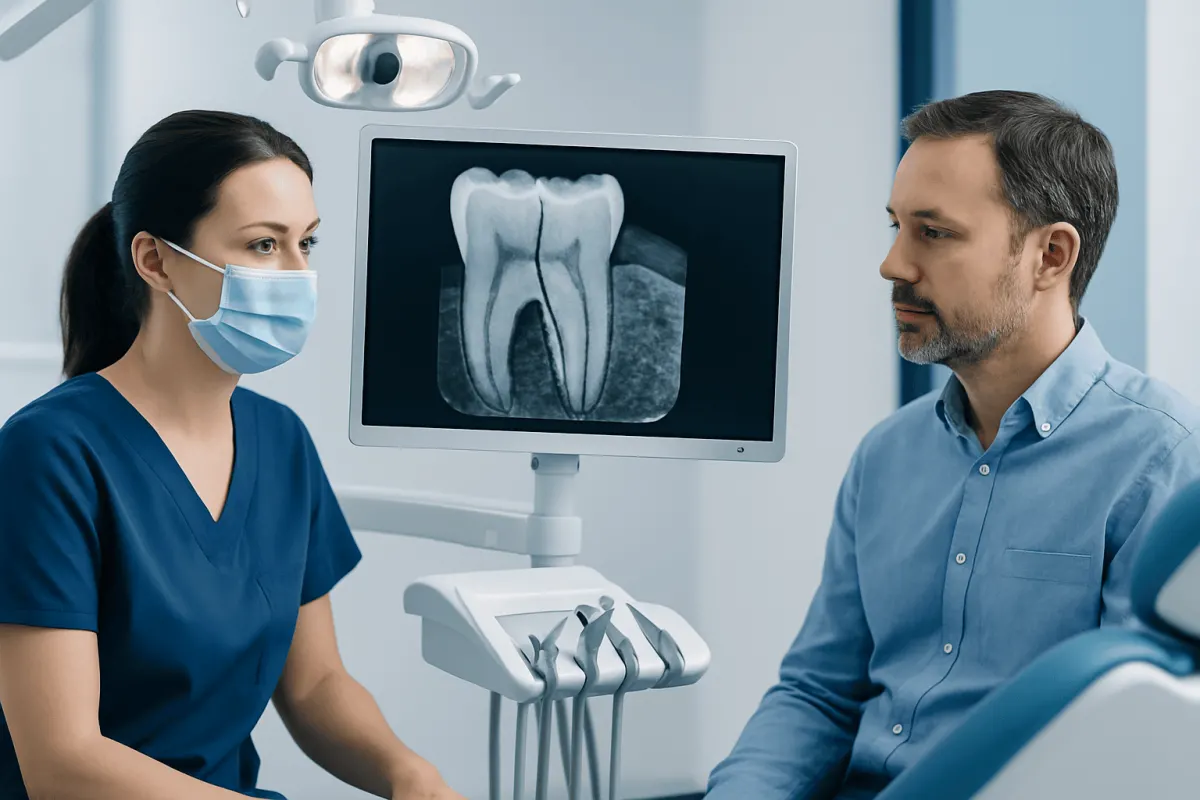
Special methods may help reveal cracks that are difficult to see. These can include shining a dental light through the tooth, using magnification, applying a staining dye, or asking the person to bite on a small instrument in different areas. A cold test or electrical pulp test may be used to assess the nerve response, although these tests are interpreted together with the full clinical picture.
Dental X-rays are useful for checking the roots, bone around the tooth, decay, and some fracture-related changes. However, very fine cracks may not appear on a standard X-ray. In selected cases, three-dimensional imaging may help evaluate complex root fractures or plan treatment. The key question is whether the crack can be sealed and stabilized while preserving a healthy, functional tooth.
Treatment Options Depend on the Depth of the Crack
Treatment depends on the location, direction, and depth of the fracture, as well as the health of the pulp and surrounding gum and bone. A small enamel chip or superficial crack may be smoothed, monitored, or restored with tooth-colored composite bonding. If a larger area of the tooth is weakened, a crown may protect the remaining structure from splitting under chewing pressure.
When a crack reaches the pulp and causes inflammation or infection, root canal treatment may be needed before the tooth is restored with a crown. Root canal treatment removes damaged pulp tissue, disinfects the inside of the tooth, and allows the outer tooth structure to be sealed and reinforced. It is often considered when the tooth remains structurally restorable.
A complete split that extends deeply below the gum line may not be repairable as one unit. In some situations, a dentist may be able to preserve part of a tooth; in others, extraction may be the healthiest option, followed by discussion of replacement choices such as an implant, bridge, or removable prosthesis. Early evaluation generally gives the best opportunity to preserve a tooth.
Acıbadem Health Point’s multidisciplinary dental specialists at JCI-accredited hospitals assess dental fractures and discuss appropriate treatment options for international patients based on the individual tooth and overall oral health.
When to Seek Medical Care
A dentist should be contacted promptly, ideally within a few days, for a tooth that is visibly cracked, split, chipped significantly, or newly rough or unstable, even without pain. Earlier assessment is particularly important after a blow to the mouth, because damage to the pulp or root may not be immediately noticeable.
Urgent dental care is appropriate if pain becomes severe, the tooth is loose, a large piece breaks away, swelling develops in the gums, face, or jaw, or there is a pimple-like bump on the gum. Fever, spreading facial swelling, trouble swallowing, difficulty breathing, or inability to open the mouth normally require urgent medical evaluation, as these may indicate a more serious infection or injury.
While waiting for care, people should avoid chewing on the affected tooth and should not attempt to pull a partially attached tooth segment. Regular dental checkups, treatment of cavities, and a custom night guard when recommended for grinding can help reduce the likelihood of future cracks. A dentist can also check whether a crown, filling, or bite adjustment may help protect teeth that are at higher risk.
Frequently asked questions
01Can a tooth be cracked in half and not hurt?
Yes. A crack may not hurt if it only affects the outer tooth layers or does not involve the pulp, which contains the nerve. However, the crack can still worsen over time, so a dental examination is recommended.
02Will a cracked tooth heal on its own?
No, tooth enamel and dentin do not heal a crack on their own. A dentist may monitor a very minor surface line, but a true crack or split often needs protection or restoration to prevent it from spreading.
03How quickly should a painless cracked tooth be checked?
A visibly cracked, broken, or split tooth should be assessed promptly, preferably within a few days. Same-day or urgent care is appropriate if there is swelling, significant trauma, a loose tooth, severe pain, or signs of infection.
04Can a dentist save a tooth that has split in half?
Sometimes, depending on how far the split extends and whether the root and pulp are affected. A crown, bonding, or root canal treatment may help save a restorable tooth, but a deep split below the gum line may require removal.
05Should a person brush a cracked tooth?
Yes, gentle brushing is important to keep the tooth and gums clean. A soft toothbrush and careful technique can help avoid irritating a sharp or sensitive area, while vigorous scrubbing should be avoided.
06What foods should be avoided with a cracked tooth?
It is best to avoid hard, crunchy, sticky, and chewy foods, as well as chewing on the affected side. Extremely hot or cold foods and drinks may also be uncomfortable if the crack has made the tooth more sensitive.
This article is for general information only and is not a substitute for professional medical advice. Please consult a qualified doctor about your individual situation.
Joint and spine care in Turkey — expert assessment & treatment
JCI-accredited · board-certified surgeons · reply within 24h
Add us as a Preferred Source to see more of our trusted health content across Google Search, AI Overviews and Discover.