Thyroid Pain Usually Points to Thyroiditis, Not Cancer
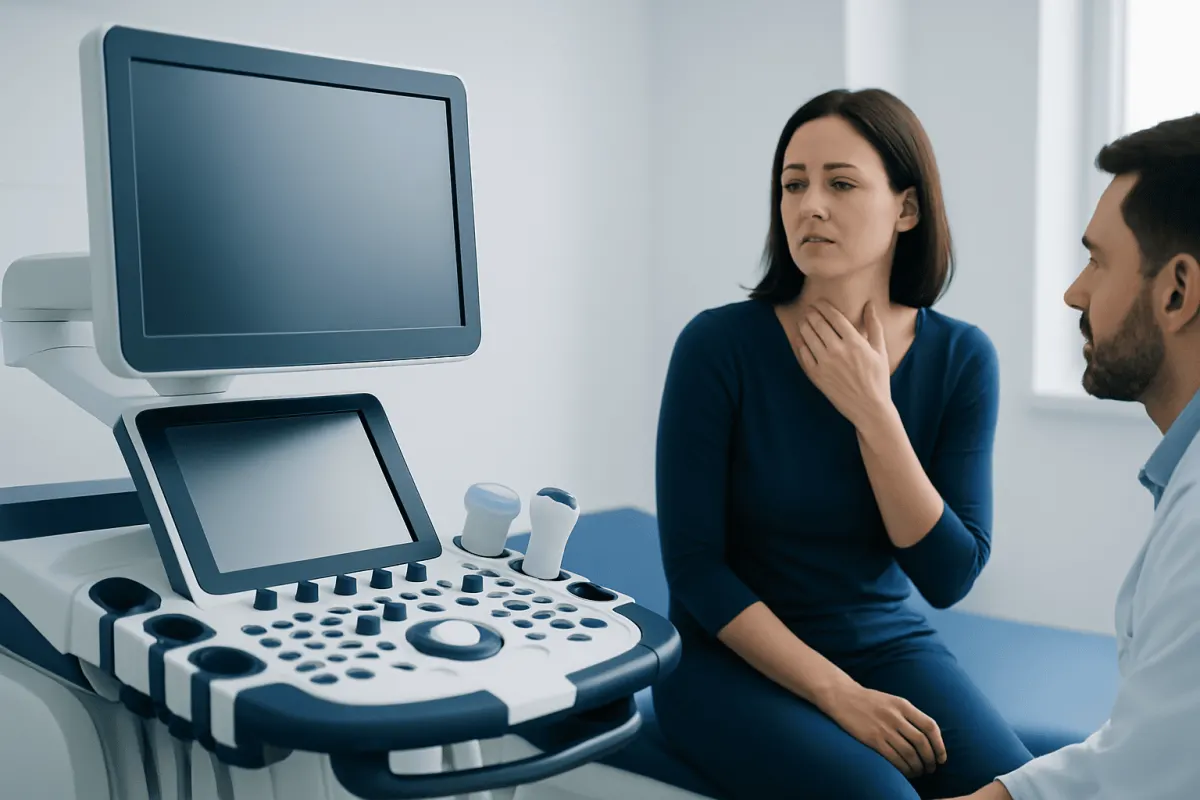
Does the front of your neck ache when you swallow, turn your head, or button a shirt collar? Thyroid pain is uncommon, and when it does happen it most often comes from inflammation of the thyroid gland, known as thyroiditis.
Plenty of other structures sit right there in the front of the neck, and any of them can cause similar discomfort. That is why a medical assessment helps: it pins down where the pain is actually coming from and rules out problems that need prompt treatment.
What Does Thyroid Pain Mean?
Thyroid pain refers to tenderness, aching, pressure, or sharp discomfort in the lower front of the neck, where the butterfly-shaped thyroid gland sits. The thyroid is normally not painful to touch. When pain truly comes from this gland, inflammation is a common explanation, although several other conditions in the neck can create a similar sensation.
Discomfort may be felt in one small area or across the front of the neck. Some people notice pain when swallowing, turning the head, wearing a tight collar, or touching the area. Pain can also travel toward the jaw, ears, or upper chest, particularly when inflammation affects the thyroid capsule, the thin tissue surrounding the gland.
An ache near the thyroid does not automatically mean a thyroid problem. Sore throat, swollen lymph nodes, muscle strain, acid reflux, dental or jaw problems, and conditions affecting the voice box may all cause neck discomfort. A clinician can assess the location, duration, associated symptoms, and thyroid function to clarify what is happening.
How Thyroid Pain May Feel and What May Accompany It
The pattern of your symptoms tells us a lot. Painful inflammation of the thyroid often causes a tender, enlarged area at the front of the neck. The discomfort may begin gradually after a viral upper respiratory illness, become worse over days, and sometimes move from one side of the neck to the other.
Inflammation can temporarily release stored thyroid hormone into the bloodstream. During this phase, a person may experience palpitations, tremor, sweating, anxiety, heat intolerance, tiredness, or unintentional weight loss. Later, as hormone stores are depleted, some people develop temporary low-thyroid symptoms such as feeling cold, constipation, dry skin, slowed thinking, or low energy.
Some symptoms are not specific to the thyroid, but still worth mentioning to your doctor. These include a visible lump, neck fullness, hoarseness, cough, a sensation of pressure, painful swallowing, fever, or enlarged lymph nodes. A lump without pain can also require assessment, since many thyroid nodules and thyroid cancers are painless.
- Tenderness with fever: may suggest inflammation or, rarely, infection.
- Sudden pain and swelling: can occur if bleeding develops within a thyroid nodule or cyst.
- Pressure without tenderness: may result from an enlarged thyroid, nodule, or a nearby non-thyroid cause.
- Persistent hoarseness or swallowing difficulty: should be medically evaluated.
Common Causes of a Painful Thyroid Area

Subacute thyroiditis, also called de Quervain thyroiditis, is one of the best-known causes of thyroid pain. It is thought to be related to a viral illness or a post-viral inflammatory response. The thyroid may become painful and swollen, and thyroid hormone levels can fluctuate over several weeks or months before returning to normal in many people.
Less commonly, acute suppurative thyroiditis is a bacterial infection of the gland. This can cause significant localized pain, fever, redness, swelling, and feeling unwell. It is uncommon but requires urgent assessment because infection in the neck may need antibiotic treatment and sometimes drainage.
Bleeding into a pre-existing thyroid nodule or fluid-filled cyst can cause sudden pain, tenderness, or rapid swelling. This may occur spontaneously, after minor injury, or occasionally after a procedure. Most thyroid nodules are benign and painless, but a new or changing neck lump should be evaluated rather than assumed to be harmless.
Autoimmune thyroid conditions, including Hashimoto’s thyroiditis and Graves’ disease, usually do not cause pain. Painful Hashimoto’s thyroiditis is rare. Thyroid cancer is also more often painless; however, any persistent lump, progressive pressure symptoms, or voice change warrants professional assessment regardless of whether pain is present.
Other Problems That Can Mimic Thyroid Pain
The neck contains muscles, lymph nodes, nerves, the windpipe, esophagus, throat, and salivary glands, all close to the thyroid. So where the pain sits, on its own, cannot confirm the thyroid is to blame. For example, a sore throat from a viral infection may cause pain on swallowing and tender lymph nodes that feel close to the thyroid.
Muscle tension or strain in the neck can produce aching that worsens with posture, desk work, exercise, or head movement. Temporomandibular joint problems and dental infections may radiate toward the jaw and neck. Reflux can create throat discomfort, a lump sensation, cough, or hoarseness without actual thyroid inflammation.
Swollen cervical lymph nodes can be tender after respiratory infections. In some situations, pain near the collarbone, chest, or shoulder has causes outside the neck and needs separate evaluation. Please do not diagnose yourself based only on where the discomfort sits.
How Clinicians Assess Thyroid Pain
A clinician will usually begin by asking when the pain started, whether it followed an infection, how quickly it changed, and whether there are symptoms of thyroid hormone imbalance. They will examine the neck for tenderness, enlargement, nodules, lymph nodes, skin changes, and movement of the swelling when swallowing. The throat, ears, mouth, and neck muscles may also be checked.
Blood tests commonly include thyroid-stimulating hormone (TSH) and free thyroid hormone levels. Depending on the suspected cause, tests for inflammation, thyroid antibodies, or infection may be helpful. These results can show whether the gland is overactive, underactive, or functioning normally at the time of assessment.
A thyroid ultrasound can identify enlargement, nodules, cysts, bleeding, or features of inflammation. It can also help distinguish thyroid tissue from nearby lymph nodes or other neck structures. If a nodule has features that need closer assessment, a clinician may recommend fine-needle aspiration biopsy; this is a standard way to collect cells for examination.
In selected cases, an uptake scan, CT scan, MRI, or laryngoscopy may be considered. The choice depends on the symptoms and examination findings. Imaging is not needed for every person with front-of-neck pain, but it can be valuable when there is a palpable lump, rapid swelling, concern for infection, or unexplained persistent symptoms.
Treatment and Supportive Care
What we treat depends entirely on what is causing the pain. For subacute thyroiditis, care often focuses on reducing pain and inflammation while monitoring thyroid hormone levels over time. A clinician may recommend suitable anti-inflammatory pain relief when safe for the individual, and may prescribe stronger anti-inflammatory treatment when symptoms are severe or do not settle.
If temporary overactive-thyroid symptoms such as a fast heartbeat or tremor are troublesome, medicines may be used to control these symptoms. Antithyroid medicines are generally not useful for subacute thyroiditis because the problem is release of stored hormone rather than increased hormone production. Some people later need temporary thyroid hormone replacement if a low-thyroid phase develops.
Bacterial thyroid infection requires prompt treatment directed by a medical team, often including antibiotics and evaluation for a collection of pus. Sudden swelling due to bleeding into a nodule may be monitored if mild, but urgent review is important if swelling is enlarging or affecting breathing or swallowing. Procedures or surgery are reserved for selected situations, such as a concerning nodule, recurrent cyst, abscess, or compressive symptoms.
Until assessed, people can avoid repeatedly pressing or massaging a tender neck area. Rest, hydration, and avoiding activities that worsen neck strain may help. Check with a pharmacist or clinician before reaching for over-the-counter painkillers, particularly if you have kidney disease, stomach ulcers, a bleeding risk, are pregnant, or take medicines that affect clotting.
When to Seek Medical Care
Anyone with new thyroid-area pain lasting more than a few days, recurrent discomfort, a noticeable neck lump, or symptoms of thyroid hormone changes should arrange a medical review. Assessment is also appropriate when neck pain follows a recent respiratory infection and is accompanied by tenderness over the thyroid, palpitations, unusual fatigue, or temperature intolerance.
Urgent medical care is needed for trouble breathing, noisy breathing, inability to swallow saliva, rapidly increasing neck swelling, severe pain, high fever, redness spreading over the neck, confusion, fainting, or a very fast or irregular heartbeat. These symptoms do not always indicate a thyroid emergency, but they should not be managed at home.
Prompt evaluation is also advised for persistent hoarseness, coughing up blood, unexplained weight loss, a hard or fixed neck lump, or enlarged lymph nodes that do not resolve. Most of the time these turn out to be non-cancerous, but getting checked early means the right diagnosis and treatment sooner.
For international patients, Acıbadem Health Point’s multidisciplinary specialists and JCI-accredited hospitals can assess thyroid and neck symptoms using coordinated endocrinology, imaging, ear-nose-throat, and surgical expertise when needed.
Frequently asked questions
01Is thyroid pain a sign of cancer?
Thyroid cancer is usually painless, so pain alone is not a typical sign. However, a persistent or growing neck lump, voice change, swallowing difficulty, or enlarged lymph nodes should be assessed by a clinician. Most thyroid lumps are not cancer, but evaluation is important.
02Can thyroiditis cause pain in the ear or jaw?
Yes. With subacute thyroiditis, pain can spread from the lower front of the neck toward the jaw or ears. This happens because of shared nerve pathways and inflammation around the thyroid. Ear or jaw pain can also have dental, ear, or jaw-joint causes, so an examination is helpful.
03Can stress cause thyroid pain?
Stress can increase muscle tension in the neck and make discomfort feel more noticeable, but it is not considered a direct cause of painful thyroid inflammation. Persistent tenderness over the thyroid or a neck lump should not be attributed to stress without medical assessment. A clinician can check for thyroid and non-thyroid causes.
04Can a thyroid nodule hurt?
Most thyroid nodules do not cause pain. A nodule may become painful if bleeding occurs inside it, if it enlarges rapidly, or if there is inflammation nearby. Sudden swelling or significant pain should be reviewed promptly, especially if breathing or swallowing is affected.
05How long does pain from subacute thyroiditis last?
Pain from subacute thyroiditis often improves over several weeks, although the overall course can last for months. Thyroid hormone levels may change during recovery and need follow-up testing. The duration varies, so ongoing or worsening symptoms should be discussed with a clinician.
06Should a person massage a painful thyroid?
It is best to avoid pressing, massaging, or repeatedly checking a painful neck swelling. This is unlikely to treat the cause and may increase tenderness. A clinician can advise on safe symptom relief after identifying the likely source of pain.
This article is for general information only and is not a substitute for professional medical advice. Please consult a qualified doctor about your individual situation.
Persistent digestive symptoms? Get evaluated in Turkey
JCI-accredited · board-certified surgeons · reply within 24h
Add us as a Preferred Source to see more of our trusted health content across Google Search, AI Overviews and Discover.