Thymoma Cancer: Diagnosis, Outlook and Treatment
Thymoma cancer is a rare tumor that begins in the thymus, a small immune-system organ behind the breastbone. Many thymomas are treatable, particularly when found before they have spread, and care is planned according to tumor stage, resectability, and associated conditions such as myasthenia gravis.
Thymoma Cancer Overview
Thymoma cancer is a rare tumor that develops from epithelial cells in the thymus. The thymus sits in the upper chest, behind the breastbone and between the lungs. It is most active during childhood, when it helps immune cells mature, and becomes smaller with age. Thymoma most often occurs in adults and may be found during imaging performed for another reason.
Thymomas often grow slowly, but they are considered malignant because they can invade nearby tissues or spread to the lining around the lungs or heart and, less commonly, to distant organs. Thymoma is different from thymic carcinoma, which is generally more aggressive and has distinct features under the microscope. A specialist pathology review is important because the exact tumor type affects treatment planning and outlook.
Thymoma can be linked with autoimmune conditions, especially myasthenia gravis. In myasthenia gravis, communication between nerves and muscles is disrupted, causing fluctuating muscle weakness. Not everyone with thymoma has myasthenia gravis, and not everyone with myasthenia gravis has a thymoma, but doctors routinely assess for this association.
What Are the Common Signs and Symptoms of Thymoma?
Many people with thymoma have no noticeable symptoms, particularly when the tumor is small. The tumor may be detected on a chest X-ray or CT scan obtained because of a cough, injury, or another health concern. When symptoms occur, they may result from pressure on structures in the chest or from an associated autoimmune disorder.
Possible chest-related symptoms include a persistent cough, chest pain or pressure, shortness of breath, wheezing, difficulty swallowing, or hoarseness. A larger tumor can occasionally affect blood flow through the superior vena cava, the large vein returning blood from the head and upper body to the heart. This may cause swelling of the face, neck, or arms and prominent chest veins, and needs urgent medical assessment.
Symptoms of associated myasthenia gravis may include drooping eyelids, double vision, difficulty chewing or swallowing, a weak voice, neck weakness, or tiredness that worsens with repeated activity and improves with rest. These symptoms can have many causes, so they do not by themselves mean a person has thymoma. Evaluation by a clinician is the safest way to identify the cause.
- Persistent or worsening cough, breathlessness, or chest discomfort
- Unexplained facial or arm swelling
- New drooping eyelids, double vision, or fluctuating muscle weakness
- Difficulty swallowing, speaking, or breathing
How Thymoma Cancer Is Diagnosed and Staged
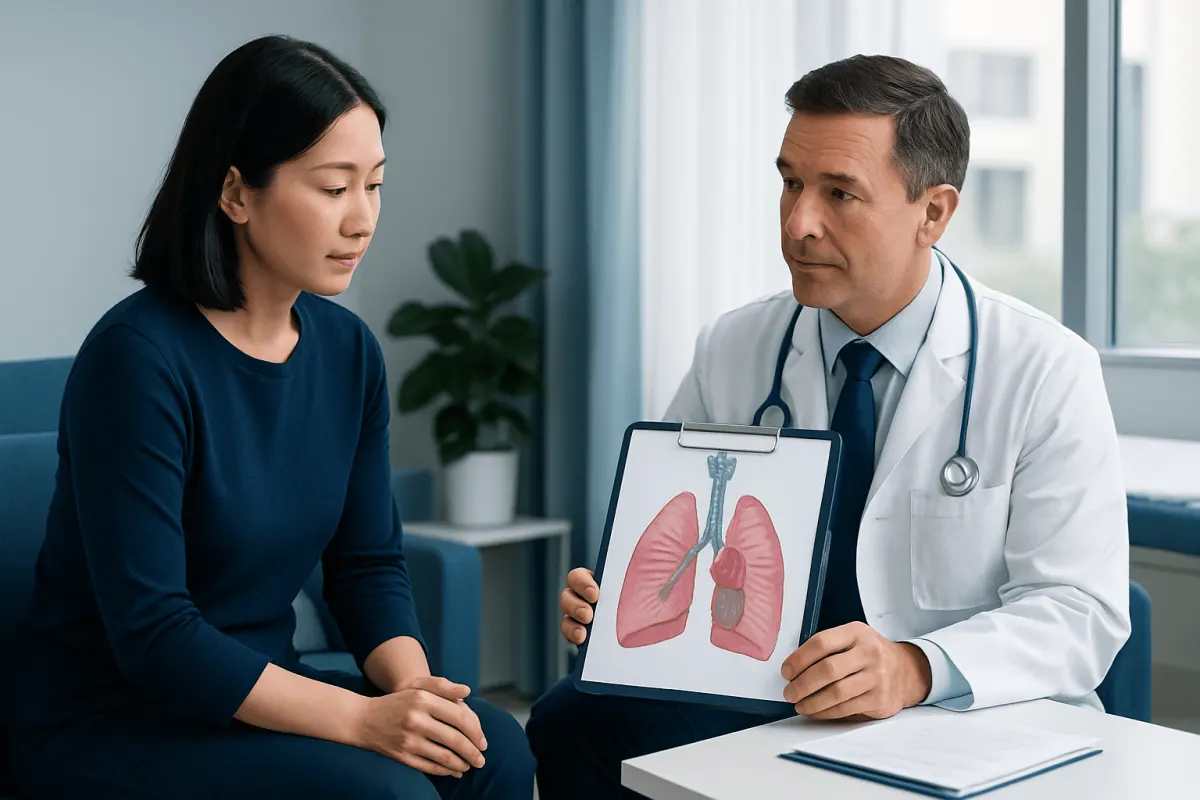
Evaluation usually begins with a medical history, physical examination, and chest imaging. A contrast-enhanced CT scan is commonly used to assess the tumor’s size, location, relationship to nearby structures, and possible spread. MRI may be helpful in selected situations, and PET/CT can sometimes provide additional information when more aggressive disease is suspected or the diagnosis is uncertain.
Blood tests do not diagnose thymoma, but they may help assess general health and look for related conditions. If symptoms suggest myasthenia gravis, clinicians may arrange neurological testing and blood tests for relevant antibodies. Breathing and swallowing assessments may also be needed when muscle weakness is present.
A tissue diagnosis may be obtained through a needle biopsy or another procedure when imaging suggests that surgery may not be the first step. In some clearly operable cases, the surgical specimen provides the definitive diagnosis. Pathologists examine the tissue to distinguish thymoma from thymic carcinoma, lymphoma, germ-cell tumors, and other masses in the front part of the chest.
Staging describes how far the tumor has extended. Doctors consider whether it is confined to the thymus, has invaded nearby tissues, has spread to the pleura or pericardium, or has reached distant organs. A multidisciplinary team uses staging, pathology, symptoms, and surgical feasibility to recommend an individualized plan.
Modern Thymoma Treatment Approaches
Treatment is individualized and ideally planned by a multidisciplinary team that may include thoracic surgeons, medical oncologists, radiation oncologists, radiologists, pathologists, and neurologists. For many patients with localized, removable thymoma, surgery to remove the thymus and tumor is the central treatment. The goal is complete removal while protecting nearby structures whenever safely possible.
Radiotherapy may be recommended after surgery when there is a higher risk of local recurrence, such as when the tumor has invaded surrounding tissues or margins are close or positive. It may also be used when surgery is not possible or as part of combined treatment for locally advanced disease. Modern radiation planning aims to target the tumor area while limiting dose to the heart, lungs, spinal cord, and other healthy tissues.
Systemic treatment may be used before surgery to shrink an initially unresectable tumor, after treatment in selected higher-risk situations, or for recurrent or metastatic disease. Options can include Side Effects" class="ahp-ilk">chemotherapy and, in carefully selected cases, other medicines guided by tumor behavior and prior treatment. Immune checkpoint inhibitors require particular caution in thymic tumors because serious autoimmune side effects can occur.
People with myasthenia gravis need coordinated neurological care before, during, and after treatment. Stabilizing muscle symptoms, planning anesthesia carefully, and monitoring breathing strength can reduce complications. Supportive care may include nutrition support, symptom control, rehabilitation, and emotional support throughout treatment.
What Is the CAP Chemotherapy Regimen for Thymoma?
CAP is a chemotherapy regimen whose name comes from the first letters of three medicines: cyclophosphamide, doxorubicin, and cisplatin. It has been used for thymoma that is advanced, has returned after prior treatment, or cannot initially be removed completely with surgery. In some situations, it may be given before surgery to try to reduce the tumor and make removal more feasible.
CAP is delivered in treatment cycles under close oncology supervision. The exact schedule, number of cycles, and whether CAP is appropriate depend on the tumor stage, a person’s previous treatments, heart and kidney function, blood counts, age, other medical conditions, and treatment goals. Alternative chemotherapy combinations may be considered in different circumstances.
Potential side effects can include fatigue, nausea, reduced blood cell counts, infection risk, mouth soreness, hair loss, kidney effects, nerve-related symptoms, and effects on heart function. Not every person experiences the same effects. Oncology teams monitor blood tests and organ function, offer medicines to prevent or manage side effects, and may adjust treatment when needed.
What Are the Common Side Effects of Thymoma Radiotherapy?
Radiotherapy for thymoma is usually directed at the chest. Side effects depend on the treatment field, total dose, technique, and individual health factors. Many effects are temporary and begin gradually during treatment or in the weeks afterward, while some late effects are uncommon but important to discuss before therapy begins.
Common short-term effects include tiredness, mild skin redness or irritation in the treated area, and irritation of the esophagus, which may cause soreness when swallowing or heartburn-like discomfort. Some people develop a dry cough or temporary chest discomfort. Maintaining fluids and nutrition, following skin-care advice from the radiotherapy team, and reporting symptoms early can help with management.
Less common longer-term risks may include inflammation or scarring in part of the lung, effects on heart structures, esophageal narrowing, or a small risk of another cancer developing years later. The radiation oncology team balances these risks against the expected benefit and uses detailed planning to reduce exposure to normal tissue. New or worsening breathlessness, fever, severe swallowing difficulty, or chest pain should be reported promptly.
What Is the Prognosis for Thymoma?
The prognosis for thymoma is often favorable compared with many other cancers, especially when the tumor is detected at an early stage and can be removed completely. However, prognosis is personal and cannot be predicted from the diagnosis alone. It is influenced by tumor stage, extent of invasion, pathology subtype, whether complete surgical removal is achieved, response to systemic treatment when used, and overall health.
Thymoma can recur years after initial treatment, including after apparently successful surgery. For this reason, long-term follow-up imaging is usually recommended. The follow-up schedule varies according to stage and treatment history, and a specialist team can explain the purpose and timing of surveillance for each person.
It can be helpful to ask the treatment team about the tumor stage, pathology report, surgical margins, treatment intent, and recommended follow-up plan. These details provide a more meaningful picture than general outcome figures. Emotional support, clear communication, and management of related autoimmune conditions are also important parts of living well during and after treatment.
When to Seek Medical Care
A person should arrange a medical review for persistent cough, unexplained chest discomfort, breathlessness, hoarseness, trouble swallowing, or symptoms of fluctuating muscle weakness. Although these symptoms are often caused by conditions other than thymoma, an assessment can identify whether chest imaging or specialist testing is appropriate.
Urgent medical attention is needed for severe shortness of breath, rapidly worsening weakness, difficulty speaking or swallowing, inability to keep the airway clear, chest pain, or sudden swelling of the face, neck, or arms. These symptoms can indicate a serious problem and should not be managed by waiting at home.
After a thymoma diagnosis, care at a center experienced in thoracic tumors can support accurate pathology review and coordinated planning. Acıbadem Health Point’s multidisciplinary specialists and JCI-accredited hospitals diagnose and treat thymoma for international patients, with treatment decisions tailored to clinical findings and individual needs.
Frequently asked questions
01Is thymoma cancer always malignant?
Thymoma is generally treated as a malignant thymic epithelial tumor because it can invade nearby tissues and may spread or recur. However, many thymomas grow slowly and are detected at a stage where complete treatment is possible. The pathology type and stage help clarify its likely behavior.
02Can thymoma be cured with surgery?
Complete surgical removal can be potentially curative for many localized thymomas. Whether surgery is possible depends on the tumor’s relationship to major blood vessels, lungs, heart lining, and other nearby structures. Some people need radiotherapy or systemic treatment as well.
03Does thymoma cause myasthenia gravis?
Thymoma is associated with myasthenia gravis, but it does not cause the condition in every person. Doctors commonly screen people with thymoma for symptoms and signs of myasthenia gravis. Neurological care is especially important when weakness affects swallowing or breathing.
04How is thymoma different from thymic carcinoma?
Both tumors begin in the thymus, but thymic carcinoma usually has more aggressive behavior and different microscopic features. Thymoma is often slower growing, although it can still invade and spread. A pathologist’s assessment is needed to distinguish them accurately.
05Can thymoma return after treatment?
Yes, thymoma can recur, sometimes years after initial treatment. Recurrence risk varies according to stage, pathology, and whether the tumor was completely removed. Long-term follow-up with imaging is therefore an important part of care.
06Are there lifestyle changes that prevent thymoma?
There is no established lifestyle measure proven to prevent thymoma because its causes are not fully understood. Avoiding tobacco, staying physically active as able, eating a balanced diet, and attending follow-up appointments support general health. These measures do not replace specialist monitoring or treatment.
This article is for general information only and is not a substitute for professional medical advice. Please consult a qualified doctor about your individual situation.
Oncology care in Turkey — second opinion and treatment plan
JCI-accredited · board-certified surgeons · reply within 24h
Add us as a Preferred Source to see more of our trusted health content across Google Search, AI Overviews and Discover.