

Thrombophlebitis: Symptoms, Causes and Treatment
- 8 min read
- Published November 8, 2026
Key Takeaways
- Thrombophlebitis means a vein is inflamed, and a clot may be present.
- Superficial thrombophlebitis often causes a tender, cord-like vein near the skin.
- Symptoms that spread, worsen, or involve leg swelling need medical assessment to rule out deeper clotting.
- Diagnosis is usually based on examination and may include ultrasound.
- Treatment often includes compression, walking, and anti-inflammatory care, with anticoagulation in selected cases.
Thrombophlebitis is inflammation of a vein that is often linked to a clot, most commonly in a superficial vein near the skin. It usually improves with timely care, but medical evaluation is important to confirm the type and reduce the risk of complications.
Overview
Thrombophlebitis describes inflammation in a vein, usually with a clot forming in that same vessel. In everyday practice, it is most often seen in superficial veins, especially in the legs, where it may appear as a red, tender, rope-like line beneath the skin.
For many people, the condition is local and manageable, but it should never be assumed to be “just irritation.” A doctor’s assessment helps distinguish superficial thrombophlebitis from deep vein thrombosis, which can require different treatment and closer monitoring.
People planning care from another country often want to know whether this is something that can wait. The answer depends on the symptoms and where the clot is suspected. A prompt evaluation is the safest way to determine whether the problem is limited to a small surface vein or extends deeper into the circulation.
Symptoms
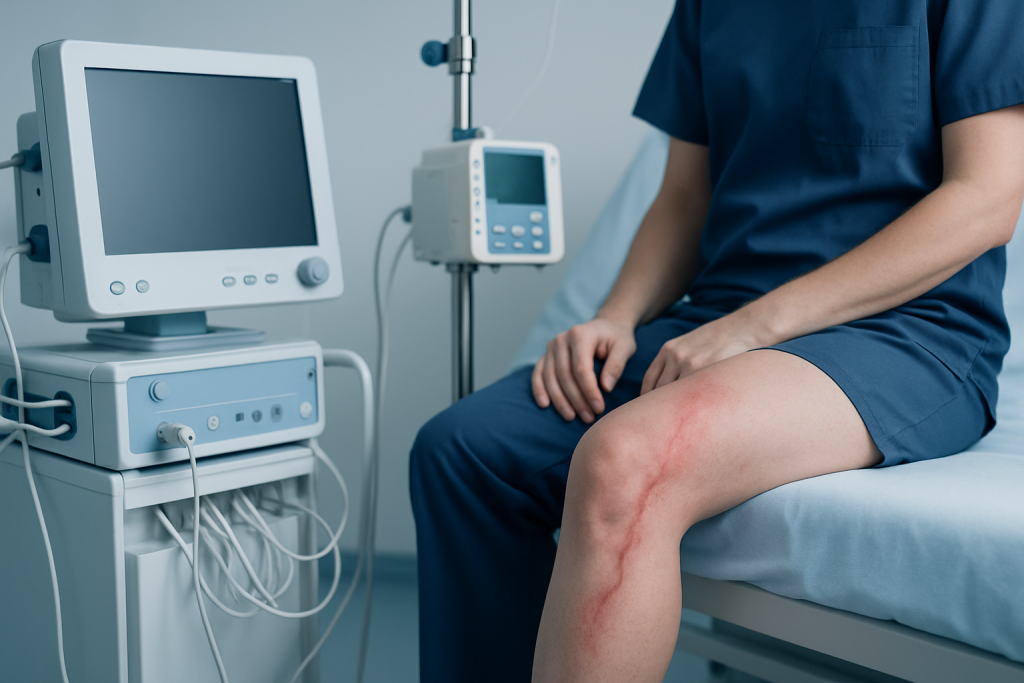
Symptoms are usually quite localized. The affected vein may feel firm, warm, and painful to the touch, and the skin over it can look red or darker than the surrounding area. Some people notice a narrow, cord-like band under the skin, particularly in the leg or arm.
If the inflammation is near the surface, the discomfort may be noticeable when standing, walking, or pressing on the area. Fever is not typical, but mild swelling around the vein can occur. In some cases, symptoms develop after an IV line, injection, long travel, minor injury, or an episode of varicose vein irritation.
Signs that deserve more urgent review include swelling of the whole limb, pain that is more diffuse than a single tender vein, shortness of breath, chest pain, or sudden worsening of symptoms. These can suggest a deeper clot or another condition that needs immediate attention.
Causes & Risk Factors

Thrombophlebitis develops when the lining of a vein becomes irritated or injured and clotting is triggered. This may happen after a recent procedure, a blood draw, an intravenous catheter, an injection, or trauma to the vein. Varicose veins can also make superficial veins more vulnerable.
Certain factors make clot formation more likely. These include prolonged immobility, recent surgery, pregnancy, cancer, hormonal therapy, inherited clotting tendencies, smoking, dehydration, and previous clotting episodes. Longer flights or travel with limited movement can add to the risk, especially in people who already have other risk factors.
Sometimes the cause is obvious, but not always. When thrombophlebitis appears without a clear trigger, clinicians often look for underlying contributors so that future episodes can be prevented and deeper vein disease is not missed.
Diagnosis
Diagnosis begins with a careful history and physical examination. A clinician will ask where the pain started, how fast it changed, whether there was a recent IV or procedure, and whether there are any signs of swelling beyond the painful vein.
Ultrasound is commonly used when there is uncertainty or when the symptoms raise concern for deep vein thrombosis. This test helps show where the clot is located, how far it extends, and whether nearby deep veins are involved. That distinction is important because treatment decisions can differ significantly.
Blood tests are not always necessary for straightforward superficial thrombophlebitis, but they may be used if the diagnosis is unclear or if another condition is being considered. For international patients, it is reasonable to ask what testing is actually needed before traveling for care, so the plan is efficient and focused.
Treatment Options
Treatment depends on the location and extent of the clot, as well as the person’s overall risk profile. Many cases of superficial thrombophlebitis are managed with supportive measures such as compression, leg elevation, gentle walking, and warm compresses. Anti-inflammatory medication may be recommended when appropriate.
If the clot is extensive, close to a deep vein connection, or associated with higher-risk features, a doctor may prescribe anticoagulation to reduce the chance of extension. This is one reason self-diagnosis can be unhelpful: the same-looking red, tender vein may require very different treatment depending on the ultrasound findings.
When thrombophlebitis is related to an IV line or catheter, the device may need to be removed or replaced if clinically appropriate. If an infection is suspected, additional treatment may be needed. Patients traveling for care often appreciate a clear plan for medication, mobility, and follow-up before they return home.
Prevention & Self-care
There is no single way to prevent every episode, but several habits can lower the risk. Regular movement during long trips, staying well hydrated, and avoiding prolonged stillness can help circulation. For people with varicose veins or a history of clotting, a clinician may suggest compression stockings or other measures tailored to the situation.
After a diagnosed episode, self-care focuses on easing discomfort and supporting recovery. Gentle walking is usually preferred over prolonged rest, because movement encourages healthy blood flow. Elevating the affected limb when resting may also help reduce swelling and aching.
It is also wise to keep follow-up appointments, especially if anticoagulation has been prescribed or if symptoms are changing. Patients recovering abroad should ask for a written summary of the diagnosis, test results, and medication plan so their local doctor can continue care smoothly.
- Move regularly during travel and at work.
- Follow instructions about compression garments if prescribed.
- Do not massage a painful, inflamed vein unless a clinician has said it is safe.
- Report new swelling, spreading redness, or breathing symptoms promptly.
When to See a Doctor
Medical assessment is appropriate when a vein becomes painful, red, warm, or firm and the cause is not clearly minor. It is especially important if the symptoms are in the leg, because superficial and deep clots can overlap or occur together.
Seek prompt care if there is swelling of the whole limb, pain that is worsening, a clot near the groin or armpit, a history of recent surgery or cancer, or a prior blood clot. New chest pain, shortness of breath, coughing up blood, or sudden faintness should be treated as urgent.
Acibadem Health Point’s multidisciplinary specialists and JCI-accredited hospitals diagnose and treat thrombophlebitis for international patients, with coordinated evaluation when travel planning and follow-up need to be organized carefully. Even so, the most important step is to have a qualified clinician confirm the diagnosis and guide treatment based on the individual case.
Living With the Condition
Most people recover well once the inflamed vein has been identified and managed appropriately. Symptoms often settle over days to weeks, though the timeline depends on the size and location of the clot and whether there are underlying vein problems.
For those who have had one episode, the main goal is to reduce the chance of another. That may mean addressing varicose veins, reviewing hormone therapy, improving mobility during travel, or monitoring for conditions that make clotting more likely. A personalized plan matters more than a generic checklist.
Because thrombophlebitis can affect people who are otherwise healthy, it is helpful to keep a record of what triggered the episode, what testing was done, and which treatments were used. That makes future medical visits more efficient, whether the next appointment is at home or in another country.
Frequently asked questions
01Is thrombophlebitis the same as a blood clot?
Not exactly. Thrombophlebitis means a vein is inflamed and there is often a clot in that vein. The concern is whether it is limited to a superficial vein or involves a deeper vein, which changes the level of risk and treatment.
02Can thrombophlebitis go away on its own?
Some mild superficial cases improve with supportive care, but it is still wise to have a clinician confirm the diagnosis. The main reason is to make sure a deeper clot is not being missed and to decide whether more treatment is needed.
03What does thrombophlebitis usually feel like?
People often describe a tender, warm, red area along a vein that feels firm or rope-like. The pain may be localized and become more noticeable when the area is touched or when standing for long periods.
04Do I need an ultrasound?
Not every case needs imaging, but ultrasound is commonly used when symptoms are not straightforward or when a deeper clot must be ruled out. A clinician will decide based on the exam, risk factors, and symptom pattern.
05Is it safe to travel with thrombophlebitis?
Travel plans depend on the location of the clot, the treatment being used, and whether there is any concern for deep vein involvement. It is best to ask the treating doctor before flying or taking a long trip, especially if anticoagulation or follow-up testing is involved.
06What can I do at home to feel better?
Gentle walking, limb elevation, and any compression or medication recommended by the doctor can help ease symptoms. Avoid vigorous massage or ignoring worsening symptoms, and seek medical advice if the redness or swelling spreads.
This article is for general information only and is not a substitute for professional medical advice. Please consult a qualified doctor about your individual situation.
Explore treatments in Turkey — costs, top hospitals & a free quote
JCI-accredited · board-certified surgeons · reply within 24h
Add us as a Preferred Source to see more of our trusted health content across Google Search, AI Overviews and Discover.


How can we help you today?
Meet an Acibadem specialist by secure video, before you travel.
Book a video visit