When and How Surgeons Operate on the Thoracic Spine
Pain that wraps around your ribs, legs that feel unsteady, a middle back that no longer holds you the way it used to — these are the kinds of problems that bring people to a thoracic spine surgeon.
Surgery on the thoracic spine is done to take pressure off the spinal cord or nerves, to correct instability or deformity, and sometimes to remove tumors or treat fractures in the middle back. Which procedure you need, how long recovery takes, and what results you can expect all depend on what is causing the problem, how many spinal levels are involved, and your overall health.
Overview: What is thoracic spine surgery?
The thoracic spine is the run of 12 vertebrae in the middle of your back, between the neck and the lower back, and this is surgery on that section. It may be recommended when a structural problem is pressing on the spinal cord or nerve roots, causing instability, or affecting spinal alignment. The goal is to protect nerve function, reduce pain where possible, improve stability, and help a person return to safe daily movement.
No two of these operations look quite the same. Depending on the diagnosis, it may involve removing part of bone to create more space for the spinal cord (laminectomy), removing disc material, repairing a fracture, straightening a deformity, removing a tumor, or joining vertebrae with bone graft and implants (spinal fusion). Some operations can be performed through smaller incisions, while others require an open approach for safe access and correction.
The thoracic spinal canal is relatively narrow, and the spinal cord runs through it. That is why careful imaging, surgical planning, and neurological monitoring matter so much here. Surgery is usually considered after a specialist has matched a person’s symptoms, examination findings, and scans, rather than based on imaging changes alone.
When thoracic spine surgery may be considered
Specialists may consider surgery when symptoms are caused by a confirmed thoracic spine problem and are not improving with appropriate non-surgical treatment. Conservative care may include guided activity changes, physical therapy, pain management, and treatment of the underlying disease when appropriate. That said, if the spinal cord is significantly compressed or your neurological symptoms are getting worse, surgery may become urgent.
Conditions that can lead to thoracic surgery include a thoracic disc herniation, spinal stenosis, fractures from trauma or osteoporosis, infection, tumors, scoliosis or kyphosis, and instability caused by degeneration or prior surgery. A person may experience mid-back pain, pain wrapping around the chest or abdomen, numbness, leg weakness, stiffness, impaired balance, or difficulty walking. Not every symptom of back pain originates in the spine, so other causes may also need to be excluded.
Candidacy depends on the diagnosis, location and extent of the problem, bone health, medical conditions, medication use, smoking status, and the person’s goals. The surgical team may request magnetic resonance imaging (MRI), computed tomography (CT), X-rays, blood tests, and sometimes bone-density assessment. A neurological examination helps identify whether the spinal cord or nerve roots are affected.
- Progressive weakness, gait difficulty, or signs of spinal cord compression may support timely surgery.
- Unstable fractures, certain tumors, infections, and severe deformity may require stabilization or decompression.
- Risks and expected benefits should be discussed in relation to the specific condition, not as a single outcome for all thoracic operations.
How does the thoracic spine surgery procedure work?

Before surgery, the anesthesia and spine teams review medical history, medications, allergies, and any risks related to heart, lung, bleeding, or infection. Patients are given individual instructions about eating and drinking before anesthesia and about medicines that may need adjustment. The operation is performed under general anesthesia, so the patient is asleep and does not feel the procedure.
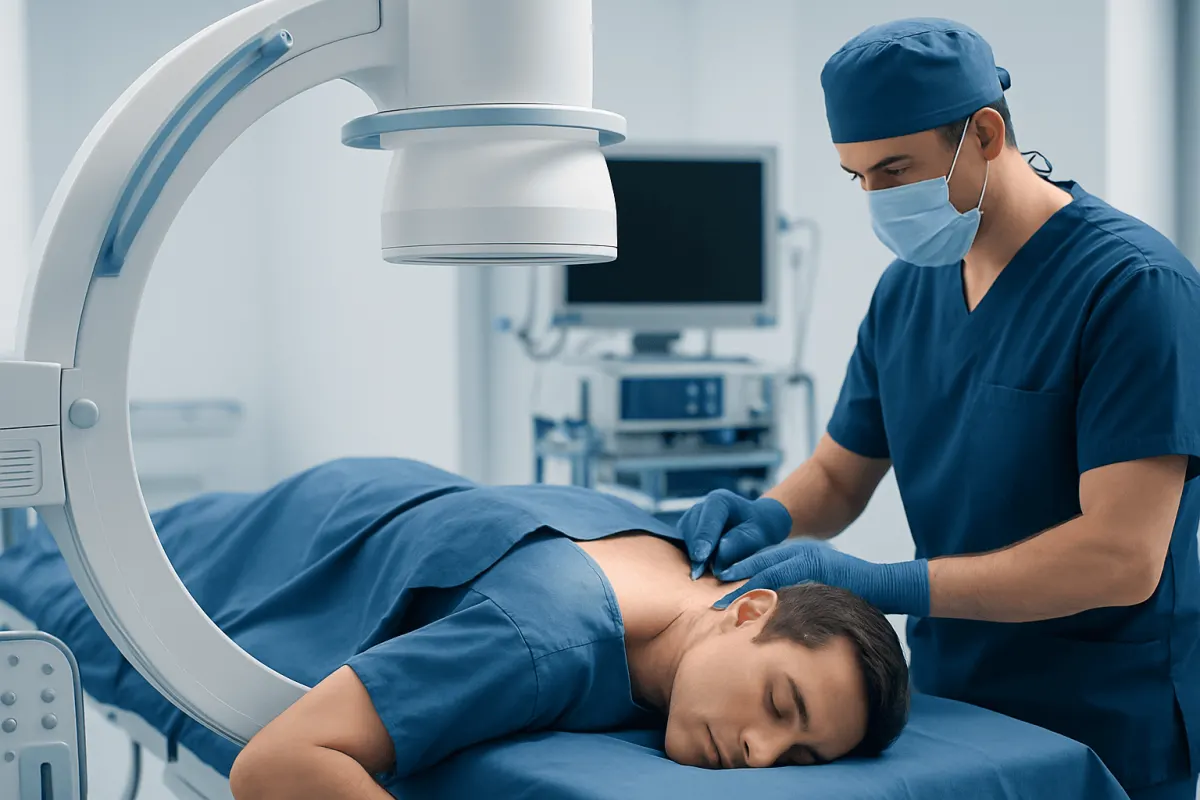
During the operation, the surgeon positions the patient safely, usually face down for a posterior approach. Imaging may be used to confirm the correct spinal level, and many operations use neuromonitoring to observe signals traveling through the spinal cord and nerves. The surgeon then reaches the affected area through the back, side, chest, or occasionally a combined approach, depending on where the compression or instability is located.
In a thoracic laminectomy, part of the vertebral arch is removed to make more room for the spinal cord. If a disc, bone spur, tumor, or other tissue is causing compression, it may be removed or reduced. When the spine needs support, screws, rods, cages, and bone graft may be used to stabilize it and promote fusion. The incision is closed, and the patient is monitored in the recovery area before transfer to a ward or, when needed, a higher-observation setting.
For people considering surgical management, spine surgery evaluation and treatment can help clarify the approach that best fits the diagnosis, anatomy, and recovery goals.
Benefits, limitations and risks to understand
The potential benefit of thoracic spine surgery is to relieve pressure on the spinal cord or nerves, prevent further neurological decline, stabilize the spine, or correct a deformity. Pain may improve, but pain relief is not the only measure of success. In some cases, the main purpose is to prevent worsening weakness, loss of mobility, or spinal instability rather than to remove every symptom.
Results depend greatly on the cause and duration of symptoms. Nerves and the spinal cord may recover slowly after longstanding compression, and some neurological symptoms can remain even after technically successful surgery. People with recent or progressive symptoms may have different expectations from those with chronic spinal cord injury, complex deformity, cancer, infection, or multiple prior operations.
Every operation carries risks, and this one is no exception. These can include bleeding, infection, blood clots, reactions to anesthesia, wound problems, persistent pain, and the need for further treatment. Specific risks of thoracic spinal surgery include leakage of spinal fluid, incomplete symptom relief, implant or fusion problems, and injury to nerve tissue or the spinal cord. The surgeon explains the risks most relevant to the planned technique and the individual’s health.
Risk reduction includes careful preoperative assessment, appropriate management of chronic conditions, avoiding tobacco and nicotine products, following wound-care guidance, and taking part in recommended rehabilitation. A patient should ask what symptoms surgery is expected to improve, which symptoms may persist, and what alternatives are reasonable.
Thoracic spine surgery recovery: hospital stay and timeline
Thoracic spine surgery recovery starts with close observation after anesthesia. Pain control commonly uses a combination of medicines, with the aim of allowing safe breathing, movement, sleep, and participation in therapy. Staff monitor strength, sensation, wound drainage, circulation, and bladder and bowel function. The length of hospital stay varies from a short stay for selected procedures to several days or longer after complex decompression, fusion, trauma surgery, or treatment for serious illness.
How long will you be in bed? For most people, strict bed rest lasts only the short period right after surgery. Early, supervised sitting, standing, and walking are often encouraged once the surgeon considers it safe because movement supports circulation, lung function, bowel activity, and confidence. Some people require a brace, temporary activity limits, or a different plan because of the surgical approach, spinal stability, or medical condition.
During the first few weeks, patients typically increase walking gradually while avoiding heavy lifting, forceful twisting, and activities that strain the healing area. Incision care, showering guidance, driving restrictions, work return, and medication plans are individualized. Physical therapy may begin in hospital or later in recovery, focusing first on safe movement and then on strength, balance, posture, and endurance.
Recovery time is not the same for every operation. People may resume light daily activities in several weeks, while thoracic spinal surgery recovery time after a fusion or complex reconstruction can extend over several months. Bone fusion, when performed, may continue to develop for many months. Follow-up appointments and imaging allow the team to monitor healing and adjust activity recommendations.
How long does it take to fully recover from thoracic spine surgery?
Full recovery from thoracic spine surgery often takes several months, but the timeline varies considerably. A smaller decompression procedure may allow a return to many usual activities within weeks to a few months, whereas a multilevel fusion, deformity correction, fracture repair, or surgery for spinal cord compression may require a longer rehabilitation period. Recovery also includes physical healing, improvement in stamina, and neurological recovery where nerves or the spinal cord were affected.
Symptoms such as numbness, altered sensation, weakness, or balance problems may improve gradually and sometimes incompletely. Improvement can continue for months because nerve tissue heals more slowly than skin and muscle. If symptoms stick around, it does not automatically mean the surgery failed. Bring them up at follow-up so your team can look at healing, rehabilitation needs, and other possible causes.
Following the surgeon’s activity plan is important. Patients should attend scheduled reviews, use a brace if prescribed, maintain adequate nutrition and hydration, avoid nicotine, and ask before restarting higher-impact exercise or work involving lifting. A gradual plan is generally safer than trying to resume all activities quickly.
What is the success rate of thoracic spine surgery?
There is no one success rate to quote, because the term covers very different conditions and procedures. A laminectomy for a localized compression, a fusion for instability, and an operation for a tumor or severe deformity have different aims and different ways of measuring outcome. For some patients, success means reduced pain and better walking; for others, it means preventing further spinal cord damage or restoring stability after a fracture.
Surgeons assess likely benefit using the diagnosis, scan findings, severity and duration of neurological symptoms, spinal alignment, overall health, and the planned technique. Outcomes are often more favorable when the condition being treated clearly matches the symptoms and when the procedure addresses a specific source of compression or instability. Severe pre-existing spinal cord damage, poor bone quality, smoking, uncontrolled medical conditions, and complex disease can affect healing and recovery.
A useful preoperative discussion includes the expected goals, the chance of symptom improvement versus stabilization, possible complications, and the likelihood of needing rehabilitation or additional treatment. No surgeon can guarantee a particular result, but clear planning helps patients make informed decisions based on their own condition.
How painful is a thoracic laminectomy? When to seek medical care
A thoracic laminectomy can cause postoperative pain and muscle soreness around the incision, particularly during the first days and weeks. The intensity varies with the number of levels treated, whether fusion was performed, the surgical approach, and a person’s pain sensitivity and previous health. Modern recovery plans use tailored pain control, early movement, breathing exercises, and rehabilitation to keep discomfort manageable while supporting healing.
Patients should contact their surgical team promptly for increasing rather than improving pain, new numbness or weakness, worsening balance, fever, redness or drainage from the wound, chest pain, shortness of breath, or swelling in a leg. New difficulty controlling the bladder or bowel, or sudden severe weakness, requires urgent medical assessment. Any of these can have several explanations, but after spine surgery none of them should be brushed off.
Before surgery, urgent medical care is also appropriate for new leg weakness, rapidly worsening walking problems, loss of bladder or bowel control, or severe pain after significant trauma. Acıbadem Health Point’s multidisciplinary specialists and JCI-accredited hospitals diagnose and treat spine conditions for international patients, with care plans coordinated around the person’s clinical needs.
Frequently asked questions
01Is thoracic spine surgery a major operation?
Thoracic spine surgery can be a major operation, especially when it involves spinal cord decompression, multiple spinal levels, fusion, deformity correction, trauma, or tumor treatment. Some less extensive procedures may have a shorter recovery. The planned approach and the underlying condition determine the overall complexity.
02How long does it take to fully recover from thoracic spine surgery?
Many people make meaningful progress during the first several weeks, but full recovery commonly takes several months. Recovery after fusion or complex reconstruction may take longer because bone healing and physical conditioning continue over time. Neurological symptoms such as numbness or weakness can improve gradually and may not resolve completely.
03What is the success rate of thoracic spine surgery?
There is no single success rate because thoracic surgery treats a range of different problems. Success may mean pain reduction, improved function, spinal stabilization, or preventing further neurological decline. A surgeon can give more individualized expectations after reviewing the diagnosis, scans, symptoms, and planned procedure.
04How long is bed rest after spinal surgery?
Strict bed rest is often brief after many spinal operations, and supervised movement is commonly started as soon as it is safe. Early walking can support circulation, breathing, and recovery. However, the surgeon may recommend different restrictions after certain procedures or when there are specific medical concerns.
05How painful is a thoracic laminectomy?
Pain after a thoracic laminectomy is usually most noticeable near the incision and surrounding muscles during the early recovery period. The level of discomfort differs from person to person and may be greater if fusion is performed at the same time. A tailored pain-management plan and gradual activity progression can help make recovery more comfortable.
06Will I need physical therapy after thoracic spine surgery?
Many patients benefit from rehabilitation, although the timing and intensity vary. Therapy may focus on safe walking, posture, balance, flexibility, strength, and return to daily activities. The surgeon and rehabilitation team decide when therapy should begin based on the operation and healing progress.
This article is for general information only and is not a substitute for professional medical advice. Please consult a qualified doctor about your individual situation.
Joint and spine care in Turkey — expert assessment & treatment
JCI-accredited · board-certified surgeons · reply within 24h
Add us as a Preferred Source to see more of our trusted health content across Google Search, AI Overviews and Discover.