Symptoms of Lacrimal Gland Tear: Signs, Causes and When to See a Doctor

Key Takeaways
- Symptoms often include pain near the upper outer eyelid, swelling, tearing, dryness, or a feeling that the eye is irritated.
- A lacrimal gland tear may happen after trauma, surgery, inflammation, or less commonly from a growth affecting the gland.
- Doctors usually diagnose the problem with an eye exam and imaging tests such as CT or MRI when needed.
- Treatment depends on the cause and severity, and may include observation, medication, wound repair, or surgery.
- Sudden vision changes, severe pain, or eye injury after an accident should be assessed promptly.
A tear or injury to the lacrimal gland can cause pain, swelling, watering, dryness, and changes in how the eye feels or looks. Because these symptoms can overlap with other eye conditions, a timely eye examination helps confirm the cause and guide treatment.
Overview
The symptoms of lacrimal gland tear usually show up as a combination of pain, swelling, watering, and irritation around the upper outer part of the eye. Some people notice that one eyelid sits differently, the eye looks fuller or more swollen, or tears run down the face even when the eye itself feels dry.
The lacrimal glands sit in the upper outer corners of the orbit and help produce the watery layer of tears. When one is torn or injured, the balance of tear production and drainage can change quickly. That is why the eye may seem to be doing two opposite things at once: watering excessively while also feeling dry, gritty, or uncomfortable.
This condition is not something people can confirm by symptoms alone. Similar complaints can come from eyelid injuries, orbital fractures, infection, inflammation, or a blocked tear duct. For that reason, a careful examination by an eye specialist is important, especially after a blow to the face, a fall, or eye surgery.
Symptoms
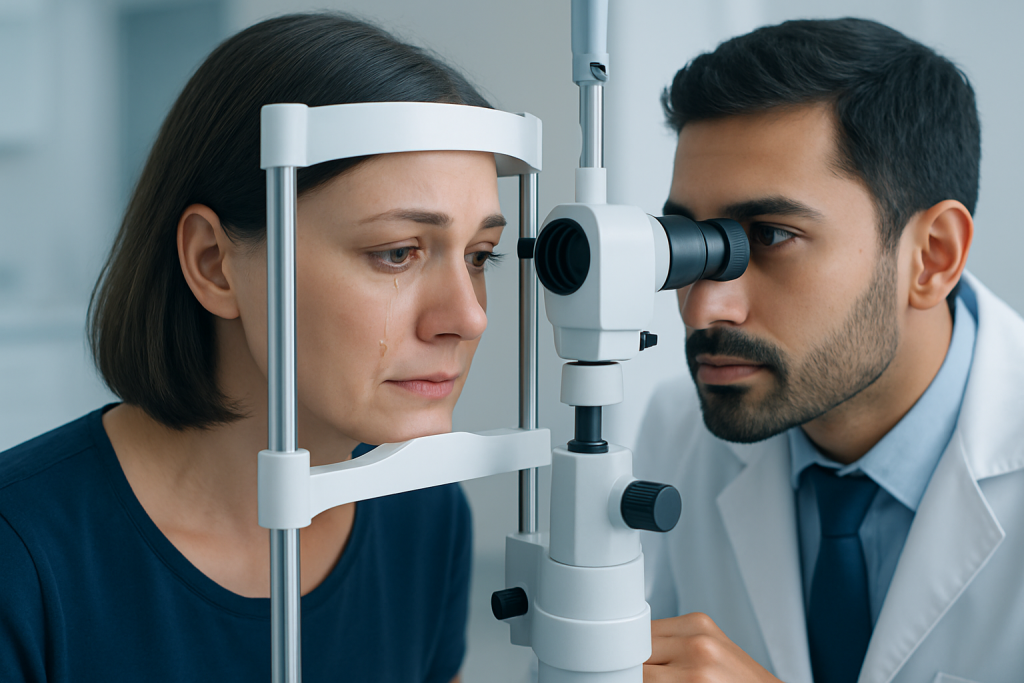
The pattern of symptoms depends on whether the tear is partial or complete and whether nearby tissues are also injured. Some symptoms appear immediately after trauma, while others become more noticeable over hours or days.
Common symptoms can include:
- Pain or tenderness in the upper outer eyelid or around the eye socket
- Swelling, bruising, or a feeling of pressure near the brow
- Excess tearing or constant watery eyes
- Dryness, grittiness, or a burning sensation despite tearing
- Redness of the eye or eyelid
- A feeling that the eye is not opening or closing normally
- Blurred vision if swelling or surface irritation affects the eye
In some cases, the main clue is not pain but a change in the tear pattern over time. A person may feel that the eye is too dry and too watery at the same time, which can be confusing. If symptoms follow trauma, they should be treated as potentially important even if the discomfort seems mild at first.
Causes & Risk Factors

A lacrimal gland tear most often results from direct injury to the eye region. A hard impact from sports, a fall, a traffic accident, or a penetrating object can damage the gland or the tissues around it. Surgery involving the eyelids, orbit, or nearby facial structures can also rarely affect the gland.
Not every swollen or painful lacrimal gland is torn. Inflammation, such as dacryoadenitis, can cause similar symptoms. A mass in the gland, scarring, or problems involving the surrounding bones and soft tissue may also change tear production and the way the eye looks and feels.
Risk factors may include facial trauma, contact sports, previous eye or eyelid surgery, autoimmune disease, or conditions that make tissues more vulnerable to inflammation. International patients who travel after an injury should seek evaluation sooner rather than later, because delayed assessment can make it harder to sort out swelling, tears, and deeper orbital damage.
Diagnosis
Diagnosis begins with a detailed history and a focused eye and facial examination. The doctor will ask how the injury happened, when symptoms began, whether vision changed, and whether there has been prior surgery or inflammatory disease. This helps separate a true lacrimal gland tear from other causes of swelling or tearing.
An eye specialist may examine eyelid position, tear flow, eye movement, and the surface of the eye. If the injury is significant or if deeper damage is suspected, imaging such as CT or MRI may be recommended to look at the orbit and surrounding tissues. These tests can help show whether there is a tear, associated fracture, or another structural problem.
Sometimes additional tests are used to check tear function or inflammation. The exact workup depends on the person’s symptoms and the likely cause. Because eye injuries can involve more than one structure, a careful diagnosis is the safest way to choose treatment.
Treatment Options
Treatment depends on the size of the injury, the cause, and whether nearby structures are also affected. Small, stable injuries may be managed conservatively with observation, lubricating eye drops, cold compresses, and follow-up visits. The goal is to reduce irritation and monitor healing while protecting vision.
If there is significant tissue damage, persistent leakage, a deep wound, or an associated fracture, procedural treatment may be needed. This can include repair of the injured tissue, management of associated eyelid or orbital injuries, or treatment of an underlying inflammatory condition. When inflammation is the main issue rather than a tear, doctors may use medication tailored to the cause.
People should not try to self-treat a suspected lacrimal gland injury with random eye drops or home remedies. Preserving the eye surface and preventing infection matter more than simply easing discomfort. For patients traveling from abroad, clinicians usually also plan follow-up in a way that is realistic for return travel and recovery.
Prevention & Self-care
Not every lacrimal gland tear can be prevented, but eye and face protection lowers the risk of trauma. Protective eyewear during sports, seat belts in vehicles, and prompt treatment for facial injuries all help reduce the chance of more serious orbital damage.
After an injury, gentle self-care can make the eye more comfortable while waiting for medical review. This may include avoiding rubbing the eye, resting the face, and using only the treatments recommended by a clinician. If the eye feels dry, lubricating drops suggested by a doctor may help protect the surface.
Recovery can be easier when follow-up is planned early, especially for people who have traveled for care. Clear instructions about wound care, medication use, activity limits, and return visits help protect healing once the patient is back home.
When to See a Doctor
Medical evaluation is important after any eye or facial injury that causes pain, swelling, tearing, or a change in vision. A person should seek prompt care if the eye looks uneven, the eyelid droops, the injury is deep, or symptoms keep worsening instead of settling.
Urgent assessment is especially important if there is vision loss, severe pain, double vision, a suspected fracture, bleeding from the eye area, or a penetrating injury. Even when symptoms seem modest, an injury near the lacrimal gland can be part of a larger orbital problem that is not visible from the outside.
If specialist care is needed, Acibadem Health Point’s multidisciplinary teams and JCI-accredited hospitals diagnose and treat eye and orbital conditions for international patients with coordinated follow-up in mind.
Living With Recovery and Follow-Up
Healing after a lacrimal gland injury can take time, and symptoms may change as swelling goes down. Some people notice that tearing, dryness, or irritation improves gradually, while others need more than one review to make sure tear function and eye surface comfort are returning as expected.
Follow-up appointments are useful because they allow the doctor to check vision, eye movement, eyelid position, and signs of inflammation or scarring. If symptoms persist, the plan can be adjusted, which may include additional imaging, medication changes, or surgical review. This step is particularly important for patients managing recovery from another country, since the timing of follow-up can affect the quality of long-term care.
Keeping a simple symptom log can help during recovery. Notes about pain, tearing, dryness, light sensitivity, or blurred vision can give the clinician a clearer picture of whether the eye is improving or needs a different approach.
Frequently asked questions
01What are the most common symptoms of a lacrimal gland tear?
Common symptoms include pain or tenderness near the upper outer eyelid, swelling, bruising, watering, and a dry or gritty eye sensation. Some people also notice redness or blurred vision if the eye surface becomes irritated. The exact pattern depends on whether the injury is partial, complete, or linked to another eye problem.
02Can a lacrimal gland tear cause both dry eye and tearing?
Yes. A damaged lacrimal gland can disrupt normal tear production, so the eye may feel dry while also watering excessively. This combination can be confusing, but it is a recognized sign that the tear film balance has been affected.
03How is a lacrimal gland tear diagnosed?
Doctors usually start with a medical history and a careful eye and facial exam. If needed, they may order CT or MRI scans to look for orbital injury or other structural problems. The goal is to confirm the cause and check whether nearby tissues are involved.
04Does every lacrimal gland tear need surgery?
No. Some injuries are small and can be managed with observation and supportive care. Surgery is usually considered when the tear is significant, when there is deeper tissue damage, or when another orbital injury needs repair.
05What should someone do right after a facial injury near the eye?
They should avoid rubbing the eye and seek medical evaluation, especially if there is pain, swelling, bleeding, double vision, or any change in sight. A prompt exam helps determine whether the lacrimal gland, eyelids, orbit, or eye surface has been affected.
06Can symptoms improve on their own?
Mild symptoms from a minor injury may improve as swelling settles, but a true tear or deeper orbital injury should still be checked by a doctor. Improvement does not always mean the problem has fully healed, so follow-up is important.
This article is for general information only and is not a substitute for professional medical advice. Please consult a qualified doctor about your individual situation.
Joint and spine care in Turkey — expert assessment & treatment
JCI-accredited · board-certified surgeons · reply within 24h
Add us as a Preferred Source to see more of our trusted health content across Google Search, AI Overviews and Discover.