Symptoms of Bile Duct Blockage: Signs, Causes and When to See a Doctor

Key Takeaways
- Bile duct blockage can interrupt the flow of bile from the liver to the intestine and quickly affect digestion and liver function.
- Common symptoms include yellowing of the skin or eyes, dark urine, pale stools, itching, nausea, and abdominal pain.
- Gallstones are a frequent cause, but inflammation, strictures, infections, and tumors can also block bile flow.
- Diagnosis usually involves blood tests and imaging such as ultrasound, CT, MRCP, or endoscopic procedures.
- Treatment depends on the cause and may include endoscopic removal of a blockage, medication, drainage, or surgery.
- Anyone with jaundice, fever, severe pain, or confusion should seek medical care without delay.
Symptoms of bile duct blockage often include jaundice, dark urine, pale stools, itching, and pain in the upper abdomen. Because the cause can range from gallstones to inflammation or a tumor, prompt medical evaluation is important.
Overview
The symptoms of bile duct blockage usually show up when bile cannot move normally from the liver into the small intestine. One of the earliest clues is jaundice, a yellowing of the skin and the whites of the eyes, often joined by dark urine, pale or clay-colored stools, and itching. Some people also notice upper abdominal discomfort, nausea, or a general feeling of being unwell.
Bile is essential for digesting fat and carrying waste products out of the body. When the ducts that transport it become narrowed or blocked, the liver and bloodstream can begin to reflect that change. The cause may be temporary and treatable, such as a gallstone, or it may need more complex evaluation, which is why the pattern of symptoms matters.
For international patients planning care abroad, the main goal is not to wait and hope the signs settle on their own. A clinician can determine whether the issue is a simple obstruction or something that needs urgent treatment, and that distinction is especially important when travel, recovery, and follow-up all have to be coordinated across countries.
Symptoms

The symptoms of bile duct blockage often develop in a recognizable cluster rather than as a single complaint. Yellowing of the skin or eyes is the best-known sign, but it may appear after darker urine or lighter stools are already noticeable. Itching can be widespread and persistent because bile components build up in the body.
Other symptoms may include pain in the upper right abdomen, a feeling of pressure after eating, loss of appetite, nausea, or vomiting. Some people develop chills, fever, or weakness if the blockage is linked to infection. In more prolonged cases, fat digestion may be affected, which can lead to greasy stools or unintentional weight loss.
- Yellow skin or eyes
- Dark urine
- Pale or clay-colored stools
- Itching without a clear skin rash
- Upper abdominal pain or discomfort
- Nausea, vomiting, or reduced appetite
These symptoms do not point to one single diagnosis. However, when they occur together, especially with jaundice, they should be treated as a sign that the bile ducts and liver need medical assessment.
Causes & Risk Factors
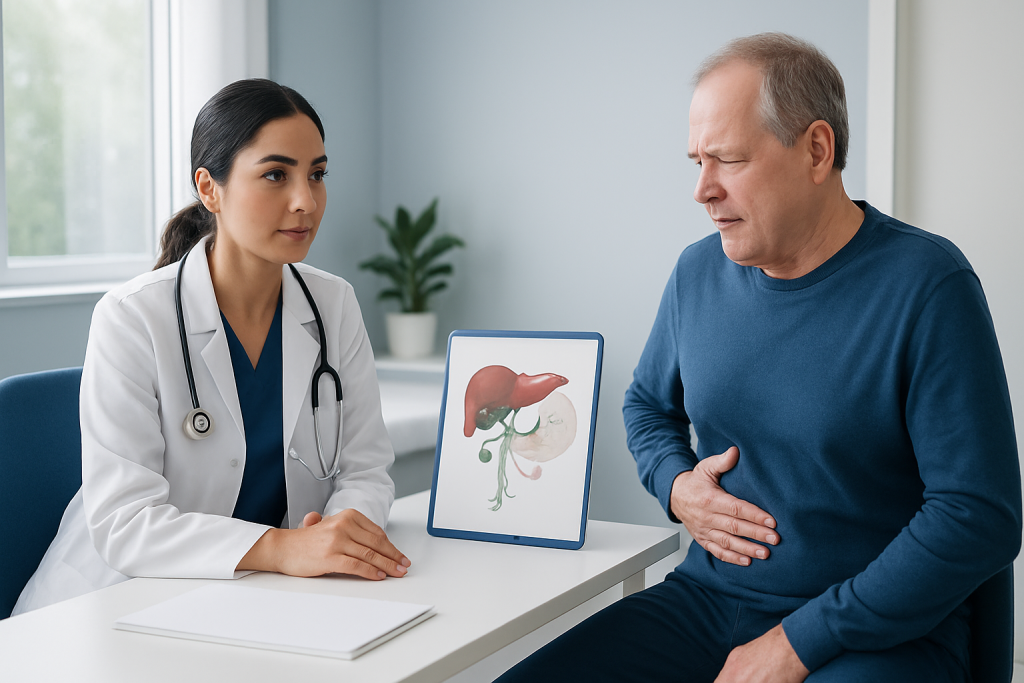
Gallstones are among the most common reasons bile flow becomes blocked. A stone can move out of the gallbladder and lodge in the common bile duct, preventing bile from passing into the intestine. Other causes include inflammation of the ducts, scarring or narrowing after surgery or injury, pancreatitis, infections, and growths in the pancreas, liver, or bile ducts.
Risk factors vary by cause. A history of gallstones, previous biliary procedures, inflammatory bowel disease, certain infections, and some inherited or autoimmune conditions can all raise the chance of obstruction. Age may also play a role, and some blockages are more likely to occur when there is long-standing irritation or repeated inflammation in the biliary system.
It is helpful to think of bile duct blockage as a problem with a pathway, not just an organ. Something may be inside the duct, pressing on it from outside, or gradually narrowing it over time. That is why doctors usually look beyond the first symptom and search for the underlying reason before choosing treatment.
Diagnosis
Diagnosis begins with a detailed history and physical examination, especially when jaundice or abdominal pain is present. A clinician may ask about the timing of symptoms, changes in urine or stool color, fever, recent travel, past gallbladder problems, and any previous procedures in the abdomen. This helps narrow the likely cause before tests are ordered.
Blood tests are often used to assess liver function and look for signs of inflammation or infection. Imaging is usually the next step. Ultrasound is commonly used first, while CT scans and MRCP can provide a more detailed view of the ducts, liver, gallbladder, and pancreas. In some cases, ERCP is used both to diagnose and to treat the obstruction.
The testing pathway may be especially important for people traveling for care, because the right sequence of tests can reduce delays and avoid unnecessary procedures. A well-coordinated team can often plan imaging, specialist review, and treatment in a short, organized timeframe so the patient knows what to expect before returning home.
Treatment Options
Treatment depends on what is causing the blockage. If a gallstone is the problem, an endoscopic procedure may be used to remove it and restore bile flow. If the duct is narrowed, a stent may be placed to keep it open. When infection is present, antibiotics and drainage may be needed promptly.
Some causes are managed with surgery, particularly when a tumor, severe scar tissue, or another structural problem is blocking the duct. In autoimmune or inflammatory conditions, medicines may help reduce ongoing damage and improve bile flow. Supportive care is also important, including fluids, nutrition support when needed, and close monitoring of liver tests.
No single treatment fits every case. The best approach is usually the one that relieves the blockage while also addressing the reason it occurred, so the problem does not return. For patients who need care across borders, multidisciplinary teams can help align gastroenterology, surgery, imaging, and follow-up planning in one coordinated pathway.
Prevention & Self-care
Not every bile duct blockage can be prevented, but some risks can be reduced. Maintaining a healthy weight, staying physically active, and following a balanced eating pattern may lower the chance of gallstones in some people. Managing known digestive or inflammatory conditions also helps reduce long-term irritation of the biliary system.
Self-care is mainly about recognizing symptoms early and avoiding delay. People should not ignore jaundice, persistent itching, or stool and urine color changes, even if the discomfort feels mild. Until a clinician gives further guidance, it is sensible to keep meals light if eating causes nausea and to stay hydrated unless a doctor advises otherwise.
After treatment, follow-up matters as much as the initial procedure. Patients may need repeat blood tests, imaging, or specialist review to confirm that bile is flowing normally and that the underlying cause is under control. This is particularly relevant for international patients arranging recovery at home, since the discharge plan should be clear and practical before travel.
When to See a Doctor
Medical review should be sought promptly if jaundice appears, especially when it comes with dark urine, pale stools, itching, or upper abdominal pain. Fever, chills, confusion, or worsening weakness can indicate infection or a more serious blockage and should not be ignored. Even when symptoms come and go, they still deserve assessment.
Urgent care is especially important if pain is severe, vomiting prevents keeping fluids down, or the person seems drowsy or disoriented. These features can mean the liver or bile ducts are under significant stress. Early evaluation often makes treatment simpler and may reduce the chance of complications.
Acibadem Health Point’s multidisciplinary specialists and JCI-accredited hospitals diagnose and treat bile duct obstruction for international patients, with coordinated imaging, procedure planning, and follow-up support. The goal is careful, timely care that fits the patient’s medical needs and travel timeline.
Living With the Condition After Treatment
Recovery after bile duct blockage depends on the cause and the treatment used. Some people feel better quickly once the duct is opened, while others need time for inflammation, infection, or jaundice to settle. Doctors may recommend repeat tests to confirm that liver values are improving.
If a stent, drainage tube, or surgery is part of the plan, patients need clear instructions about activity, diet, and follow-up visits. It is also useful to understand which symptoms should trigger a call to the care team after discharge, particularly if the patient will continue recovery in another country.
Long-term outlook is often good when the blockage is found early and managed appropriately. The key is not only treatment, but also understanding the reason the blockage happened so future episodes can be prevented or detected sooner.
Frequently asked questions
01What are the most common symptoms of bile duct blockage?
The most common symptoms are jaundice, dark urine, pale stools, itching, and pain in the upper abdomen. Some people also notice nausea, reduced appetite, or fever if infection is present. The symptoms can appear gradually or more suddenly, depending on the cause.
02Is bile duct blockage always caused by gallstones?
No. Gallstones are a frequent cause, but the duct can also be blocked by inflammation, scarring, infection, pancreatitis, or tumors. A doctor usually looks for the exact cause before deciding on treatment.
03Can bile duct blockage go away on its own?
Some mild symptoms may seem to improve temporarily, but an actual blockage usually needs medical evaluation. If bile is not flowing normally, the liver and digestion can be affected. It is safer to have the cause checked rather than waiting for it to pass.
04How is bile duct blockage diagnosed?
Doctors often start with blood tests and an ultrasound, then use more detailed imaging such as CT, MRCP, or ERCP if needed. The choice of test depends on the symptoms and the suspected cause. In some situations, ERCP can both confirm the blockage and treat it.
05Is jaundice an emergency?
Jaundice needs prompt medical attention, especially if it appears with fever, pain, vomiting, or confusion. These signs can suggest a blocked duct with infection or another serious problem. Early care helps prevent complications and guides the right treatment.
06What should an international patient prepare before traveling for treatment?
It helps to gather recent test results, a medication list, and details of any prior gallbladder or liver problems. Patients should also ask how follow-up will work after returning home, including repeat blood tests and warning signs to watch for. Clear planning makes treatment and recovery smoother across borders.
This article is for general information only and is not a substitute for professional medical advice. Please consult a qualified doctor about your individual situation.
Medical weight-loss options in Turkey — costs & eligibility
JCI-accredited · board-certified surgeons · reply within 24h
Add us as a Preferred Source to see more of our trusted health content across Google Search, AI Overviews and Discover.