Swollen Groin Glands in Men: When to Seek Care
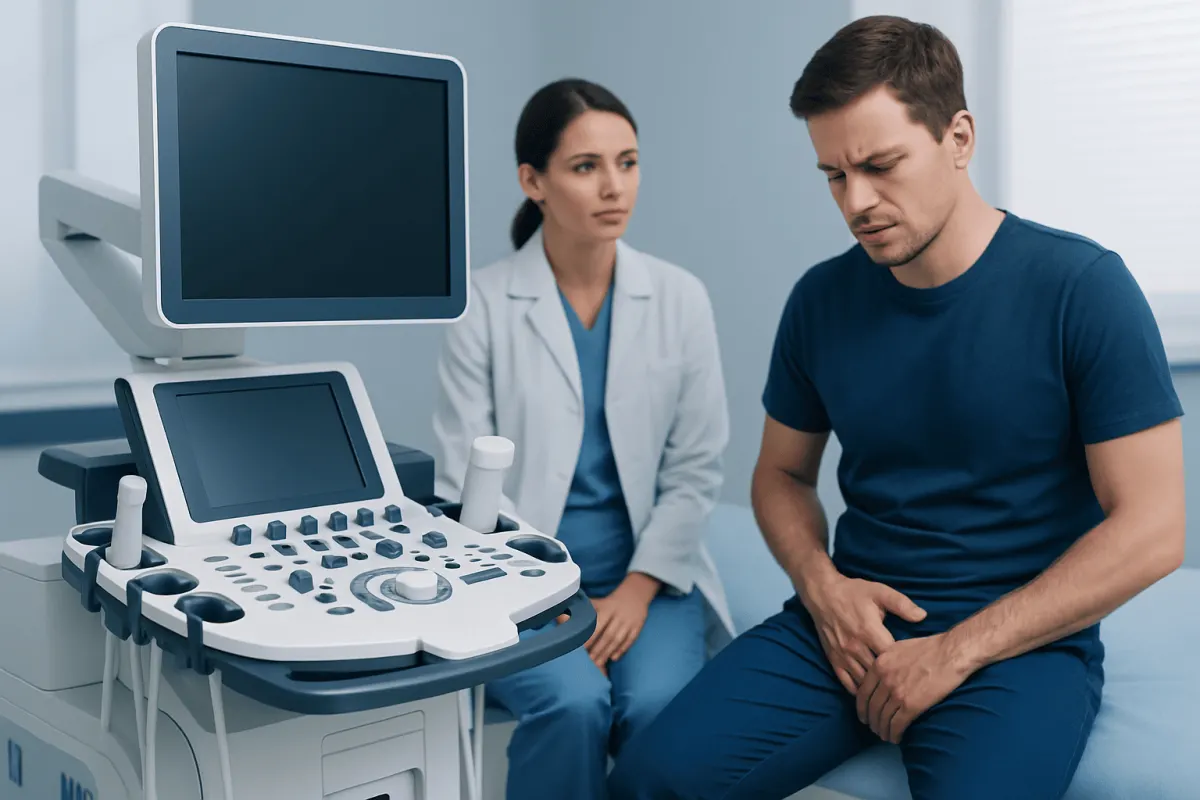
Glands in groin swollen male usually means enlarged inguinal lymph nodes. These nodes often react to infections or inflammation in the legs, genital area or lower abdomen, while a smaller number of cases require tests or procedures to identify the cause.
Overview: What Does It Mean When Glands in the Groin Are Swollen?
When people search for “glands in groin swollen male,” they are usually referring to enlarged inguinal lymph nodes. Lymph nodes are small immune-system structures that filter lymph fluid and help the body respond to infections. The groin contains groups of nodes that drain the skin and tissues of the legs, lower abdomen, buttocks and external genital area.
Enlargement is often a temporary immune response, particularly when a node is tender and there is a recent skin infection, ingrown hair, wound, athlete’s foot or sexually transmitted infection. However, swelling that does not improve, continues to grow or occurs without a clear explanation deserves medical assessment. A clinician can consider the full pattern of symptoms rather than relying on node size alone.
Most people with swollen groin nodes do not need surgery. Procedures such as needle biopsy, surgical lymph node biopsy or lymphadenectomy are considered only when there is a specific clinical reason, such as an unclear persistent node or staging and treatment of a diagnosed cancer.
Symptoms, Causes and Risk Factors
Swollen inguinal nodes may be felt as one or more lumps in the crease between the lower abdomen and upper thigh. They can be tender, sore when walking, or discovered incidentally. Symptoms from the underlying cause may include a rash, skin redness, a sore on the leg or genitals, urinary symptoms, fever or fatigue.
Common causes include bacterial or viral infections, fungal infection of the feet, inflammation around hair follicles, cuts or insect bites, and infections transmitted through sexual contact. Inflammation from conditions affecting the skin or immune system can also lead to reactive nodes. Rarely, enlarged groin nodes can be related to cancers involving the skin, testicle, penis, anus, lower limb or lymphatic system.
Risk factors depend on the cause. Recent shaving or skin injury, untreated foot problems, travel-related exposures, contact with infections and unprotected sexual activity can be relevant. A doctor may ask about recent illness, new medicines, skin changes, sexual health, weight loss, night sweats and any previous cancer history. These questions help guide appropriate testing without assuming a serious cause.
- Nodes caused by infection are often tender and may appear with nearby skin or genital symptoms.
- Nodes that are firm, painless, fixed in place or progressively enlarging require assessment, although appearance alone cannot diagnose the cause.
- Symptoms affecting the leg, foot or genital skin are important because these areas commonly drain to groin lymph nodes.
How Are Swollen Groin Lymph Nodes Diagnosed?
Assessment usually begins with a medical history and examination of the groin, abdomen, legs, feet and genital area when appropriate and with consent. The clinician will look for infections, wounds, skin changes and hernias, which can also cause a groin lump but are different from enlarged lymph nodes.
Depending on the findings, tests may include blood tests, urine testing, sexual health tests or an ultrasound scan. Ultrasound can help distinguish a lymph node from other types of lumps and describe features that guide the next step. It does not always establish the exact cause on its own.
If a node remains unexplained or has features requiring further investigation, a doctor may recommend tissue sampling. A fine-needle aspiration or core needle biopsy takes cells or a small tissue sample using a needle, usually with local anaesthetic. In some situations, an excisional biopsy removes all or part of one lymph node so a pathologist can examine its structure in detail. This is an important diagnostic approach in selected cases, not a routine response to every swollen node.
What to Expect After a Groin Lymph Node Biopsy?
After a groin lymph node biopsy, the person may have local soreness, bruising, mild swelling or a small amount of numbness around the incision or needle site. These effects generally improve over days to a few weeks. The care team provides individual wound-care instructions, including when dressings can be removed, when showering is suitable and which activities should be temporarily limited.
For an open biopsy, the procedure is often performed as day surgery, although the plan depends on the person’s health and the type of anaesthesia used. Walking is commonly encouraged as tolerated, but strenuous exercise, heavy lifting and stretching of the groin may need to wait until the wound has healed. Prescribed or recommended pain relief should be used exactly as advised by the treating team.
It is important to contact the surgical team promptly if there is increasing redness, warmth, drainage, fever, worsening pain, opening of the wound or rapid swelling. A small collection of fluid under the skin, called a seroma, can occur after surgery and may need observation or treatment. Pathology results can take time because tissue processing and specialist review are needed; the doctor will explain when and how results will be discussed.
How Painful Is Lymphadenectomy Recovery?
Lymphadenectomy is surgery to remove multiple lymph nodes, usually because of a known or strongly suspected cancer. Recovery can be more uncomfortable than recovery after a single-node biopsy because the incision and tissue dissection are more extensive. Pain is typically most noticeable in the first days after surgery and is managed with an individualized pain-control plan.
People may experience tightness, bruising, fatigue, reduced comfort when walking and temporary numbness around the groin or upper thigh. Drain tubes may be used to remove fluid after surgery; if so, the team explains drain care and when removal is likely. The length of hospital stay and return to normal activities vary according to the extent of surgery, wound healing and whether other treatments are planned.
A significant longer-term consideration after groin lymphadenectomy is lymphedema, or persistent swelling caused by reduced lymph drainage. Not everyone develops it, but the risk should be discussed before surgery. Early reporting of limb heaviness, swelling, skin tightness or recurrent skin infection allows the team to arrange assessment and supportive care, which may include specialist exercises, compression or lymphatic therapy.
When lymph node surgery forms part of cancer care, treatment planning is individualized. Lymphadenectomy may be discussed alongside imaging, pathology review and other therapies depending on the diagnosis and stage.
How Long Does It Take for Swollen Lymph Nodes in the Groin to Heal?
For reactive lymph nodes caused by a straightforward infection or local irritation, tenderness may begin to improve within several days after the underlying problem is treated or resolves. The node itself can take two to four weeks to become smaller, and some nodes remain slightly noticeable for longer even when there is no ongoing illness.
Healing time is not the same for everyone. It depends on the cause, the severity and duration of inflammation, whether treatment is needed, and whether there are repeated infections or ongoing skin problems. Antibiotics are useful only for certain bacterial infections and should not be self-started for an unexplained lump.
A node should be re-evaluated if it is not improving over several weeks, enlarges, becomes hard or fixed, or is accompanied by fever, drenching night sweats, unexplained weight loss or widespread enlarged nodes. These signs do not confirm cancer, but they indicate that timely medical review is important.
How Long Does It Take for Swollen Glands to Return to Normal?
Swollen glands may return to their previous size within a few weeks when the cause is temporary, such as a minor skin infection, fungal foot infection or viral illness. Sometimes the immune response leaves a lymph node mildly enlarged for months. In that situation, stability and the absence of concerning symptoms are reassuring factors, but only a clinician can determine whether follow-up is appropriate.
The most helpful approach is to address the underlying trigger. This may include treating a diagnosed infection, keeping skin wounds clean, managing athlete’s foot, avoiding squeezing or repeatedly checking the lump, and attending follow-up appointments. Repeated pressing can make the area sore and make it harder to judge whether swelling is changing.
After a biopsy or node removal, the external wound often heals over a few weeks, while deeper tissue healing and return to usual comfort can take longer. The treating surgeon provides the most accurate recovery timeline because it reflects the procedure performed, laboratory findings and the person’s overall health.
When to Seek Medical Care
Medical advice is appropriate for a new groin lump that has no obvious cause, lasts longer than two to four weeks, grows over time or causes ongoing discomfort. A prompt appointment is also sensible when there are genital sores, discharge, pain during urination, a rash, an infected wound, or symptoms of a possible sexually transmitted infection. Testing and treatment can protect both the individual and sexual partners where relevant.
Urgent medical assessment is needed for severe pain, a rapidly enlarging groin mass, high fever, spreading redness, inability to pass urine, severe testicular pain or swelling, or feeling significantly unwell. These symptoms can have several causes and should not be managed by waiting at home.
For persistent or concerning lymph node changes, Acıbadem Health Point’s multidisciplinary specialists at JCI-accredited hospitals can coordinate examination, imaging, biopsy and follow-up for international patients. The appropriate care pathway depends on the suspected cause and should be decided with a qualified doctor.
Frequently asked questions
01Can swollen glands in the groin be caused by a sexually transmitted infection?
Yes. Some sexually transmitted infections can cause swollen groin lymph nodes, especially when there are genital sores, rash, discharge or urinary symptoms. Testing is the only reliable way to identify an infection, so a person with possible exposure or symptoms should seek confidential medical advice.
02Are swollen groin lymph nodes always a sign of cancer?
No. Infection, skin irritation and inflammation are much more common reasons for enlarged groin lymph nodes. Still, nodes that persist, enlarge or occur with unexplained weight loss, night sweats or other concerning symptoms should be assessed.
03Can a swollen groin lymph node be treated at home?
Home care may be suitable for comfort while arranging care for a clear minor trigger, such as rest, avoiding friction and keeping affected skin clean. A person should not squeeze the lump or take antibiotics without medical guidance. Medical review is important if the lump is unexplained, worsening or persistent.
04How painful is lymphadenectomy recovery?
Recovery after lymphadenectomy usually involves pain and tightness in the groin, particularly during the first days and when walking. Pain-control medicines and activity guidance are tailored by the surgical team. Ongoing leg swelling, worsening pain or wound changes should be reported promptly.
05How long does it take for swollen lymph nodes in the groin to heal?
Nodes reacting to a minor infection may become less tender within days and reduce in size over two to four weeks. Some remain slightly enlarged for longer after the infection has resolved. A node that does not improve or continues to enlarge should be checked by a clinician.
06What should someone expect after a groin lymph node biopsy?
Mild soreness, bruising and swelling at the biopsy site are common after a groin lymph node biopsy. The care team will give instructions about wound care, showering, activity and pain relief. Increasing redness, fever, discharge or rapidly worsening swelling should be reported.
07How long does it take for swollen glands to return to normal?
Many swollen glands return to normal within a few weeks after the triggering infection or inflammation settles. The timeline can be longer when inflammation has been prolonged or the node has been enlarged repeatedly. Follow-up is advisable if the swelling remains unexplained or changes over time.
This article is for general information only and is not a substitute for professional medical advice. Please consult a qualified doctor about your individual situation.
Hair transplant in Turkey — costs, graft counts & a free assessment
JCI-accredited · board-certified surgeons · reply within 24h
Add us as a Preferred Source to see more of our trusted health content across Google Search, AI Overviews and Discover.