Spinal Flexion Is Normal Bending, but Pain With It Has Causes
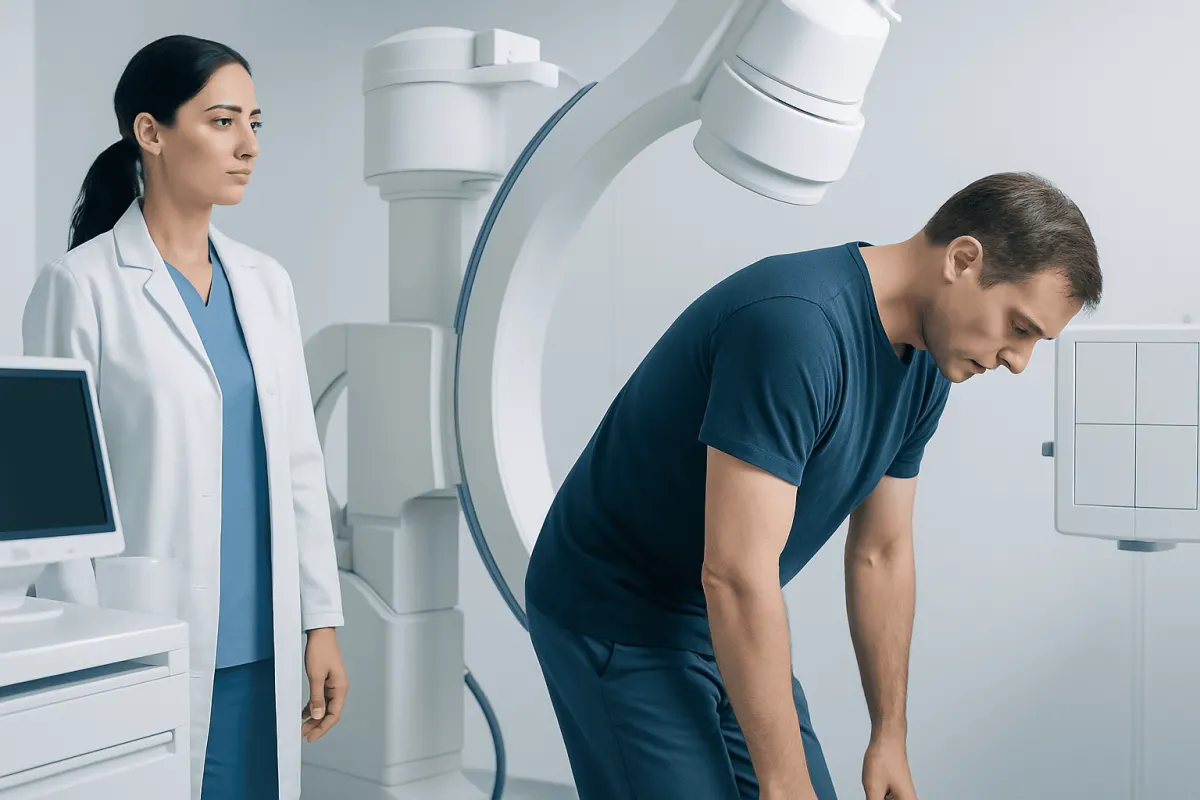
You reach down to tie your shoes, and something in your lower back pulls. Or you stand up after a long stretch at your desk and the first bend forward feels stiff and sore. That forward-bending motion is spinal flexion — the natural movement your spine makes when you sit, tie your shoes, or reach down for something.
It is a normal part of daily movement. But pain, stiffness, weakness, or discomfort that keeps coming back when you bend forward may point to a muscle strain, a disc problem, posture-related stress, or another spinal condition.
What spinal flexion means
Spinal flexion is the movement that happens when a person bends the spine forward. It is part of normal body mechanics and helps with many daily tasks, including sitting down, leaning over a sink, picking up an object, or curling the body slightly during rest. The motion can occur through the neck, upper back, and lower back, although people often notice it most in the lumbar spine.
On its own, spinal flexion is not a disease — it simply describes a movement. In a healthy spine, that movement happens in a controlled way, supported by the discs, joints, ligaments, and muscles. The abdominal and back muscles help guide this motion, while the hips also share some of the movement during forward bending.
Most people look this up because bending forward hurts, feels tight, or makes them afraid of doing damage. The real question is not whether your spine bends — it is whether your body handles that bend comfortably. Discomfort may come from overuse, muscle spasm, poor posture, reduced flexibility, a disc problem, or age-related wear in the spine.
How spinal flexion feels in daily life
Many people do not think about spinal flexion until it becomes uncomfortable. Forward bending may feel smooth and easy, or it may trigger pulling, pressure, stiffness, or sharp pain. Some patients notice symptoms only after long periods of sitting, while others feel pain when getting out of bed, lifting, coughing, or returning to an upright position.
The pattern of symptoms can offer clues. Pain limited to the muscles of the lower back may suggest strain or overuse. Pain that travels into the buttock or leg may indicate nerve irritation. A sense of morning stiffness that improves with movement can have a different meaning from pain that worsens throughout the day with repeated bending.
Common symptoms that may occur with painful spinal flexion include:
- Localized low back or neck pain
- Muscle tightness or spasm
- Reduced range of motion
- Pain when sitting, bending, or lifting
- Radiating pain, numbness, or tingling in an arm or leg
- Weakness or a feeling of instability during movement
Symptoms are often mild and short-lived, especially after unusual activity. But pain that lingers or keeps coming back deserves attention, particularly once it starts affecting your sleep, work, exercise, or everyday self-care.
Why spinal flexion can become painful

Pain during spinal flexion can arise from several structures. Muscles and ligaments may be overstretched during sudden movement, repetitive bending, or lifting with poor technique. Intervertebral discs, which act as cushions between the vertebrae, can also become irritated or degenerate over time. In some people, forward bending increases pressure on a sensitive disc and triggers pain.
Another common factor is posture. Prolonged sitting, slouched positions, limited hip mobility, and weak core support can change how the spine handles load. When the body repeatedly relies on the lower back rather than distributing movement through the hips and trunk, spinal flexion may become less efficient and more uncomfortable.
Age-related changes can also contribute. Disc dehydration, arthritis in the small facet joints, reduced muscle conditioning, and narrowing around nerves may all affect how bending feels. Some conditions cause pain mainly with extension, while others are aggravated more by flexion. That is why a doctor looks at your whole pattern of symptoms, not just one movement.
Possible causes and risk factors include:
- Muscle strain or ligament sprain
- Repetitive bending or heavy lifting
- Sedentary lifestyle and poor posture
- Limited hip flexibility or weak trunk muscles
- Disc bulge or herniated disc
- Degenerative disc disease or spinal osteoarthritis
- Previous spine injury or osteoporosis-related fracture
- Excess body weight or deconditioning
How doctors evaluate spinal flexion problems
Assessment begins with a careful history. A doctor will ask when the pain started, where it is felt, whether it spreads, and what movements make it better or worse. They may also ask about work demands, exercise habits, prior injuries, recent falls, fever, unexplained weight loss, or numbness and weakness.
The physical examination usually includes observing posture, testing range of motion, checking muscle strength, and assessing sensation and reflexes. The clinician may look at how a patient bends forward and returns upright, whether the hips move freely, and whether nerve tension signs are present. This helps distinguish a simple mechanical problem from possible nerve compression or another underlying issue.
Not every patient needs imaging. X-rays can show alignment, fractures, or degenerative changes, while MRI is more useful for discs, nerves, and soft tissues. If symptoms suggest a more complex cause, the doctor may recommend MRI or other diagnostic imaging. Which test you need depends on your symptoms and what the examination shows — not simply on the fact that bending hurts.
Treatment options and recovery
Treatment depends on the cause, severity, and duration of symptoms. For many patients, the first step is conservative care. This may include short-term activity modification, avoiding heavy lifting, using heat or cold, and taking doctor-recommended pain relief medication when appropriate. Complete bed rest is usually not advised, because gentle movement often supports recovery.
Physical therapy is often central to care. A rehabilitation plan may focus on flexibility, core strength, hip mobility, posture, and safer lifting mechanics. Patients may learn how to move through the hips, support the trunk, and gradually build tolerance for daily bending. In some cases, doctors recommend physical therapy and rehabilitation to improve movement patterns and reduce recurring pain.
If pain is linked to nerve irritation, a significant disc problem, or lasting functional limitation, further treatment may be needed. Options can include specialist review, targeted pain management, or surgery in selected cases. For patients whose symptoms relate to a disc condition and do not improve with conservative treatment, spine surgery may be considered after careful evaluation.
Recovery time varies. A mild strain may improve in days to weeks, while a disc-related problem may take longer. Early improvement does not always mean the spine is fully conditioned again, so a gradual return to activity is important. Long-term results often depend on building strength, improving movement habits, and addressing workplace or lifestyle factors that overload the spine.
Prevention and self-care for safer bending
Prevention does not mean avoiding spinal flexion altogether. Forward bending is a normal function, and the spine generally benefits from regular, well-controlled movement. The goal is to improve how the body performs the movement and reduce unnecessary strain.
Helpful self-care habits include staying physically active, changing positions often, and strengthening the trunk and hips. People who sit for long hours may benefit from standing breaks, ergonomic adjustments, and exercises that restore spinal and hip mobility. When lifting, using the legs and hips, keeping the load close to the body, and avoiding sudden twisting can make the task safer.
Simple ways to protect the spine during daily activities include:
- Warm up before exercise or physically demanding work
- Build core and hip strength gradually
- Maintain flexibility in the hamstrings and hips
- Avoid repeated heavy bending when fatigued
- Use supportive posture during sitting and computer work
- Stop and reassess if a movement causes sharp or radiating pain
Patients with recurring symptoms may benefit from personalized advice. Near the end of the care pathway, specialist assessment can help clarify whether the issue is mainly muscular, postural, disc-related, or due to another spinal condition such as scoliosis. Acıbadem Health Point’s multidisciplinary specialists in JCI-accredited hospitals diagnose and treat spinal conditions for international patients.
When to seek medical care
Many episodes of pain with spinal flexion improve with time, activity modification, and guided exercise. Still, medical evaluation is a good idea if symptoms last more than a few weeks, keep returning, or make normal activities difficult. Persistent pain should not be ignored simply because it started after a common movement like bending forward.
Urgent assessment is especially important if back or neck pain follows significant trauma, or if it appears with fever, unexplained weight loss, night pain, or a history of cancer. These features do not always mean a serious problem, but they do require timely medical review.
Immediate medical attention is needed if spinal pain is accompanied by any of the following:
- New weakness in an arm or leg
- Numbness in the groin or saddle area
- Loss of bladder or bowel control
- Severe or rapidly worsening radiating pain
- Difficulty walking or maintaining balance
Getting checked early helps pin down the cause, shape the right treatment, and lower the risk of long-term disability. For most people, a proper diagnosis and a clear plan mean better pain control and safer movement as time goes on.
Frequently asked questions
01Is spinal flexion normal?
Yes. Spinal flexion is the normal forward-bending motion of the spine and is used during many everyday activities. It only becomes a concern when it causes pain, marked stiffness, weakness, or other symptoms.
02Why does bending forward hurt my lower back?
Pain with bending forward can happen for several reasons, including muscle strain, disc irritation, poor posture, limited hip mobility, or age-related changes in the spine. A doctor looks at the overall pattern of symptoms to identify the most likely cause.
03Can spinal flexion make a disc problem worse?
In some people, forward bending can increase symptoms from a sensitive or herniated disc, especially if it causes leg pain, tingling, or numbness. However, the relationship is different for each patient, and not all pain with flexion means there is a disc injury.
04Should a person avoid spinal flexion completely if it is painful?
Not usually. Avoiding all bending for a long time can reduce confidence and stiffness may increase. It is generally better to identify the cause, modify painful activities for a short time, and follow a guided plan to restore safer movement.
05What tests are used for painful spinal flexion?
The first steps are usually a medical history and physical examination. If needed, a doctor may order imaging such as X-ray or MRI to evaluate bones, alignment, discs, nerves, or other structures.
06When is back pain with spinal flexion an emergency?
It needs urgent care if it comes with new leg or arm weakness, numbness around the groin, loss of bladder or bowel control, severe trauma, or rapidly worsening pain. These symptoms can suggest nerve compression or another serious problem that should be assessed promptly.
This article is for general information only and is not a substitute for professional medical advice. Please consult a qualified doctor about your individual situation.
Joint and spine care in Turkey — expert assessment & treatment
JCI-accredited · board-certified surgeons · reply within 24h
Add us as a Preferred Source to see more of our trusted health content across Google Search, AI Overviews and Discover.