Slight Lazy Eye: Signs of Mild Amblyopia
“Lazy eye slight” commonly describes mild amblyopia, where one eye does not develop clear vision as well as the other. It is not caused by laziness or poor effort, and early eye assessment is important because treatment is most effective while vision is developing.
What does “lazy eye slight” mean?
“Lazy eye slight” is not a formal medical diagnosis. It usually refers to mild amblyopia, a condition in which vision in one eye, and less commonly both eyes, has not developed as clearly as it should. The eye may look completely normal, but the brain has learned to rely more on the eye that provides the sharper image.
Amblyopia develops during the visual-development years, usually from infancy through childhood. It is not caused by an eye being lazy, poor reading habits, screen use, or a child not trying hard enough. The term can be misleading because the central issue is how the brain and eye work together to develop vision.
Mild amblyopia can be easy to miss. A child may use their stronger eye so effectively that everyday activities seem normal. A comprehensive eye examination can identify unequal vision and the underlying reason before it has a more lasting effect.
How mild lazy eye may appear
Some children and adults with mild amblyopia have no noticeable symptoms. They may not realize that one eye sees less clearly because they have always experienced vision that way. Routine childhood vision checks are therefore valuable, even when there are no concerns at home.
Possible signs include squinting, closing or covering one eye in bright light, sitting very close to screens, losing place while reading, or having difficulty judging distances. Reduced depth perception may make catching a ball, pouring liquids, using stairs, or some hand-eye tasks more challenging. These signs do not confirm amblyopia, but they support the need for an eye assessment.
Sometimes an eye appears to turn inward, outward, upward, or downward. This is called strabismus and can be associated with amblyopia. However, not every visible eye turn causes amblyopia, and amblyopia can occur without an obvious eye turn.
- One eye consistently wandering or seeming misaligned
- Head tilting or turning to look at objects
- Complaints of blurred vision, headaches, or tired eyes in older children
- Difficulty with precise visual tasks or depth judgment
Why amblyopia develops

Amblyopia occurs when the brain receives an unclear or mismatched image from an eye during visual development. Over time, it may give less attention to that image. The three most common pathways are refractive error, strabismus, and visual deprivation.
Refractive amblyopia can occur when one eye is much more long-sighted, short-sighted, or astigmatic than the other, or when both eyes have a significant uncorrected refractive error. The brain may favor the eye with the clearest focus. A child may not complain because the better-seeing eye compensates.
Strabismic amblyopia may develop when the eyes do not line up consistently. To avoid double vision, the brain may suppress the image from the turned eye. Deprivation amblyopia is less common but more urgent; it can result when something blocks a clear image from entering the eye, such as a congenital cataract or a drooping eyelid that covers the pupil.
Risk can be higher in children born prematurely, those with developmental differences, and those with a family history of strabismus, amblyopia, childhood cataract, or significant refractive error. A risk factor does not mean a child will develop amblyopia, but it supports timely screening.
How an eye specialist confirms the diagnosis
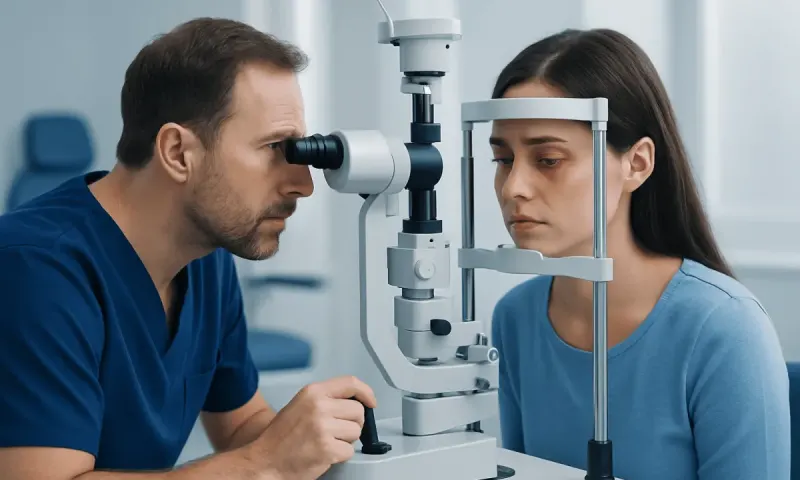
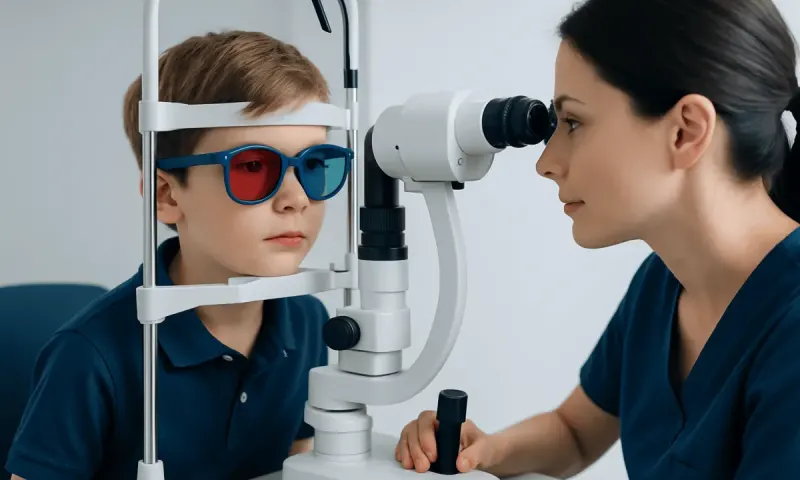
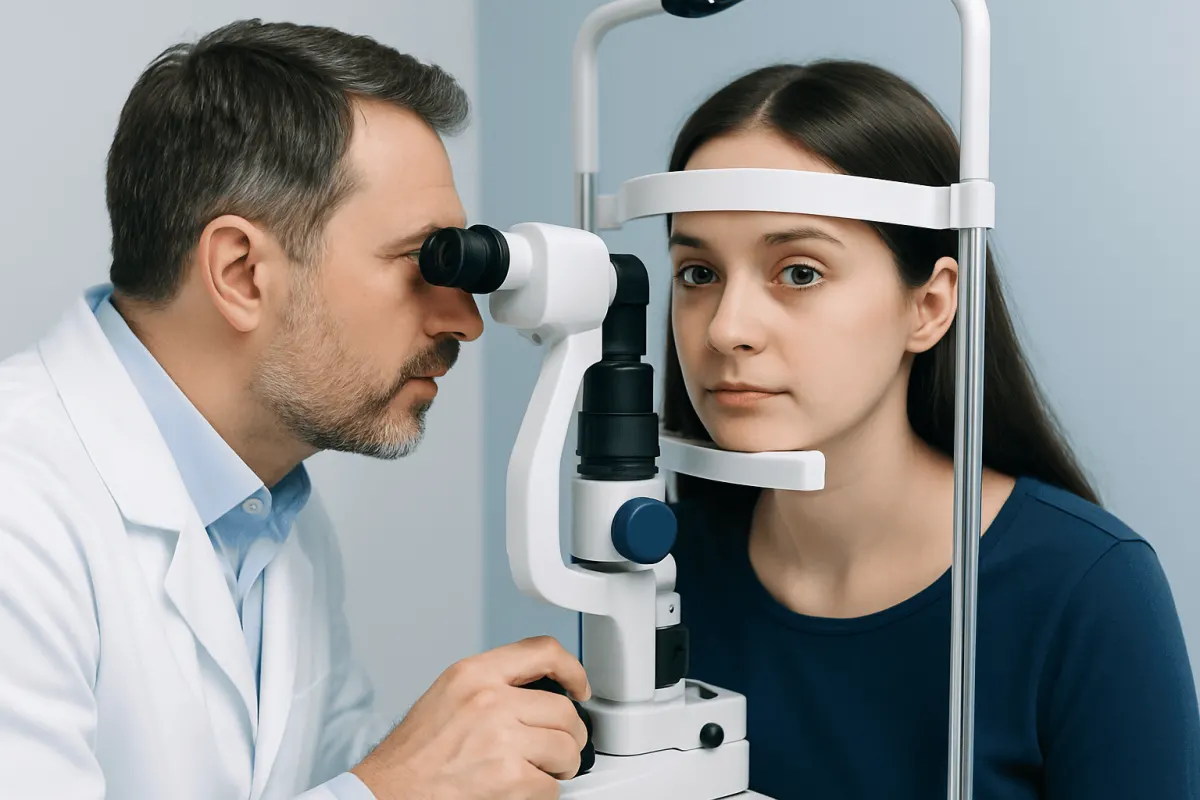
Diagnosis is based on an eye examination rather than appearance alone. An ophthalmologist or qualified eye-care professional checks how well each eye sees, how the eyes move and align, and whether there is a difference in focusing power. Tests are adapted to the child’s age and ability, including picture- or symbol-based charts for younger children.
The examination may include drops that temporarily widen the pupils and relax focusing. This allows a more accurate measurement of refractive error and a clearer view of the internal structures of the eye. The clinician also looks for conditions that may reduce vision or require prompt treatment, including cataract, retinal disease, or optic nerve problems.
Finding a mild difference early matters. The clinician will determine whether it represents amblyopia, a refractive error alone, an eye alignment issue, or another cause of reduced vision. The result guides an individualized treatment plan and follow-up schedule.
Treatment: improving vision development
Treatment aims to give both eyes the clearest possible images and encourage the brain to use the weaker eye. The best plan depends on the cause, the difference in vision between the eyes, the child’s age, and how treatment is progressing. Families should follow the prescribed schedule closely and attend follow-up visits, as the plan may need adjustment.
For many children, correctly prescribed glasses are the first and sometimes the only treatment needed. Glasses correct long-sightedness, short-sightedness, or astigmatism and allow the brain to receive a clearer image. Wearing them consistently is important, even if the child does not feel that their vision is impaired.
If vision remains unequal after an appropriate period with glasses, an ophthalmologist may recommend covering the stronger eye with a patch for a specific amount of time each day. This encourages use of the weaker eye. In selected cases, medicated drops may temporarily blur vision in the stronger eye as an alternative to patching. These treatments should only be used as directed, because excessive penalization can affect the stronger eye.
When an underlying condition blocks vision or significantly affects eye alignment, treating that condition may be necessary. For example, a cataract may need prompt specialist management. Eye-muscle surgery can help align the eyes in some cases, but it does not automatically treat amblyopia; vision therapy may still be needed before or after surgery.
Everyday support and realistic expectations
Improvement often takes time and depends on consistent treatment. Parents and caregivers can help by making glasses or patching part of a predictable daily routine, using encouragement rather than blame, and choosing close-up activities the child enjoys during prescribed patch time. Reading, drawing, puzzles, crafts, and age-appropriate games may help keep a child engaged.
Patches can cause temporary skin irritation. Using products recommended by the care team, placing the patch on clean dry skin, and varying placement slightly can help. A child should not use a patch outside the prescribed schedule. If there is marked redness, pain, rash, reduced vision in the stronger eye, or difficulty tolerating treatment, the family should contact the clinician.
Most improvement is achieved when treatment begins in early childhood because the visual system is still adaptable. However, this does not mean older children, teenagers, or adults should ignore a suspected vision difference. They should have an eye examination to identify correctable refractive errors, eye alignment concerns, or other eye conditions and discuss realistic management options.
There is no reliable home test or exercise that can diagnose or cure amblyopia. Nutritional support and screen-time limits are important for general health habits, but they do not replace prescribed glasses, patching, drops, or professional follow-up when amblyopia is present.
When to seek medical care
A child should have a prompt eye assessment if an eye turns in or out consistently, a white or cloudy-looking pupil is noticed, an eyelid appears to cover the pupil, or vision seems suddenly worse. A red or painful eye, sensitivity to light, a new severe headache with visual symptoms, or an eye injury also needs timely medical attention.
Non-urgent assessment is still advisable when a child squints often, holds objects unusually close, has trouble with depth perception, or has a family history of childhood eye problems. Vision screening is useful, but it does not replace a full examination when symptoms or risk factors are present.
Acıbadem Health Point’s multidisciplinary specialists and JCI-accredited hospitals can assess and treat eye conditions, including amblyopia, for international patients. A qualified ophthalmologist can explain whether a mild “lazy eye” concern requires observation, glasses, patching, treatment for an underlying cause, or referral to another specialist.
Frequently asked questions
01Can a slight lazy eye correct itself?
A mild difference in vision should not be assumed to resolve on its own. Some children may need only glasses, while others need patching, drops, or treatment for an underlying problem. An eye examination identifies the cause and the most appropriate follow-up.
02Is lazy eye the same as a squint?
Not exactly. A squint, also called strabismus, means the eyes are not aligned, while amblyopia means reduced vision development in one or both eyes. They can occur together, but either condition can occur without the other.
03At what age should a child be checked for lazy eye?
Vision screening is commonly performed in early childhood, and children should be examined sooner if there are symptoms, risk factors, or a visible eye turn. Babies and young children can be assessed with age-appropriate methods. Earlier recognition generally gives more opportunity to improve visual development.
04Do glasses fix mild amblyopia?
Glasses can substantially improve vision when uncorrected refractive error is the cause, and they are often the first step in treatment. Some children need additional treatment if vision remains unequal after consistently wearing glasses. The eye specialist will monitor progress and adjust the plan if needed.
05Can adults be treated for lazy eye?
Adults with longstanding amblyopia should still have a comprehensive eye examination, especially if they notice a change in vision. The visual system is less adaptable after childhood, so improvement may be more limited than in young children, but correctable refractive or eye-health issues should not be overlooked. Management should be discussed with an ophthalmologist.
06Should a child wear an eye patch all day?
Not unless an ophthalmologist specifically prescribes that schedule. Patch duration is individualized according to the child’s age, vision, cause of amblyopia, and response to treatment. Using a patch for longer than advised can blur vision in the stronger eye and is not recommended.
This article is for general information only and is not a substitute for professional medical advice. Please consult a qualified doctor about your individual situation.
Explore treatments in Turkey — costs, top hospitals & a free quote
JCI-accredited · board-certified surgeons · reply within 24h
Add us as a Preferred Source to see more of our trusted health content across Google Search, AI Overviews and Discover.