The Skeletal System Is Living Tissue, Not a Fixed Frame

Have you ever thought of your skeleton as just scaffolding — a fixed frame that holds you up? It’s much more alive than that. Your skeletal system is made up of bones, joints, cartilage, ligaments, and bone marrow, all working together every day.
It supports your posture and movement, protects vital organs, helps make blood cells, and stores the minerals your body needs for overall health.
Overview: what the skeletal system is and why it matters
The skeletal system is the body’s structural framework. It includes bones, joints, cartilage, ligaments, and bone marrow, all working together to support the body, allow movement, and protect important organs such as the brain, heart, and lungs. In adults, the skeleton contains 206 bones, although this number is higher in infancy because some bones fuse as a child grows.
It’s easy to picture the skeleton as a passive frame. In reality, it’s living tissue. Bone is constantly being broken down and rebuilt — a process that keeps bones strong, repairs microscopic damage, and lets them respond to changes in movement, body weight, hormones, and nutrition.
Your bones also do quieter work. They store minerals — especially calcium and phosphorus — that your muscles and nerves depend on, along with many other body functions. And the marrow inside certain bones produces your blood cells, which ties bone health directly to your overall health.
How the skeletal system works
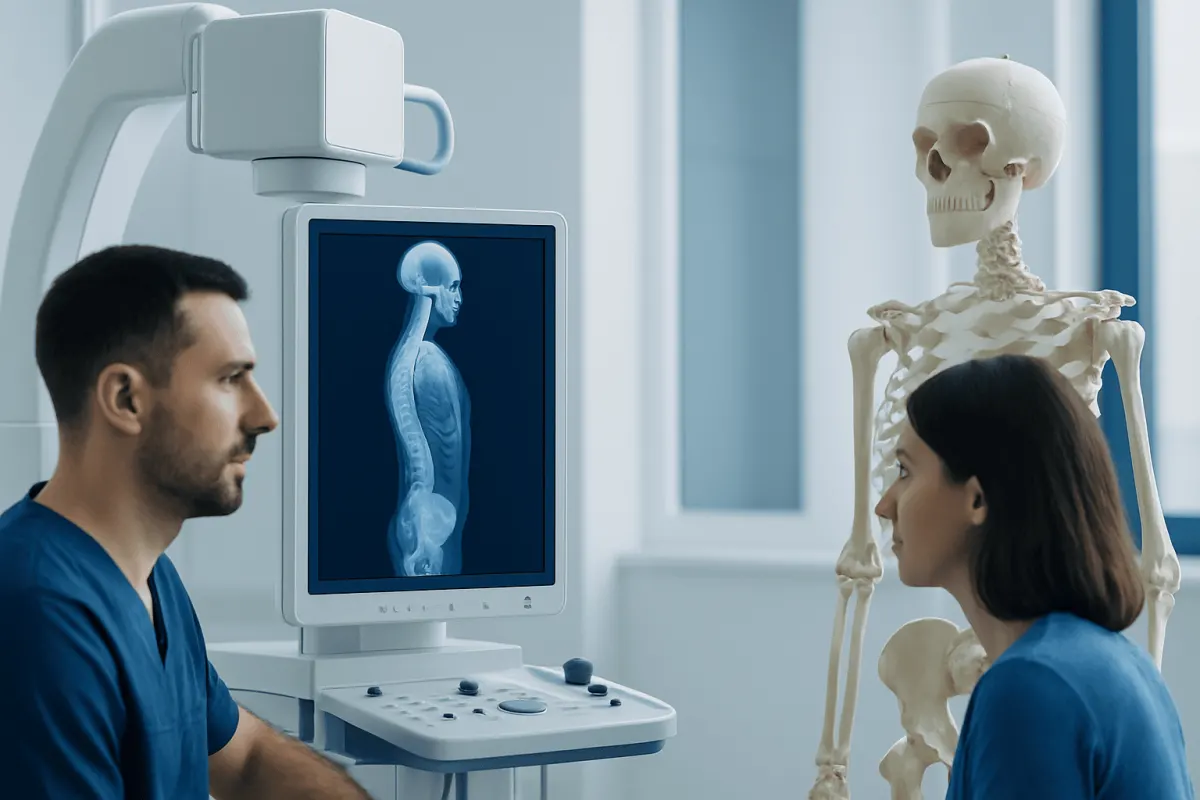
The skeleton is often divided into two main parts. The axial skeleton includes the skull, spine, ribs, and breastbone. It mainly protects the central nervous system and vital organs. The appendicular skeleton includes the shoulders, arms, pelvis, and legs, which are especially important for mobility and everyday activities.
Bones meet at joints, where movement becomes possible. Some joints allow very little movement, while others, such as the hip and shoulder, allow a wide range of motion. Cartilage covers the ends of bones inside joints and helps reduce friction. Ligaments connect bone to bone and help stabilize joints.
Muscles and bones work as a coordinated system. Muscles pull on bones through tendons, creating movement at the joints. Because of this close partnership, skeletal problems often affect mobility, balance, posture, and daily comfort. Conditions involving the joints may overlap with arthritis, while structural injuries may require orthopedic evaluation.
- Support: gives the body shape and posture
- Protection: shields organs such as the brain, spinal cord, heart, and lungs
- Movement: works with muscles and joints to produce motion
- Storage: holds minerals and some fat reserves
- Blood cell production: bone marrow produces red cells, white cells, and platelets
Common symptoms and warning signs of skeletal problems
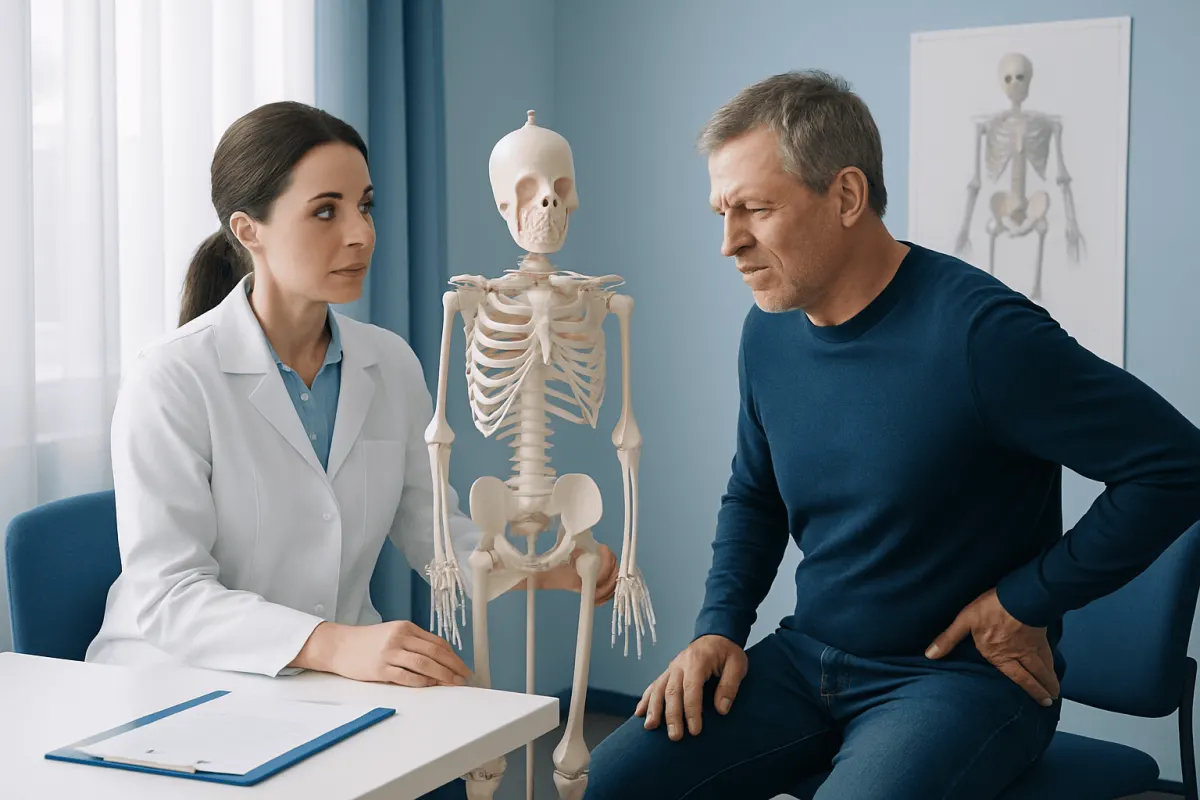
Bone problems don’t always start with a dramatic injury. Often the first signs creep in gradually and are easy to brush off. Pain in the bones or joints, stiffness, swelling, less flexibility, or trouble walking can all point to a problem with the skeleton or the tissues around it.
Some symptoms point more strongly to bone weakness or structural change. Recurrent fractures after minor falls, loss of height, curvature of the spine, or persistent back pain may suggest reduced bone density or spinal changes. A person may also notice changes in posture, trouble standing upright, or pain that worsens with activity.
Children and adolescents can show different signs. Delayed growth, limb deformities, frequent fractures, or pain that limits play and movement may need assessment. In adults, long-term joint pain, especially in weight-bearing joints such as the knees and hips, may be associated with wear-related conditions including osteoarthritis.
What can affect the skeletal system
Age is one of the biggest factors in bone health. Bone mass usually builds through childhood and adolescence, peaks in early adulthood, and then slowly declines. Hormonal changes — especially after menopause — can speed up bone loss and raise your fracture risk.
Nutrition also matters. Calcium, vitamin D, protein, and overall balanced nutrition help support bone strength. Low body weight, poor diet, eating disorders, and certain digestive conditions that affect nutrient absorption can contribute to weaker bones. A sedentary lifestyle can also reduce bone strength because bones become stronger when they are regularly challenged by weight-bearing activity.
Other risk factors include smoking, excess alcohol use, some long-term medications such as corticosteroids, and chronic medical conditions that affect hormones, kidneys, or inflammation. Falls and trauma are major causes of fractures at any age. In some people, skeletal concerns are related to sports injuries or overuse, and treatment may include orthopedic and traumatology care for assessment and recovery planning.
Common skeletal conditions include fractures, osteoporosis, spinal curvature disorders, joint degeneration, and inflammatory or metabolic bone diseases. Some problems are temporary and heal fully, while others are chronic and need ongoing management to protect function and quality of life.
How doctors evaluate skeletal system concerns
Evaluation starts with a medical history and physical examination. A doctor may ask about pain location, stiffness, injuries, family history, activity level, medications, diet, falls, and any previous fractures. The physical exam often includes checking posture, gait, joint range of motion, spinal alignment, tenderness, swelling, and muscle strength.
Imaging tests are often central to diagnosis. Standard X-rays can show fractures, joint space changes, alignment problems, and some bone diseases. In more complex cases, advanced imaging such as MRI or CT scan may help assess soft tissues, subtle fractures, tumors, or spine conditions in more detail.
When low bone density is a concern, a bone density scan may be recommended. Blood tests can help look for vitamin D deficiency, calcium imbalance, inflammation, infection, or hormone-related causes of bone loss. In selected cases, additional tests may be needed to evaluate marrow, metabolic bone disorders, or unexplained fractures.
Treatment options and long-term management
Treatment depends on the underlying problem. Minor injuries may improve with rest, temporary activity changes, pain relief, bracing, and guided rehabilitation. Fractures may need immobilization with a cast or splint, while more serious or displaced fractures can require surgery to restore alignment and stability.
Chronic skeletal conditions are often managed with a combination of approaches. These can include physical therapy, exercise programs to improve strength and balance, nutritional support, medications to protect bone density or reduce inflammation, and strategies to reduce fall risk. Joint or spine conditions may also need specialist care, especially if pain limits daily life.
For some patients, targeted treatment is needed for the specific cause. Osteoporosis care aims to reduce fracture risk and preserve bone mass. Degenerative joint disease focuses on pain control, mobility, and function. Severe injuries, deformities, or advanced joint damage may require procedural or surgical treatment after careful evaluation.
Because the skeletal system is closely linked with muscles, nerves, and connective tissues, treatment often works best when it is multidisciplinary. Near the end of the care pathway, patients may benefit from coordinated support from orthopedics, radiology, rehabilitation, and internal medicine. Acıbadem Health Point’s multidisciplinary specialists and JCI-accredited hospitals diagnose and treat skeletal conditions for international patients.
Protecting skeletal health: prevention and self-care
You can support your bones at any age. Regular weight-bearing exercise — walking, stair climbing, dancing, or resistance training — helps keep them strong. Balance and flexibility work lowers your risk of falls, which matters more and more as you get older.
Nutrition is another foundation. Adequate calcium and vitamin D are important for bone health, and protein supports the tissues involved in movement and repair. A varied diet with dairy or fortified alternatives, leafy greens, beans, nuts, fish, and other nutrient-rich foods can help. A doctor may advise supplements if dietary intake is not enough or if a deficiency is present.
Other helpful steps include avoiding smoking, limiting alcohol, wearing protective gear during sports, and creating a safer home environment to reduce falls. Simple changes such as improving lighting, removing loose rugs, and using supportive footwear can make a meaningful difference, especially for older adults.
- Stay physically active most days of the week
- Include strength and balance exercises
- Get enough calcium, vitamin D, and protein
- Avoid tobacco and limit alcohol
- Address vision, footwear, and home safety to prevent falls
- Discuss bone density testing if risk factors are present
When to seek medical care
See a doctor if bone or joint pain lasts more than a few days, keeps coming back, or gets in the way of sleep, walking, work, or daily life. After a fall or injury, get checked if you notice significant swelling, bruising, deformity, an inability to bear weight, or pain that isn’t improving.
Prompt evaluation is especially important for suspected fractures, sudden severe back pain, loss of height, visible changes in alignment, or numbness and weakness associated with neck or back symptoms. Unexplained bone pain, fever, or weight loss also deserves timely medical review because these symptoms may have causes beyond simple strain.
People with risk factors for osteoporosis, a history of repeated fractures, or long-term use of medicines that affect bone strength should ask a doctor whether preventive screening is appropriate. Early evaluation can identify treatable problems before they lead to greater pain, disability, or another fracture.
Frequently asked questions
01What is included in the skeletal system?
The skeletal system includes bones, joints, cartilage, ligaments, and bone marrow. Together, these structures support the body, enable movement, protect organs, store minerals, and help produce blood cells.
02What are the main functions of the skeletal system?
Its main functions are support, protection, movement, mineral storage, and blood cell production. Bones provide structure, joints allow motion, and bone marrow inside certain bones helps form red and white blood cells and platelets.
03How can a person keep the skeletal system healthy?
Regular weight-bearing exercise, strength training, and balance work help maintain bone and joint health. Good nutrition, especially enough calcium, vitamin D, and protein, plus avoiding smoking and reducing fall risk, are also important.
04At what age does bone health become a concern?
Bone health matters at every age because peak bone mass is built during childhood and early adulthood. However, bone loss becomes more common with aging, especially after menopause, so prevention and screening become increasingly important later in life.
05What are common diseases that affect the skeletal system?
Common skeletal conditions include fractures, osteoporosis, osteoarthritis, scoliosis, and some inflammatory or metabolic bone disorders. These conditions can affect strength, posture, movement, and everyday comfort in different ways.
06When should someone worry about bone or joint pain?
Bone or joint pain should be assessed if it is severe, persistent, recurrent, or follows an injury. Pain with swelling, deformity, inability to use the limb, loss of height, or nerve symptoms such as numbness or weakness needs medical evaluation.
This article is for general information only and is not a substitute for professional medical advice. Please consult a qualified doctor about your individual situation.
Joint and spine care in Turkey — expert assessment & treatment
JCI-accredited · board-certified surgeons · reply within 24h
Add us as a Preferred Source to see more of our trusted health content across Google Search, AI Overviews and Discover.