Femoral Neck Fracture: Urgent Care and Treatment

A femoral neck fracture is a break in the narrow section of the thigh bone just below the ball of the hip joint. It is a serious injury, especially in older adults, but prompt diagnosis, appropriate treatment and rehabilitation can support recovery and independence.
Overview: What Is a Femoral Neck Fracture?
A femoral neck fracture is a break in the femur, or thigh bone, in the narrow area just below the femoral head. The femoral head is the rounded “ball” at the top of the femur that fits into the hip socket. Because this fracture is inside the hip joint capsule, it can affect the blood supply to the femoral head and may need prompt specialist treatment.
Femoral neck fractures are one type of hip fracture. They are especially common in older adults, often after a fall from standing height, because bone strength and balance can change with age. They can also occur in younger people after significant trauma, such as a road traffic collision or sports injury.
The fracture may be nondisplaced, meaning the bone pieces remain in their usual position, or displaced, meaning the pieces have shifted apart. This distinction strongly influences treatment decisions. A hip injury after a fall should be assessed urgently, even if symptoms initially seem manageable.
Symptoms and Warning Signs
The most common symptom is sudden pain in the groin, hip, upper thigh or buttock after a fall or injury. The person may be unable to stand, walk or put weight through the affected leg. Pain can become worse with movement, and the hip may feel stiff or difficult to move.
With a displaced fracture, the injured leg may look shorter than the other leg and may turn outward. Bruising or swelling can occur, although it is not always obvious. In some nondisplaced fractures, a person may still be able to walk for a short time, but persistent hip or groin pain after a fall still needs medical evaluation.
Emergency care is appropriate after a suspected hip fracture. It is particularly important to seek urgent help when there is severe pain, inability to bear weight, a visibly changed leg position, numbness, weakness, or symptoms following a major injury.
Causes and Risk Factors
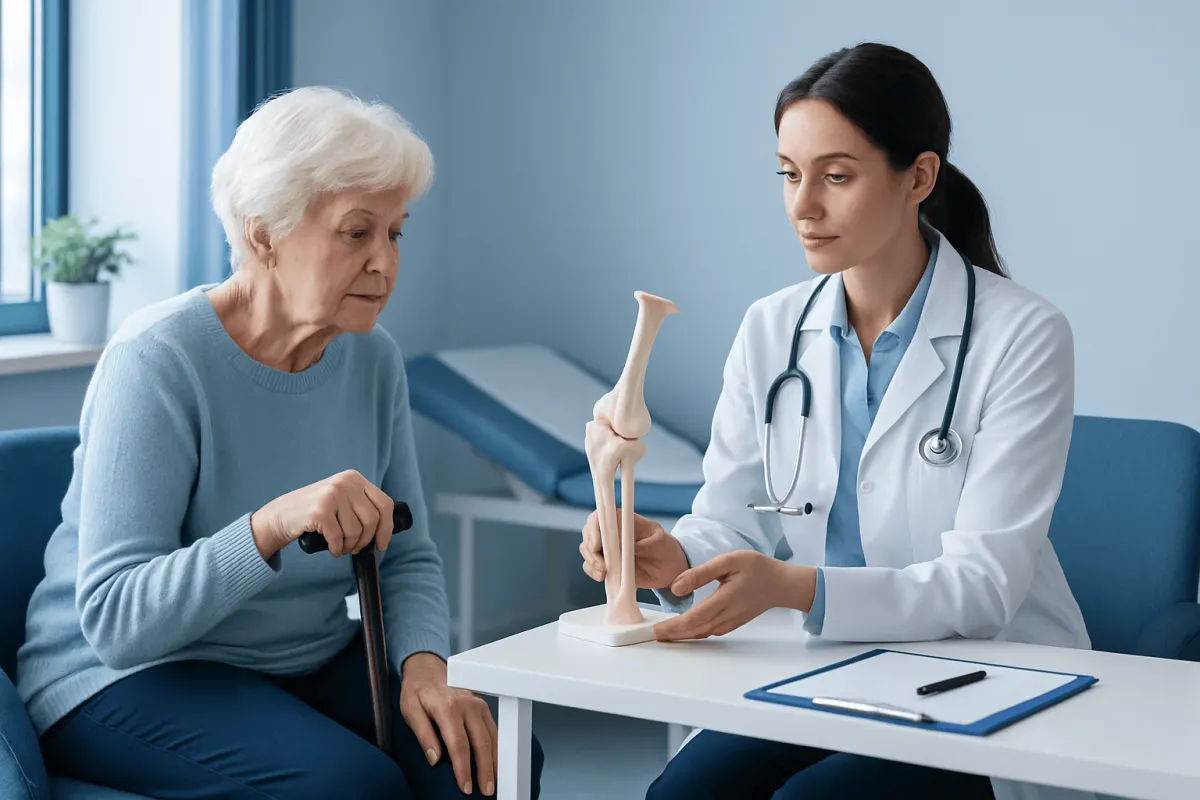
In older adults, a simple fall is the usual cause of a femoral neck fracture. Osteoporosis, a condition that makes bones weaker and more likely to break, is an important underlying risk factor. Reduced muscle strength, poor balance, vision problems and certain medicines that cause dizziness or sedation can also increase the likelihood of falling.
Other factors associated with hip fracture risk include previous fragility fractures, low body weight, smoking, high alcohol intake, low physical activity and long-term use of some medicines, including corticosteroids. Medical conditions that affect bone health, nutrition, nerve function or mobility may contribute as well.
In younger adults, femoral neck fractures are more often related to high-energy trauma. Less commonly, a weakened bone may fracture with little force because of an underlying bone disorder or a stress injury. Doctors consider the person’s age, injury mechanism and medical history when evaluating the cause.
- Older age and osteoporosis
- Previous falls or previous fractures
- Reduced balance, muscle weakness or limited mobility
- Home hazards such as loose rugs, poor lighting or clutter
- High-impact injury, particularly in younger adults
How a Femoral Neck Fracture Is Diagnosed
Diagnosis begins with a clinical assessment, including details about the injury, pain, medical conditions, usual mobility and medications. A clinician examines the hip and leg and checks circulation, sensation and movement below the injury. Pain relief, safe positioning and support are provided while assessment takes place.
Hip and pelvic X-rays usually identify a femoral neck fracture and show whether it is displaced. If X-rays do not show a fracture but symptoms and examination still suggest one, magnetic resonance imaging (MRI) is often used to detect an occult, or hidden, fracture. Computed tomography (CT) may also be useful in selected situations.
Blood tests, heart and lung assessment, and medication review may be needed before surgery, particularly for older adults or people with long-term health conditions. The team also evaluates bone health and fall risk, as these measures can help reduce the chance of another fracture later.
Treatment Options
Treatment is individualized and depends on whether the fracture is displaced, the person’s age, overall health, bone quality, activity level and ability to undergo surgery. Most femoral neck fractures are treated surgically because surgery can stabilize or replace the damaged area and allows earlier movement. Timing is planned as safely and promptly as possible after medical assessment.
For some nondisplaced fractures, surgeons may use screws or other internal fixation devices to hold the bone in position while it heals. Displaced fractures in younger patients may also be treated with fixation when preserving the natural femoral head is appropriate. However, healing complications can occur because the blood supply to the femoral head may be disrupted.
For many older adults with a displaced femoral neck fracture, replacing part or all of the hip joint may be recommended. A hemiarthroplasty replaces the femoral head, while a total hip replacement replaces both the femoral head and the hip socket surface. The most suitable operation is decided through discussion with the orthopedic team.
Nonsurgical treatment is uncommon and may be considered only when surgery is not medically appropriate or aligns with the person’s goals of care. It generally involves pain control, careful positioning and a tailored mobility plan, but prolonged immobility carries risks. Management commonly includes hip replacement surgery when joint replacement is the appropriate option, followed by structured rehabilitation.
Recovery and Rehabilitation
Recovery starts early, often with help from physiotherapists and nursing staff to sit up, stand and walk safely using a walker, crutches or other aid. The timing and amount of weight-bearing allowed depend on the fracture pattern and operation performed. Following the surgeon’s instructions is important for protecting the repair or replacement during healing.
Rehabilitation focuses on restoring safe movement, hip strength, balance, confidence and everyday function. Occupational therapists can help with practical activities such as dressing, bathing, using stairs and preparing the home for a safer return. Recovery timelines vary widely, and improvement may continue for months.
Potential complications include infection, blood clots, wound problems, delirium in some older adults, pressure injuries and loss of function from reduced mobility. Fixation procedures may also be affected by nonunion, where the bone does not heal as expected, or avascular necrosis, where reduced blood flow damages the femoral head. Follow-up appointments help the team identify and manage concerns early.
Good nutrition, adequate protein intake, hydration, pain management and gradual activity can support rehabilitation. A healthcare professional may also recommend assessment and treatment for osteoporosis, including evaluation of calcium and vitamin D intake and medicines when indicated.
Prevention and Self-Care
Not every femoral neck fracture can be prevented, but strengthening bones and reducing fall risk can make a meaningful difference. Adults at risk of osteoporosis should discuss bone health assessment with a clinician, especially after a low-impact fracture. Treatment for osteoporosis can reduce the risk of future fractures when appropriate.
Regular weight-bearing and muscle-strengthening activity, suited to an individual’s health and abilities, supports bone strength, balance and coordination. Adequate dietary calcium, vitamin D where advised, avoiding smoking and limiting alcohol can also support bone health. People should seek professional advice before starting a new exercise program after a fracture or surgery.
Fall prevention at home may include improving lighting, removing trip hazards, securing loose carpets, using nonslip footwear and installing grab bars where needed. Vision and hearing checks, medication reviews and the use of recommended walking aids can also reduce risk. Family members and caregivers can assist by helping create a safer environment.
When to See a Doctor
Anyone with hip or groin pain after a fall, accident or other injury should be assessed promptly, particularly if walking is painful or difficult. Emergency assessment is needed if the person cannot bear weight, has severe pain, notices that the leg looks shortened or turned outward, or has had a significant impact injury.
After treatment, patients should contact their care team for increasing pain, fever, worsening redness or drainage from a wound, new swelling in a leg, chest pain, shortness of breath, or a sudden decline in mobility. These symptoms do not always indicate a serious problem, but they need timely medical advice.
Ongoing follow-up is also important for fracture healing, rehabilitation progress and prevention of future falls and fractures. Acıbadem Health Point’s multidisciplinary specialists and JCI-accredited hospitals diagnose and treat femoral neck fractures for international patients, with care plans tailored to the individual’s injury and overall health.
Frequently asked questions
01Is a femoral neck fracture the same as a hip fracture?
A femoral neck fracture is a specific type of hip fracture. It occurs in the upper part of the thigh bone, just below the femoral head, which forms the ball of the hip joint. Other hip fractures can occur in nearby parts of the upper femur.
02Can someone walk with a femoral neck fracture?
Some people with a small or nondisplaced fracture may still be able to walk, although doing so is usually painful. This does not rule out a fracture. Hip or groin pain after a fall should be assessed promptly, especially when weight-bearing is difficult.
03Does every femoral neck fracture need surgery?
Most femoral neck fractures are treated with surgery, but the best approach depends on the fracture and the person’s health. In selected cases, surgery may not be appropriate because of serious medical conditions or individual care goals. An orthopedic specialist can explain the expected benefits and risks of each option.
04How long does recovery take after a femoral neck fracture?
Recovery varies according to the fracture, the treatment used, age, general health and rehabilitation progress. Early assisted movement often begins soon after treatment, while strength, balance and confidence can continue improving over several months. Follow-up and rehabilitation plans are tailored to the individual.
05What is avascular necrosis after a femoral neck fracture?
Avascular necrosis means damage to bone caused by reduced blood supply. Because a femoral neck fracture can affect vessels supplying the femoral head, this is a possible complication, particularly after displaced fractures. Regular orthopedic follow-up helps monitor healing and identify problems if they develop.
06How can another hip fracture be prevented?
Prevention usually combines osteoporosis assessment and treatment when needed with fall-risk reduction. Safe exercise, adequate nutrition, medication review, vision care and home safety changes can all help. A clinician can recommend a plan based on the person’s health, mobility and fracture history.
This article is for general information only and is not a substitute for professional medical advice. Please consult a qualified doctor about your individual situation.
Joint and spine care in Turkey — expert assessment & treatment
JCI-accredited · board-certified surgeons · reply within 24h
Add us as a Preferred Source to see more of our trusted health content across Google Search, AI Overviews and Discover.