Sinus Infection Symptoms: Signs, Causes and When to See a Doctor

Key Takeaways
- Sinus infection symptoms can overlap with a common cold, allergies, or other nasal conditions.
- Facial pain or pressure, blocked nose, thick mucus, and reduced smell are among the most common signs.
- Viruses cause many sinus infections, while allergies, nasal polyps, or a deviated septum can increase risk.
- Diagnosis is usually based on symptoms and examination; imaging is reserved for selected cases.
- Home care may help mild cases, but worsening symptoms, high fever, or eye or neurological symptoms need prompt medical review.
Sinus infection symptoms often include facial pressure, thick nasal discharge, congestion, reduced smell, and a heavy feeling in the head. Many cases improve with supportive care, but symptoms that are severe, persistent, or unusual deserve medical evaluation.
Overview
A sinus infection, also called sinusitis, happens when the tissue lining the sinus cavities becomes inflamed and swollen. When people search for sinus infection symptoms, they are usually trying to understand whether their blocked nose and facial pressure are more than a stubborn cold. The short answer is that sinusitis often causes congestion, thick nasal discharge, facial pressure, and a reduced sense of smell, but the pattern and duration of symptoms matter just as much as the symptoms themselves.
The sinuses are air-filled spaces around the nose, cheeks, eyes, and forehead. When they cannot drain well, mucus builds up and the area becomes irritated. This can happen after a viral infection, with allergies, or because of structural issues that narrow the sinus openings. In many people, sinusitis is temporary and improves with time; in others, it can become recurrent or long-lasting and may need a more detailed ENT assessment.
For international patients arranging care from abroad, understanding the symptom pattern helps set expectations before travel. A doctor may first confirm whether the problem is likely a short-lived infection, a flare of chronic sinus inflammation, or a different issue such as migraine, dental pain, or an upper respiratory infection.
Symptoms
The most familiar sinus infection symptoms are not always dramatic. They often begin as a feeling of fullness in the face or nose that gradually becomes more noticeable. Some people describe pressure behind the eyes, pain around the cheeks or forehead, or a sense that their head feels “heavy.”
Common symptoms can include:
- Blocked or stuffy nose
- Thick nasal discharge, which may be yellow or green
- Postnasal drip, meaning mucus running down the throat
- Facial pressure or tenderness
- Reduced sense of smell or taste
- Cough, especially at night
- Bad breath
- Ear pressure or a feeling of fullness
- Fatigue or general malaise
Sinusitis can also cause a mild fever, but fever is not always present. Some people have more discomfort when leaning forward, while others mainly notice persistent drainage and congestion. In children, symptoms may look different and may include irritability, mouth breathing, or a cough that lingers beyond the initial cold.
It is important to note that color alone does not prove a bacterial infection. Thick or discolored mucus can occur with viral infections and inflammation as well. The overall course of the illness, rather than one single symptom, usually helps doctors judge what is going on.
Causes & Risk Factors

Most sinus infections start with swelling inside the nose and sinus passages. Viral upper respiratory infections are a common trigger, because they can make the drainage pathways narrow and trap mucus. When drainage is poor, bacteria may sometimes multiply, but not every sinus infection is bacterial.
Several factors can increase the chance of developing sinusitis or make symptoms last longer. These include allergies, frequent colds, smoking or exposure to smoke, air pollution, and structural differences such as a deviated septum or nasal polyps. Dental infections can also contribute to pain or inflammation that feels like sinus disease, especially in the upper jaw area.
People with asthma, chronic allergic rhinitis, or immune system problems may be more prone to recurring episodes. Travel itself does not cause sinusitis, but dry cabin air, dehydration, and pressure changes can make already irritated sinuses feel worse. For patients planning medical travel, it is useful to tell the doctor about recent flights, allergies, prior sinus surgery, and any treatments already tried.
Diagnosis
Doctors usually diagnose sinusitis by listening carefully to the symptom history and examining the nose, throat, ears, and face. They look at how long the symptoms have lasted, whether they are improving or worsening, and whether there are warning signs that suggest a more complicated problem. This approach often gives enough information without the need for tests.
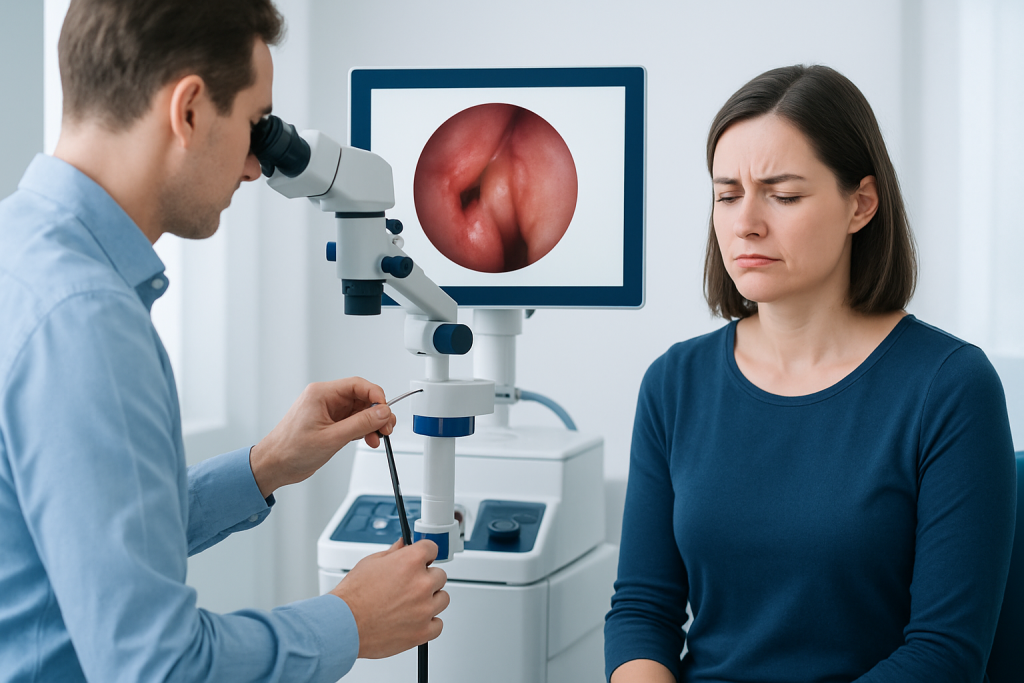
If symptoms are persistent, severe, recurrent, or not responding to initial care, an ENT specialist may recommend additional evaluation. This may include nasal endoscopy, which uses a thin camera to look inside the nasal passages, or imaging such as a CT scan when anatomy, complications, or chronic disease need to be assessed.
Doctors also consider other causes of facial pain or congestion. Migraine, dental problems, allergic rhinitis, nasal polyps, and other infections can resemble sinusitis. A careful diagnosis matters because treatment is different depending on the underlying cause.
Treatment Options
Treatment depends on whether the sinusitis is likely viral, allergic, structural, or bacterial. Many mild cases improve with supportive care while the body clears the inflammation. In these situations, the goal is to reduce swelling, encourage drainage, and keep the person comfortable.
Common approaches may include saline nasal rinses, steam or humidified air, adequate fluids, rest, and symptom-relief medicines recommended by a clinician. If allergies are contributing, doctors may suggest allergy-focused treatment to calm the nasal lining and reduce recurrence. When bacterial infection is suspected, a physician may consider prescription medicine after evaluating the overall clinical picture.
People with chronic or recurrent sinusitis may need a more detailed plan. This can involve managing triggers, treating nasal polyps or inflammation, and, in selected cases, discussing procedures that improve drainage. Surgery is not the first step for most patients, but it can be useful when symptoms persist despite proper medical treatment or when anatomy is contributing to repeated blockage.
For patients traveling from another country, a clear treatment plan and follow-up schedule are especially important. The most helpful care is often coordinated among ENT specialists, imaging teams, and, when needed, allergy or dental experts so that the underlying cause is not missed.
Prevention & Self-care
Not every sinus infection can be prevented, but several habits can lower the chance of flare-ups or reduce symptom burden. Keeping the nose moist and minimizing irritation helps the sinuses drain more effectively. Good hand hygiene also matters because many episodes begin with a viral cold.
Helpful self-care steps may include:
- Using saline rinses or sprays as advised by a clinician
- Drinking enough fluids
- Avoiding cigarette smoke and strong irritants
- Managing allergies consistently
- Using a humidifier if dry air worsens symptoms
- Addressing dental problems promptly
People with frequent episodes may benefit from looking for patterns, such as symptoms after seasonal allergy exposure, air travel, or upper respiratory infections. Simple prevention measures are often more effective when they are matched to the person’s triggers rather than used in a one-size-fits-all way.
When to See a Doctor
Medical review is a good idea when sinus symptoms last longer than expected, become more intense, or keep returning. A doctor should be consulted if facial pain, congestion, or discharge continues without improvement, especially if symptoms last beyond the usual course of a simple cold or start to interfere with sleep, work, or daily activities.
Prompt evaluation is especially important if there is a high fever, swelling around the eyes, vision changes, severe headache, confusion, neck stiffness, or shortness of breath. These are not typical everyday sinus symptoms and should be assessed quickly. A doctor should also be seen if symptoms are one-sided, if there is severe tooth pain, or if home measures are not helping.
People with immune system concerns, significant chronic illness, or a history of sinus surgery may need earlier assessment. For international patients, it is reasonable to seek care before travel if symptoms are escalating, because an in-person examination can determine whether additional testing or a specialist review is needed.
Acibadem Health Point’s multidisciplinary specialists and JCI-accredited hospitals diagnose and treat sinus conditions for international patients when coordinated ENT care is needed.
Frequently asked questions
01How can a person tell if it is a sinus infection or a cold?
A cold often peaks and improves within several days, while sinusitis tends to cause more persistent facial pressure, thick discharge, and blocked breathing through the nose. The duration and pattern of symptoms are often more useful than mucus color alone. If symptoms are lasting, worsening, or unusually painful, a doctor can help distinguish the cause.
02Do green or yellow mucus mean the infection is bacterial?
Not necessarily. Discolored mucus can appear with viral infections, allergies, and inflammation as well as bacterial disease. Doctors consider the whole picture, including how long symptoms have lasted and whether they are improving.
03Can sinus infection symptoms go away without antibiotics?
Yes, many sinus infections improve with time and supportive care, especially when they are triggered by a virus. Antibiotics are not needed for every case. A clinician decides whether they are appropriate based on the symptoms and exam findings.
04Why does a sinus infection sometimes cause tooth pain or ear pressure?
The sinuses are close to the upper teeth, ears, and eye sockets, so inflammation can create referred pain or pressure in those areas. This does not always mean the teeth or ears are the main problem. A doctor may check for dental or ear conditions if the pain is pronounced or one-sided.
05What helps sinus pressure at home?
Saline rinses, fluids, rest, and humidified air can help some people feel better. Avoiding smoke and treating allergies may also reduce irritation. If symptoms are severe or keep returning, medical advice is important rather than relying only on home care.
06When is sinusitis considered chronic?
Sinusitis is generally considered chronic when symptoms persist for an extended period or keep coming back over time. Chronic cases often reflect ongoing inflammation rather than a single short infection. An ENT specialist can evaluate whether allergies, polyps, or structural issues are contributing.
This article is for general information only and is not a substitute for professional medical advice. Please consult a qualified doctor about your individual situation.
Explore treatments in Turkey — costs, top hospitals & a free quote
JCI-accredited · board-certified surgeons · reply within 24h
Add us as a Preferred Source to see more of our trusted health content across Google Search, AI Overviews and Discover.