Sinus Cancer Diagnosis, Prognosis, and Treatment
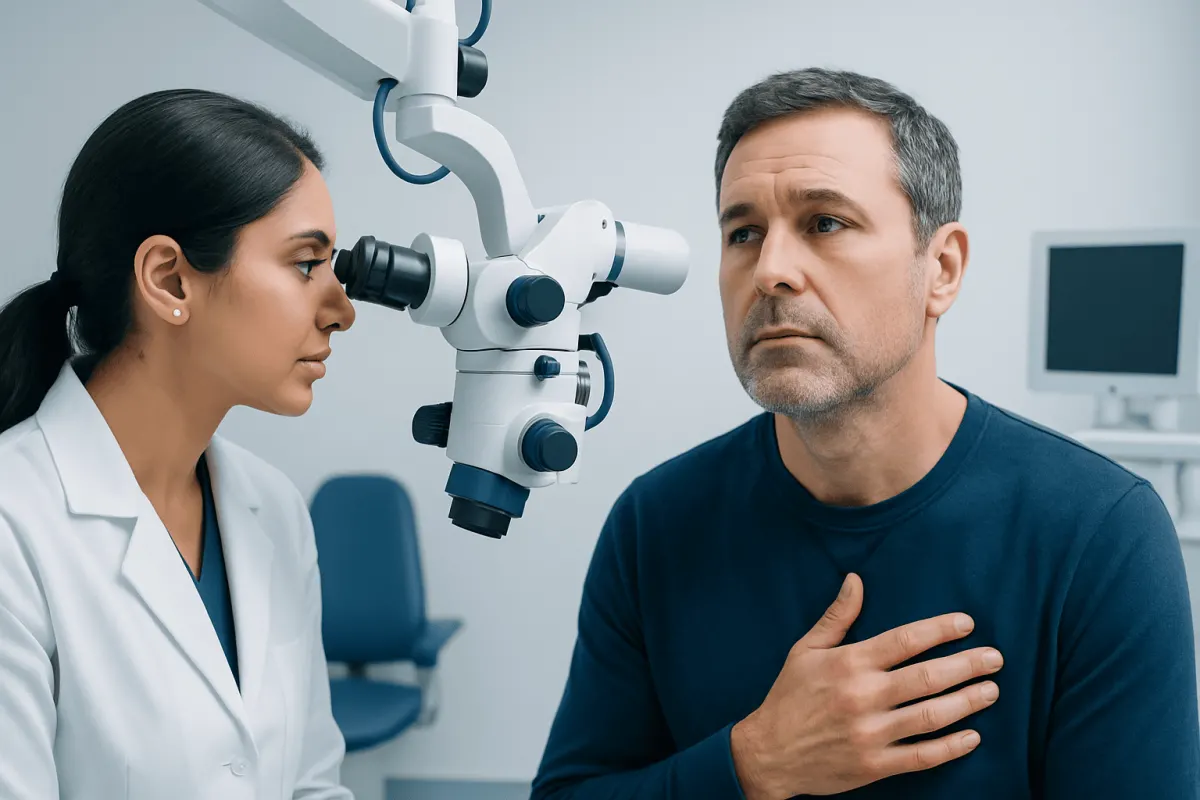
Sinus cancer is a rare group of cancers that begins in the nasal cavity or the air-filled spaces around the nose. Its outlook and treatment depend on the exact tumor type, location, stage, and whether it can be removed or controlled with surgery, radiation therapy, and systemic treatment.
Overview: how sinus cancer is diagnosed and treated
Sinus cancer is a rare cancer that develops in the nasal cavity or paranasal sinuses, which are air-filled spaces in the bones around the nose. It is not the same as ordinary sinusitis. Most cases require specialist assessment because early symptoms can resemble allergies, infection, or nasal polyps, while some tumors cause few symptoms until they grow larger.
A diagnosis is confirmed by examining a tissue sample under a microscope. Care is usually planned by a multidisciplinary head and neck cancer team. Depending on the tumor’s site and extent, treatment may combine surgery, radiation therapy, chemotherapy, and, for selected cancers, targeted medicines or immunotherapy. The aim may be cure, long-term control, symptom relief, or a combination of these goals.
“Sinus cancer” includes cancers arising in the nasal cavity and several sinus spaces, including the maxillary, ethmoid, frontal, and sphenoid sinuses. Cancers in the nasopharynx, the upper part of the throat behind the nose, are anatomically nearby but are a distinct condition with different treatment pathways.
Symptoms and signs that may need assessment
Symptoms depend on where a tumor starts and the structures it affects. A symptom alone does not mean cancer; nasal blockage and facial pressure are much more often caused by infection, allergy, or other benign conditions. However, symptoms that are persistent, worsening, or mainly on one side deserve medical review.
- Blocked nose on one side that does not improve
- Repeated nosebleeds or blood-stained nasal discharge
- Reduced sense of smell, persistent runny nose, or a nasal lump
- Facial swelling, numbness, pain, or pressure
- Loose upper teeth, poorly fitting dentures, or persistent mouth or palate symptoms
- Watery eyes, double vision, a bulging eye, or changes in vision
- Headache, ear pressure, hearing changes, or enlarged neck lymph nodes
Symptoms involving the eye, such as double vision or reduced vision, need timely assessment. The same is true of new facial numbness, a growing mass, or significant recurrent bleeding. Clinicians consider the full pattern of symptoms, examination findings, and risk factors rather than relying on any single sign.
Causes, tumor types, and risk factors
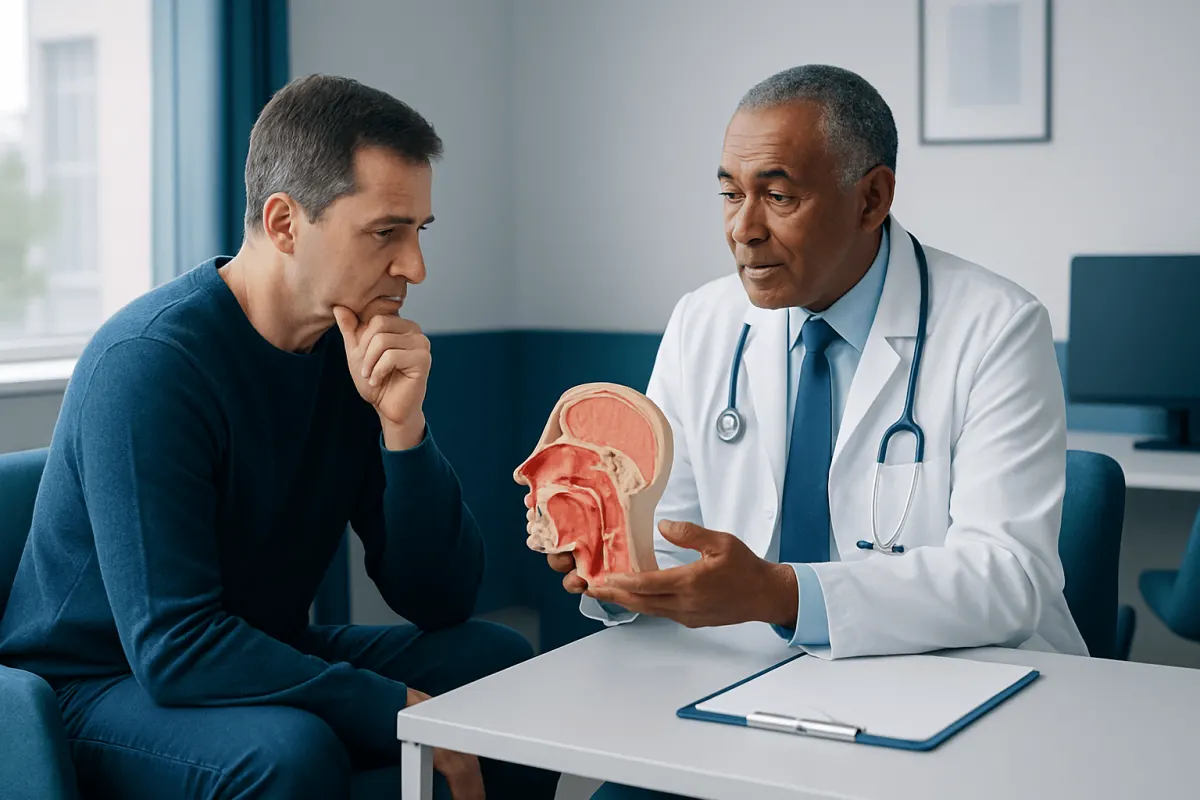
In most people, there is no single identifiable cause of sinus cancer. These cancers arise when cells acquire genetic changes that allow them to grow abnormally. Several histologic types are possible, including squamous cell carcinoma, adenocarcinoma, adenoid cystic carcinoma, melanoma, lymphoma, and other rarer tumors. Knowing the exact type is essential because it influences staging and treatment.
Some workplace exposures have been associated with a higher risk, particularly long-term exposure to wood dust, leather dust, certain industrial chemicals, nickel compounds, or chromium compounds. Tobacco use may also contribute to risk for some head and neck cancers. Previous radiation exposure and particular inherited or immune-related factors may be relevant in a small number of people.
Risk factors do not predict what will happen to an individual, and many people with sinus cancer do not have a known exposure history. Avoiding tobacco, following workplace safety measures, and using appropriate respiratory protection in dusty industrial environments are sensible preventive steps.
How sinus cancer is diagnosed and staged
Assessment commonly begins with an ear, nose, and throat specialist. They may use a thin flexible camera, called nasal endoscopy, to look inside the nose and upper throat. This examination can identify an abnormal area and help guide the next steps, although it cannot by itself confirm cancer.
Imaging is used to show the size of a tumor and whether nearby areas are involved. CT scans provide detailed views of bone, while MRI is particularly useful for soft tissues, the eye socket, skull base, nerves, and brain-adjacent structures. PET-CT may be used in selected cases to assess lymph nodes or possible spread elsewhere in the body.
A biopsy is needed for a definite diagnosis. A pathologist examines the specimen and may perform additional laboratory tests to classify the tumor accurately. Staging combines the biopsy result with imaging findings, including the tumor’s location, local extent, lymph-node involvement, and whether it has spread. Some tumors require review at a specialist center because their anatomy and pathology are complex.
Modern treatment approaches for sinus cancer
Treatment planning considers the cancer type, stage, precise location, possible effects on vision and facial function, previous treatment, and the person’s general health and preferences. A multidisciplinary team may include head and neck surgeons, skull-base surgeons, radiation oncologists, medical oncologists, radiologists, pathologists, dentists, dietitians, speech and swallowing therapists, and specialist nurses.
Surgery is often considered when the tumor can be removed safely and completely. Some tumors can be approached through the nose using endoscopic techniques, while others require open surgery. Reconstructive surgery may be used when needed to restore form or function. Robotic surgery may be considered for selected head and neck tumors, although it is not appropriate for every sinus cancer.
Radiation therapy is commonly used after surgery when there is a risk of microscopic remaining cancer, and it may be the main local treatment when surgery is not feasible. Modern techniques aim to deliver radiation accurately while protecting nearby structures such as the eyes, optic nerves, brain, salivary glands, and spinal cord. Chemotherapy may be given with radiation for some cancers, before treatment to shrink a tumor, or for disease that has returned or spread.
Targeted therapies and immunotherapy may be options for selected recurrent or metastatic cancers, depending on the tumor subtype and molecular testing. People benefit from discussing expected benefits, possible side effects, fertility considerations where relevant, rehabilitation needs, and supportive care before treatment begins.
What is the prognosis for cancer of the sinus cavity?
The prognosis for cancer of the sinus cavity varies considerably and cannot be estimated from the diagnosis name alone. Early, localized tumors that can be completely treated generally have a more favorable outlook than tumors that have grown into nearby critical structures, involved lymph nodes, or spread to distant sites. Because sinus tumors may develop quietly in spaces around the nose, some are diagnosed at a more advanced local stage.
Important factors include the exact pathology, tumor grade, stage, ability to remove or control the tumor, response to radiation or systemic therapy, and a person’s overall health. Certain rare tumor types behave differently from squamous cell carcinoma, so broad survival figures can be misleading when applied to one person.
The treating team can provide the most meaningful prognosis after reviewing imaging, biopsy results, and treatment response. Follow-up after treatment is important because it helps detect recurrence, manage long-term effects, and support recovery of breathing, swallowing, speech, vision, nutrition, and emotional wellbeing.
What is the survival rate for stage 4 sinus cancer?
There is no single reliable survival rate for stage 4 sinus cancer. Stage 4 can describe a tumor that has grown extensively into nearby structures, spread to regional lymph nodes, or spread to distant organs, and these situations have different implications. Survival estimates also vary by tumor type, treatment received, country, and the period in which data were collected.
Advanced local disease is not automatically the same as distant metastatic disease. Some stage 4 tumors can still be treated with curative intent using carefully planned combinations of surgery, radiation therapy, and systemic treatment. When a cancer has spread to distant sites, treatment may focus on slowing growth, controlling symptoms, and maintaining quality of life, while some people may benefit from newer systemic therapies or clinical trials.
Rather than relying on a general online percentage, it is helpful to ask the oncology team about the individual stage category, treatment goal, available options, and factors that influence the expected outlook. Supportive and palliative care can be introduced alongside cancer-directed treatment at any stage to manage symptoms and improve quality of life.
Do you lose weight with nasal cancer?
Unintentional weight loss can occur with nasal or sinus cancer, but it is not present in everyone and is not specific to cancer. It may result from reduced appetite, pain, changes in taste or smell, swallowing difficulty, tiredness, anxiety, or the increased energy needs associated with illness. Nasal blockage alone can also reduce enjoyment of food by affecting smell.
Weight loss is more often a concern when disease is advanced or during treatments that affect the mouth, throat, appetite, or sense of taste. Radiation therapy and chemotherapy can sometimes cause mouth soreness, dry mouth, nausea, fatigue, or swallowing problems. Early input from a dietitian can help a person maintain nutrition and hydration during treatment.
Anyone with unexplained weight loss, persistent nasal symptoms, a lump, or bleeding should arrange a clinical assessment. Prompt review is especially important when weight loss is accompanied by facial swelling, eye symptoms, persistent pain, or neck lumps.
What are the treatment guidelines for nasopharyngeal carcinoma?
Nasopharyngeal carcinoma begins in the nasopharynx behind the nose and is treated differently from most cancers of the nasal cavity and paranasal sinuses. International guidelines generally recommend radiation therapy as the main treatment for non-metastatic nasopharyngeal carcinoma because of the location of the tumor. Modern intensity-modulated radiation therapy is commonly used to target the tumor and neck lymph nodes precisely.
For many locally advanced cases, chemotherapy is combined with radiation therapy. Depending on the stage, tumor features, and local practice, chemotherapy may be given before chemoradiotherapy, during radiation, or in other carefully selected sequences. If cancer returns or has spread, systemic treatment may include chemotherapy and, for appropriate patients, immunotherapy or other medicines based on clinical evaluation.
Ongoing care includes monitoring for treatment effects on swallowing, hearing, thyroid function, dental health, nutrition, and emotional wellbeing. Although it is a separate disease, people looking for related information may find nasopharyngeal cancer resources helpful. Treatment decisions should be made with an experienced head and neck oncology team.
When to seek medical care
Medical care should be sought for nasal blockage, bleeding, discharge, facial pressure, or reduced smell that persists despite usual treatment, particularly when symptoms are mainly on one side. A clinician should also assess a persistent neck lump, facial numbness, unexplained loosening of upper teeth, or new swelling around the nose or cheek.
Urgent assessment is appropriate for new double vision, a change in vision, marked swelling around the eye, severe or uncontrolled nosebleeding, confusion, or new neurologic symptoms. These symptoms can have several causes, but prompt evaluation is important to identify and treat the cause safely.
After diagnosis, care at a center with head and neck cancer expertise can help coordinate complex decisions. Acıbadem Health Point’s multidisciplinary specialists and JCI-accredited hospitals diagnose and treat sinus and related head and neck cancers for international patients. People should bring prior scan reports, pathology slides or blocks when available, and a list of current medicines to specialist appointments.
Frequently asked questions
01Is sinus cancer the same as sinusitis?
No. Sinusitis is inflammation or infection of the sinuses and is much more common than sinus cancer. Sinus cancer is a growth of abnormal cells and requires imaging and a biopsy for confirmation. Persistent or one-sided symptoms should be assessed rather than repeatedly self-treated.
02Can a CT scan diagnose sinus cancer?
A CT scan can show an abnormal mass and whether nearby bone is affected, but it cannot confirm the tumor type. MRI and PET-CT may provide additional information in selected cases. A biopsy is required to establish a diagnosis.
03Can sinus cancer be cured?
Some sinus cancers can be treated with curative intent, particularly when they are localized or can be controlled with a planned combination of surgery and radiation therapy. The possibility of cure depends on the cancer type, stage, location, and treatment response. The oncology team can explain the treatment goal for an individual case.
04Does sinus cancer spread to the brain?
Some tumors of the upper nasal cavity or sinuses can grow close to the skull base and structures near the brain because of their location. This does not mean that every sinus cancer reaches the brain. MRI and other imaging tests help clinicians assess local extension and plan treatment safely.
05What happens after sinus cancer treatment?
Follow-up visits usually include symptom review, examination of the nose and throat, and imaging when indicated. The care team also monitors for treatment effects involving the eyes, teeth, thyroid, swallowing, nutrition, hearing, and emotional health. Rehabilitation and supportive services can be important parts of recovery.
06Can smoking increase the risk of sinus cancer?
Smoking may increase the risk of some cancers of the nasal cavity and head and neck, although sinus cancer has several possible risk factors and many cases have no known cause. Stopping tobacco use benefits overall health and can support treatment tolerance and recovery. A clinician can recommend evidence-based support for quitting.
This article is for general information only and is not a substitute for professional medical advice. Please consult a qualified doctor about your individual situation.
Oncology care in Turkey — second opinion and treatment plan
JCI-accredited · board-certified surgeons · reply within 24h
Add us as a Preferred Source to see more of our trusted health content across Google Search, AI Overviews and Discover.