Shingles on the Neck: Symptoms and Prompt Care
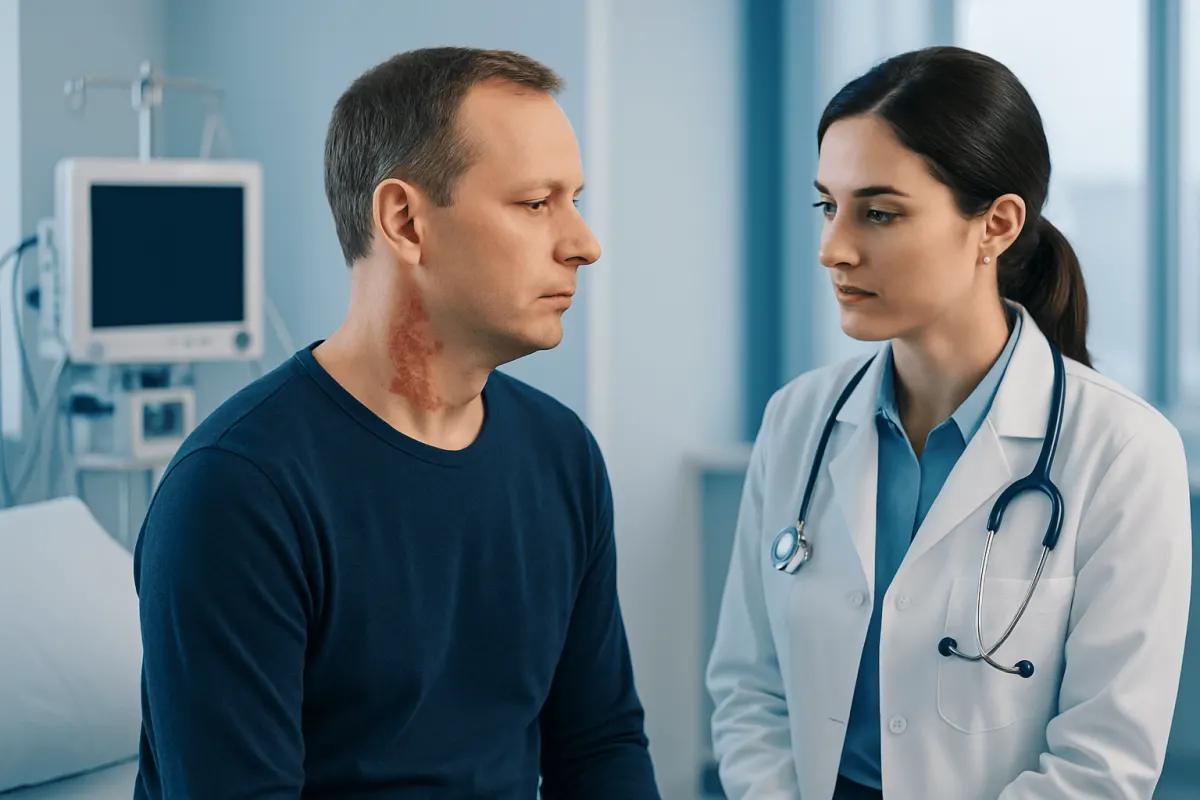
Shingles on the neck is a reactivation of the varicella-zoster virus, the virus that causes chickenpox. It commonly produces burning pain, sensitivity, and a blistering rash on one side of the neck, and early medical assessment can help reduce its severity and complications.
Overview: What does shingles on the neck look and feel like?
Shingles on neck is a localized outbreak of herpes zoster, caused by reactivation of the varicella-zoster virus after a person has had chickenpox. The virus remains inactive in nerve tissue for years and may reactivate later in life. When it affects nerves serving the neck, it can cause pain and a rash along a narrow area of skin on the neck, upper shoulder, jawline, scalp, or upper chest.
The rash usually appears on only one side of the neck. It often begins as red patches that develop into clusters of small, fluid-filled blisters. The blisters generally dry and crust over within days to a few weeks. Although shingles is often recognizable by its one-sided pattern and discomfort, a clinician should confirm the diagnosis because other skin conditions can resemble it.
Neck shingles can be particularly uncomfortable because clothing, hair, seat belts, and normal head movement may rub against sensitive skin. Prompt evaluation is worthwhile, especially when symptoms are recent, because prescription antiviral treatment may shorten the illness and reduce the likelihood of complications.
Early symptoms and rash pattern
Before the rash develops, many people notice unusual sensations in one area of the neck. These may include burning, stabbing pain, tingling, numbness, itching, or marked sensitivity to touch. Some people describe pain from light contact, such as a collar touching the skin. This early phase can be mistaken for muscle strain, a pinched nerve, contact irritation, or another cause of neck pain.
Within several days, a rash typically develops in the same painful area. Small blisters may cluster together on a red base and follow the route of a sensory nerve. On the neck, the rash may extend toward the shoulder, behind the ear, lower scalp, or upper chest, but it usually remains on one side. New blisters can continue to appear for a few days before the area begins to heal.
Some people also have general symptoms such as tiredness, headache, chills, or a mild fever. Pain severity varies widely. Younger healthy adults may have a relatively mild outbreak, while older adults and people with weakened immune systems may experience more intense symptoms or more widespread disease.
- A one-sided band or patch of painful blisters is typical of shingles.
- Rash on both sides of the body, widespread blisters, or a rash without pain may need assessment for other causes.
- Shingles can occasionally cause pain without a visible rash, although this is less common and can be harder to diagnose.
Why shingles develops and who is at higher risk

Anyone who has had chickenpox can develop shingles because the virus can remain dormant in the body. Shingles does not result from catching chickenpox again. Rather, it occurs when the previously inactive virus reactivates in a nerve. The reason for reactivation is not always clear, and having shingles does not mean that a person has done anything wrong.
Risk increases with age, particularly after age 50, as immune responses naturally change over time. A weakened immune system can also raise risk. This may occur with certain cancers, HIV infection, immune-suppressing medicines, organ transplantation, or medical treatments that affect immunity. Severe stress, illness, or physical strain are sometimes reported before an outbreak, but they are not the sole cause.
Shingles itself is not passed from one person to another as shingles. However, direct contact with fluid from active blisters can transmit varicella-zoster virus to someone who has never had chickenpox or the chickenpox vaccine. That person could develop chickenpox, not shingles. Covering the rash and avoiding direct contact with blisters helps reduce this risk until all lesions have crusted over.
How clinicians diagnose shingles on the neck
Clinicians usually diagnose shingles by examining the rash and asking about the timing of pain, tingling, and blisters. A one-sided rash in a nerve-like distribution is often enough to make the diagnosis. It is useful to seek assessment early, even if the rash is mild, because treatment decisions are most time-sensitive near the start of the outbreak.
Testing is not needed in every case. If the appearance is unusual, if the rash is widespread, or if a person has a weakened immune system, a clinician may take a sample from a blister for laboratory testing. This can help distinguish varicella-zoster virus from herpes simplex virus and other causes of blistering skin lesions.
An assessment should also consider the exact location of the rash. Shingles involving the face, eye area, ear, or scalp may need more urgent or specialist evaluation because nerves in these areas can be associated with eye, hearing, balance, or facial movement complications. Neck symptoms accompanied by severe headache, confusion, weakness, or a stiff neck should not be assumed to be uncomplicated shingles.
Treatment and symptom relief
Prescription antiviral medicines are the main treatment for shingles. They limit viral replication and are most effective when started as soon as possible, commonly within the first few days after the rash appears. A clinician may still recommend them later when new blisters are forming, pain is significant, the rash is near the face, or the person has a higher risk of complications.
Pain management is individualized. Depending on symptoms and medical history, a clinician may recommend simple pain relievers, medicines for nerve pain, or other supportive treatments. It is important not to apply strong topical products, leftover prescription creams, or unproven remedies to broken blisters without medical advice, as these may irritate the skin or increase infection risk.
At home, keeping the rash clean and dry, wearing loose soft clothing, and using cool compresses may improve comfort. Blisters should not be scratched or deliberately opened. Frequent handwashing and covering the rash with a clean, non-stick dressing when practical can help protect the skin and reduce virus transmission to others.
Most people recover fully, but some continue to have nerve pain after the rash heals. This is called postherpetic neuralgia and is more common with increasing age and severe initial pain. Early assessment and an appropriate pain plan can support comfort and follow-up if persistent symptoms develop.
When to seek medical care
Anyone who suspects shingles on the neck should contact a doctor or qualified healthcare professional promptly, particularly if the pain or rash began within the last few days. Early evaluation gives the best opportunity to discuss antiviral medicines and pain relief. This is also important for people who are pregnant, have a weakened immune system, are receiving cancer treatment, or take medicines that suppress immunity.
Urgent medical care is needed if the rash is close to an eye, on the nose, around the ear, or associated with eye redness, vision changes, ear pain, hearing changes, dizziness, facial weakness, or difficulty moving part of the face. These symptoms can indicate involvement of nearby nerves and require timely assessment.
Medical advice should also be sought urgently for a widespread rash, high fever, severe headache, confusion, neck stiffness, new limb weakness, trouble walking, shortness of breath, or signs of a skin infection such as increasing redness, warmth, swelling, pus, or worsening pain. These features are not typical of a simple localized outbreak and should be checked without delay.
Prevention, recovery and follow-up
Vaccination is the most effective way to reduce the risk of shingles and postherpetic neuralgia in eligible adults. Recommendations vary by country and personal health status, so a doctor can advise whether the shingles vaccine is appropriate. People who have had shingles before may still benefit from vaccination because another episode can occur.
During recovery, adequate rest, fluids, regular meals, and gentle activity as tolerated can support overall wellbeing. The rash may leave temporary changes in skin color, but scarring is less likely when blisters are protected from scratching and secondary infection. Pain should gradually improve as the skin heals, although the pace of recovery differs from person to person.
If pain, numbness, itching, sleep disturbance, or low mood continues after the rash has resolved, follow-up care is important. Persistent symptoms can often be managed with a tailored plan. Acıbadem Health Point’s multidisciplinary specialists and JCI-accredited hospitals can assess and treat shingles-related symptoms for international patients when specialist care is needed.
Frequently asked questions
01Can shingles occur only on the neck?
Yes. Shingles can affect almost any area of skin supplied by a sensory nerve, including the neck. It may also extend from the neck to the shoulder, upper chest, scalp, or area behind the ear on the same side.
02Is shingles on the neck contagious?
A person with shingles cannot directly give someone else shingles. However, fluid from active blisters can spread varicella-zoster virus to a person who is not immune to chickenpox, causing chickenpox. The risk is reduced by covering the rash, avoiding direct contact, and washing hands carefully until blisters crust over.
03How long does shingles on the neck last?
New blisters often appear for several days, then dry and crust over. The skin rash commonly heals within two to four weeks, although pain or skin sensitivity may last longer for some people. A clinician should review pain that persists after the rash has healed.
04Can neck shingles cause swollen lymph nodes?
It can. Lymph nodes near an area of skin inflammation may become mildly swollen or tender while the body responds to infection. Enlarging, very painful, persistent, or unexplained swollen nodes should be assessed by a healthcare professional.
05Should a person exercise with shingles on the neck?
Gentle activity may be reasonable if the person feels well enough, but strenuous exercise may be uncomfortable during the active phase. Rest is appropriate when pain, fatigue, fever, or general illness is present. The rash should be covered where possible, and contact sports or activities involving close skin contact should be avoided until blisters have crusted.
06Can shingles on the neck spread to the eye?
A neck rash does not usually spread across the body to the eye. However, shingles can affect nearby facial nerve areas, and a rash on the forehead, nose, eyelid, or around the eye needs urgent assessment. Any eye pain, red eye, light sensitivity, or vision change should be treated as urgent.
This article is for general information only and is not a substitute for professional medical advice. Please consult a qualified doctor about your individual situation.
Hair transplant in Turkey — costs, graft counts & a free assessment
JCI-accredited · board-certified surgeons · reply within 24h
Add us as a Preferred Source to see more of our trusted health content across Google Search, AI Overviews and Discover.