Sartorius Muscle Pain Can Spread From Hip to Inner Knee
You went for a run, kicked a ball, or took the stairs two at a time — and now something pulls along the front of your hip, or aches on the inside of your knee. That pattern is typical of sartorius muscle pain, which usually shows up after activity that repeatedly bends the hip or knee: running, kicking, stair climbing, or quick changes of direction.
The good news is that it often settles with relative rest and gradual rehabilitation. But severe pain, swelling, weakness, or not being able to put weight on the leg should be assessed promptly.
Overview: What Does Sartorius Muscle Pain Feel Like?
The sartorius is a long, strap-like muscle in the thigh, and pain here comes from irritating, overloading, or injuring it. It may feel like an ache, tightness, pulling sensation, or sharp pain along the front of the hip, groin, inner thigh, or inner side of the knee. In many people, symptoms start after an unfamiliar workout, a sudden movement, or repeated activity rather than after a single obvious injury.
The sartorius helps move the hip and knee together. It assists with bending the hip and knee, turning the thigh outward, and helping position one leg across the other. Because it crosses both the hip and knee joints, discomfort can be noticed in more than one location and may be confused with hip flexor, groin, quadriceps, adductor, or knee problems.
Most mild strains settle if you adjust your activity sensibly and ease back into normal movement. Keep in mind, though, that pain in this region does not always come from the sartorius itself. A qualified clinician can distinguish a muscle problem from joint, tendon, nerve, bone, abdominal, vascular, or pelvic causes when symptoms are persistent, severe, or unclear.
Where the Sartorius Muscle Is Located
The sartorius begins at the front upper part of the pelvic bone, near the prominent point often felt at the front of the hip. It travels diagonally across the front of the thigh and attaches on the inner upper shin, just below the knee. It is often described as the longest muscle in the body.
Its diagonal path explains why sartorius pain may not stay in one small spot. Irritation near the upper attachment can produce pain at the front of the hip or in the groin. Pain in the middle portion may be felt across the front-inner thigh, while irritation close to its lower attachment may be noticed near the inner knee.
The muscle works with several nearby structures. At the hip, it works alongside the hip flexors and muscles that move the leg outward. At the knee, its tendon is part of the pes anserinus region, where tendons from three thigh muscles attach on the inner shin. So inner-knee pain may sometimes come from tendon irritation or bursitis rather than a muscle strain alone.
Common Triggers and Risk Factors

A sartorius strain can occur when the muscle is stretched or loaded beyond its current capacity. Sprinting, kicking, lunging, jumping, cycling, hill climbing, skating, and sports involving fast changes of direction can all place repeated demand on the muscle. A quick slip, forced split-like position, or abrupt pivot may cause a more immediate injury.
Overuse is also common. Training more often, for longer, or at higher intensity without enough recovery can irritate muscle and tendon tissue even without a single traumatic event. Returning to sport too quickly after time away, rapidly increasing hill work, or changing footwear, surfaces, or training technique may contribute.
Other factors can make overload more likely, including reduced hip mobility, weakness or poor endurance in the hip and trunk muscles, fatigue, inadequate warm-up, and previous hip, groin, thigh, or knee injury. Having these factors does not mean you will develop pain, but working on them supports recovery and lowers the chance of it coming back.
- Sudden acceleration, deceleration, or pivoting
- High-volume running, cycling, or stair climbing
- Repeated kicking or deep lunging
- Prolonged sitting followed by intense activity
- Returning to exercise before strength and control have recovered
Symptoms That May Suggest a Sartorius Problem
Symptoms depend on the location and severity of irritation. A mild strain may cause stiffness when getting up from a chair, climbing stairs, lifting the knee, or taking a long stride. There may be tenderness when pressing along the front-inner thigh, and the area may feel tight after activity or the following morning.
A more significant strain can cause a sudden sharp pain during exercise, followed by pain when walking, running, bending the knee, or bringing the knee toward the chest. Bruising, swelling, or a feeling of weakness can occur with a larger muscle injury. People may alter their gait to avoid the painful movement.
Not every groin, thigh, or inner-knee symptom is sartorius muscle pain. Hip joint conditions can cause groin pain and restricted movement; adductor injuries often affect the upper inner thigh; and pain at the inner knee may arise from ligaments, tendons, the bursa, or the joint itself. Symptoms such as tingling, numbness, burning pain, or pain radiating below the knee may point toward nerve involvement and deserve clinical assessment.
How Sartorius Muscle Pain Is Diagnosed
A clinician usually begins by asking how the pain started, which movements worsen it, and whether there was a direct injury. They may assess walking, hip and knee range of motion, muscle strength, tenderness, and pain with specific resisted movements. This examination helps identify whether the sartorius is likely involved and whether another structure may be responsible.
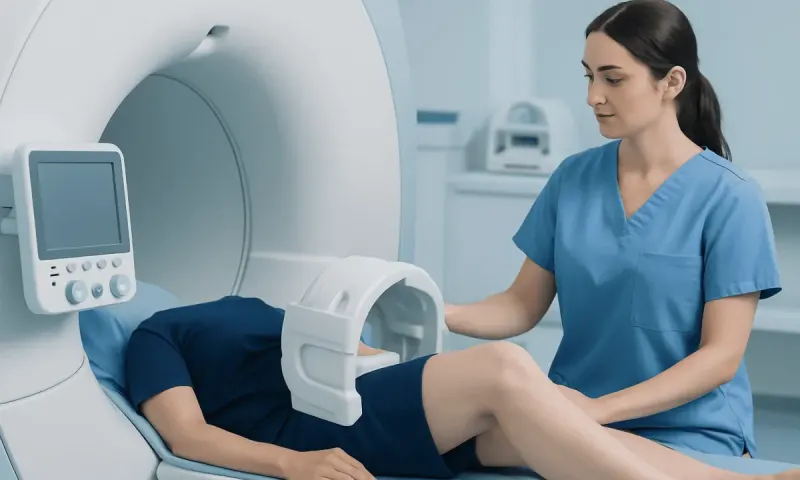
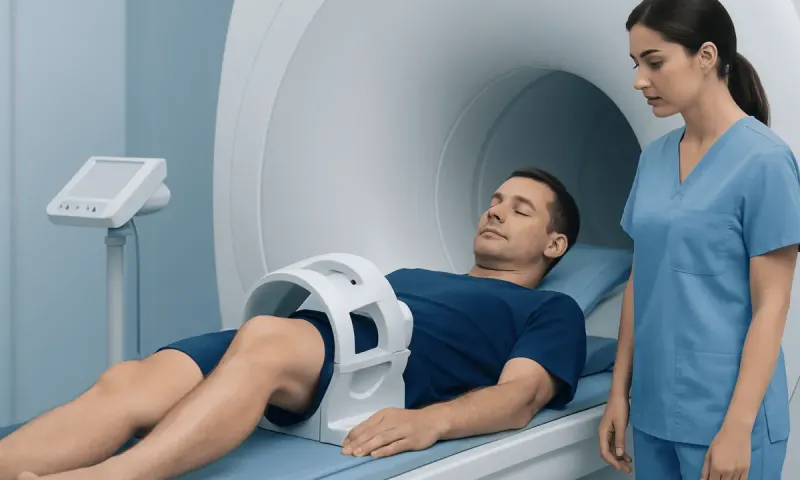
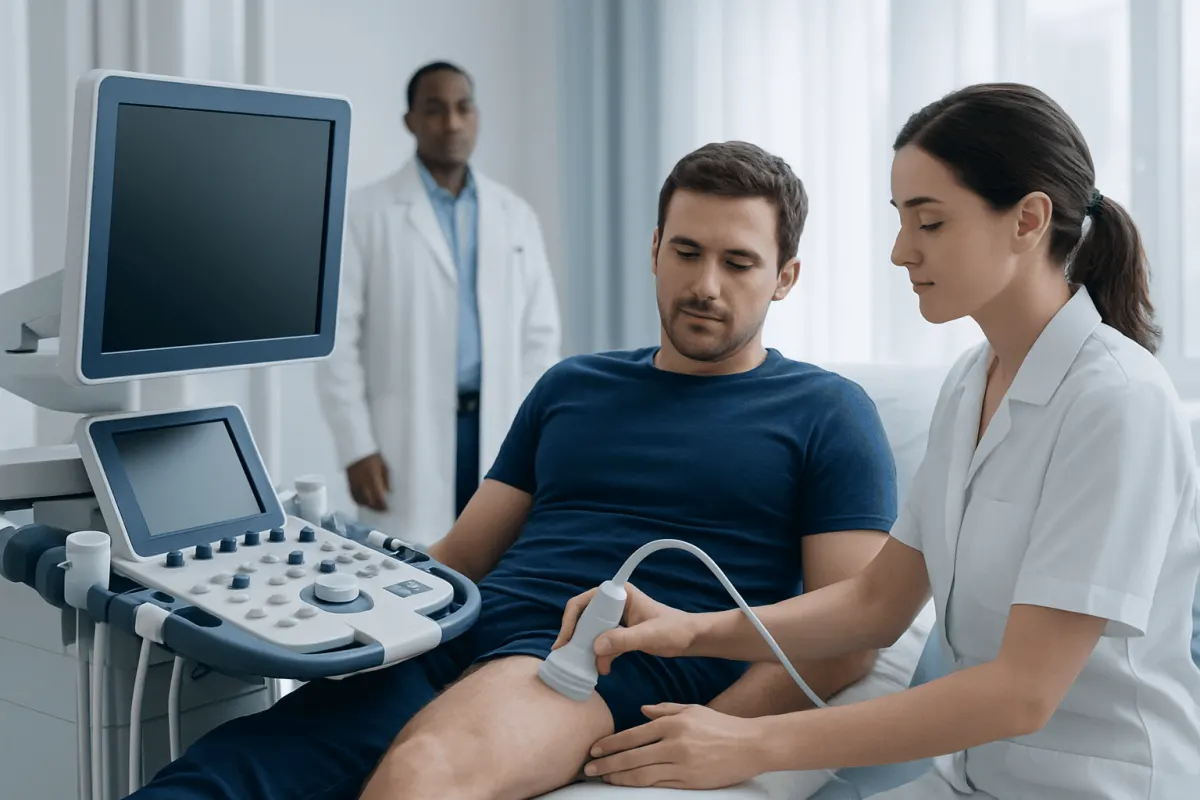
Imaging is not needed for every mild, improving muscle injury. It may be considered when pain is severe, a fracture, tendon tear, hip or knee problem, or another diagnosis is suspected, or when symptoms do not improve as expected. Ultrasound can sometimes assess superficial soft tissues, while magnetic resonance imaging may provide more detail for deeper or complex injuries.
Accurate diagnosis is particularly important when groin pain has no clear exercise-related trigger, occurs at night, or is accompanied by systemic symptoms. Depending on the person’s symptoms and medical history, a clinician may also consider conditions involving the hip, lower back, abdomen, urinary tract, pelvis, blood vessels, or nerves.
Treatment, Recovery and Self-Care
For a mild suspected sartorius strain, the first step is relative rest: avoiding movements that reproduce sharp pain while maintaining gentle, comfortable daily activity. Complete bed rest is usually unnecessary and can lead to stiffness. During the first day or two after an acute injury, a wrapped cold pack may help some people manage pain and swelling; it should not be applied directly to the skin.
As acute pain settles, gradual movement is important. Gentle hip and knee range-of-motion exercises can be followed by progressive strengthening of the hip, thigh, and trunk muscles. A physiotherapist can tailor a program to the person’s sport, work demands, movement pattern, and stage of recovery. Stretching should be comfortable and controlled; forceful stretching into pain can aggravate a healing strain.
Non-prescription pain medicines may be appropriate for some people, but the choice depends on individual health conditions, other medicines, allergies, and pregnancy status. A pharmacist or doctor can provide individualized advice. A return to running, sports, or demanding exercise should be gradual, with no sharp pain during activity and no meaningful worsening afterward.
Recovery time varies with the severity of injury and whether the underlying load-related factors are addressed. Mild muscle irritation may improve over days to a few weeks, while more substantial strains can take longer. If symptoms persist or repeatedly return, reassessment can help identify whether the diagnosis or rehabilitation plan needs to change.
Preventing Recurrence and Supporting Healthy Movement
Prevention is less about finding one perfect stretch and more about preparing your body for what you are about to ask of it. Training increases should be gradual, especially after illness, travel, injury, or a break from exercise. Alternating high-impact sessions with lower-impact activity and allowing recovery days can help tissues adapt to load.
A purposeful warm-up before sports or intense exercise can include easy movement followed by activity-specific drills, such as controlled leg swings, brisk walking, light jogging, or practice movements at lower intensity. Strength and endurance work for the hips, thighs, core, and calves may improve movement control during running, climbing, pivoting, and kicking.
It can also help to review practical contributors, including worn footwear, sudden changes in terrain, bike setup, workplace posture, or technique. Discomfort that predictably appears after one specific activity is useful information for a clinician or physiotherapist. Adjusting the trigger while building capacity is often more effective than simply pushing through pain.
If hip, thigh, groin, or knee symptoms are not going away, Acıbadem Health Point’s specialist teams and JCI-accredited hospitals can assess you and build a rehabilitation or treatment plan around your situation as an international patient.
When to Seek Medical Care
Medical care is recommended for pain that is severe, follows a fall or major injury, prevents normal walking, or does not begin improving with a period of reduced activity. Assessment is also sensible when there is visible bruising, pronounced swelling, a popping sensation at the time of injury, or ongoing weakness in the leg.
Urgent evaluation is important for a hot, red, markedly swollen leg; new fever; unexplained severe groin or hip pain; numbness or progressive weakness; loss of bladder or bowel control; or symptoms of a possible blood clot, such as one-sided leg swelling with chest pain or shortness of breath. These symptoms are not typical of a simple muscle strain and should not be managed with home care alone.
People with osteoporosis, a history of cancer, recent surgery, prolonged immobility, pregnancy, or significant medical conditions should have new or unexplained thigh, hip, or groin pain assessed with particular care. Asking early is worth it: either you get reassurance, or the right cause gets treated.
Frequently asked questions
01Can sartorius muscle pain cause groin pain?
Yes. The sartorius begins near the front of the pelvis, so irritation near its upper attachment can be felt in the front of the hip or groin. However, groin pain has many possible causes, including hip joint, adductor, abdominal, urinary, and pelvic conditions, so persistent or unexplained symptoms should be evaluated.
02How can a person tell if sartorius muscle pain is a strain?
A strain is more likely when pain begins during or after running, kicking, lunging, climbing, or a sudden stretch and is reproduced by moving the hip or knee. Local tenderness, tightness, and pain with walking or stairs may also occur. A clinical examination is needed to confirm the source, especially if symptoms are severe or not improving.
03Should sartorius muscle pain be stretched?
Gentle, pain-free movement may be useful once acute pain begins to settle, but forceful stretching should be avoided. Stretching into sharp pain can irritate a strained muscle further. A physiotherapist can advise when and how to progress flexibility work safely.
04How long does sartorius muscle pain take to heal?
Mild overload symptoms may improve within days to a few weeks when activity is adjusted and rehabilitation is started gradually. More significant strains can take several weeks or longer. Recovery depends on injury severity, ongoing physical demands, and whether contributing movement or training factors are addressed.
05Can sartorius pain be felt near the knee?
Yes. The sartorius tendon attaches on the inner upper shin below the knee, so symptoms can be felt around the inner knee. Because several structures are close together in this area, a clinician may need to distinguish sartorius-related pain from pes anserine bursitis, tendon problems, ligament injuries, or knee-joint conditions.
06Is it safe to run with sartorius muscle pain?
Running through sharp pain, limping, or worsening symptoms is generally not advisable. A person may return gradually when they can walk and perform basic strengthening movements comfortably, with no significant increase in pain during or after activity. A clinician or physiotherapist can guide return to sport after a more significant injury.
This article is for general information only and is not a substitute for professional medical advice. Please consult a qualified doctor about your individual situation.
Joint and spine care in Turkey — expert assessment & treatment
JCI-accredited · board-certified surgeons · reply within 24h
Add us as a Preferred Source to see more of our trusted health content across Google Search, AI Overviews and Discover.