Rhinoplasty: What Changes Most Between Primary and Revision Surgery?

Key Takeaways
- Primary rhinoplasty is usually the first nose operation, while revision rhinoplasty corrects or refines results from a previous surgery.
- Revision procedures often face scar tissue, altered anatomy, and limited cartilage, which can make planning more complex.
- Both cosmetic goals and breathing concerns matter; a good assessment looks at form and function together.
- Recovery may be similar in basic stages, but revision surgery can require more careful follow-up and patience.
- A detailed consultation, clear expectations, and enough healing time after prior surgery are essential before deciding on revision.
Rhinoplasty can reshape the nose for cosmetic, functional, or combined reasons, but Scar Revision Surgery: When Can It Improve Scar Appearance?" class="ahp-ilk">revision surgery often involves a different level of planning than the first operation. Understanding what changes between primary and revision rhinoplasty helps patients set realistic expectations and prepare for a safer, more informed consultation.
Overview
Rhinoplasty is surgery that changes the shape, structure, or function of the nose. For some people, the goal is to refine a feature that has bothered them for years; for others, it is to improve breathing, correct an injury, or address both appearance and airway concerns at the same time.
The biggest distinction to understand is between primary rhinoplasty and revision rhinoplasty. Primary surgery is the first operation on the nose. Revision surgery is performed after a previous rhinoplasty, usually because the result did not fully meet the patient’s goals, because healing changed the outcome, or because new breathing problems developed.
Although both procedures fall under the same name, they are not planned in the same way. The second operation often begins with a more detailed investigation of what is already present, what changed after the first surgery, and what can realistically be improved. For international patients, that conversation is especially important because travel, timing, and follow-up all need to fit the healing process, not only the calendar.
Symptoms
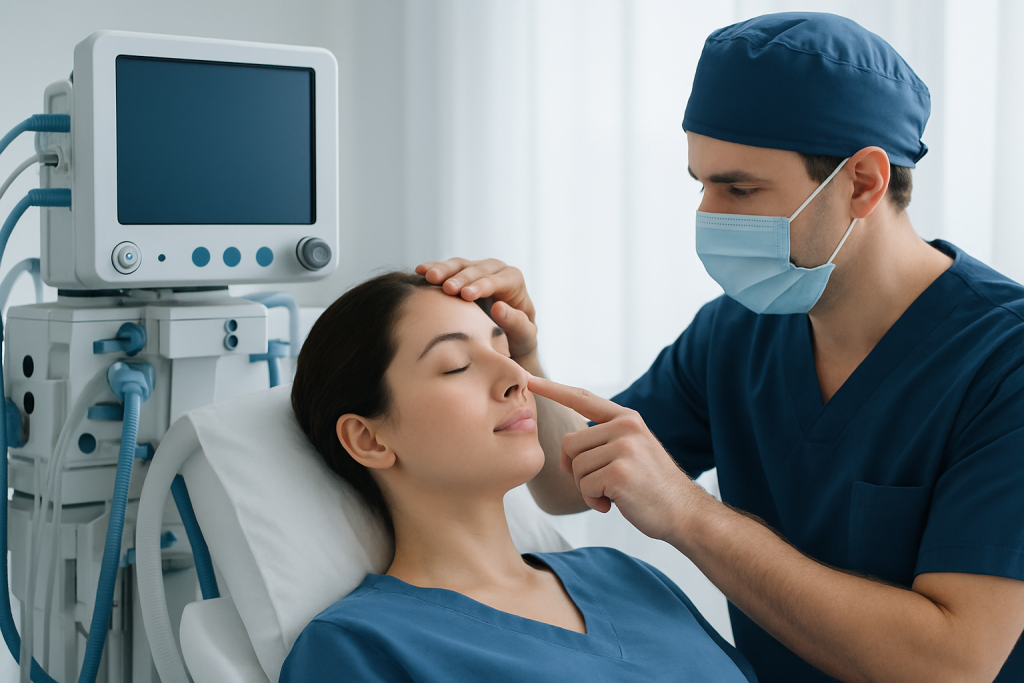
People considering primary rhinoplasty often describe a long-standing concern about nasal shape, such as a dorsal hump, a drooping or upturned tip, asymmetry, or a nose that seems out of balance with the face. Some also seek help for blockage, snoring, or reduced airflow through one or both nostrils.
After a previous surgery, the reasons for revision can look different. The nose may feel stiff, look uneven, heal with visible irregularities, or still not match the patient’s original goals. In some cases, the most troubling issue is functional rather than cosmetic, such as persistent congestion, valve collapse, or difficulty breathing through the nose.
Common reasons patients ask for revision assessment include:
- Persistent or new breathing difficulty
- Asymmetry or contour irregularities
- Tip shape that feels too rotated, too pinched, or insufficiently refined
- Bridge irregularities or visible graft edges
- Scarring, stiffness, or a nose that feels less natural than expected
It is important to remember that some swelling and temporary unevenness are normal after any rhinoplasty. Concerns become more meaningful when they remain after enough healing time has passed and are confirmed on surgical review.
Causes & Risk Factors

Primary rhinoplasty is usually considered when a patient wants a first-time change in nasal shape or function. The reasons may be cosmetic, medical, or related to trauma, congenital differences, or breathing obstruction. The operation may involve bone, cartilage, soft tissue, and the internal support structures that keep the nose both attractive and stable.
Revision rhinoplasty is typically needed when one or more factors affect the original result. These may include the healing response, the complexity of the first operation, the quality and quantity of remaining cartilage, or the nose’s tendency to form scar tissue. Sometimes the original surgical plan was appropriate, but the tissues healed in an unexpected way. In other cases, the first correction may have been too conservative or too aggressive for the patient’s anatomy.
Factors that can make revision surgery more complex include:
- Scar tissue from the first operation
- Reduced or reshaped cartilage available for support
- Changes in nasal blood supply and tissue mobility
- Prior grafts, implants, or altered internal anatomy
- Injury or infection affecting the healed nose
Risk also rises when revision is considered too early. The nose continues to settle for months, and sometimes longer, after surgery. A thoughtful surgeon will usually advise waiting until healing is stable unless there is an urgent functional issue.
Diagnosis
Rhinoplasty planning starts with a careful consultation, not a hurried decision. For primary surgery, the evaluation looks at the nose’s proportions, internal airway, skin thickness, cartilage strength, and the patient’s goals. Photographs, facial analysis, and sometimes nasal breathing tests help the surgeon understand both appearance and function.
Revision assessment is usually more detailed because the surgeon must also reconstruct the history of the previous operation. The consultation may include operative reports, old photographs, descriptions of healing, and a close physical exam of the nose at rest and during breathing. This helps the surgeon identify which changes are structural, which are related to scar tissue, and which are still evolving with time.
Patients traveling from another country benefit from bringing as much information as possible, including past surgical records, allergy history, medications, and any details about complications or follow-up care. If imaging or endoscopic examination is needed, it is used to guide planning rather than to replace a hands-on examination. The best surgical plan is usually one that respects the existing anatomy instead of trying to force a dramatic change without enough support.
Treatment Options
Primary rhinoplasty may involve reducing a hump, reshaping the nasal tip, straightening a deviated nose, narrowing the bridge, or improving airflow. Some procedures are open rhinoplasty, where a small external incision allows broad visibility, while others are closed rhinoplasty, where the incisions remain inside the nostrils. The choice depends on the anatomy and the goals of the operation.
Revision rhinoplasty is often more individualized. The surgeon may need to rebuild support with cartilage grafts, correct valve collapse, smooth irregularities, or restore balance after previous overcorrection or undercorrection. In some cases, cartilage is taken from the septum, ear, or rib, depending on what the nose needs and what is available safely.
Differences patients often notice between primary and revision surgery include:
- Revision surgery may require more structural rebuilding rather than simple reshaping
- Grafting is more common in revision cases
- Operative time and planning can be more involved
- Healing may feel slower because of scar tissue and previous tissue changes
Patients should know that revision rhinoplasty is not a quick fix for every concern. A responsible surgeon explains what can be improved, what may remain limited by existing tissue, and how much change the nose can tolerate without compromising breathing or support. That honesty is often the clearest sign of good surgical planning.
Recovery, Prevention & Self-care
Recovery after primary and revision rhinoplasty follows the same general pattern: swelling, bruising, and a gradual return to daily routines. Most patients need early rest, head elevation, protection from pressure on the nose, and temporary limits on exercise and heavy lifting. The exact timeline varies, but the first few weeks are usually the period when most visible healing changes occur.
Revision surgery often asks for a little more patience. Because the tissue has already been operated on, swelling may linger longer and the nose may feel firmer for a more extended period. This does not automatically mean something is wrong; it often reflects normal healing in a previously altered area. Final refinement can take many months, especially in the tip, where swelling tends to settle slowly.
Helpful self-care steps include:
- Following all postoperative instructions exactly as given
- Avoiding pressure, trauma, or eyeglasses resting on the healing nose unless approved
- Keeping follow-up visits, even when traveling internationally
- Protecting the nose from sun exposure during recovery
- Reporting concerning symptoms such as worsening pain, persistent bleeding, or new breathing difficulty
Prevention in rhinoplasty is not only about avoiding complications. It also means choosing the right operation at the right time. Waiting for complete healing after the first surgery, using realistic goals, and working with a surgeon experienced in both cosmetic and functional nasal surgery can reduce the chance of needing early revision.
When to See a Doctor
A consultation with a qualified plastic surgeon or ENT specialist is appropriate if a person is unhappy with the appearance or function of the nose and wants to understand options. For first-time rhinoplasty, the discussion should focus on whether surgery is likely to help and what changes are medically and aesthetically reasonable.
For revision concerns, timing matters. A nose that is still healing can look uneven or feel congested for a long time after surgery. In many cases, it is wise to wait until the surgeon confirms that the tissues have settled enough to judge the result accurately. However, new or worsening breathing problems, signs of infection, or concerns after trauma should be assessed promptly.
Seek medical review sooner if there is:
- Persistent nasal blockage that does not improve
- Significant asymmetry developing after healing
- Skin color changes, increasing redness, or drainage
- Severe pain, fever, or bleeding
- Any sudden change after injury to the nose
For patients considering treatment abroad, a coordinated plan is especially useful. Follow-up, travel timing, and recovery support should be discussed before surgery begins. Acibadem Health Point’s multidisciplinary specialists and JCI-accredited hospitals can diagnose and treat rhinoplasty-related concerns for international patients, with care tailored to both structure and function.
Key Differences Patients Usually Notice
What changes most between primary and revision rhinoplasty is not simply the appearance of the nose, but the surgical environment itself. Primary surgery starts with untouched anatomy, while revision surgery starts with a nose that has already been reshaped, healed, and sometimes scarred. That difference affects every part of the process, from planning to recovery.
In primary rhinoplasty, the surgeon has a wider range of options because the tissue is usually more predictable. In revision rhinoplasty, the surgeon often works with fewer resources and more variables. The focus shifts from creating a first result to restoring balance, support, and function in a structure that has already been altered.
For many patients, the best outcome is not a dramatic transformation but a nose that feels natural, breathes well, and fits the face more comfortably. That goal can be reached in both primary and revision settings, but the path is usually more complex the second time around.
Frequently asked questions
01How is revision rhinoplasty different from primary rhinoplasty?
Primary rhinoplasty is the first nose surgery, while revision rhinoplasty is done after a previous operation. Revision cases are usually more complex because the surgeon must work around scar tissue, changed anatomy, and limited cartilage support.
02Why do some people need revision surgery after rhinoplasty?
Revision may be considered if breathing problems remain, if the nose heals with asymmetry, or if the result does not match the patient’s goals. In some cases, the first surgery was appropriate but healing changed the final appearance or function.
03Can revision rhinoplasty improve breathing as well as appearance?
Yes, revision surgery can address structural problems that affect airflow, such as valve collapse or septal issues. The surgeon should evaluate cosmetic and functional concerns together so one does not worsen the other.
04How long should a patient wait before considering revision rhinoplasty?
The nose needs enough time to settle before the result can be judged accurately, and that often takes many months. The right timing depends on the individual case, so a surgeon should confirm when healing is stable enough for reassessment.
05Is revision rhinoplasty always more difficult than the first surgery?
It is often more complex because the tissue has already been operated on. That said, a carefully planned revision can still produce meaningful improvement when it is done for the right reasons and with realistic expectations.
06What should an international patient prepare before a rhinoplasty consultation?
It helps to bring any previous surgical records, medication lists, allergy information, and photos showing the nose before and after the first procedure. Patients should also discuss how follow-up will work after travel, since recovery requires consistent review.
This article is for general information only and is not a substitute for professional medical advice. Please consult a qualified doctor about your individual situation.
Explore treatments in Turkey — costs, top hospitals & a free quote
JCI-accredited · board-certified surgeons · reply within 24h
Add us as a Preferred Source to see more of our trusted health content across Google Search, AI Overviews and Discover.