Rhinoplasty in Istanbul: Costs, Surgeons and What to Expect

Key Takeaways
- Most international patients plan 7–10 days in Istanbul so the splint or cast can be removed and the surgeon can confirm it is reasonable to fly.
- Packages commonly bundle consultation, surgery, anesthesia, hospital stay, airport and clinic transfers, interpreter support and early follow-up — always ask for the inclusions in writing.
- Cost bands vary widely by technique (primary versus revision), surgeon experience and hospital setting; no reputable team quotes a price before reviewing photos or a video consultation.
- Accreditation such as JCI, national board certification and documented surgeon volume in rhinoplasty are more useful selection criteria than before-and-after galleries alone.
- Aftercare does not end at the airport: swelling settles gradually over months, and a US-based physician should be identified before departure for local follow-up.
- No surgeon can guarantee a specific result; revision rates exist worldwide, and honest counseling about limitations is a sign of good practice.
Traveling to Istanbul for nose surgery usually means a planned stay of about a week to ten days, a package that bundles surgery, hospital care, transfers and early follow-up, and a cost that sits well below typical US private-pay figures. This guide explains how the journey is coordinated, what to ask before booking, and how aftercare continues once a patient flies home.
Why US Patients Consider Istanbul for Nose Surgery
People searching for rhinoplasty Turkey Istanbul are usually weighing three things at once: cost, surgical experience and the practicalities of having an operation far from home. Istanbul has become a major destination for facial plastic and ear, nose and throat (ENT) surgery because a large volume of these procedures is performed there each year, many hospitals hold international accreditation, and coordinated packages simplify the logistics of travel, translation and transfers. For a self-paying patient in the United States — cosmetic rhinoplasty is generally not covered by insurance — the total outlay including flights is often meaningfully lower than a domestic private-pay pathway.
It is important to frame this realistically. Traveling abroad does not change the biology of healing, the possibility of complications, or the fact that a nose is a functional structure as well as an aesthetic one. What careful planning does change is how well informed a patient is before consenting, how clearly expectations are set, and how the follow-up is arranged on both sides of the Atlantic.
This article is written from the patient-journey perspective: how care is organized, what a typical week looks like, and which questions to raise with a patient coordinator. Detailed clinical questions — whether a person is a candidate, which technique suits their anatomy, how a deviated septum or breathing problem should be addressed — belong to a qualified surgeon who has examined the patient and reviewed imaging.
Rhinoplasty Turkey Istanbul: How the Patient Journey Works
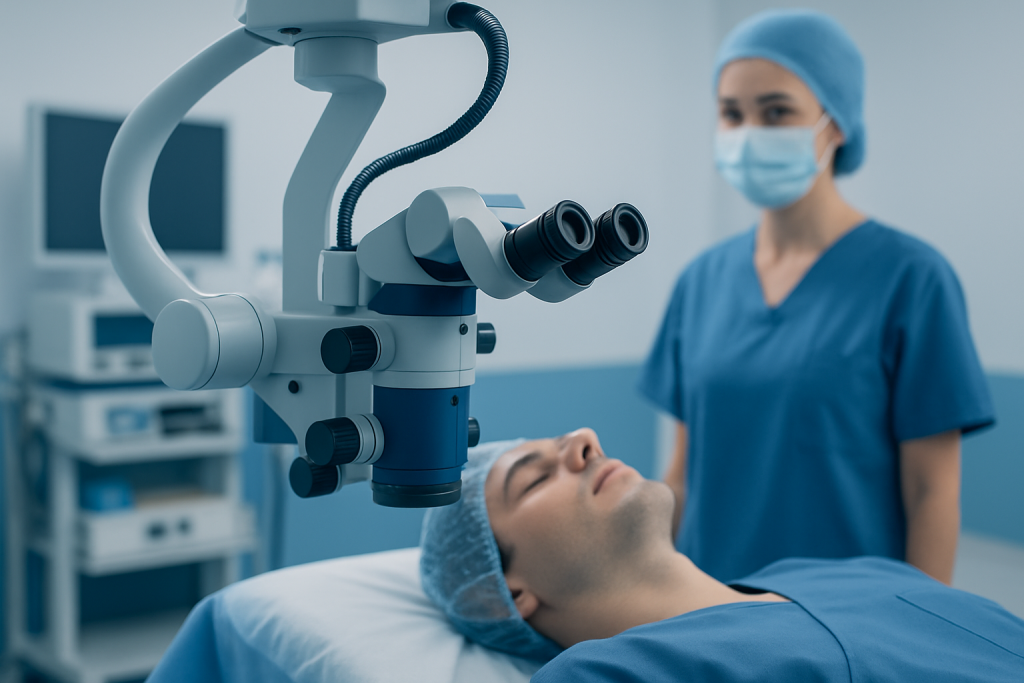
The rhinoplasty Turkey Istanbul pathway usually begins remotely, months before any flight is booked. A patient sends standardized photographs (front, profile, three-quarter and base views), a summary of medical history, previous nasal surgery or trauma, medications and any breathing complaints. A coordinator routes this to the surgical team, and a video consultation is scheduled so the patient can hear directly from the surgeon rather than only from an intermediary.
That first conversation should cover goals in specific terms, whether functional work such as septoplasty or turbinate reduction may be needed alongside cosmetic reshaping, and what is realistically achievable given skin thickness, cartilage strength and previous surgery. A written provisional plan and an indicative cost range normally follow. Nothing at this stage is final: the definitive plan is confirmed in person after a physical examination in Istanbul, and it is normal — and reassuring — for a surgeon to adjust the plan once they can examine the nose directly.
Once the patient decides to proceed, the coordination phase begins. This typically includes date planning around the surgeon’s operating schedule, guidance on Turkish entry requirements for US citizens, hotel arrangements near the hospital, airport pickup, an interpreter for consent discussions and ward rounds, and a schedule of preoperative tests. Patients are usually asked to arrive at least one full day before surgery so blood work, an anesthesiology assessment and the face-to-face consultation can take place unhurried.
- Remote photo review and medical history
- Video consultation with the operating surgeon
- Provisional plan and indicative cost band
- Travel, accommodation and interpreter arrangements
- Arrival, in-person examination and preoperative testing
- Surgery, overnight or short hospital stay
- Splint or cast removal and clearance to fly
What Treatment Packages Typically Include

Packages differ from hospital to hospital, so the single most useful request a patient can make is a written, itemized list of inclusions and exclusions before paying a deposit. A comprehensive package for nose surgery commonly covers the in-person surgical consultation, routine preoperative laboratory tests and anesthesia assessment, operating room and anesthesia fees, the surgeon’s fee, the hospital stay (frequently one night), medications supplied during admission, dressings and the nasal splint, airport and hospital transfers, interpreter services, and one or more postoperative reviews including splint removal.
Items that are often not included deserve equal attention: international flights, extra hotel nights if recovery takes longer than planned, treatment of unexpected medical issues, prescription medications purchased after discharge, and — critically — any future revision surgery. Some programs offer defined arrangements for revision within a set period, but these vary and should never be understood as a promise of a particular outcome.
Accommodation is usually offered as a partner-hotel arrangement rather than being medically supervised, so patients who prefer a quieter recovery or who travel alone should discuss this openly. Most surgeons ask that an adult companion travel with the patient or at least be available for the first 24 to 48 hours after discharge, both for practical help and for safety.
Understanding Cost Bands and What Drives Them
Responsible programs quote cost bands, not fixed prices, until the surgeon has reviewed photographs or examined the patient. As a planning guide, primary cosmetic rhinoplasty in an accredited Istanbul hospital generally falls into a low-to-mid four-figure US dollar range as an all-inclusive package, while complex revision cases, procedures requiring rib or ear cartilage grafting, or combined functional and cosmetic operations sit noticeably higher. Comparable private-pay surgery in major US cities commonly runs several times higher once facility and anesthesia fees are added.
Several factors move a quote within or above these bands. Revision surgery takes longer and demands more grafting material. Ethnic or structural rhinoplasty in patients with thick skin or weak cartilage may require additional support techniques. Adding septoplasty, turbinate work or a chin implant changes operating time. Surgeon seniority, hospital category and whether the stay is inpatient or day-case all contribute. Currency movements and seasonal demand can shift quotes between the time of first inquiry and the booking date.
An unusually low headline figure is worth questioning rather than celebrating. Patients should ask what happens if surgery runs longer than planned, who is responsible for the cost of managing a complication, whether the named surgeon will personally perform the operation, and whether the price is guaranteed for a defined period. Payment should go to the hospital or a clearly identified corporate entity, with a receipt — never informally to an individual.
Accreditation and Surgeon Credentials as Selection Criteria
Accreditation is the most objective quality signal available to a patient who cannot visit in advance. Joint Commission International (JCI) accreditation indicates that a hospital has been externally audited against international standards for patient safety, infection control, medication management and emergency response. It does not rate an individual surgeon’s aesthetic judgment, but it does mean the surrounding system — sterile processing, anesthesia protocols, intensive care backup — has been independently assessed. Operating in a full-service hospital rather than a stand-alone office suite also matters if an unexpected medical problem arises.
On the surgeon side, patients should confirm specialty training and board certification in either otolaryngology (ENT) with facial plastic subspecialization or in plastic, reconstructive and aesthetic surgery, along with membership in recognized national or international professional societies. Reasonable questions include how many rhinoplasties the surgeon performs annually, what proportion are revisions, whether they routinely handle functional breathing problems, and how complications are managed. Requesting to see results in patients with similar anatomy — not only the most photogenic cases — is entirely appropriate.
Be cautious with marketing signals that carry no verifiable meaning: unbranded before-and-after galleries, claims of a perfect record, influencer endorsements, or pressure to book a date during a first call. Careful counseling that includes what a procedure cannot achieve is a far better indicator of quality than promotional confidence. Anyone with significant heart, lung, bleeding or clotting conditions, or who uses blood-thinning medication, should have those issues cleared by their own physician in the United States before committing to travel.
Travel Timing, the Hospital Stay and Early Recovery
Most programs advise planning roughly seven to ten days in Istanbul. A common rhythm is arrival and consultation on day one, surgery on day two with an overnight stay, quiet recovery at the hotel for several days with any internal splints or packing removed as directed, and external splint or cast removal around day six to eight, followed by a final review and clearance to travel. These timelines are typical rather than promised; the surgeon adjusts them based on healing, and patients should build flexibility into return flights and keep a changeable ticket if possible.
Early recovery usually involves swelling and bruising around the eyes that peaks in the first two to three days, nasal congestion and mouth breathing, and mild to moderate discomfort that is generally managed with prescribed pain relief rather than strong opioids. Sleeping with the head elevated, applying cold compresses as instructed, avoiding nose blowing, and staying well hydrated are standard advice. Most people feel socially presentable within about two weeks, though residual swelling — particularly at the tip — settles gradually over many months, and the final contour is judged at around a year.
Flying carries specific considerations. Cabin pressure changes, dry air and prolonged immobility all matter after facial surgery, which is why surgeons usually prefer that patients wait until the splint is removed and the nose has been inspected before boarding a long-haul flight. Patients should ask about walking during the flight, hydration, compression stockings if advised, and what to do about congestion at altitude. Sun protection, avoidance of strenuous exercise and contact sports for several weeks, and refraining from wearing heavy glasses on the bridge are commonly recommended.
Aftercare Once You Fly Home
The most overlooked part of medical travel is what happens in month two and beyond. Before leaving Istanbul, patients should collect a complete discharge package: the operative note, details of any implants or grafts used, anesthesia record, medication list, wound care instructions, the follow-up schedule, and direct contact details for the surgical team and the international patient office. This documentation lets any US clinician step in quickly if a question arises.
Practically, aftercare usually runs on two tracks. Remote follow-up with the operating surgeon continues by video call or secure messaging, with the patient sending standardized photographs at agreed intervals. Local follow-up is arranged with a physician in the United States — a primary care doctor, ENT specialist or plastic surgeon — who can examine the nose in person if there is a concern. Identifying that local clinician before traveling, and confirming they are willing to see a patient operated on abroad, prevents a stressful search later.
Patients should know which symptoms warrant prompt local medical attention rather than an email: heavy or persistent bleeding, fever, spreading redness or discharge suggesting infection, sudden vision changes, severe pain that is not controlled, or breathing difficulty. Long-term, small asymmetries and residual swelling are common and often resolve with time; any discussion of revision is usually deferred for at least a year so that tissues have fully settled.
When to Speak with a Patient Coordinator
A patient coordinator is most useful earlier than most people expect — at the point of curiosity rather than the point of decision. Coordinators can arrange a video consultation with a surgeon, obtain a second opinion on a plan already offered elsewhere, clarify what a package covers, outline visa and entry guidance for US travelers, estimate the number of nights needed, and arrange interpreters and transfers. They can also flag when a case is better managed closer to home, which is a legitimate and appropriate outcome of a consultation.
Useful questions to raise include: which surgeon will operate and who assists; whether the hospital is internationally accredited; what the total indicative cost band is and what is excluded; what happens if an extra night or an extra week is needed; how complications are handled and who pays; how follow-up works after returning to the United States; and what documentation will be provided at discharge. Getting the answers in writing creates a shared record that reduces misunderstanding.
Acibadem Health Point coordinates this process for international patients, connecting them with multidisciplinary ENT, facial plastic and anesthesiology specialists across JCI-accredited Acibadem hospitals, and supporting travel planning, interpretation and post-discharge follow-up. Any decision about whether nose surgery is appropriate, and which technique to use, should be made together with a qualified surgeon after a proper examination.
Frequently asked questions
01How many days should I plan to stay in Istanbul for rhinoplasty?
Most programs suggest around seven to ten days so that preoperative testing, surgery, early recovery and splint removal can all take place before departure. The exact length depends on how healing progresses and on the surgeon's assessment at the final review. Booking a flexible return ticket is sensible in case an extra night or two is advised.
02What is usually included in a rhinoplasty package in Turkey?
Packages commonly cover the surgical consultation, preoperative tests, anesthesia, operating room and surgeon fees, a short hospital stay, the nasal splint and dressings, transfers, interpreter support and early follow-up visits. International flights, extra hotel nights and future revision surgery are frequently excluded. Ask for a written, itemized list of inclusions and exclusions before paying anything.
03Why is rhinoplasty less expensive in Istanbul than in the United States?
The difference reflects lower operating costs, staff and facility expenses, and currency factors rather than a lower standard of surgery in accredited hospitals. Cosmetic rhinoplasty is generally self-paid in both countries, so patients compare full private-pay figures. Cost alone should never be the deciding factor — accreditation, surgeon credentials and aftercare arrangements matter more.
04How soon after surgery is it safe to fly home?
Surgeons commonly prefer that patients wait until the external splint has been removed and the nose inspected, which is often around a week after the operation. Flying earlier is sometimes possible but should only be done with explicit clearance from the operating team. Timelines are individual, and the surgeon's in-person assessment takes priority over any general schedule.
05What should I check when comparing surgeons and hospitals?
Look for internationally recognized hospital accreditation such as JCI, verifiable board certification in ENT or plastic surgery, documented experience with rhinoplasty including revision cases, and clear answers about who will actually perform the operation. Realistic counseling about limitations is a better sign than promotional confidence. Be wary of pressure to book quickly or of any promise of a guaranteed result.
06Who looks after me once I return to the United States?
Follow-up usually continues remotely with the operating surgeon through video calls and photo reviews, while a local physician provides in-person care if needed. Identifying a US-based primary care doctor, ENT specialist or plastic surgeon willing to see you before you travel is strongly advised. Carry your full operative and discharge documentation home so any clinician can review exactly what was done.
07When is the right time to contact a patient coordinator?
Contacting a coordinator early — even while still researching — helps clarify whether travel is realistic for your situation and what a plan might involve. Coordinators can arrange a video consultation with a surgeon, explain package structures and indicative cost bands, and handle travel logistics. They can also advise when a case may be better managed near home.
This article is for general information only and is not a substitute for professional medical advice. Please consult a qualified doctor about your individual situation.
Explore treatments in Turkey — costs, top hospitals & a free quote
JCI-accredited · board-certified surgeons · reply within 24h
Add us as a Preferred Source to see more of our trusted health content across Google Search, AI Overviews and Discover.