

Restorative Dentistry: Types, Benefits and Procedures
- 9 min read
- Published November 28, 2026
Key Takeaways
- Restorative dentistry treats teeth that are broken, decayed, worn, or missing.
- Common options include fillings, crowns, bridges, implants, inlays, onlays, and dentures.
- The right treatment depends on the tooth’s condition, bite, gum health, and the patient’s goals.
- Early care can prevent small problems from becoming more complex and costly.
- Good home oral hygiene and regular follow-up visits help restorations last longer.
Restorative dentistry focuses on repairing teeth that are damaged by decay, wear, fracture, or trauma, and on replacing teeth that are missing. It aims to bring back function, comfort, and a natural appearance while protecting long-term oral health.
Overview
Restorative dentistry is the part of dental care that helps rebuild teeth and, when needed, replace them. It is used when a tooth has lost strength, shape, or function because of decay, cracking, wear, injury, or infection. The goal is not only to make the mouth look better, but also to make eating, speaking, and cleaning the teeth more comfortable and reliable.
For many patients, restorative treatment is a practical decision rather than a cosmetic one. A small cavity may need a filling; a heavily damaged tooth may need a crown; several missing teeth may call for a bridge, implant, or denture. A dentist usually chooses the least invasive option that can still provide stable, long-term results.
International patients often ask how restorative dentistry fits into travel and recovery. The answer depends on the treatment plan. Some procedures can be completed in a single visit, while others require staged appointments, healing time, and follow-up care coordinated with the patient’s home dentist or local clinic.
Symptoms and Signs That Restoration May Be Needed

Not every dental problem announces itself loudly. Some teeth need restoration because of obvious pain, but others show smaller signs that are easy to overlook. A tooth may feel sensitive to cold, hot, or sweet foods, or it may hurt when biting down. A chip, visible crack, dark spot, or old filling that feels loose can also be a clue.
Missing teeth can create a different set of symptoms. Chewing may become less efficient, the bite may feel uneven, and nearby teeth may begin to shift into open spaces. Over time, this can make cleaning harder and may place extra stress on the jaw and remaining teeth.
- Toothache or pressure when chewing
- Sensitivity to temperature or sugar
- Visible damage such as chips, cracks, or worn edges
- Food trapping around a damaged or missing tooth
- Changes in speech or bite alignment
Some people first notice a functional change rather than pain. They avoid chewing on one side, feel self-conscious about a front tooth, or realize that a denture no longer fits as intended. These changes are worth discussing early, before more of the tooth structure is lost.
Causes and Risk Factors
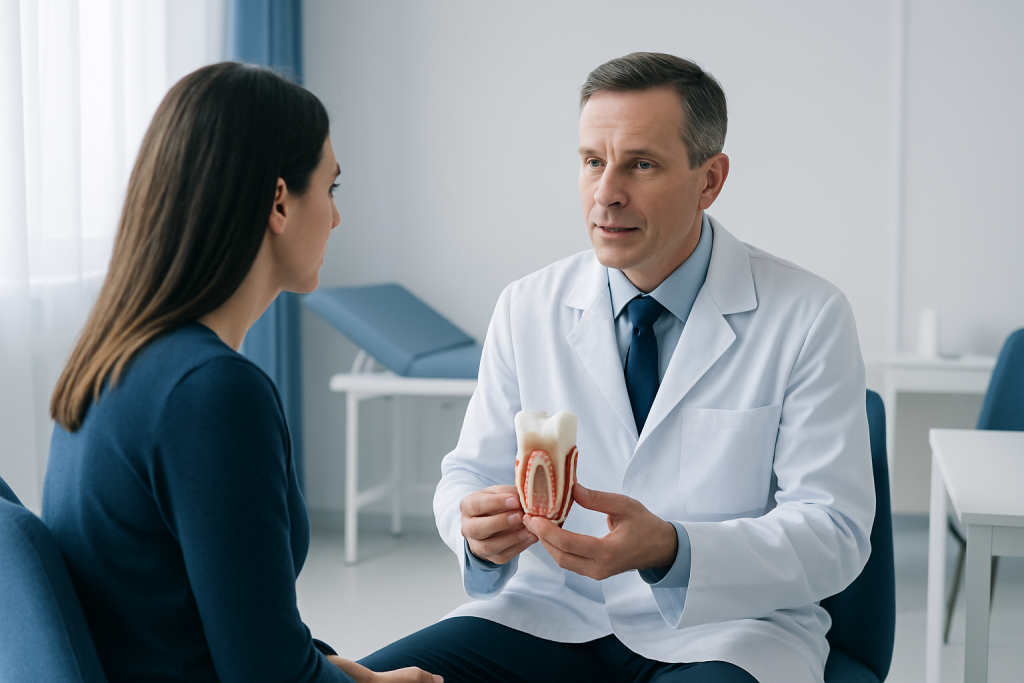
Restorative dentistry is often needed because the natural tooth has been weakened over time. Tooth decay remains one of the most common reasons for treatment. When bacteria break down enamel and dentin, a small cavity can expand into a larger defect that requires more than a simple filling.
Other causes include trauma, grinding or clenching the teeth, age-related wear, acid erosion, and large existing restorations that have failed. Gum disease can also contribute indirectly by loosening teeth or creating conditions where tooth replacement becomes necessary. In some patients, inherited enamel weakness or a history of extensive dental work plays a part.
Risk tends to rise when daily cleaning is inconsistent, sugar intake is frequent, mouth dryness is present, or routine dental checkups are delayed. Smoking and poorly controlled medical conditions can also affect healing and the long-term performance of restorations. For travelers seeking care abroad, it helps to share a complete health and dental history so the treatment plan reflects the full picture.
Diagnosis and Treatment Planning
Restorative treatment starts with a careful examination. A dentist typically reviews symptoms, checks the bite, inspects the teeth and gums, and may take X-rays or other images to see what is happening below the surface. This is important because what looks like a small surface defect can sometimes hide a deeper structural problem.
The treatment plan is based on several practical questions: How much healthy tooth remains? Is the nerve involved? Is the tooth stable enough to repair, or would replacement be more predictable? The dentist also considers the patient’s bite, gum health, aesthetic goals, and how much time is available if care is being done during a visit from another country.
In many cases, patients are given a choice between repair and replacement approaches. For example, a damaged tooth may be rebuilt with a filling, inlay, onlay, or crown depending on the extent of loss. If the tooth cannot be saved, extraction followed by replacement may be discussed. A thoughtful plan aims to restore function while preserving as much natural tooth structure as possible.
Treatment Options
There is no single restorative dentistry procedure that fits every tooth. Small cavities are commonly treated with fillings, which remove decayed tissue and rebuild the shape of the tooth. When more of the tooth is missing, an inlay or onlay may be used for added strength, or a crown may be placed to cover and protect the entire visible part of the tooth.
When one or more teeth are missing, the main options usually include bridges, implants, or removable dentures. A bridge uses nearby teeth or implants to support an artificial tooth. A dental implant replaces the tooth root with a small fixture in the jaw, later topped with a crown. Dentures can restore several teeth or a full arch and may be a practical solution for some patients, especially when many teeth are involved.
Root canal treatment may also be part of restorative care when the tooth’s nerve is infected or inflamed. After the inner portion is treated, the tooth often needs a crown to restore strength and seal the structure. In more complex cases, multiple steps may be combined so that function, comfort, and appearance are addressed together.
- Fillings for small to moderate decay
- Inlays and onlays for larger areas of tooth loss
- Crowns for teeth that need full coverage and support
- Bridges, implants, and dentures for missing teeth
- Root canal therapy when the pulp is affected
What to Expect During the Process
Patients usually want to know how involved treatment will be and how it will affect daily life. Many restorative procedures are performed with local anesthesia, so the area is numb during treatment. Afterward, mild soreness or sensitivity can happen, especially if the tooth has been heavily worked on or if gum tissue was involved.
Some restorations are completed in a single appointment, while others need more than one visit. Crowns, bridges, and implant-based care may require preparation, temporary restorations, healing time, and final placement. Patients traveling for treatment should ask in advance how many visits are likely, whether the work can be staged efficiently, and what follow-up will be needed after returning home.
Good communication makes the process smoother. A dentist can explain how to care for temporary restorations, what symptoms are expected, and which changes should be reported. Patients who are well prepared often find that the experience is manageable and more predictable than they first expected.
Prevention and Self-care
Restorative dentistry is most effective when it is paired with good everyday care. Brushing twice a day with fluoride toothpaste, cleaning between the teeth, and keeping up with routine checkups can help prevent new damage and extend the life of existing restorations. Small habits matter because repaired teeth still need ongoing protection.
Patients with fillings, crowns, bridges, implants, or dentures may need a few extra routines. Hard foods, ice chewing, and using the teeth as tools should be avoided. If grinding or clenching is present, a dentist may recommend a night guard. Dry mouth should also be discussed, because saliva helps protect both natural teeth and restorations.
International follow-up is worth planning in advance. Patients should leave with written instructions, post-treatment contact details, and a clear sense of which findings require a later check. If care continues at home, sharing records and X-rays with the local dentist can help maintain continuity.
When to See a Doctor
A dentist should be seen promptly if tooth pain lasts, if chewing becomes difficult, or if a restoration feels loose, broken, or uncomfortable. A cracked tooth or swollen gum can sometimes worsen quietly, even when the symptoms seem minor at first. Early evaluation usually gives more treatment choices and can preserve more natural tooth structure.
Urgent attention is especially helpful when swelling, fever, drainage, or severe pain is present, or when a tooth is knocked out or badly fractured. These situations do not always mean the problem is dangerous, but they do deserve timely assessment so the treatment can be planned appropriately.
For patients considering treatment abroad, it is wise to seek a consultation before travel if possible, particularly when several teeth are involved or if prior dental work has failed. Acibadem Health Point’s multidisciplinary specialists and JCI-accredited hospitals diagnose and treat restorative dental problems for international patients, with care plans designed to support both treatment and follow-up.
Frequently asked questions
01What does restorative dentistry include?
Restorative dentistry includes treatments that repair damaged teeth or replace missing ones. Common examples are fillings, crowns, bridges, implants, root canal therapy, and dentures. The exact choice depends on how much of the tooth is affected and what the patient needs for chewing and appearance.
02Is restorative dentistry only for cavities?
No. Cavities are a major reason for treatment, but restorative dentistry also addresses cracked teeth, worn teeth, broken fillings, and missing teeth. It can help after injury, infection, or long-term wear as well.
03How do dentists decide between a filling and a crown?
The decision usually depends on how much healthy tooth is left and how much strength the tooth needs. A filling may be enough for smaller areas of decay, while a crown is often better when a tooth is more heavily damaged or weakened. The bite and location of the tooth also matter.
04Are dental implants always better than bridges or dentures?
Not always. Implants are a strong option for many patients, but they require enough bone and time for healing, and they are not the best choice for every situation. Bridges and dentures can still be very effective depending on the number of missing teeth, the condition of neighboring teeth, and the patient’s overall health.
05How long do restorative treatments last?
Longevity varies based on the material used, the location of the tooth, oral hygiene, bite forces, and regular dental care. A well-maintained restoration can last for many years, but no dental treatment is permanent. Ongoing checkups help identify wear or problems early.
06Can restorative dentistry improve appearance as well as function?
Yes. Many restorative treatments are designed to blend in with the surrounding teeth while also improving chewing and comfort. Even when the main goal is function, the result often looks more natural and balanced.
This article is for general information only and is not a substitute for professional medical advice. Please consult a qualified doctor about your individual situation.
Joint and spine care in Turkey — expert assessment & treatment
JCI-accredited · board-certified surgeons · reply within 24h
Add us as a Preferred Source to see more of our trusted health content across Google Search, AI Overviews and Discover.


How can we help you today?
Meet an Acibadem specialist by secure video, before you travel.
Book a video visit