Remove Hard Skin on Feet: What You Need to Know

Key Takeaways
- Hard skin on feet usually develops as the skin protects itself from repeated rubbing or pressure.
- Gentle soaking, careful exfoliation, moisturizing, and better-fitting footwear can help soften thickened skin.
- People with diabetes, poor circulation, or reduced sensation should avoid self-treatment and seek professional guidance.
- Pain, redness, cracking, bleeding, or a lump that keeps returning may mean the area needs medical evaluation.
- Treating the underlying cause is the best way to stop hard skin from coming back.
Hard skin on the feet is usually a callus or corn formed by repeated pressure or friction. It can often be managed with gentle care at home, but persistent, painful, or recurring thickened skin may need medical assessment.
Overview
To remove hard skin on feet safely, the goal is not to scrub the skin away all at once. Hard skin usually develops because the body is trying to protect an area that is being rubbed, squeezed, or pressed too often. The most common forms are calluses, which are broader patches of thickened skin, and corns, which are smaller and more focused.
For many people, hard skin is more of a comfort issue than a medical problem. Still, it can become sore, crack, catch on socks, or make walking uncomfortable. A thoughtful approach works better than aggressive trimming, which can irritate healthy skin and sometimes lead to infection.
In practical terms, the safest plan is to soften the area, gently smooth it, moisturize regularly, and address the footwear or foot mechanics that caused it. If the skin keeps returning in the same place, the feet may be sending a useful message about pressure points, footwear, posture, or an underlying condition.
Symptoms and What Hard Skin Looks Like

Hard skin often feels rough, dry, or slightly raised. On closer look, it may appear yellowish, whitish, or gray, depending on skin tone and thickness. A callus is usually broader and flatter, while a corn is often smaller and more concentrated, sometimes with a firmer center.
Symptoms can vary from mild to irritating. Some people notice tenderness only when walking barefoot or wearing certain shoes, while others feel a burning or pressing sensation after standing for long periods. Cracks can form if the skin becomes very dry, especially on the heels.
It is worth paying attention if the area becomes red, warm, swollen, or starts draining fluid. Those changes are not typical of simple thickened skin and suggest that a clinician should examine the foot.
Causes and Risk Factors
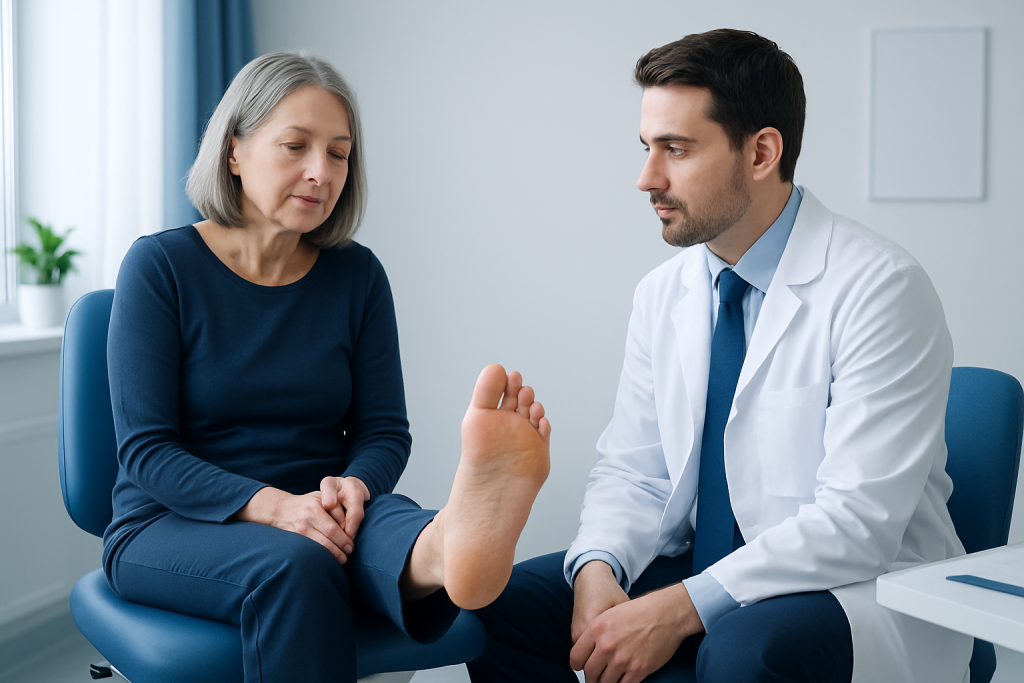
Hard skin most often develops where the foot bears repeated pressure. Tight shoes, high heels, shoes with narrow toe boxes, or footwear that allows the foot to slide can all create friction. Standing for long hours, walking long distances, or sports that place pressure on certain areas can have the same effect.
Foot shape and gait also matter. Bunions, hammertoes, flat feet, high arches, or uneven weight distribution can push pressure onto specific spots. Even something as simple as a seam inside a shoe or a loose insole can repeatedly rub the skin in one place.
Certain health conditions make foot skin more vulnerable or make self-care less safe. These include diabetes, peripheral artery disease, neuropathy, psoriasis, and other conditions that affect sensation, healing, or skin turnover. Older adults may also develop thicker, drier skin more easily.
- Repeated rubbing or pressure
- Ill-fitting shoes or worn-out insoles
- Foot deformities or biomechanical changes
- Dry skin and reduced skin elasticity
- Diabetes, nerve problems, or circulation issues
How Diagnosis Is Made
Most of the time, a health professional can diagnose a callus or corn by looking at the foot and asking about shoes, activity, pain, and when the thickening started. A careful exam can also show whether the problem is due to pressure, a bony prominence, or a skin condition that mimics hard skin.
In some cases, a clinician may check the foot more broadly. They may look at walking pattern, toe alignment, arch shape, and whether there are signs of fungal infection, warts, or other causes of thickened skin. If sensation or circulation is a concern, those issues may be assessed as well.
For international patients, this stage is especially useful because it helps separate a simple skin problem from a structural or medical issue that needs more than home treatment. A clear diagnosis prevents repeated treatment of the same spot without solving the reason it formed.
Treatment Options
Most treatment plans begin with gentle softening and gradual reduction of the thick skin. Soaking the feet in warm water for a short period can make the area easier to smooth. Afterward, a pumice stone or foot file may be used lightly on dry or softened skin, but never to the point of pain or rawness.
Moisturizers play an important role. Creams that contain urea, lactic acid, or similar ingredients can help soften thickened skin and reduce dryness. Regular use is often more helpful than occasional intense treatment, because the aim is steady improvement rather than forceful removal.
When hard skin is painful, recurrent, or linked to foot deformity, a clinician may trim the excess skin safely in the office and recommend pressure relief. This may include cushioned insoles, toe pads, orthotics, or shoe changes. If a bunion, hammertoe, or other structural issue is driving the problem, treatment may need to focus there to prevent the skin from returning.
Surgical treatment is not usually needed for hard skin itself, but it may be considered if an underlying deformity is severe and repeatedly causes pressure points. Any more advanced treatment should be guided by a qualified doctor after the cause has been identified.
Prevention and Self-care
The best way to prevent hard skin from coming back is to reduce the pressure that created it in the first place. Shoes should fit comfortably, with enough room for the toes and without areas that rub. If the person has a specific spot that always thickens, a podiatrist or dermatologist can often help identify the pressure pattern.
Daily care matters, especially for dry feet. Gentle washing, careful drying, regular moisturizing, and periodic light smoothing can keep skin supple. Thickened skin should never be cut at home with blades, scissors, or razors, because even a small slip can injure healthy tissue.
For people who travel or spend long days on their feet, packing the right shoes and keeping a simple foot-care routine can make a noticeable difference. If a long flight, a walking-heavy itinerary, or a new pair of shoes tends to trigger symptoms, it is better to address that early than wait for the skin to harden.
- Choose shoes that match foot shape and activity level
- Use cushioned socks and pressure-relieving insoles if needed
- Moisturize feet regularly, especially heels and pressure areas
- Gently smooth thick skin after bathing, not before
- Replace shoes that are worn down or uneven
When to See a Doctor
Medical advice is important if hard skin is painful, keeps returning, or is not improving with simple care. A clinician should also examine the foot if the area is cracked deeply, bleeding, red, swollen, or warm, because these signs may suggest irritation or infection.
People with diabetes, poor circulation, numbness, or a history of foot ulcers should not attempt to treat thickened skin on their own. Even small injuries can take longer to heal in these situations, so professional foot care is the safer choice.
A doctor visit is also sensible if the hard skin looks unusual, if there is a dark spot under it, if a wart is suspected, or if walking is becoming difficult. For patients planning treatment from another country, a specialist can usually help decide whether the issue can be managed conservatively or whether it needs in-person procedures or follow-up.
Acibadem Health Point’s multidisciplinary specialists and JCI-accredited hospitals diagnose and treat hard skin-related foot problems for international patients as part of coordinated care.
Living With Recurring Hard Skin
Some people find that hard skin returns even after they have treated it well. That does not mean the effort has failed; it usually means the pressure pattern has not changed enough yet. A long-term solution often combines skin care with practical changes in shoes, activity, or support devices.
It can help to keep track of where the skin forms, what footwear was worn, and when pain appears. That information gives clinicians clues about mechanics and can shorten the path to a better fit or a more targeted plan. In many cases, the right insole, a shoe change, or a small adjustment in walking support makes the difference.
When hard skin is viewed as a signal rather than a nuisance, treatment becomes more effective. The skin is protecting the foot; the aim is to make that protection unnecessary by removing the cause of the repeated stress.
A Practical Home Care Approach
A simple routine is often enough for mild cases. After bathing or soaking, the skin can be gently smoothed with a pumice stone or foot file, then covered with a moisturizer. The routine should be consistent, mild, and stopped if there is soreness or cracking.
If the person has a thick callus on the heel, extra dryness may respond to richer moisturizers and better sock choices. If the thick skin sits over a bony prominence on a toe or ball of the foot, reducing pressure is just as important as skin softening.
Home care is most successful when it is paired with realistic expectations. Thick skin that developed over months will not disappear overnight, and that is normal. A steady plan is safer, more comfortable, and more likely to hold up over time.
Frequently asked questions
01What is the safest way to remove hard skin on feet at home?
The safest approach is to soften the skin first, then gently smooth it with a pumice stone or foot file. Afterward, apply a moisturizer regularly to help keep the skin supple. Cutting the skin with blades or scissors is not recommended.
02Are calluses and corns the same thing?
They are related but not identical. Calluses are usually broader areas of thickened skin, while corns are smaller, more focused areas that often form over pressure points. Both usually develop from repeated friction or pressure.
03Can hard skin on the feet be a sign of a bigger problem?
Sometimes, yes. Recurrent hard skin may be linked to footwear, foot shape, gait changes, or a condition such as diabetes or poor circulation. If it is painful, unusual, or keeps returning, a clinician should evaluate it.
04Should people with diabetes remove hard skin themselves?
It is usually safer for people with diabetes to avoid self-treating thickened skin, especially if they have numbness or circulation problems. A foot care professional can reduce the risk of skin injury and check for early problems that may not be obvious. This is an area where supervised care is particularly important.
05How long does it take for hard skin to improve?
Mild hard skin may soften gradually with regular care over days to weeks, but the timeline depends on how thick it is and whether the pressure source is corrected. If the same area keeps thickening, the underlying cause likely needs attention as well. Consistency matters more than aggressive treatment.
06When should someone see a podiatrist or dermatologist?
A specialist visit is sensible if the skin is painful, cracked, infected, or not improving with gentle home care. It is also important if the person has diabetes, numbness, or circulation issues, or if the thickened area might actually be a wart or another skin condition.
This article is for general information only and is not a substitute for professional medical advice. Please consult a qualified doctor about your individual situation.
Joint and spine care in Turkey — expert assessment & treatment
JCI-accredited · board-certified surgeons · reply within 24h
Add us as a Preferred Source to see more of our trusted health content across Google Search, AI Overviews and Discover.