Head Itchy and Losing Hair: What You Need to Know

Key Takeaways
- Itchy scalp and hair loss often occur together when the scalp is inflamed, irritated, or infected.
- Common causes include dandruff, eczema, psoriasis, fungal infections, lice, and some types of alopecia.
- Diagnosis may require a scalp exam, hair-pull test, lab tests, or occasionally a biopsy.
- Treatment depends on the cause and may include medicated shampoos, prescription creams, antifungal therapy, or hair-loss treatments.
- Seeking medical advice early can help prevent further shedding and reduce discomfort.
If a person has a head that is itchy and is losing hair, the two symptoms may be related to a scalp condition, an infection, inflammation, or a hair-loss disorder. A careful medical evaluation can help identify the cause and guide the right treatment.
Overview
When someone notices that the head feels itchy and hair is coming out, the first question is usually whether the two problems are connected. In many cases, they are. An irritated scalp can trigger scratching, inflammation, or damage to hair follicles, while certain hair-loss conditions also make the scalp feel tender, dry, or itchy.
It is helpful to think of the scalp as skin with hair attached. Like skin elsewhere on the body, it can react to infection, allergy, dryness, autoimmune activity, or buildup from hair products. Because the causes range from mild and temporary to conditions that need medical treatment, the most useful next step is not self-diagnosis but a focused assessment of the scalp and hair pattern.
For people traveling for care, this issue can be especially frustrating because symptoms may flare while abroad, during climate changes, or after trying unfamiliar shampoos and styling products. The good news is that many causes are identifiable on examination, and treatment can often begin with simple, targeted steps once the reason is clear.
Symptoms
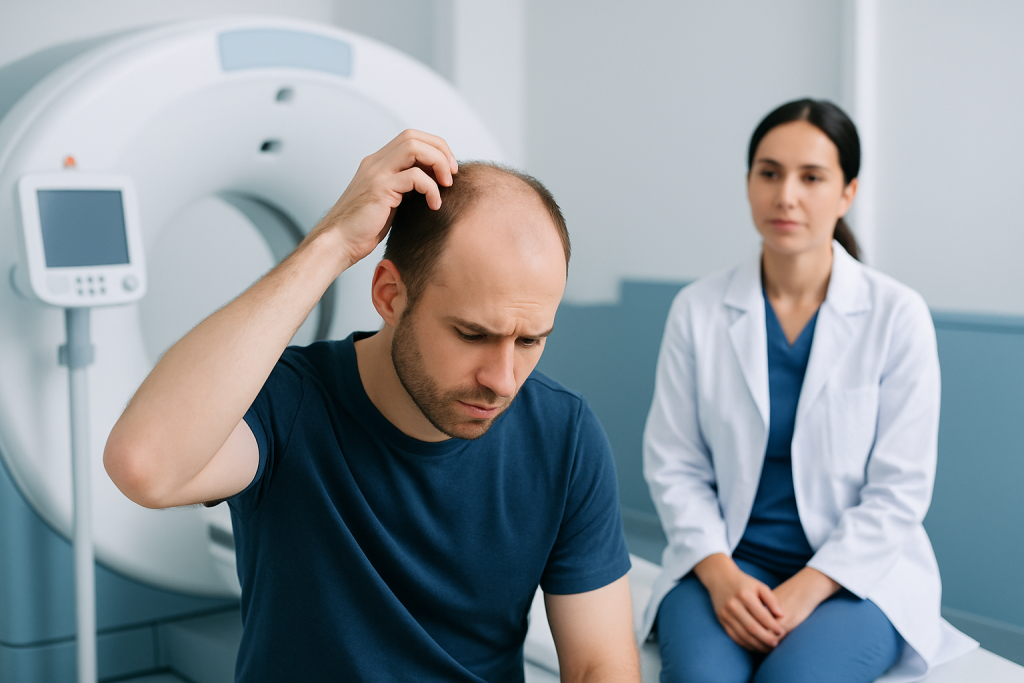
Itching is not the only clue. The pattern of hair loss and the condition of the scalp can provide important hints about what is happening underneath. Some people notice diffuse shedding, while others see patchy bald areas, broken hairs, flaking, redness, or small bumps.
Common accompanying signs include:
- Dryness, scaling, or visible flakes
- Redness or swelling of the scalp
- Burning, soreness, or tenderness
- Patchy hair loss or thinning at the crown or hairline
- Broken hairs or short stubble-like hairs
- Pustules, crusting, or oozing in some infections
Itching can also lead to repeated scratching, which may worsen shedding by breaking hairs or irritating already sensitive skin. If the scalp has open sores, spreading redness, fever, swollen lymph nodes, or rapid hair loss, the person should be evaluated promptly.
Causes & Risk Factors

There is no single explanation for an itchy scalp with hair loss. The most common causes include inflammatory scalp conditions such as dandruff-related seborrheic dermatitis, eczema, and psoriasis. These can make the scalp dry, inflamed, and uncomfortable, and the constant scratching may increase shedding.
Infections are another important category. Fungal infections such as tinea capitis can cause itching, scaling, broken hairs, and patchy loss. Head lice may also lead to intense itching, especially behind the ears and at the nape of the neck. Less commonly, bacterial infections or scarring inflammatory disorders can damage hair follicles and affect regrowth.
Hair loss disorders may also be involved. Alopecia areata, for example, usually causes patchy loss and may sometimes be associated with tingling or itching before the hair falls out. Traction alopecia can develop when hairstyles pull on the scalp for long periods. Risk is higher when there is frequent tight braiding, chemical hair processing, harsh styling habits, family history of hair loss, or another skin condition affecting the scalp.
Diagnosis
A clinician usually begins by asking when the itching and hair loss started, how quickly they are progressing, and whether anything seems to worsen or improve the symptoms. The pattern of loss, the amount of flaking, and the appearance of the scalp often narrow the possibilities considerably.
An examination may include looking closely at the scalp and hair shafts, gently pulling a few hairs to assess shedding, and checking for signs of infection or inflammation. If the cause is not obvious, additional tests may be recommended. These can include a fungal test, blood tests for iron, thyroid function, or other systemic issues, and occasionally a scalp biopsy when an autoimmune or scarring condition is suspected.
Because several different problems can look similar at first glance, especially when a person has been trying over-the-counter products, professional evaluation is often the fastest route to a correct diagnosis. This is particularly true if the person is considering treatment while traveling and wants care that can be planned around follow-up needs.
Treatment Options
Treatment depends on the underlying cause rather than the symptom alone. For dandruff or seborrheic dermatitis, medicated shampoos and anti-inflammatory scalp treatments are commonly used. For eczema or psoriasis, a clinician may suggest topical medicines that calm inflammation and reduce itching.
If the issue is a fungal infection, antifungal treatment is usually needed, and the choice depends on the type and severity of the infection. Lice require specific anti-parasitic treatment and careful cleaning of personal items. When hair loss is related to alopecia areata or another immune-mediated condition, treatment may focus on reducing inflammation and supporting regrowth.
Some people also benefit from hair-loss-specific care, such as treatment for pattern hair loss if that is part of the picture. However, it is important not to start multiple products at once. A stepwise plan makes it easier to tell what is helping and avoids further scalp irritation from unnecessary products.
Prevention & Self-care
Self-care is most helpful when it protects the scalp rather than overwhelming it. Gentle cleansing, avoiding aggressive scratching, and using mild hair products can reduce irritation. If styling habits involve traction, loosening braids, ponytails, extensions, or other tension-heavy styles may help prevent further breakage and follicle stress.
Other practical measures include:
- Choosing fragrance-light or sensitive-skin products when possible
- Avoiding hot water that may dry the scalp
- Not sharing combs, hats, or pillowcases if lice or fungal infection is possible
- Limiting frequent chemical treatments or heat styling
- Keeping follow-up appointments if symptoms do not settle
For travelers, bringing a familiar shampoo and documenting recent product changes can be useful. Climate shifts, pool exposure, stress, and different water or hair-care routines can all make symptoms more noticeable, but they do not replace the need to rule out a medical cause.
When to See a Doctor
Medical evaluation is a good idea if itching lasts more than a short time, hair loss is continuing, or the scalp looks inflamed. A doctor should be seen sooner if there are patchy bald areas, broken hairs, pain, pus, crusting, spreading redness, or a child has a suspicious scalp rash.
It is also wise to seek care when over-the-counter shampoos or home measures do not help, or when the person has other symptoms such as fatigue, weight changes, or signs of a hormonal or nutritional problem. Hair loss can sometimes be the first visible clue to a broader health issue.
For international patients, coordinated care can make the process easier. At Acibadem Health Point, multidisciplinary specialists and JCI-accredited hospitals diagnose and treat scalp and hair conditions for patients coming from abroad, with attention to both the medical workup and the follow-up plan needed after travel.
Living with the Symptom While the Cause Is Being Clarified
When itching and shedding are active, the goal is to reduce further irritation while waiting for a diagnosis. That often means pausing new hair products, avoiding vigorous brushing, and resisting the urge to pick at flakes or scabs. Small changes can make the scalp less reactive and make the examination more informative.
People may also find it helpful to take a few clear photos of the scalp over time. These images can show whether the hair loss is spreading, improving, or staying stable, especially if the person is getting care across different locations or in another country. A calm, stepwise approach is usually more effective than trying many remedies at once.
Outlook
The outlook depends on the cause. Conditions such as dandruff, lice, or some forms of scalp inflammation often improve well once treated. Temporary shedding may settle after the trigger is removed, while some hair-loss disorders require longer-term management to encourage regrowth and protect remaining hair.
The most important point is that itchy scalp and hair loss are not a diagnosis by themselves. They are a signal that the scalp needs attention. With careful evaluation and the right treatment plan, many people can reduce discomfort and better understand what is happening to their hair.
Frequently asked questions
01Why does my head itch and my hair fall out at the same time?
Itching and hair loss often happen together when the scalp is inflamed, irritated, infected, or affected by a hair-loss disorder. Scratching can also worsen shedding by breaking hair and damaging the scalp surface.
02Can dandruff cause hair loss?
Dandruff itself does not usually destroy hair follicles, but the itching and inflammation it causes can lead to increased shedding or breakage. If the scalp is very red, sore, or scaly, a clinician may look for seborrheic dermatitis or another skin condition.
03Could an infection be causing the problem?
Yes. Fungal infections and lice are common reasons for itching, scaling, and hair loss, especially when the scalp looks irritated or broken hairs are present. These conditions usually need targeted treatment rather than just a cosmetic shampoo.
04When is hair loss with itching more serious?
It is more concerning if the hair loss is patchy, fast, painful, or leaving scarring, or if there is pus, swelling, fever, or swollen lymph nodes. These signs can point to infection or an inflammatory condition that should be assessed promptly.
05Will the hair grow back after the scalp problem is treated?
In many cases, yes, especially when the cause is temporary and the follicles are not scarred. Recovery depends on how long the condition has been present and whether the underlying cause is treated early.
06Should a person stop using all hair products?
Not necessarily, but it can help to simplify the routine and avoid harsh or heavily fragranced products until the scalp settles. A doctor can suggest a safer routine based on the likely cause and the person’s hair type.
This article is for general information only and is not a substitute for professional medical advice. Please consult a qualified doctor about your individual situation.
Hair transplant in Turkey — costs, graft counts & a free assessment
JCI-accredited · board-certified surgeons · reply within 24h
Add us as a Preferred Source to see more of our trusted health content across Google Search, AI Overviews and Discover.