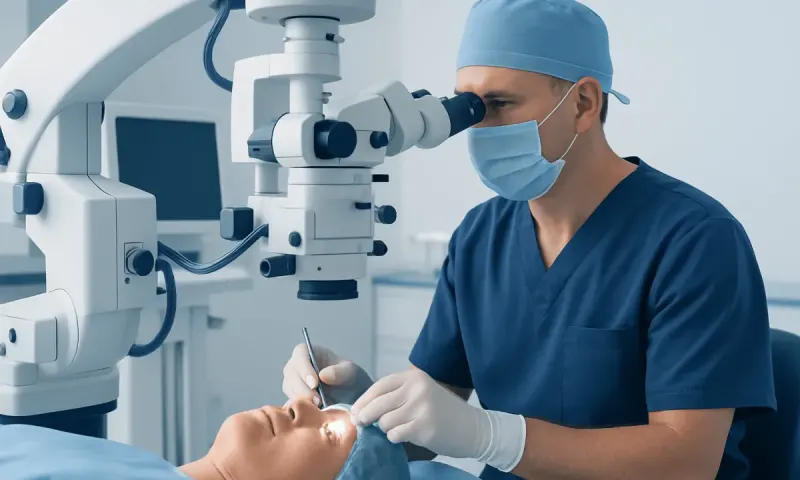
Refractive Surgery Reshapes the Cornea or Replaces the Lens
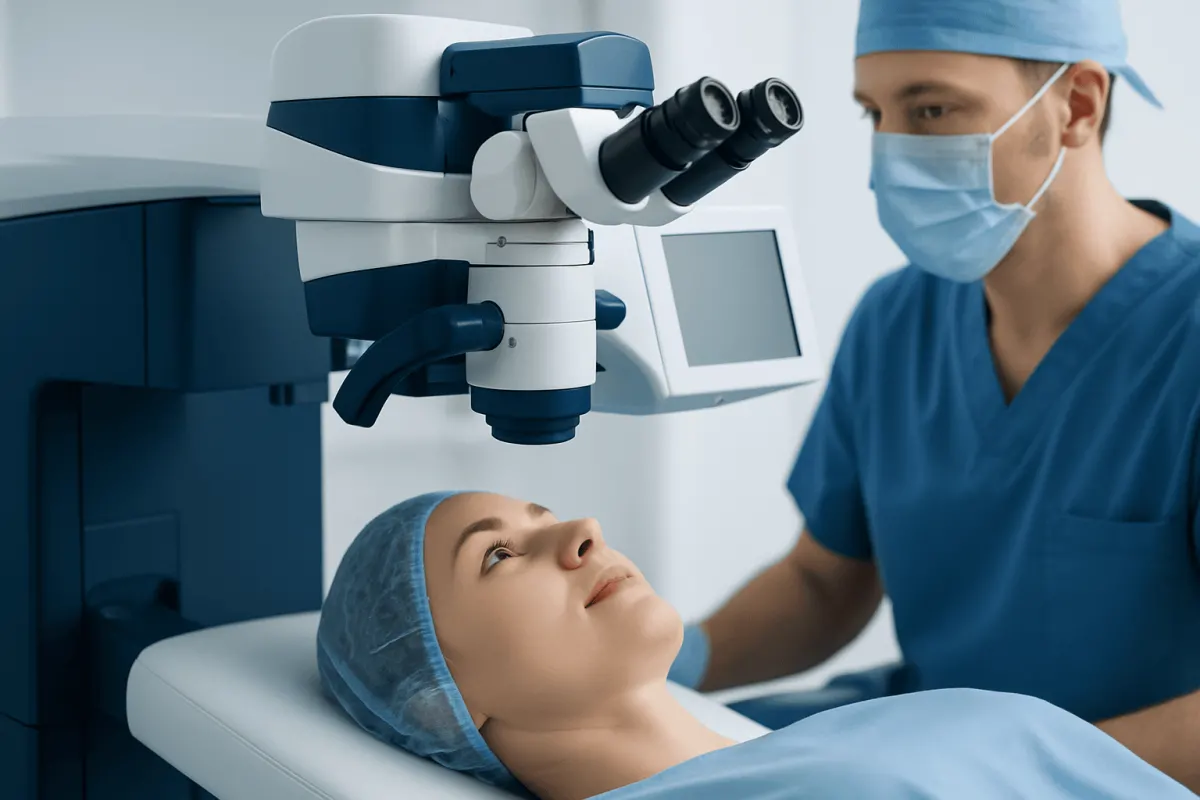
Tired of reaching for your glasses before your feet hit the floor? That is the reason most people start asking about refractive surgery.
Refractive surgery is a group of eye procedures that correct focusing errors such as nearsightedness, farsightedness, astigmatism, and age-related loss of near vision. It can reduce your dependence on glasses or contact lenses. But how suitable you are, how you recover, and how well you see afterwards depend on the procedure chosen and on your own eyes.
Overview: What Is Refractive Surgery?
Refractive surgery is a broad term for procedures that improve how light focuses on the retina, the light-sensitive tissue at the back of the eye. It is used to correct refractive errors, including myopia (nearsightedness), hyperopia (farsightedness), astigmatism, and, in selected people, presbyopia, the age-related difficulty seeing close objects.
The goal is usually to reduce reliance on glasses or contact lenses rather than to promise perfect vision in every circumstance. Depending on the person’s eyes and visual needs, an ophthalmologist may recommend a cornea-based laser procedure, such as LASIK or PRK, or a lens-based approach, such as an implantable lens or refractive lens exchange. Cataract surgery can also have a refractive purpose when an artificial lens is chosen to reduce dependence on glasses.
There is no single best option — it depends on you. A full assessment looks at your prescription, corneal shape and thickness, tear film, pupil size, retina, natural lens, general health, occupation, hobbies, and what you expect from your night and near vision.
How Refractive Surgical Procedures Work
Laser refractive procedures change the curvature of the cornea, the clear front surface of the eye. By reshaping this surface with a precisely programmed laser, the eye can focus light more accurately. LASIK creates a thin corneal flap before laser reshaping, while PRK reshapes the corneal surface after the outer cell layer is removed. Other laser techniques may create a small corneal incision rather than a flap.
Lens-based refractive surgery changes the focusing power inside the eye. An implantable collamer lens may be placed in front of the natural lens for some people with higher prescriptions. Refractive lens exchange removes the natural lens and replaces it with an artificial intraocular lens; this approach is more commonly considered in older adults or those with early lens changes.
There is overlap with cataract care here, since cataract surgery also swaps the eye’s cloudy natural lens for an artificial one. The difference is timing and purpose: refractive lens exchange is done mainly to correct refractive error, before a cataract has started to affect vision.
Modern planning uses detailed measurements, including corneal mapping, corneal thickness, eye length, pupil assessment, and tear-film evaluation. These tests help the surgeon identify the safest approach and determine whether surgery is appropriate.
Who May Be a Candidate for Refractive Surgery?

Potential candidates are usually adults with a stable prescription, healthy corneas and retinas, and realistic expectations. Stability matters because a prescription that is still changing may affect the durability of the result. The assessment also evaluates whether the desired visual outcome is compatible with the person’s eye anatomy and lifestyle.
Laser procedures may not be suitable for everyone. Marked dry eye, very thin or irregular corneas, keratoconus, certain corneal scars, uncontrolled glaucoma, active eye inflammation, or some retinal conditions can change the recommendation. Pregnancy and breastfeeding can temporarily alter refraction and tear production, so elective surgery is often postponed.
People in their 40s and beyond should discuss presbyopia carefully. Correcting distance vision in both eyes may still leave a need for reading glasses. In some cases, the clinician may discuss monovision, in which one eye is optimized more for distance and the other for near tasks, after a successful contact-lens trial.
If you are thinking about a laser-based option, a specialist consultation is the place to ask your questions. Decide after a full eye examination — never on the basis of your prescription alone.
What Happens During the Procedure?
Most corneal laser procedures are outpatient treatments. Before surgery, numbing eye drops are used, and the eye is held open gently with an instrument. The patient is awake but should not feel sharp pain. A fixation light helps maintain eye alignment while the laser treatment is delivered.
In LASIK, the surgeon creates and lifts a thin flap, reshapes the underlying corneal tissue with an excimer laser, and then repositions the flap. In PRK, the surface cell layer is removed before laser reshaping; a protective contact lens is generally placed while the surface heals. The laser portion itself commonly takes seconds, although preparation and positioning take longer.
Lens procedures are also typically performed using local anesthetic drops, sometimes with additional sedation depending on the setting and patient needs. A small incision allows the surgeon to implant or exchange a lens. Patients generally go home the same day with prescribed eye drops and detailed activity instructions.
Before any procedure, your ophthalmologist will talk you through the likely benefits, the alternatives, the limits, and the possible complications. Arrange a lift home, and follow the instructions you are given about stopping contact lenses, eye makeup, medicines, and fasting if sedation is planned.
How Long Does It Take to Recover From Refractive Surgery?
Refractive surgery recovery time depends mainly on the technique. After LASIK, many people notice clearer functional vision by the next day and return to routine non-strenuous activities within a few days. Vision can fluctuate early on, and glare, halos, dryness, or light sensitivity may occur while the eyes adapt.
PRK usually has a slower initial refractive eye surgery recovery time because the corneal surface must regrow. Discomfort and blurred vision are often more noticeable during the first several days. Useful vision may take one to several weeks, while the sharpness of vision can continue improving over several weeks or months.
Recovery after lens-based surgery varies with the procedure and the eye’s health. Many patients see improvement soon after surgery, but the brain and eye may need time to adapt to a new intraocular lens. Follow-up visits are important for monitoring healing, eye pressure, lens position, and visual progress.
During refractive surgery recovery, patients are usually advised not to rub their eyes, to use drops exactly as prescribed, and to avoid swimming, hot tubs, dusty settings, and contact sports for the period recommended by their surgeon. They should attend all scheduled reviews, even if vision seems satisfactory.
How Painful Is Refractive Surgery?
Refractive surgery is generally not painful during the procedure because anesthetic eye drops numb the surface of the eye. Patients may feel pressure, awareness of the eyelids being held open, or temporary visual sensations, but they should not feel significant sharp pain. Anxiety is common, and the care team can explain each step as it happens.
After LASIK, many people experience mild burning, grittiness, tearing, or light sensitivity for several hours. PRK can cause more discomfort during the first few days because the corneal surface is healing. Prescribed medication, lubricating drops, and a protective contact lens when appropriate are used to make this period more comfortable.
Severe pain, pain that gets worse instead of better, or pain with marked redness or reduced vision is not expected. Get it checked urgently — it may point to a problem that needs prompt treatment.
Benefits, Risks, and the Most Common Complication
A potential benefit of refractive surgery is greater freedom from glasses or contact lenses for daily activities, sport, travel, and work. Many people achieve a substantial reduction in their prescription. Outcomes vary, however, and some people still use glasses for reading, detailed tasks, driving at night, or certain visual demands.
The most common complication after refractive surgery, particularly laser corneal surgery, is dry eye symptoms. These may include burning, fluctuating vision, grittiness, or discomfort. Symptoms are often temporary, but they can persist in some individuals. Identifying and treating dry eye before surgery helps reduce this risk.
Other possible effects include glare, halos, starbursts around lights, reduced contrast sensitivity, undercorrection, overcorrection, regression of the correction, inflammation, infection, flap-related issues after LASIK, and rarely, corneal weakening. Lens-based procedures have their own risks, including pressure changes, inflammation, retinal complications, and visual effects related to the implanted lens.
Sometimes an enhancement treatment is an option, once the eyes have healed fully and the measurements show that further correction is safe. Your surgeon should go through your own likelihood of benefit and risk beforehand, including how any existing dry eye syndrome may affect your comfort and the quality of your vision.
When to Seek Medical Care
Patients should contact their eye surgeon promptly after refractive surgery if they develop increasing pain, sudden or worsening loss of vision, significant redness, discharge, injury to the eye, or new flashes, many floaters, or a curtain-like shadow in vision. These symptoms do not always mean a serious complication, but they require timely assessment.
For patients recovering from cataract or lens surgery, accidentally bending over once is usually not an emergency. However, repeated deep bending, heavy lifting, straining, or rubbing the eye may increase pressure or disrupt early healing. The person should follow the surgeon’s specific instructions and call the care team if bending is followed by pain, reduced vision, bleeding, or other new symptoms.
Anyone considering refractive surgery should seek a comprehensive evaluation from an ophthalmologist rather than relying on an online suitability test. Acıbadem Health Point’s multidisciplinary specialists and JCI-accredited hospitals diagnose and treat eye conditions for international patients, including assessment for cataract surgery and refractive options where appropriate.
Frequently asked questions
01How long does it take to recover from refractive surgery?
Recovery depends on the procedure. Many people have useful vision within one or two days after LASIK, while PRK often requires several days to weeks for clearer functional vision. Fine visual changes, dryness, and night-vision symptoms can continue improving for weeks or months.
02What happens if I accidentally bend over after cataract surgery?
Bending over once after cataract surgery usually does not cause harm, especially if there are no new symptoms. However, patients should avoid repeated deep bending, heavy lifting, straining, and eye rubbing during the early recovery period if their surgeon has advised this. New pain, reduced vision, bleeding, or marked redness should be reported promptly.
03What is the most common complication after refractive surgery?
Dry eye symptoms are among the most common complications or side effects after laser refractive surgery. They can cause burning, grittiness, fluctuating vision, and discomfort, and often improve with time and prescribed lubricating treatment. Pre-existing dry eye should be assessed and managed before surgery.
04How painful is refractive surgery?
Most procedures are not painful during treatment because numbing eye drops are used. Some pressure or temporary awareness may be felt. Mild irritation is common after LASIK, while PRK can cause more discomfort for several days as the corneal surface heals.
05Can refractive surgery eliminate the need for glasses permanently?
It can greatly reduce dependence on glasses or contact lenses, but it cannot guarantee that glasses will never be needed again. Age-related presbyopia may require reading glasses, and later cataract development can change vision. Some people also prefer glasses for night driving or detailed close work.
06Is refractive surgery safe?
Refractive surgery is widely performed and can be safe when the right procedure is selected for an appropriate candidate. Like all surgery, it has potential risks, including dry eye, visual disturbances, infection, and the need for additional correction. A thorough examination and discussion with an ophthalmologist are essential for an informed decision.
This article is for general information only and is not a substitute for professional medical advice. Please consult a qualified doctor about your individual situation.
Explore treatments in Turkey — costs, top hospitals & a free quote
JCI-accredited · board-certified surgeons · reply within 24h
Add us as a Preferred Source to see more of our trusted health content across Google Search, AI Overviews and Discover.