

Rectal Cancer: Symptoms, Causes and Treatment
- 9 min read
- Published November 28, 2026
Key Takeaways
- Rectal cancer may cause rectal bleeding, changes in bowel habits, or a feeling that the bowel does not empty completely.
- Symptoms can resemble hemorrhoids, irritable bowel symptoms, or other digestive conditions, so evaluation matters.
- Persistent or unexplained bowel changes, anemia, or pelvic discomfort should be discussed with a doctor.
- Diagnosis usually involves a physical examination, endoscopy, biopsy, and imaging to determine the extent of disease.
- Early assessment supports more treatment options and clearer planning for people traveling for care.
Cancer Symptoms: Early Signs and Red Flags" class="ahp-ilk">Rectal cancer symptoms can be subtle at first and may overlap with common digestive problems. Knowing what changes deserve medical attention can help people seek evaluation sooner and make informed decisions about care.
Overview
Rectal cancer develops in the last part of the large intestine, where stool is stored before leaving the body. In the earliest stages, it may cause few or no clear symptoms, which is one reason that small but persistent changes should not be ignored.
Many people first notice a change during everyday routines: a little blood on the toilet paper, a bowel movement that feels incomplete, or a shift in how often they need to go. These signs do not always mean cancer, but they do deserve medical attention because rectal cancer symptoms can overlap with conditions such as hemorrhoids, fissures, inflammation, or infection.
For international patients, the practical question is often not just “What does this mean?” but “How quickly should I be checked, and what tests will I need if I travel for care?” A structured evaluation can answer both, helping the care team understand whether the symptoms are caused by a benign problem or by something more serious.
Symptoms

The most common rectal cancer symptoms involve the bowel itself. Some people notice bright red blood in the stool or on the tissue, while others see darker or mixed blood that suggests bleeding higher in the bowel. Rectal bleeding may happen intermittently, which can make it easy to dismiss at first.
Changes in bowel habits are another frequent clue. A person may feel constipated, develop looser stools, need to go more often, or experience a sense of urgency. Some describe a feeling that the rectum has not emptied completely, even after a bowel movement.
Other symptoms can appear as the disease progresses or if the tumor causes narrowing of the rectum. These may include:
- Ongoing abdominal, pelvic, or rectal discomfort
- Stool that appears narrower than usual
- Unexplained weakness or fatigue, sometimes related to anemia
- Unintentional weight loss
- A palpable mass in some cases
Not everyone with rectal cancer has pain, and not every symptom appears at once. A single symptom that persists, especially bleeding or a sustained change in bowel pattern, is enough reason to ask a doctor for an evaluation.
Causes & Risk Factors

Rectal cancer begins when cells in the lining of the rectum develop changes that allow them to grow uncontrollably. These changes usually happen over time rather than all at once, and the exact reason in an individual person is not always clear.
Several factors may raise the likelihood of rectal cancer. Risk tends to be higher with older age, a personal or family history of colorectal cancer or certain polyps, and inherited conditions such as Lynch syndrome or familial adenomatous polyposis. Long-standing inflammatory bowel disease, including ulcerative colitis and Crohn’s disease affecting the colon, can also increase risk.
Lifestyle factors may play a role as well, although they do not determine a person’s future on their own. Smoking, heavy alcohol use, obesity, low physical activity, and diets high in processed meats have been associated with a greater risk of colorectal cancers. Having one or more risk factors does not mean rectal cancer will develop, but it can lower the threshold for prompt medical review when symptoms appear.
Diagnosis
Diagnosis usually starts with a careful history and physical examination. A doctor may ask when the symptoms began, whether blood appears on the stool or in the toilet, how bowel habits have changed, and whether there is a family history of bowel cancer. A digital rectal examination may help identify a mass or other abnormality close to the anal canal.
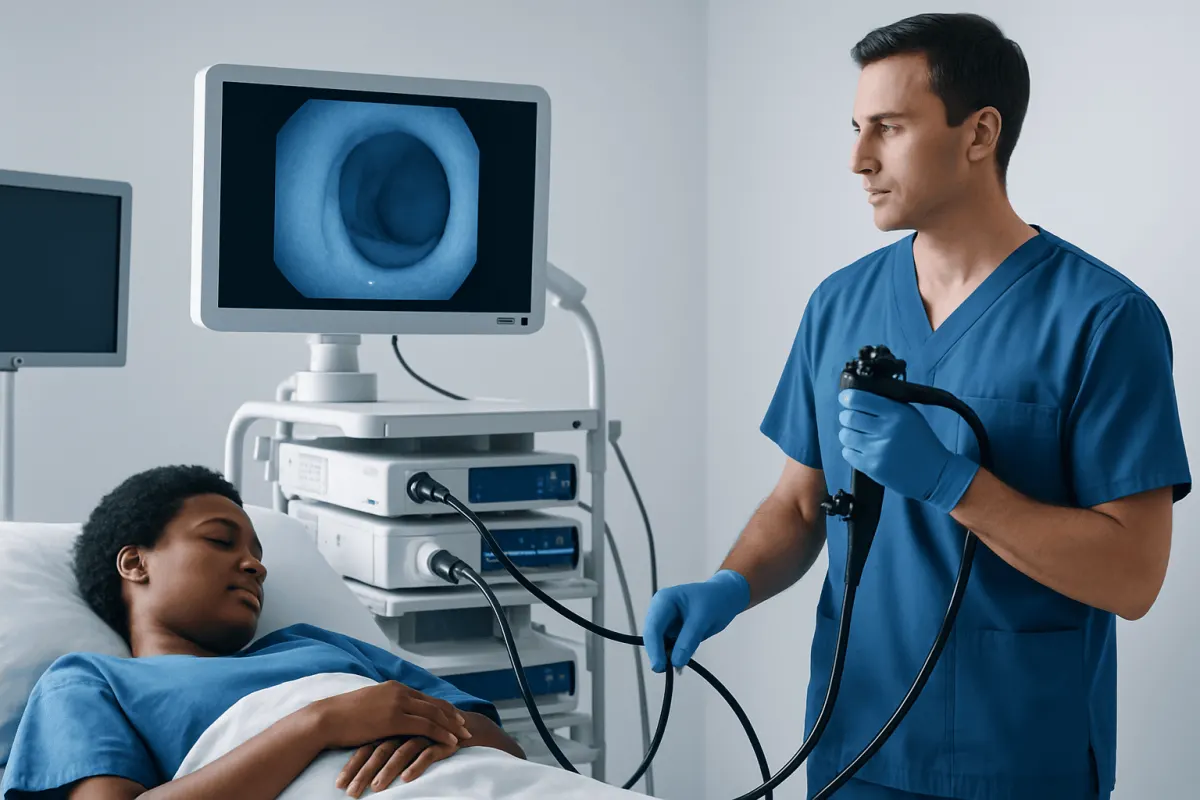
If rectal cancer is suspected, endoscopic evaluation is often the next step. A flexible sigmoidoscopy or colonoscopy allows the doctor to look directly at the rectum and colon, and tissue samples can be taken during the same procedure. A biopsy is the only way to confirm cancer.
After a diagnosis is confirmed, imaging tests help define how far the cancer has spread and guide treatment planning. MRI of the pelvis, CT scans, and sometimes endorectal ultrasound are used to assess the tumor and nearby lymph nodes. Blood tests may also be ordered to check general health and look for anemia, but they do not diagnose rectal cancer on their own.
Treatment Options
Treatment depends on the size and location of the tumor, whether it has spread, and the person’s overall health. For many rectal cancers, treatment is planned by a multidisciplinary team because surgery, radiation, and medication often need to be coordinated carefully.
Surgery is a central treatment for many cases, especially when the tumor can be removed completely. Depending on the situation, the surgeon may preserve the sphincter or, in some cases, create a temporary or permanent stoma. The exact approach is individualized and usually discussed in detail before treatment begins.
Radiation therapy and chemotherapy are commonly used before surgery, after surgery, or sometimes instead of immediate surgery in selected cases. These treatments can shrink the tumor, lower the risk of recurrence, or help control disease that cannot be removed surgically. Newer approaches, including targeted therapy or immunotherapy, may be considered in certain situations based on tumor characteristics and test results.
Because treatment can affect bowel function, energy levels, appetite, and emotional well-being, supportive care matters too. Nutrition guidance, symptom control, and rehabilitation can make recovery more manageable, especially for patients who are balancing treatment with travel and follow-up abroad.
Prevention & Self-care
Not every case of rectal cancer can be prevented, but healthy habits and timely screening can reduce risk and improve the chance of finding disease earlier. People with average risk should follow their doctor’s recommendations for colorectal screening, and those with higher risk may need a more tailored plan.
Everyday choices can support bowel health. A diet that includes fiber-rich foods, regular movement, limited alcohol, and no smoking is generally encouraged. These measures are not a substitute for medical evaluation, but they contribute to overall digestive health and may help lower colorectal cancer risk over time.
For someone already dealing with rectal cancer symptoms, self-care is about observing and recording changes rather than trying to self-diagnose. Tracking bleeding, stool changes, pain, fatigue, appetite, and weight can help the doctor interpret patterns more accurately. If care involves travel, keeping test reports, medication lists, and symptom notes organized can make consultations more efficient.
When to See a Doctor
Medical review is important if rectal bleeding is persistent, if bowel habits change for more than a short period, or if stools become narrower without another clear explanation. A doctor should also be contacted if there is unexplained anemia, ongoing pelvic or rectal discomfort, or unintentional weight loss.
Symptoms should not be assumed to be hemorrhoids without evaluation, especially when bleeding is new, repeated, or accompanied by a change in bowel pattern. People with a personal history of colon polyps, inflammatory bowel disease, or a strong family history of colorectal cancer should seek advice promptly when symptoms appear.
Anyone traveling for evaluation or treatment should aim for a center that can coordinate diagnosis, staging, and follow-up efficiently. Acibadem Health Point provides access to multidisciplinary specialists and JCI-accredited hospitals that diagnose and treat rectal cancer for international patients, helping care feel more organized across borders.
Living With Uncertainty Before a Diagnosis
Waiting for test results can be more difficult than the symptoms themselves. It helps to remember that many rectal symptoms have non-cancer causes, and a structured medical workup is the best way to separate a temporary problem from something that needs treatment.
During this stage, it is useful to write down questions before appointments: What tests are needed? How soon should results be expected? If cancer is found, what is the likely sequence of treatment? Clear questions can reduce stress and make discussions more productive, especially for people arranging care from another country.
Support from family, trusted friends, and the care team can also make a difference. Even before a diagnosis is confirmed, anyone with worrying rectal symptoms deserves prompt, respectful evaluation and a plan that is easy to understand.
Frequently asked questions
01Are rectal cancer symptoms the same as hemorrhoids?
They can look similar at first, especially when there is rectal bleeding. The difference is that rectal cancer symptoms often persist or come with bowel habit changes, so a medical evaluation is important rather than assuming hemorrhoids are the cause.
02Does blood in the stool always mean cancer?
No, blood in the stool has many possible causes, including hemorrhoids, fissures, and inflammation. However, new or repeated bleeding should always be checked by a doctor so the cause can be identified safely.
03Can rectal cancer cause constipation?
Yes, it can. A tumor may narrow the rectum or alter bowel function, leading to constipation, thinner stools, or a feeling that the bowel does not empty fully.
04What tests are usually done first?
A doctor may begin with a history, physical examination, and rectal exam, followed by colonoscopy or sigmoidoscopy if needed. If an abnormal area is found, a biopsy confirms the diagnosis, and imaging then helps with staging.
05Is rectal cancer treatable if found early?
Yes, earlier diagnosis usually gives more treatment options and better planning. Treatment may include surgery, radiation, chemotherapy, or a combination, depending on the tumor and the person’s overall condition.
06Should someone travel for a second opinion if symptoms are unclear?
A second opinion can be helpful when test results are complex, symptoms continue, or a treatment plan needs to be confirmed. It is especially useful for international patients who want coordinated diagnosis and follow-up before making major travel decisions.
This article is for general information only and is not a substitute for professional medical advice. Please consult a qualified doctor about your individual situation.
Medical weight-loss options in Turkey — costs & eligibility
JCI-accredited · board-certified surgeons · reply within 24h
Add us as a Preferred Source to see more of our trusted health content across Google Search, AI Overviews and Discover.


How can we help you today?
Meet an Acibadem specialist by secure video, before you travel.
Book a video visit