Radon in the Home: Testing, Results, and Reducing Exposure

You can’t smell it, see it, or taste it — and that’s exactly the problem with radon. It’s a naturally occurring radioactive gas that can build up indoors, especially in the lower levels of buildings. Because your senses give you nothing to go on, a radon test is the only reliable way to find out whether you’re being exposed and whether anything needs to be done about it.
Overview: What are radon and radiation?
Radon and radiation go together for a simple reason: radon is a radioactive gas that forms naturally as uranium and other elements break down in rocks and soil. Outdoors, radon usually disperses into the air. Indoors, it can accumulate, particularly in basements, ground-floor rooms, and poorly ventilated areas.
When radon is breathed in, it breaks down into radioactive particles called radon progeny or decay products. These particles can attach to dust and reach the airways. Their radiation can damage cells in lung tissue over many years, which is why long-term exposure is linked with a higher risk of lung cancer.
Think of radon as a problem with the building, not an illness you catch from someone. It cannot be seen, smelled, or tasted, and most people feel entirely well during exposure. A radon test, interpreted alongside local public-health guidance, provides the practical information needed to decide on next steps.
How radon enters a building and how testing works
Radon commonly moves upward from soil into a building because of small pressure differences between indoor air and the ground. It may enter through cracks in floors and walls, gaps around pipes, construction joints, drains, crawl spaces, or wells. Any home can have radon, regardless of age, design, ventilation, or location.
Testing is simple enough to do yourself. A small detector is placed in the lowest lived-in level of the home, away from drafts, heat, direct sunlight, kitchens, and bathrooms. Short-term tests generally remain in place for a few days, while long-term tests measure radon over several months and can better reflect average exposure across seasonal changes.
The detector is then analyzed by an approved laboratory or read electronically, depending on the device. Results are usually reported as a concentration of radon in air. Local health authorities set recommended action levels, so results should be considered using the guidance that applies in the country or region where the building is located.
Testing describes the air in a particular building, not a person’s medical condition. Blood tests, chest X-rays, and routine examinations cannot determine whether an individual has been exposed to a particular amount of radon or predict whether cancer will develop.
Who should consider radon testing?
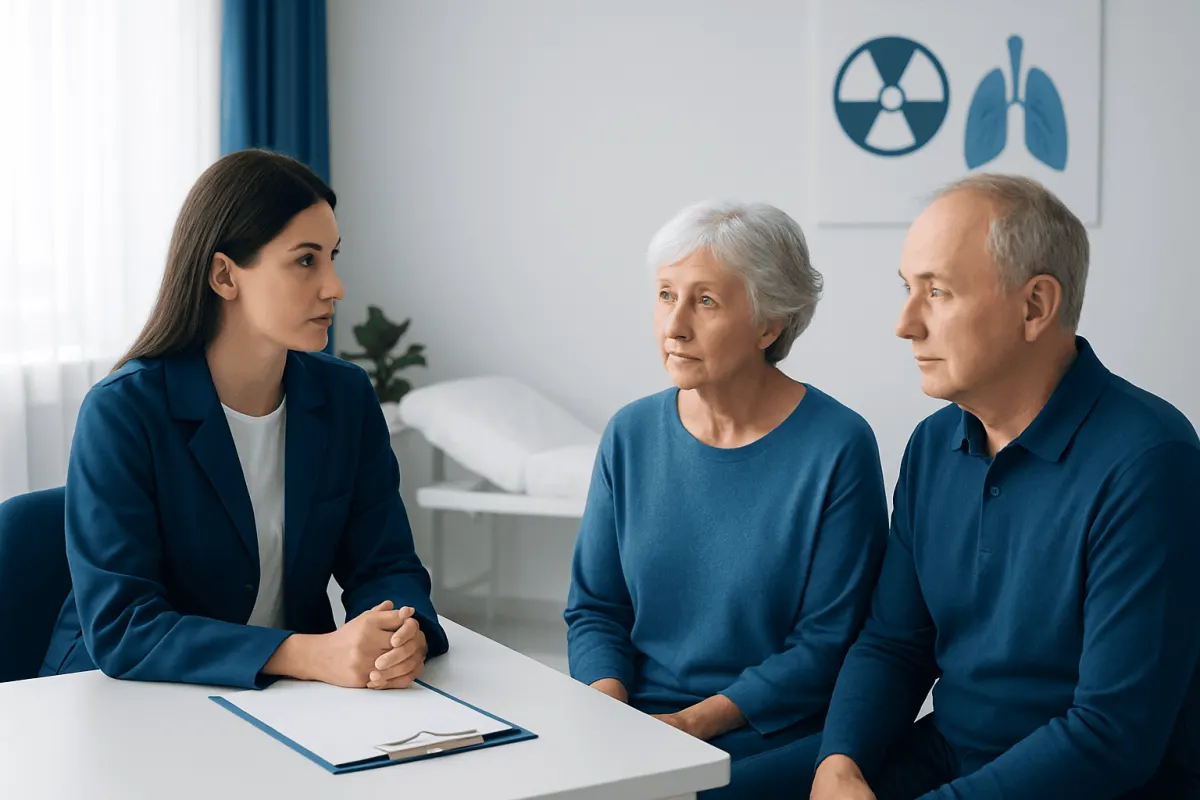
Testing is reasonable for all homes because radon levels can vary considerably between neighboring properties. It is particularly important before moving into a home, after major renovations, when converting a basement into living space, or when purchasing a property. Schools, workplaces, and other regularly occupied buildings may also need assessment under local regulations.
People who spend substantial time in below-ground or ground-level rooms may wish to prioritize testing. However, upper floors are not always free of radon, especially in multi-unit buildings or locations with naturally elevated soil radon. Testing the space where people actually live and sleep is most useful.
Smoking and radon are an especially important combination. Both can increase the risk of lung cancer, and the combined risk is greater than either exposure alone. Stopping smoking is one of the most effective ways to protect lung health, while reducing radon can further lower avoidable environmental risk.
People with a history of lung disease should not assume their symptoms are caused by radon. Conditions such as lung cancer and chronic respiratory illnesses require appropriate clinical assessment based on symptoms, examination findings, and medical history.
Radon results, mitigation and what to expect
A raised radon result is not an emergency and does not mean that a resident has cancer. It means the indoor concentration is high enough that reducing it is advisable. Because radon levels can fluctuate, a clinician, public-health authority, or qualified radon professional may recommend confirmatory or longer-term testing, depending on the result and local guidance.
Radon mitigation is a building intervention rather than a medical procedure. The most common approach is active soil depressurization: a pipe and fan system draws radon-containing air from beneath the building and vents it safely outside. Sealing visible cracks may support the system but is generally not sufficient as the only measure.
Other approaches may include improving ventilation, addressing crawl spaces, or adapting the system to the home’s design. A qualified mitigation professional assesses the property, installs an appropriate solution, and carries out follow-up testing to confirm that radon levels have fallen.
There’s nothing for you to recover from after mitigation. Some installation work may create temporary noise, limited access to part of the home, or minor disruption. The main benefit is a lasting reduction in indoor radon exposure when the system is properly designed, maintained, and retested.
- Benefits: lower long-term exposure to radioactive radon decay products and reduced preventable lung cancer risk.
- Limitations: a system needs electricity, periodic checks, and follow-up testing; no mitigation method can guarantee zero radon.
- Practical next step: retain test records and repeat testing after major structural changes or according to local advice.
How long before you get sick from radon?
Radon does not generally cause symptoms soon after exposure. If radon contributes to lung cancer, the process typically develops over many years rather than days, weeks, or a single season. Risk is related to the average radon level, the duration of exposure, and individual factors, especially smoking.
There is no specific symptom that reliably signals radon exposure. Persistent cough, coughing up blood, unexplained breathlessness, chest pain, repeated chest infections, or unintentional weight loss should be assessed by a doctor, regardless of whether radon has been found in the home.
Testing and reducing radon should not be delayed while waiting for symptoms. Prevention is useful precisely because indoor radon cannot be detected by how a person feels.
Is it okay to live in a house with radon? Is one year of exposure bad?
Most homes contain some radon, and living in a home with detectable radon is common. The key issue is the measured concentration and the length of exposure. When results are above the action level used locally, arranging mitigation is the sensible way to lower future exposure while continuing to follow national or regional public-health recommendations.
One year of radon exposure does not mean a person will become ill. Cancer risk is cumulative and usually reflects longer-term exposure. Still, reducing a high level as soon as reasonably possible is worthwhile because it lowers exposure going forward.
Until mitigation is completed, residents can follow the advice of local public-health authorities or an experienced mitigation professional. Opening windows may temporarily change readings but is not usually a reliable long-term solution, and it should not replace a properly evaluated mitigation plan.
Try not to panic over one reading. A structured approach—confirming the reading if needed, selecting a qualified contractor, and performing a post-mitigation test—offers clear and practical next steps.
What are the odds of getting cancer from radon?
No one can put an exact number on your personal cancer risk from radon. Risk depends on the indoor radon concentration, how long someone has lived or worked in that environment, smoking status, and other health and environmental factors. A high reading increases risk; it does not predict that cancer will occur.
Public-health organizations recognize radon as an important cause of lung cancer after tobacco smoking. People who smoke have a substantially higher overall lung cancer risk, so reducing both smoking exposure and elevated radon is particularly important. Support for stopping smoking can be discussed with a primary care clinician or respiratory specialist.
For people with symptoms or imaging findings that require further evaluation, clinicians may use examinations and lung cancer treatment planning when a diagnosis is confirmed. Screening and diagnostic decisions are individualized and should be based on medical history, symptoms, age, smoking history, and local clinical guidance—not on radon exposure alone.
When to seek medical care
Medical care is appropriate for persistent respiratory symptoms, especially a cough that does not improve, coughing up blood, increasing shortness of breath, ongoing chest discomfort, unexplained fatigue, recurrent chest infections, or unintended weight loss. These symptoms can have many causes, most of which are not cancer, but they deserve timely assessment.
People who have lived with elevated radon and smoke, formerly smoked, or have other lung cancer risk factors can discuss their individual risk with a doctor. The clinician may review smoking history, occupational exposures, family history, and whether any testing or referral is appropriate.
For a high household radon result without symptoms, the priority is usually environmental action: consult local health guidance and a qualified radon mitigation specialist. Acıbadem Health Point’s multidisciplinary specialists and JCI-accredited hospitals can assess respiratory symptoms and provide coordinated care for international patients when needed.
Urgent medical assessment is needed for severe or sudden breathing difficulty, coughing up a significant amount of blood, severe chest pain, fainting, or new confusion. These symptoms should not be attributed to radon without immediate evaluation.
Frequently asked questions
01Can radon be detected by smell or by symptoms?
No. Radon has no smell, color, or taste, and it usually does not cause immediate symptoms. A properly placed radon detector is the reliable way to measure it in a building.
02Should radon testing be repeated after mitigation?
Yes. Follow-up testing is important to confirm that the mitigation system has reduced indoor radon. Testing may also be repeated after major renovations, changes to ventilation, or as advised by local authorities.
03Can air purifiers remove radon?
Standard air purifiers are not considered a reliable solution for reducing radon gas. Some devices may reduce certain particles, but they do not replace a properly designed radon mitigation system.
04Does radon affect children more than adults?
Children can be exposed to radon in the same way as adults when they spend time in an affected building. Because lung cancer risk is tied to cumulative exposure over time, reducing elevated levels benefits people of all ages.
05Should everyone exposed to radon have a chest scan?
Not necessarily. Radon exposure alone does not automatically mean that imaging is needed. A doctor can advise on evaluation or screening based on symptoms, smoking history, age, and other individual risk factors.
06Can radon come from drinking water?
Radon can be present in some groundwater, particularly from private wells, and it may be released into indoor air during water use. Local environmental or public-health agencies can advise whether water testing is relevant in a particular area.
This article is for general information only and is not a substitute for professional medical advice. Please consult a qualified doctor about your individual situation.
Persistent digestive symptoms? Get evaluated in Turkey
JCI-accredited · board-certified surgeons · reply within 24h
Add us as a Preferred Source to see more of our trusted health content across Google Search, AI Overviews and Discover.