Private Children’s Hearing Test: What Families Can Expect
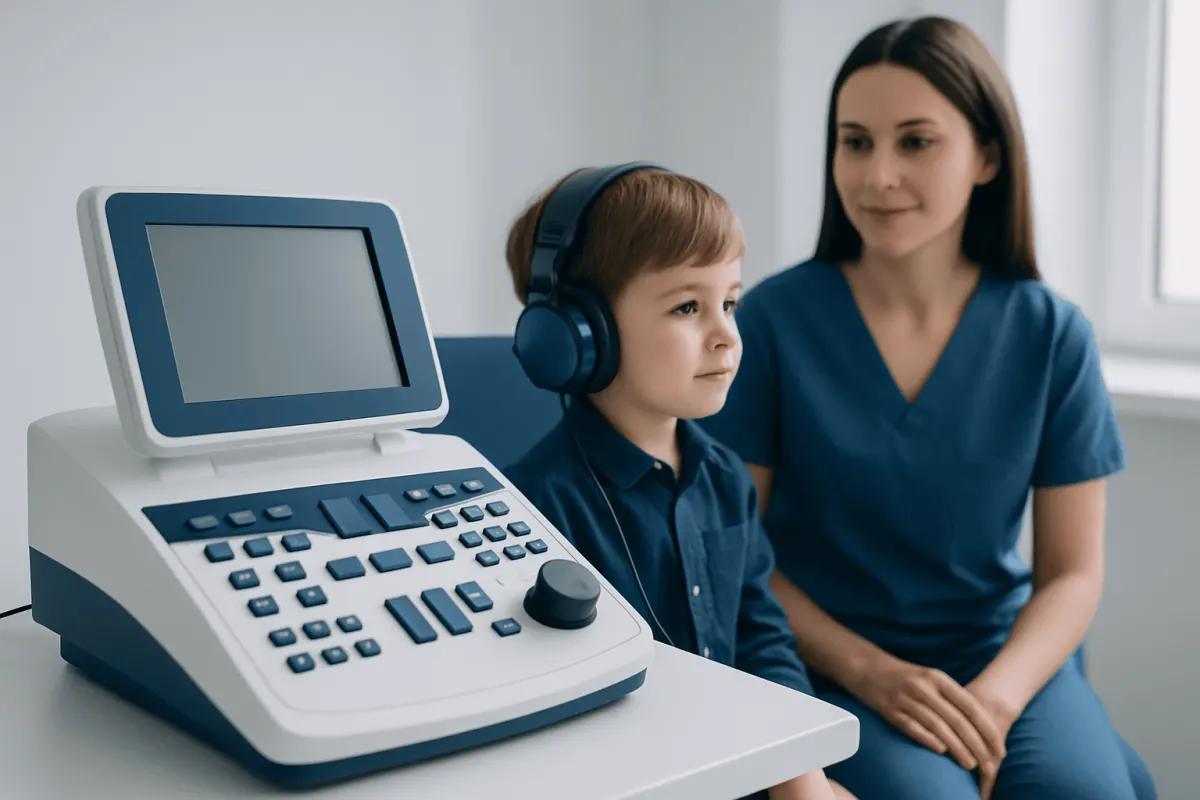
A private children’s hearing test is a structured assessment by a qualified audiologist or hearing specialist to check how well a child hears. It can help clarify concerns after a failed screening, repeated ear infections, speech delays, or changes in a child’s response to sound.
Private Children’s Hearing Test: An Overview
A private children’s hearing test is a detailed assessment of a child’s hearing, usually performed by an audiologist. It may be requested by parents who have noticed possible hearing difficulties, recommended after a school or primary care hearing screening, or arranged after recurrent ear problems. The purpose is to understand whether hearing is within the expected range and, if not, to identify the likely type and degree of hearing change.
Children do not always describe hearing problems clearly. They may seem inattentive, ask for repetition, increase the television volume, struggle in noisy places, or have unclear speech. Some children hear well in quiet settings but find it difficult to follow conversation in a classroom or group.
A private assessment may offer a timely, individual appointment and can include discussion of the child’s health history, ear examination, formal hearing measurements, and advice on next steps. The exact tests depend on the child’s age, development, cooperation, and the reason for referral.
Why Hearing Is Checked During Childhood
Hearing supports speech and language development, learning, communication, and social interaction. Hearing differences may be present from birth, develop gradually, or occur temporarily because of common childhood conditions such as middle-ear fluid. For this reason, hearing is often screened in newborns and may be checked again when concerns arise.
Some children are at higher risk of hearing difficulties. This can include children with a family history of childhood hearing loss, repeated ear infections, certain infections around birth, premature birth, craniofacial differences, exposure to very loud sounds, or medicines known to affect hearing. A clinician can advise whether more regular pediatric hearing assessments are appropriate.
Not every speech, learning, or attention concern is caused by hearing loss. However, checking hearing is an important part of a broader evaluation because hearing difficulties can affect how a child understands spoken language, especially in busy or noisy environments.
- Delayed or unclear speech and language development
- Frequent requests for repetition
- Difficulty following instructions
- Turning one ear toward sounds or favouring one side
- New difficulties at school or daycare
- Repeated ear infections or persistent blocked-ear sensations
Can a pediatrician do a hearing screening?
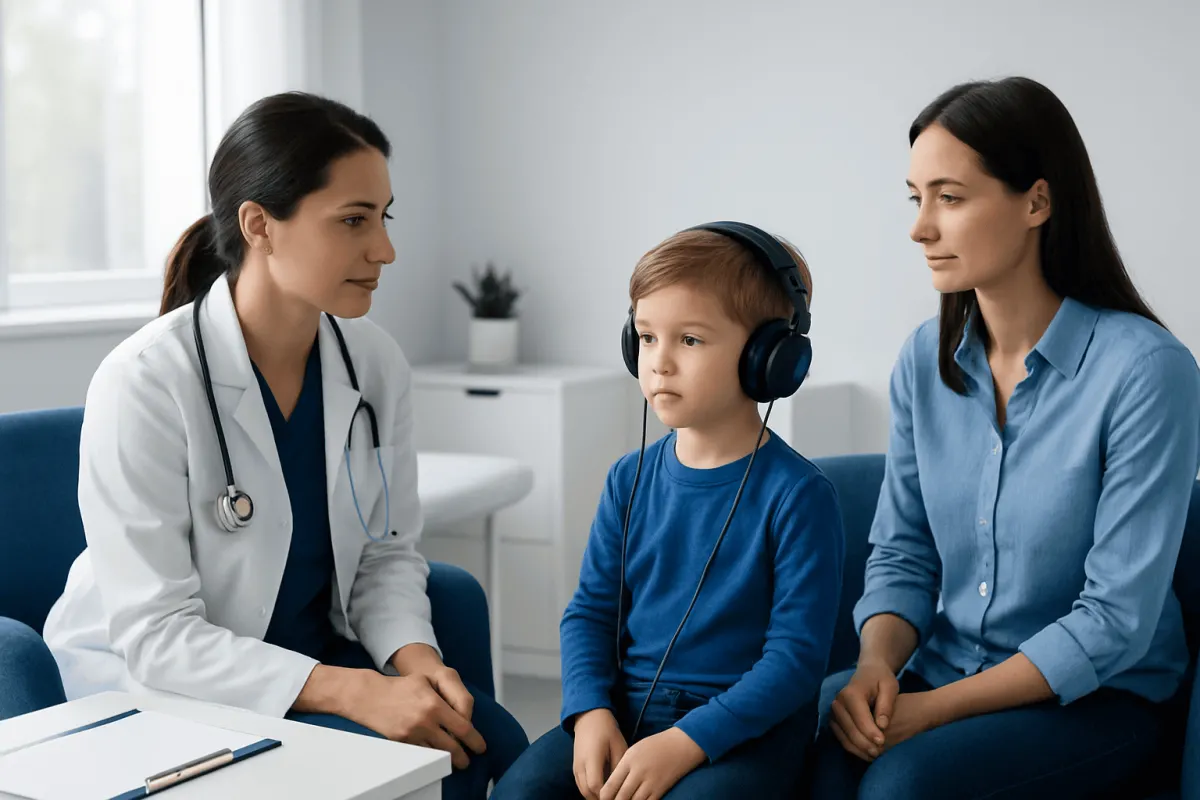
Yes. A pediatrician can perform or arrange a primary care hearing screening. Depending on the child’s age and the equipment available, this may involve asking about hearing and communication, examining the ears, using simple sound-based screening equipment, or referring the child to an audiologist for a more formal test.
A screening is designed to identify children who may need further assessment; it does not provide the same level of detail as a full diagnostic hearing evaluation. A child may not pass a screening because of temporary earwax, congestion, fluid in the middle ear, background noise, difficulty concentrating, or a true hearing issue.
If a pediatrician has concerns, they may recommend an audiology appointment and, when appropriate, assessment by an ear, nose, and throat specialist. This helps distinguish between problems affecting sound transmission through the outer or middle ear and conditions involving the inner ear or hearing nerve.
How is a pediatric hearing test done?
Pediatric hearing tests are adapted to the child rather than using one identical method for every age. The appointment usually begins with questions about birth history, infections, family history, speech and language, school performance, and the specific concerns noticed at home. The clinician may then look inside the ears for wax, inflammation, or other visible changes.
For babies, tests may measure the ear’s response to sound while the child is resting or asleep. These can include otoacoustic emissions, which assess activity in the inner ear, and auditory brainstem response testing, which measures how the hearing pathway responds to sound. These tests do not require a baby to give a behavioural response.
For toddlers and preschool children, the audiologist may use visual reinforcement or conditioned play. A child may turn toward a lighted toy after hearing a sound, or place a toy in a bucket whenever they hear a beep. School-age children can often wear headphones and signal when they hear tones at different pitches and volumes.
The assessment may also include tympanometry, which checks how the eardrum and middle ear move. This can be particularly helpful when fluid behind the eardrum is suspected. Testing is generally painless, and parents are often able to stay with the child throughout the appointment.
Understanding Results and Common Causes of Hearing Changes
Results may show hearing within the expected range, a temporary conductive hearing change, sensorineural hearing loss, or a mixed pattern. Conductive hearing changes occur when sound is blocked or reduced in the outer or middle ear. Earwax, ear infections, and fluid behind the eardrum are common causes in children.
Sensorineural hearing loss involves the inner ear or hearing nerve and may affect one or both ears. It can be present from birth or develop later. Further medical evaluation may be recommended to understand the cause, assess whether hearing is stable, and plan support tailored to the child.
Middle-ear fluid, often called glue ear, can cause fluctuating hearing that may improve as the fluid resolves. Persistent symptoms should still be assessed because ongoing hearing reduction can affect everyday communication. An ENT review may be useful for children with recurrent infections, ongoing fluid, or concerns about the structure of the ear.
When treatment is needed, options vary according to the cause. They may include managing earwax or infection, monitoring middle-ear fluid, treating underlying ENT conditions, communication support, hearing technology, or other specialist care. Decisions should be based on the child’s individual test results and developmental needs.
My 6-year-old failed a hearing test. What should I do?
A failed hearing screening should be followed up, but it does not automatically mean that a child has permanent hearing loss. The first step is to arrange a full hearing assessment with a pediatric audiologist or a qualified hearing service. The test can confirm whether there is a hearing difference and identify whether it may be temporary.
Parents can share relevant information at the appointment, including recent colds, ear pain, ear infections, changes in school performance, speech concerns, and whether the child seems to hear differently from one side. If the child has a cold or suspected ear infection, the clinician may advise repeating some testing after recovery.
It can also help to inform the child’s school or teacher while assessment is underway. Simple measures, such as sitting closer to the teacher, reducing background noise where possible, and ensuring the child can see the speaker’s face, may make listening easier. A healthcare professional can advise on the appropriate next steps once the results are known.
When should a child see an audiologist?
A child should see an audiologist after not passing a hearing screening, when parents or teachers notice possible hearing difficulties, or when a clinician recommends more detailed testing. An audiologist can perform age-appropriate tests and explain what the results mean for the child’s daily communication and development.
An appointment is also appropriate for repeated ear infections, persistent middle-ear fluid, sudden changes in hearing, ringing in the ears, sensitivity to sound, or concern that a child hears well in some situations but not others. Children with known risk factors for hearing loss may need scheduled follow-up even if they appear to hear normally.
Parents do not need to wait for a child to complain of hearing loss. Young children may adapt to reduced hearing without recognising that their experience is different. Early evaluation can provide reassurance when hearing is normal and allow timely support when it is needed.
When to Seek Medical Care
Parents should arrange medical assessment promptly if a child has a sudden change in hearing, severe ear pain, ear discharge, dizziness, facial weakness, or a significant injury involving the ear or head. Urgent care is especially important if hearing changes occur suddenly in one or both ears.
A non-urgent appointment should be arranged for persistent concerns about hearing, speech, language, school progress, frequent ear infections, or a failed screening. Avoid placing cotton buds or other objects into the ear, as this can push wax deeper or cause injury.
For international patients, Acıbadem Health Point’s multidisciplinary specialists and JCI-accredited hospitals can provide pediatric audiology and ENT assessment when further evaluation is needed. Families should discuss results and treatment choices with a qualified clinician who knows the child’s medical and developmental history.
Frequently asked questions
01Is a private children’s hearing test painful?
No. Hearing assessments are generally painless and non-invasive. Some tests involve wearing headphones, listening to sounds, or having a small soft probe placed at the ear entrance, but they should not hurt.
02How long does a pediatric hearing test take?
The length of the appointment depends on the child’s age, cooperation, and the tests needed. A full assessment may take longer than a simple screening because the audiologist needs enough reliable responses to interpret the results accurately.
03Can earwax cause a child to fail a hearing test?
Yes. Earwax can block the ear canal and reduce the amount of sound reaching the eardrum. If wax is found, a clinician may recommend safe removal and repeat hearing testing afterward.
04Can fluid in the ear affect hearing?
Yes. Fluid behind the eardrum can reduce sound transmission and cause temporary conductive hearing loss. This is common after colds or ear infections and may resolve, but persistent fluid should be assessed by a healthcare professional.
05What is included in pediatric hearing test cost?
Pediatric hearing test cost can vary according to the country, clinic, type of appointment, specialist involvement, and tests required. Families should ask the provider whether the quoted fee includes the audiology assessment, ear examination, follow-up visit, and any additional diagnostic tests.
06Should a child have another hearing test after an ear infection?
A repeat test may be recommended if hearing concerns continue after the infection has been treated or if middle-ear fluid remains. The timing depends on the child’s symptoms, examination findings, and the clinician’s advice.
This article is for general information only and is not a substitute for professional medical advice. Please consult a qualified doctor about your individual situation.
Explore treatments in Turkey — costs, top hospitals & a free quote
JCI-accredited · board-certified surgeons · reply within 24h
Add us as a Preferred Source to see more of our trusted health content across Google Search, AI Overviews and Discover.