ENT Examination: What to Expect at Your First Appointment

An ENT examination helps a specialist evaluate symptoms affecting the ears, nose, throat, sinuses, voice, and related head and neck structures. A first appointment is usually straightforward and may include questions about symptoms, a physical exam, and simple in-office tests.
Overview: What an ENT examination is
An ENT examination is an evaluation performed by an ear, nose, and throat specialist, also called an otolaryngologist. This type of doctor focuses on conditions affecting hearing, balance, the sinuses, nasal passages, throat, voice, swallowing, tonsils, salivary glands, and parts of the head and neck. The first appointment is designed to understand symptoms clearly and decide whether further testing or treatment is needed.
Many people are referred for recurring ear infections, hearing problems, nasal blockage, sinus symptoms, dizziness, snoring, sore throat, hoarseness, swallowing difficulties, or neck lumps. In some cases, the visit is prompted by symptoms that have not improved with basic treatment from a primary care doctor. The aim is to identify the likely cause in a careful and structured way.
Most first visits are outpatient appointments and do not require special preparation beyond bringing relevant medical information. The examination itself is usually well tolerated. Some parts may feel unusual, such as looking deep into the nose or throat, but they are generally brief and performed with patient comfort in mind.
Why someone may need a first ENT appointment
An ENT specialist may be consulted when symptoms are persistent, recurrent, or affecting daily life. Ear-related reasons include hearing loss, ringing in the ears, ear pain, fullness, discharge, repeated infections, and balance concerns. Nose and sinus symptoms may include congestion, nosebleeds, facial pressure, reduced sense of smell, postnasal drip, or suspected allergies.
Throat-related concerns often include sore throat that keeps coming back, enlarged tonsils, chronic cough, hoarseness, swallowing difficulty, a feeling of something stuck in the throat, or breathing noise during sleep. Some patients are also referred for evaluation of snoring or possible sleep apnea, or for visible or felt changes such as a lump in the neck.
Not every symptom points to a serious problem. Many ENT complaints are caused by infections, inflammation, allergies, reflux, structural changes such as a deviated septum, or age-related hearing changes. The first appointment helps sort through these possibilities and decide whether symptoms may relate to a common condition such as sinusitis or tonsillitis.
What happens before and during the consultation

The visit usually begins with a conversation about symptoms. The specialist may ask when the problem started, whether it is constant or intermittent, what makes it better or worse, and whether there are related symptoms such as fever, allergies, reflux, headaches, dizziness, or recent infections. Medical history, past surgeries, smoking history, medications, and family history can also be relevant.
Patients are often asked about previous treatments, including antibiotics, nasal sprays, antihistamines, reflux medicines, or hearing devices. It can be helpful to mention travel, workplace exposures, loud noise exposure, and sleep-related symptoms. For children, the doctor may ask about feeding, speech development, recurrent infections, and school hearing concerns.
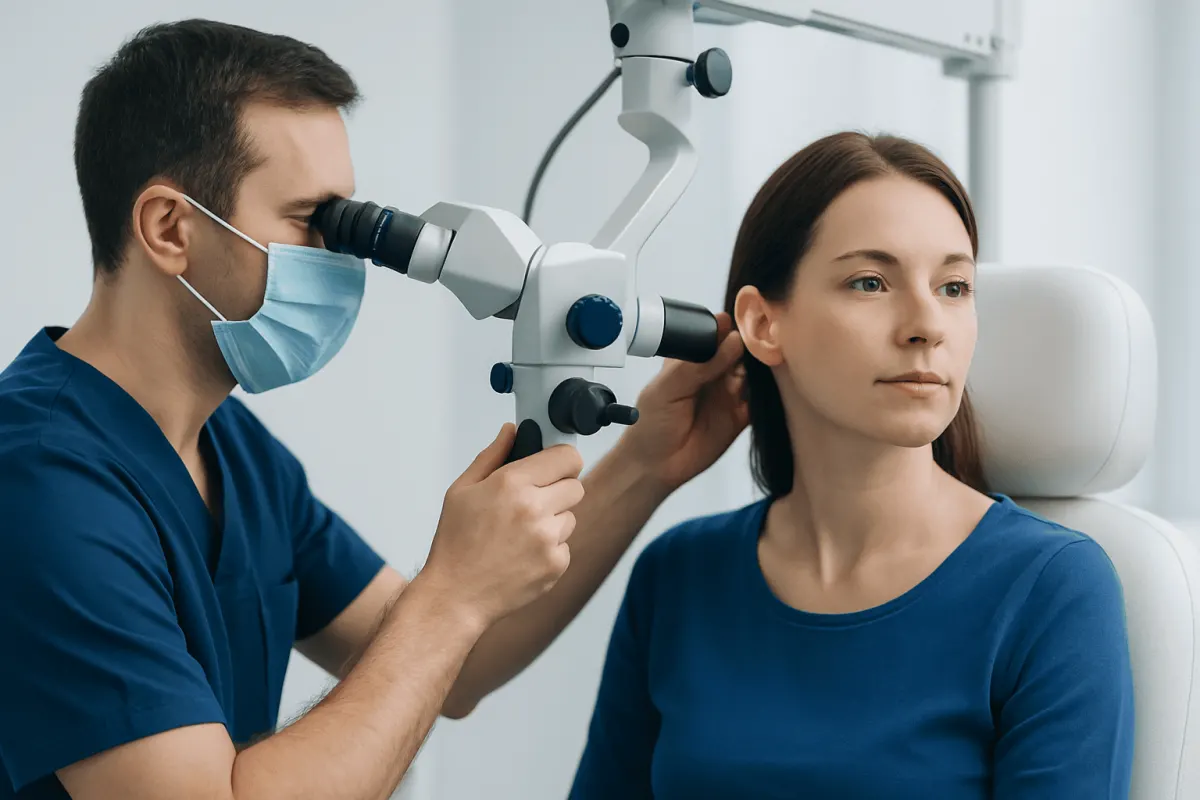
After the discussion, the doctor performs a focused examination. This may include checking the ears with an otoscope, looking inside the nose with a lighted instrument, examining the mouth and throat, and feeling the neck for lymph nodes, salivary glands, thyroid enlargement, or other masses. Breathing through the nose, voice quality, and swallowing may also be assessed depending on the reason for the visit.
Common parts of the physical ENT examination
The exact exam depends on symptoms, but several steps are common. For the ears, the doctor checks the ear canal and eardrum for wax, infection, fluid, perforation, or inflammation. Hearing may be screened informally in the room, or the specialist may recommend formal hearing evaluation if symptoms suggest hearing loss or tinnitus.
For the nose, the doctor looks for swelling, mucus, polyps, bleeding points, a deviated septum, or signs of allergy or infection. The sinuses may be discussed based on symptoms rather than pressed routinely. If a more detailed view is needed, the specialist may suggest nasal endoscopy, a quick office procedure that uses a thin scope to view the nasal passages more clearly and can support nasal endoscopy as part of diagnosis.
For the throat and voice, the mouth, tonsils, tongue, and back of the throat are examined. If there is hoarseness, swallowing difficulty, chronic cough, or a suspected voice problem, the doctor may recommend viewing the voice box with a flexible camera through the nose. This can help assess the vocal cords and nearby structures and may be performed as laryngoscopy in the clinic.
A head and neck exam may also include checking jaw movement, facial symmetry, skin changes, and neck swelling. If a lump is present, the doctor will note its size, texture, and location. These findings help guide whether observation, medication, imaging, or referral for another procedure is the next step.
Tests that may be recommended at the first visit
Some ENT appointments end after the history and examination, while others include simple office-based tests. Hearing tests are among the most common. These may include an audiogram to measure hearing levels and speech understanding, or tympanometry to check how the eardrum moves and whether there may be fluid or pressure changes in the middle ear.
If balance symptoms are prominent, additional hearing or vestibular testing may be advised, though this is often arranged for a separate visit. When symptoms involve the sinuses or deeper parts of the throat, the doctor may recommend imaging such as a CT scan or MRI, particularly if symptoms are persistent, unexplained, or associated with structural concerns.
Throat swabs, allergy testing, reflux evaluation, sleep studies, or blood tests may sometimes be needed depending on the clinical picture. If there is concern about a lump, a suspicious lesion, or persistent hoarseness, the specialist may discuss biopsy or further imaging. Hearing-related concerns may lead to formal hearing test assessment, while chronic nose or sinus symptoms may be further evaluated if a condition such as nasal polyps is suspected.
How to prepare for an ENT examination
Preparation is usually simple. Patients should bring a list of current medications, allergies, prior surgeries, and any relevant test results or scans. If symptoms come and go, it may help to note when they occur, how long they last, and whether they are linked to seasons, meals, sleep, loud noise, travel, or infections.
For hearing complaints, bringing previous audiograms or hearing aid information can be useful. For sinus or throat symptoms, it can help to mention prior use of nasal sprays, allergy medicines, antibiotics, or reflux treatment. If nosebleeds are a concern, patients should mention blood-thinning medications or supplements because they may affect the doctor’s recommendations.
Eating and drinking are usually allowed before a routine visit unless the clinic gives different instructions. If flexible scope examination may be needed, some people prefer to avoid a heavy meal immediately beforehand, although this is not always necessary. Children often do best when parents explain in simple terms that the doctor will look in the ears, nose, and throat with lights and small tools.
- Bring identification and referral documents if needed.
- Carry a medication and allergy list.
- Bring prior imaging, hearing tests, or lab results when available.
- Write down key symptoms and questions before the appointment.
What happens after the appointment
After the examination, the specialist explains the findings and whether a likely diagnosis is already clear. Some conditions can be managed right away with advice, medication, earwax removal, or watchful waiting. Others need more information from hearing tests, imaging, endoscopy, or laboratory studies before a treatment plan is finalized.
Treatment depends on the underlying cause. It may include nasal saline, medicated sprays, allergy management, antibiotics when appropriate, reflux treatment, voice care, hearing rehabilitation, or a procedure to improve drainage or remove abnormal tissue. If surgery is considered, the doctor usually explains why it may help, what recovery involves, and whether non-surgical options should be tried first.
For some patients, the next step may include evaluation for septoplasty if a deviated septum is contributing to long-term nasal blockage, or broader management of sleep, swallowing, or chronic ear problems. Near the end of the care journey, patients who need further assessment may choose centers such as Acıbadem Health Point, where multidisciplinary specialists in JCI-accredited hospitals diagnose and treat ENT conditions for international patients.
When to seek medical advice promptly
Many ear, nose, and throat symptoms are not urgent, but some deserve prompt medical attention. Medical review is important if there is sudden hearing loss, severe dizziness, difficulty breathing, rapidly worsening throat swelling, persistent high fever, significant dehydration from painful swallowing, or bleeding that does not stop. New neck lumps, hoarseness lasting more than a few weeks, or unexplained weight loss should also be assessed without unnecessary delay.
Children should be reviewed promptly if they have breathing difficulty, noisy breathing, drooling with trouble swallowing, signs of dehydration, or severe ear pain with fever. Adults and children alike should seek help if symptoms are severe, recurring often, or not improving as expected. Early evaluation can make treatment more straightforward and provide reassurance.
Even when symptoms seem mild, a planned ENT examination can be helpful if they are persistent or affecting sleep, hearing, communication, or quality of life. A qualified doctor can advise what is normal, what may need treatment, and whether specialist testing is appropriate.
Frequently asked questions
01Is an ENT examination painful?
Most ENT examinations are not painful. Some parts, such as looking deep into the nose or using a small flexible scope, may feel slightly uncomfortable or unusual, but they are usually brief and well tolerated.
02How long does a first ENT appointment usually take?
The length varies depending on symptoms and whether any tests are done on the same day. Many first visits take around 20 to 45 minutes, while more complex evaluations may take longer.
03Will the doctor put a camera in the nose or throat?
Not every patient needs this, but some do. If symptoms involve nasal blockage, sinus disease, hoarseness, or swallowing problems, the specialist may use a thin flexible scope to get a clearer view.
04Should someone avoid eating before an ENT examination?
For a routine clinic visit, people usually do not need to fast. It is still best to follow any instructions given by the clinic, especially if a specific test or procedure has been planned.
05What should be brought to a first ENT appointment?
Helpful items include a medication list, allergy information, previous scan reports, hearing test results, and referral notes. A short written timeline of symptoms can also make the consultation more efficient.
06Can an ENT specialist diagnose the problem at the first visit?
Sometimes yes, especially if the cause is clear from the history and examination. In other cases, the doctor may need hearing tests, endoscopy, imaging, or lab studies before confirming the diagnosis.
This article is for general information only and is not a substitute for professional medical advice. Please consult a qualified doctor about your individual situation.
Explore treatments in Turkey — costs, top hospitals & a free quote
JCI-accredited · board-certified surgeons · reply within 24h
Add us as a Preferred Source to see more of our trusted health content across Google Search, AI Overviews and Discover.