Prince Harry Hair Transplant: Procedure, Benefits, Risks and Recovery

Key Takeaways
- A hair transplant is a surgical hair restoration procedure that moves healthy follicles to thinning areas.
- The suitability of treatment depends on the pattern and cause of hair loss, donor hair supply, and overall scalp health.
- Recovery is usually gradual, with temporary shedding often part of the normal process.
- Results vary and are never guaranteed; realistic expectations are important before treatment.
- A proper evaluation should rule out medical causes of hair loss that may need different treatment.
- International patients should plan for consultation, surgery, aftercare, and follow-up before traveling home.
The phrase “Prince Harry hair transplant” usually refers to public curiosity about whether a modern hair restoration procedure could explain visible changes in hair density. In medical terms, the key issue is not celebrity speculation, but understanding how hair transplants are planned, who may benefit, and what recovery and risks look like.
Overview
Searches for “Prince Harry hair transplant” reflect a broader question: what does modern hair restoration actually involve, and could it help someone with visible thinning? In clinical terms, a hair transplant is a procedure that relocates healthy hair follicles from one part of the scalp, usually the back or sides, to areas where hair is thinning or has been lost.
The topic often gets attention because hair changes are easy to notice and deeply personal. For that reason, a good consultation starts with the cause of hair loss, not with a trend or a celebrity story. A doctor looks at whether the pattern fits male pattern hair loss, whether shedding is linked to stress or illness, and whether the donor area has enough stable hair to support a transplant.
For international patients, the decision often includes practical questions as well: whether the evaluation can be completed before travel, how many days are needed for the procedure and early recovery, and what follow-up will look like once the patient returns home. These details matter because hair restoration is a process, not a single appointment.
Symptoms
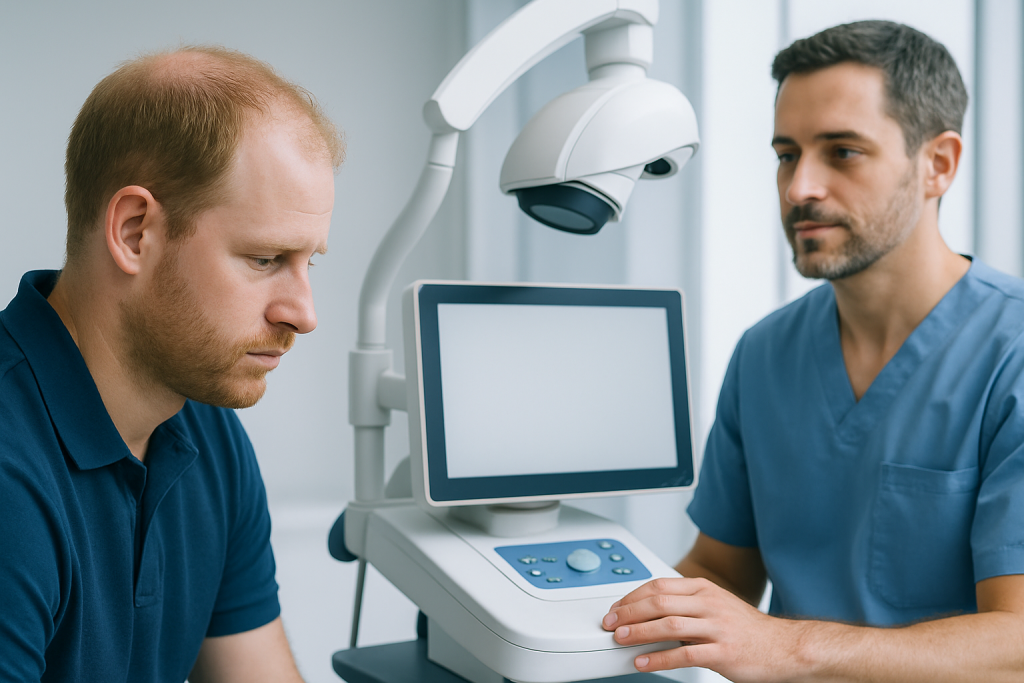
People who consider a hair transplant usually notice a gradual change rather than sudden hair loss. Common signs include a receding hairline, thinning at the crown, widening of the part, or reduced overall density that makes the scalp more visible under bright light.
Some patients also describe increased shedding on pillows, in the shower, or when brushing. While shedding can be part of normal hair cycling, persistent or patterned loss is worth medical review, especially if it is accompanied by itching, redness, scaling, or pain.
It is also useful to distinguish between permanent thinning and temporary shedding. Stress, nutritional problems, thyroid disorders, certain medicines, and scalp inflammation can all affect the hair cycle, and these causes may require treatment before surgery is even considered.
Causes & Risk Factors

The most common reason for hair transplant surgery is androgenetic alopecia, often called male pattern hair loss. In this condition, hair follicles gradually become smaller in genetically susceptible areas, typically affecting the hairline and crown over time.
Other factors can contribute to hair loss or reduce the suitability of surgery. These include autoimmune conditions, scarring forms of alopecia, hormonal changes, significant illness, nutritional deficiencies, and traction from repeated tight hairstyles. A transplant is generally most successful when the underlying hair loss pattern is stable and the donor area remains strong.
Risk factors that may influence planning include young age with rapidly progressing hair loss, limited donor hair, a history of keloid scarring, unrealistic expectations, and untreated scalp disease. A careful specialist assessment helps determine whether surgery, medical therapy, or a combination is the most appropriate path.
Diagnosis
Before recommending a transplant, a clinician usually performs a detailed scalp examination and reviews the patient’s medical history. This may include questions about family history, the age at which thinning began, any sudden shedding, medications, recent illness, diet, and hair care habits.
In many cases, the doctor will use tools such as scalp magnification or dermoscopy to examine the hair shafts and follicle patterns more closely. Photographs may be taken to document baseline density and to help track progress over time.
Blood tests are sometimes ordered when the pattern of loss is not typical or when a reversible cause is suspected. A diagnosis is important because a transplant cannot replace treatment for an active medical condition that is continuing to damage hair follicles.
Treatment Options
Hair transplant surgery usually falls into two main approaches. Follicular unit extraction, often called FUE, removes individual follicular units from the donor area and places them into thinning regions. Follicular unit transplantation, sometimes called FUT or strip surgery, removes a thin strip of scalp from which grafts are prepared for implantation.
Each method has advantages and limitations. FUE may leave tiny punctate scars and can be appealing for patients who prefer shorter hairstyles, while FUT may be considered when a larger number of grafts is needed in a single session. The best choice depends on scalp characteristics, hair quality, future hair loss risk, and the surgeon’s experience.
Non-surgical treatment may also be part of the plan. Doctors sometimes recommend medical therapy to slow ongoing hair loss, improve density in non-transplanted areas, or protect the long-term appearance of the result. A transplant is usually most effective when it fits into a broader strategy rather than standing alone.
During the procedure, the scalp is numbed with local anesthesia. Patients are awake, but comfort is closely managed. The exact length of treatment varies with the number of grafts and the chosen technique, and many patients need one or more sessions depending on their goals and donor supply.
Benefits
The main benefit of a hair transplant is that it can restore hair in areas where follicles have been lost permanently. Because the transplanted hairs come from the patient’s own scalp, they are typically better matched in texture and color than artificial alternatives.
Many patients value the gradual, natural-looking improvement. Hairline refinement can frame the face more softly, while crown restoration can improve overall coverage and styling flexibility. For some people, the benefit is not only cosmetic but also emotional, because hair loss can affect confidence in social and professional settings.
It is important to keep expectations grounded. A transplant can improve density and shape, but it does not stop future hair loss everywhere on the scalp. Good planning aims for a result that still looks balanced if natural thinning continues over the years.
Risks and Recovery
Hair transplant surgery is generally well tolerated, but it still involves normal surgical risks. Temporary swelling, tenderness, scabbing, and mild discomfort are common early on. Some patients also experience temporary numbness or itching as the scalp heals.
Less common risks include infection, poor graft survival, visible scarring, uneven density, shock loss in nearby hairs, or an unnatural hairline if planning is not careful. Choosing a qualified surgeon and following aftercare instructions closely can help reduce these risks, but no procedure is risk-free.
Recovery is usually staged. In the first days, patients need to protect the grafts from rubbing, direct pressure, and strenuous activity. Over the following weeks, some transplanted hairs may shed before new growth appears, which can surprise patients who are not expecting it. New growth is usually gradual, and final cosmetic changes take time.
International patients should plan recovery with travel in mind. They may need a few days in the treatment city for early checks and clear written instructions for washing, sleeping position, sun protection, and when to resume work or exercise. Follow-up after returning home is often part of the care plan.
Prevention & Self-care
Not every cause of hair loss can be prevented, but healthy habits can support the scalp and protect remaining hair. A balanced diet, gentle hair care, and avoidance of repeated traction or aggressive chemical processing are practical starting points.
People with ongoing thinning should ask a doctor whether there is an underlying condition that can be treated. Managing thyroid disease, iron deficiency, inflammatory scalp disorders, or stress-related shedding may improve hair health and make any future surgical plan more effective.
After a transplant, self-care focuses on protecting the grafts while they settle. Patients are usually advised to follow the clinic’s washing instructions, avoid scratching, limit sun exposure, and postpone heavy exercise until the surgeon says it is safe. For those traveling from abroad, it helps to arrange the return journey around the early recovery window rather than rushing the trip.
- Use gentle shampoo and avoid vigorous rubbing during early healing.
- Do not pick at scabs or crusts.
- Sleep as advised to reduce pressure on the grafts.
- Attend all planned follow-up appointments, including remote reviews if offered.
When to See a Doctor
A doctor should evaluate hair loss if shedding is sudden, patchy, painful, associated with scalp rash, or accompanied by other symptoms such as fatigue or weight change. These features can point to a cause that needs medical treatment rather than cosmetic correction alone.
Anyone considering a hair transplant should seek an assessment from a qualified specialist before making a decision. The consultation should cover the likely cause of hair loss, donor hair availability, realistic results, and whether medical therapy should be started first.
For patients planning care across borders, it is helpful to choose a center that can coordinate diagnosis, procedure, and aftercare clearly. Acibadem Health Point’s multidisciplinary specialists and JCI-accredited hospitals diagnose and treat hair and scalp conditions for international patients, with structured follow-up and recovery guidance.
Frequently asked questions
01What does “Prince Harry hair transplant” mean medically?
It is a popular search phrase, but it does not refer to a specific diagnosis. Medically, the important question is whether a person has hair loss that could benefit from transplant surgery after proper evaluation.
02Who is a good candidate for a hair transplant?
Good candidates usually have stable pattern hair loss, healthy donor hair, and realistic expectations. A specialist also checks for scalp disease or medical causes of thinning that should be treated first.
03Is a hair transplant permanent?
Transplanted follicles are generally resistant to the hormone-related thinning that affects many scalp areas, so they often last a long time. However, native hair around the transplant can continue to thin, which is why long-term planning matters.
04Does a hair transplant hurt?
The procedure is usually performed under local anesthesia, so pain during surgery is typically limited. Some soreness, tightness, or tenderness can occur afterward, but this is usually temporary.
05Why do some hairs fall out after surgery?
Temporary shedding after a transplant is common and can be part of the normal healing process. New growth usually appears later, so early shedding does not automatically mean the procedure failed.
06How soon can someone travel after a hair transplant?
That depends on the technique used and how the scalp heals, so the surgeon should give individualized advice. Many international patients plan to stay long enough for early instructions and a first check before flying home.
This article is for general information only and is not a substitute for professional medical advice. Please consult a qualified doctor about your individual situation.
Hair transplant in Turkey — costs, graft counts & a free assessment
JCI-accredited · board-certified surgeons · reply within 24h
Add us as a Preferred Source to see more of our trusted health content across Google Search, AI Overviews and Discover.