Pre-Pyloric Stomach: The Area Before the Pylorus

The pre pyloric stomach is the lower stomach area immediately before the pylorus, the muscular outlet that controls the movement of food into the first part of the small intestine. It is a normal anatomical region, but inflammation, ulcers, or narrowing in this area can sometimes cause upper digestive symptoms.
What Does Pre Pyloric Stomach Mean?
The pre pyloric stomach, also called the prepyloric region, is the lower portion of the stomach immediately before the pylorus. The pylorus is a ring-like muscular valve that opens from the stomach into the duodenum, which is the first section of the small intestine. “Pre pyloric” simply means “before the pylorus.”
This phrase may appear in an endoscopy, biopsy, imaging, or pathology report. By itself, it is usually an anatomical description rather than a diagnosis. For example, a report may describe redness in the prepyloric stomach, a prepyloric ulcer, or a biopsy taken from the prepyloric area. The significance depends on the accompanying findings and a person’s symptoms.
The prepyloric area overlaps with the distal stomach, particularly the antrum. It is commonly examined during upper gastrointestinal endoscopy because inflammation and peptic ulcers can develop there, and because it is a useful location for checking for Helicobacter pylori, a bacterium associated with gastritis and ulcers.
How the Prepyloric Area Works
The stomach stores meals temporarily, mixes food with acid and digestive enzymes, and turns it into a semi-liquid mixture called chyme. Strong muscular contractions in the lower stomach help break down solid food particles. The prepyloric region is especially important in this grinding and mixing process.
At the end of this process, the pylorus opens in a controlled way to let small amounts of chyme enter the duodenum. This gradual emptying helps the small intestine digest and absorb nutrients efficiently. The timing is influenced by the type and amount of food eaten, stomach contractions, and signals from the small intestine.
When the lower stomach or pylorus is irritated, swollen, scarred, or narrowed, stomach emptying may be affected. However, many digestive symptoms, including bloating and indigestion, have causes outside the prepyloric area. A clinician considers the full symptom pattern, medical history, medicines, and test results before identifying the likely cause.
Symptoms That May Involve the Pre Pyloric Stomach
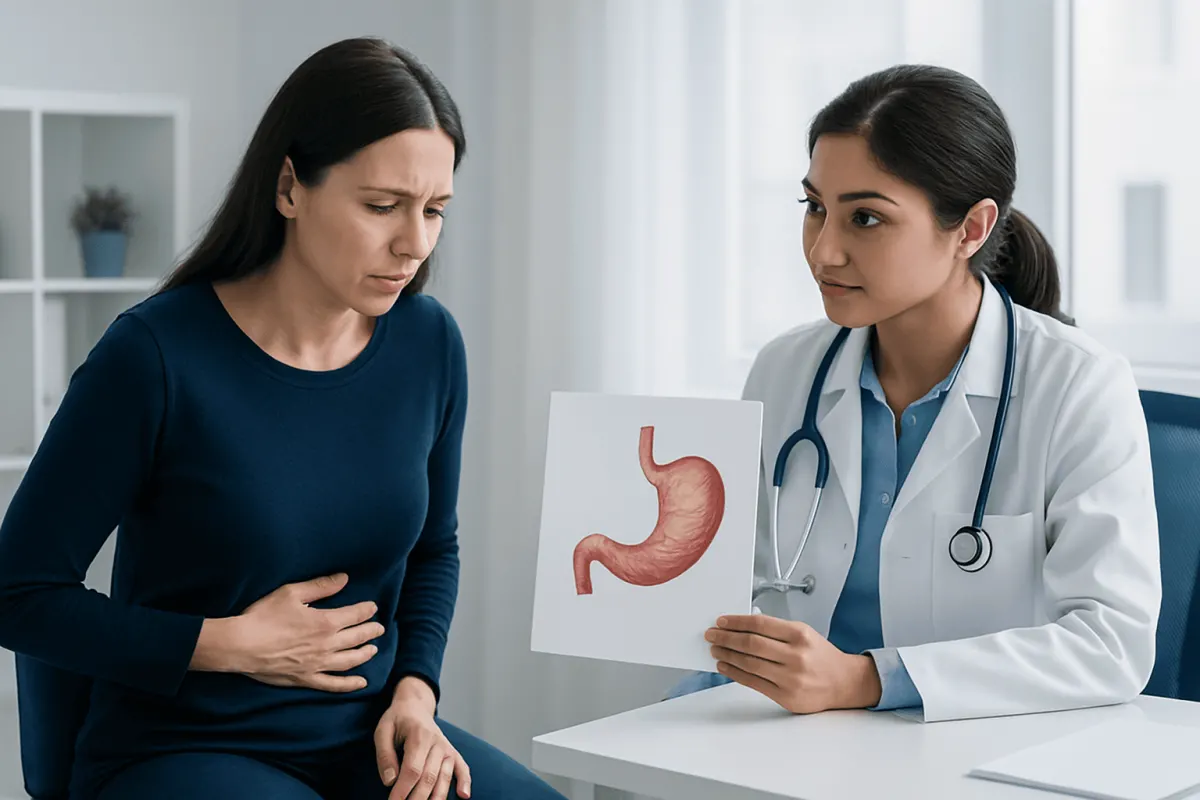
There are no symptoms unique to the pre pyloric stomach. Problems in this region may instead produce common upper digestive symptoms, often grouped under dyspepsia or indigestion. Symptoms can be occasional and mild, but persistent or recurring symptoms should be discussed with a healthcare professional.
Possible symptoms include upper abdominal discomfort or burning, feeling unusually full after a small meal, bloating, nausea, belching, reduced appetite, and discomfort that occurs after eating. A peptic ulcer can cause gnawing or burning upper abdominal pain, although some ulcers cause few or no noticeable symptoms.
If inflammation or scarring affects the pyloric outlet enough to slow stomach emptying, a person may feel full for a long time after meals, have nausea, or vomit undigested food several hours after eating. These symptoms can also occur with other conditions, so they do not confirm a prepyloric problem on their own.
- Upper abdominal pain or burning
- Early fullness or prolonged fullness after meals
- Nausea, vomiting, or recurrent indigestion
- Reduced appetite or unintentional weight loss
- Black, tar-like stools or vomiting blood, which can signal gastrointestinal bleeding
Common Conditions and Risk Factors
Gastritis, meaning inflammation of the stomach lining, may affect the prepyloric area. It can be linked to H. pylori infection, regular use of nonsteroidal anti-inflammatory drugs (NSAIDs) such as ibuprofen or naproxen, alcohol use, bile reflux, severe physical stress from serious illness, or autoimmune conditions. Mild redness seen during endoscopy does not always indicate a serious disorder, and biopsy findings may help clarify the cause.
A prepyloric ulcer is a type of peptic ulcer that occurs close to the pylorus. The most common causes are H. pylori infection and NSAID use. Smoking can make ulcer healing more difficult, while certain medicines that affect blood clotting can increase the consequences of bleeding if an ulcer is present. Peptic ulcer disease can be evaluated and treated according to its cause and severity.
Less commonly, swelling from an ulcer, scar tissue after repeated ulcers, tumors, or other disorders can narrow the gastric outlet. This may lead to gastric outlet obstruction, in which food does not pass through the stomach normally. Gastric cancer is uncommon compared with benign causes of indigestion, but persistent alarm symptoms require evaluation so serious conditions are not missed.
How Doctors Evaluate Prepyloric Findings
A clinician usually begins with questions about symptoms, their timing, medicines, alcohol and tobacco use, prior ulcers, family history, and warning signs such as bleeding or weight loss. A physical examination may be followed by blood tests when anemia, infection, inflammation, dehydration, or nutritional concerns are possible.
Testing for H. pylori may be appropriate in people with dyspepsia or suspected ulcer disease. Common noninvasive tests include a urea breath test and stool antigen test. In some situations, an upper endoscopy is recommended. This procedure allows a gastroenterologist to inspect the esophagus, stomach, and duodenum directly, including the prepyloric region.
During endoscopy, small tissue samples may be taken for biopsy. Biopsies can look for H. pylori, inflammation, changes related to long-term injury, and other abnormalities. A biopsy is commonly taken even if the lining looks only mildly irritated, because microscopic findings may not be visible during the procedure. Imaging or stomach-emptying tests may be used when obstruction or delayed emptying is suspected.
Treatment Depends on the Underlying Cause
Treatment is guided by the diagnosis rather than the phrase “pre pyloric stomach” alone. When H. pylori is confirmed, a clinician may prescribe a combination of antibiotics and acid-suppressing medicine. Follow-up testing is often used to confirm that the infection has cleared, particularly after ulcer treatment.
For gastritis or ulcers related to NSAIDs, the care plan may include stopping, reducing, or changing the medicine when medically appropriate, together with acid suppression to support healing. People should not stop prescribed pain medicines, antiplatelet medicines, or blood thinners without first speaking to the clinician who manages them. Upper gastrointestinal endoscopy may be used to diagnose a condition, obtain biopsies, and sometimes treat active bleeding.
If a narrowed pylorus is affecting stomach emptying, treatment depends on the cause. Options may include medication for inflammation or ulcer disease, endoscopic widening in selected cases, or surgery when needed. A multidisciplinary assessment is particularly important when symptoms are severe, recurrent, or associated with an abnormal biopsy or imaging result.
Everyday Steps That May Support Stomach Comfort
For many people with mild indigestion, practical measures can reduce symptoms while medical assessment is arranged or treatment is underway. Smaller meals, eating slowly, and avoiding lying down immediately after eating may help some individuals. Keeping a brief record of meals, symptoms, and medicines can also help identify patterns to discuss with a clinician.
It may be useful to limit foods or drinks that reliably worsen symptoms, such as alcohol, very fatty meals, spicy foods, coffee, or carbonated drinks. These triggers vary between individuals, and avoidance is not a substitute for assessment when symptoms persist. Stopping smoking supports digestive health and can improve ulcer healing.
Over-the-counter antacids or acid-reducing medicines can temporarily ease some symptoms, but prolonged self-treatment may delay diagnosis of an ulcer or another condition. NSAIDs should be used at the lowest effective dose for the shortest appropriate period, and only as advised by a healthcare professional, especially for people with a previous ulcer or bleeding history.
When to Seek Medical Care
Medical advice is appropriate for indigestion that lasts more than a few weeks, keeps returning, disrupts eating or sleep, or does not improve with simple measures. Evaluation is also important for people with a history of ulcers, regular NSAID use, known H. pylori infection, or a close family history of stomach cancer.
Urgent medical care is needed for vomiting blood, material that resembles coffee grounds, black tar-like stools, fainting, severe or worsening abdominal pain, repeated vomiting, or signs of dehydration. These may indicate bleeding, obstruction, or another condition requiring prompt treatment.
Unexplained weight loss, persistent vomiting, trouble swallowing, anemia, or a new persistent digestive problem in later adulthood should be assessed without delay. Acıbadem Health Point’s multidisciplinary specialists and JCI-accredited hospitals can evaluate digestive symptoms and conditions affecting the stomach for international patients.
Frequently asked questions
01Is the pre pyloric stomach a normal part of the body?
Yes. The pre pyloric stomach is a normal anatomical area at the lower end of the stomach, immediately before the pylorus. The pylorus controls the release of stomach contents into the small intestine.
02What does prepyloric gastritis mean?
Prepyloric gastritis means inflammation of the stomach lining near the pylorus. Possible causes include Helicobacter pylori infection, NSAID use, alcohol, bile reflux, and other sources of irritation. The appropriate treatment depends on the identified cause.
03What is a prepyloric ulcer?
A prepyloric ulcer is a peptic ulcer located in the lower stomach close to the pylorus. Helicobacter pylori and regular NSAID use are common causes. A clinician may recommend testing and treatment to promote healing and prevent complications.
04Can a prepyloric problem cause vomiting?
It can, particularly if inflammation, swelling, or scarring narrows the stomach outlet and delays emptying. Vomiting has many possible causes, however, so recurrent vomiting needs medical assessment. Urgent care is needed if vomiting contains blood or is accompanied by severe pain or dehydration.
05How is Helicobacter pylori tested?
Helicobacter pylori can often be detected with a breath test or stool antigen test. It may also be found in biopsy samples collected during an upper endoscopy. A clinician can advise which test is suitable and whether any medicines need to be paused before testing.
06Does redness in the prepyloric stomach mean cancer?
No. Redness commonly reflects irritation or inflammation and does not by itself mean cancer. If an endoscopy shows an abnormal area, biopsies and follow-up recommendations help determine what it represents. Persistent warning symptoms should always be assessed.
This article is for general information only and is not a substitute for professional medical advice. Please consult a qualified doctor about your individual situation.
Persistent digestive symptoms? Get evaluated in Turkey
JCI-accredited · board-certified surgeons · reply within 24h
Add us as a Preferred Source to see more of our trusted health content across Google Search, AI Overviews and Discover.