Pulled Muscle in Stomach Area: Symptoms and Relief
Pulled muscle in stomach area symptoms commonly include a sore, tender, or sharp pain in the abdominal wall that begins during or after exertion and becomes more noticeable with movement, coughing, laughing, or sitting up. Although many abdominal muscle strains settle with simple care, abdominal pain can also come from internal organs, so the pattern of symptoms matters.
What does a pulled muscle in the stomach area feel like?
Pulled muscle in stomach area symptoms usually develop when the muscles of the abdominal wall are overstretched or partially torn. The pain is often felt in one specific area of the abdomen and may be sharp at first, followed by aching, tightness, or tenderness. It commonly starts during exercise, lifting, a sudden twist, or a forceful cough.
The abdominal muscles help stabilize the trunk and assist with movements such as bending, getting out of bed, laughing, sneezing, and taking deep breaths. Because of this, discomfort from a strain often becomes more obvious when the person contracts the stomach muscles or changes position. A mild strain can improve over days to a few weeks, while a more significant injury may take longer.
Not every pain felt in the stomach area comes from a muscle. The abdomen also contains digestive, urinary, reproductive, and other organs. Pain that is severe, progressive, associated with illness symptoms, or not clearly linked to movement should be assessed by a qualified clinician.
Common symptoms of an abdominal muscle strain
An abdominal muscle strain may affect the rectus abdominis muscles at the front of the abdomen, the oblique muscles at the sides, or deeper stabilizing muscles. Symptoms depend on the location and severity of the injury. Some people notice pain immediately, while others develop soreness and stiffness later that day or the following day.
- Localized pain, soreness, tightness, or cramping in the abdominal wall
- Pain that worsens with coughing, sneezing, laughing, lifting, twisting, sitting up, or exercising
- Tenderness when pressing on the painful area
- Stiffness or discomfort when standing upright, walking, or changing position
- Muscle spasm, weakness, or a pulling sensation
- Occasionally, mild swelling or bruising after a more substantial tear
A strain is more likely when pain is clearly affected by body movement and abdominal muscle tension. In contrast, pain from an internal abdominal condition may be less closely related to movement, although this is not a reliable rule on its own. Medical evaluation is important if there is uncertainty about the cause.
Why abdominal muscles get pulled

Abdominal strains occur when a muscle is forced beyond its usual capacity. This may happen with a single sudden movement or with repeated overuse. Sports involving rapid trunk rotation, such as tennis, golf, baseball, swimming, gymnastics, and football, can place significant demand on the abdominal wall.
Heavy lifting, especially with poor technique or without adequate core control, is another common trigger. Activities such as intense sit-ups, planks, or a sudden return to exercise after a period of inactivity can also cause a strain. Repeated coughing or vomiting may irritate the muscles, particularly if they are already tired or weakened.
Risk can be higher when a person exercises while fatigued, skips a gradual warm-up, abruptly increases training intensity, or has limited core strength. Pregnancy, recent surgery, and changes in body weight can alter abdominal wall mechanics as well. These factors do not automatically cause injury, but they can make a gradual, well-paced approach to activity especially important.
Muscle strain or another condition?
A pulled abdominal muscle is only one possible explanation for pain in the stomach area. Digestive conditions, urinary tract problems, gynecological conditions, infections, and surgical emergencies can all produce abdominal pain. A clinician considers the pain location, timing, triggers, associated symptoms, medical history, and examination findings to distinguish among these causes.
A hernia may cause discomfort that increases with coughing, lifting, or straining, which can resemble a muscle injury. However, a noticeable bulge in the abdomen, navel, or groin, especially one that becomes more apparent when standing or coughing, should raise concern for a hernia. Learn more about hernia symptoms and evaluation.
Pain that starts near the navel and moves to the lower right abdomen, particularly with nausea, reduced appetite, or fever, can occur with appendicitis. Sudden severe pain, pain with persistent vomiting, or pain during pregnancy also requires medical attention rather than self-diagnosis. In women, pelvic pain may be related to reproductive health conditions and should be assessed in the appropriate clinical setting.
How a doctor identifies the cause
For a suspected abdominal muscle strain, a clinician will usually ask when the pain began, whether it followed an injury or activity, and which movements make it worse. They may ask about bowel habits, urination, appetite, fever, nausea, menstrual history when relevant, prior surgery, and any history of hernia.
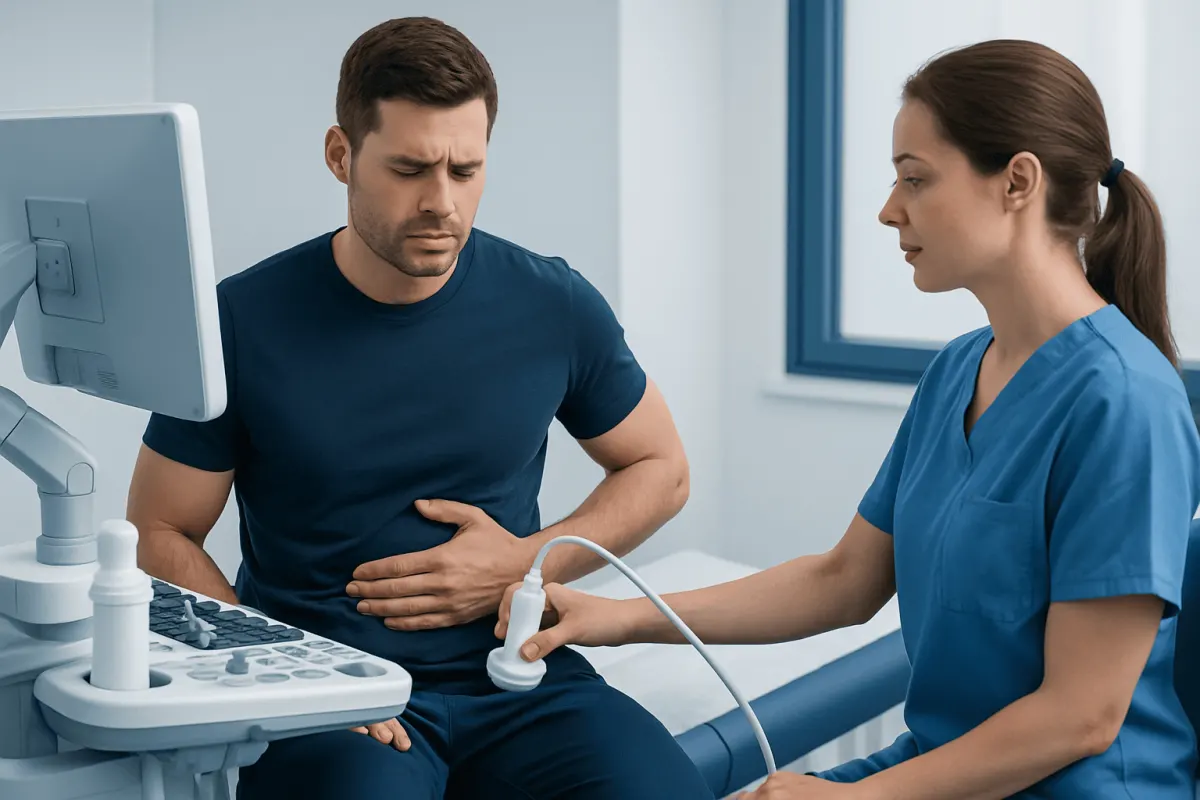
The physical examination may include gently pressing different areas of the abdomen and asking the person to tense the abdominal muscles. Pain that is focal and changes with muscle contraction can support an abdominal-wall source. The clinician also checks for guarding, swelling, bruising, a bulge, or other signs that suggest a different condition.
Imaging is not always needed for a straightforward mild strain. Ultrasound, CT, or other tests may be considered when symptoms are severe, the diagnosis is unclear, a hernia is suspected, or there are signs of an internal abdominal problem. Blood or urine tests may also help rule out infection, inflammation, or urinary causes when appropriate.
Treatment and recovery for a pulled abdominal muscle
Most mild abdominal muscle strains improve with relative rest. This means avoiding movements and activities that trigger significant pain while maintaining gentle day-to-day movement as tolerated. Continuing to push through sharp pain can delay recovery, whereas complete bed rest is usually unnecessary unless advised by a clinician.
During the first day or two, a wrapped cold pack may ease pain and swelling for some people. After the initial period, gentle heat may help stiffness or muscle spasm. Over-the-counter pain medicines may be suitable for some adults, but the best option depends on medical history, allergies, kidney or liver conditions, stomach ulcers, pregnancy, and other medicines. A pharmacist or doctor can provide individualized guidance.
As pain settles, gradual stretching and controlled core-strengthening exercises can help restore normal movement. A physiotherapist can advise on rehabilitation when pain is persistent, the injury is related to sport, or a person needs help returning safely to work or exercise. Physical therapy and rehabilitation may support a structured return to activity after more significant strains.
Recovery time varies. Mild soreness may resolve within one to two weeks, while moderate strains can take several weeks. A return to strenuous activity should be gradual and should not provoke sharp pain, marked weakness, or worsening symptoms.
Prevention and practical self-care
Abdominal muscle strains cannot always be prevented, but preparation and pacing can lower the risk. Before exercise or manual work, a gradual warm-up helps prepare muscles for movement. Increasing training load, lifting weight, or exercise duration step by step gives the abdominal wall time to adapt.
Good lifting technique is important: keep the load close to the body, bend through the hips and knees, avoid sudden twisting while carrying weight, and seek help with loads that are too heavy. A balanced program that includes core, hip, back, and overall strength can improve stability, but abdominal exercises should be progressed slowly.
People who have frequent coughing should seek assessment and treatment for the underlying cause, as repeated forceful coughing may strain the abdominal wall. Adequate rest, hydration, nutrition, and recovery between demanding sessions also support muscle health. If pain returns each time activity resumes, it is sensible to pause and arrange a medical or physiotherapy review.
When to seek medical care
Medical care is recommended for abdominal pain that is severe, worsening, unexplained, or not improving after a short period of relative rest. An examination is particularly important when there was no clear muscle-related trigger, when pain interferes substantially with normal activity, or when a new lump or bulge appears in the abdomen or groin.
Urgent assessment is needed for severe or spreading pain, a rigid or markedly swollen abdomen, fever, repeated vomiting, inability to keep fluids down, fainting, chest pain, shortness of breath, black or bloody stools, blood in urine, or yellowing of the skin or eyes. People who are pregnant, may be pregnant, have recently had abdominal surgery, or have a significant injury should seek timely medical advice for new abdominal pain.
Acıbadem Health Point’s multidisciplinary specialists and JCI-accredited hospitals assess abdominal symptoms and provide care for international patients when evaluation or treatment is needed. A clinician can help determine whether pain is due to a muscle strain or another condition requiring targeted care.
Frequently asked questions
01Can a pulled abdominal muscle cause pain when coughing?
Yes. Coughing contracts the abdominal wall, so a strained muscle often hurts more during a cough, sneeze, laugh, or deep breath. However, cough-related pain can also occur with a hernia or other conditions, particularly if there is a bulge or worsening discomfort.
02How can someone tell whether stomach pain is muscular?
Muscular pain is often localized and becomes worse with movement, stretching, lifting, sitting up, or tightening the abdominal muscles. It may also be tender to touch and follow a clear physical trigger. These clues are not definitive, so persistent, severe, or unusual abdominal pain should be medically assessed.
03Should a pulled stomach muscle be massaged?
Gentle touch may feel comfortable after the most painful early phase, but deep or forceful massage can aggravate an acute strain. It should be avoided if there is bruising, severe pain, a suspected hernia, or uncertainty about the diagnosis. A physiotherapist can advise on safe hands-on treatments when appropriate.
04Can a pulled abdominal muscle cause a lump?
A simple muscle strain more commonly causes tenderness, tightness, or occasionally swelling and bruising rather than a distinct lump. A new bulge, especially one that changes with coughing or standing, can indicate a hernia. This should be evaluated by a clinician.
05Is it safe to exercise with a pulled abdominal muscle?
Light movement may be appropriate if it does not significantly worsen pain, but strenuous core exercises, heavy lifting, twisting, and sport should be paused initially. Activity can be increased gradually as normal movement becomes comfortable. Persistent pain or repeated symptoms with return to exercise may benefit from medical or physiotherapy advice.
06When is abdominal pain an emergency?
Emergency assessment is important for sudden severe or worsening abdominal pain, pain with fever, persistent vomiting, fainting, a hard or swollen abdomen, or blood in stool or urine. Prompt care is also important for abdominal pain during pregnancy, after significant trauma, or following recent abdominal surgery. When in doubt, seeking urgent medical advice is the safer choice.
This article is for general information only and is not a substitute for professional medical advice. Please consult a qualified doctor about your individual situation.
Persistent digestive symptoms? Get evaluated in Turkey
JCI-accredited · board-certified surgeons · reply within 24h
Add us as a Preferred Source to see more of our trusted health content across Google Search, AI Overviews and Discover.